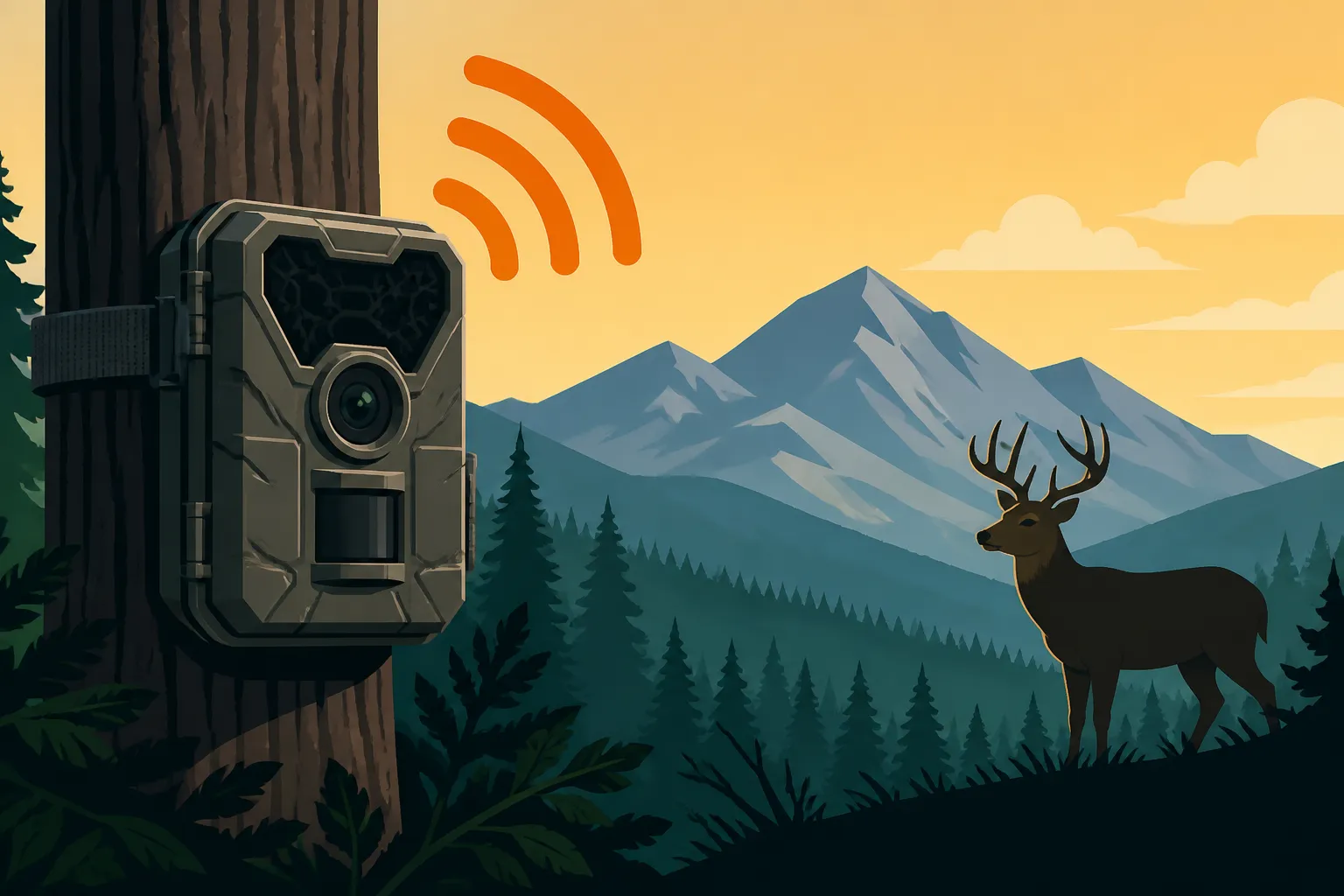
Cellular Trail Cameras for Remote North Country Land
There's nothing quite like the draw of New Hampshire's North Country, with its vast timber and remote bogs, but getting into those wild places means a significant investment of time and effort. Trying to keep tabs on deer or moose movement with traditional trail cameras often means repeated, long treks just to swap an SD card, which not only eats up your precious time but also puts undue pressure on the very animals you're trying to pattern. This guide is all about embracing modern technology to make your scouting more efficient and less intrusive, specifically by exploring how cellular trail cameras can be a game-changer for monitoring remote New Hampshire hunting grounds.
Why Traditional Cameras Fall Short in New Hampshire's Remote Terrain
When you're dealing with the vastness of places like the Connecticut Lakes Headwaters region or the deeper reaches of the White Mountain National Forest, the old way of trail camera scouting quickly shows its limitations. It's not just about the distance; it's about the unique challenges of the Granite State's rugged landscape.
The Time and Effort Sink
Let's be honest, we all love spending time in the woods, but nobody loves a six-mile hike in, a two-hour camera check, and a six-mile hike out, especially when that's just one camera in a string of many. Imagine planning a full day just to check half a dozen cameras, only to find you missed an SD card, or a battery died, or worse, a bear decided your camera was a new chew toy. The sheer logistics involved in regularly visiting remote camera sites can become a second full-time job, eating into your actual hunting time.
It's not just the physical toll. Every time you walk into a remote area, you leave scent, you break twigs, and you disturb the natural rhythms of the wildlife. While deer might tolerate some human presence in less wild areas, the big, cagey bucks and moose that call the North Country home are often far more sensitive. Multiple trips to check cameras can push them deeper into cover or alter their travel patterns right before the season, effectively undoing all your hard scouting work. We’re out there trying to gain an edge, not inadvertently educate the game we’re pursuing.
Impact of Human Pressure on Big Woods Game
In the vast, untamed timber of northern New Hampshire, animals are often less accustomed to human interference compared to those living closer to settled areas. A big North Country buck or a mature bull moose often develops a sixth sense for human presence, learned over years of avoiding hunters. Every single time you trudge through their core area to check a camera, you're leaving a calling card. Your scent, the sound of your footsteps, the visual disturbance – it all adds up.
This increased human pressure can cause nocturnal animals to become even more reclusive, or it can force them to shift their patterns entirely, opting for thicker cover or different travel corridors that might be harder for you to access or predict. We've all had that gut-punch feeling of pulling an SD card only to see pictures of a big deer that suddenly vanished just before opening day. Sometimes, we're the ones who pushed them out, simply by being there too often. Cellular cameras offer a way to drastically reduce that footprint, letting you become a ghost in the woods.
Understanding Cellular Trail Camera Technology
So, what exactly is a cellular trail camera, and how does it manage to beam images from the middle of nowhere right to your phone? It's a fantastic piece of technology, but understanding the basics is key to picking the right one and getting it to work effectively in New Hampshire’s challenging topography.
How Cellular Cameras Transmit Data
At its core, a cellular trail camera is a digital camera with a built-in cellular modem, much like the one in your smartphone. When the camera's motion sensor is triggered, it captures a photo or video, just like a traditional trail camera. The magic happens next: instead of saving that image to an SD card for you to retrieve later, the camera uses its cellular connection to send the image directly to a cloud server. From there, it's pushed straight to an app on your smartphone, tablet, or sometimes an email address. This means you can be sitting at home, miles away, and see what's walking in front of your camera in near real-time.
The camera needs a SIM card, just like your phone, and it operates on a cellular network (e.g., AT&T, Verizon, T-Mobile, or often multi-carrier options). The images are typically compressed to save data, but most modern cameras offer options for higher resolution images or even short video clips, though these chew through data much faster. This technology liberates you from constant trips, allowing you to monitor multiple locations with minimal disturbance. It's about working smarter, not harder, especially when you're Hunting the North Country.
Cellular Network Coverage and Data Plans
This is often the biggest hurdle and the most crucial consideration for New Hampshire hunters. Our state, particularly the further north you go, has notoriously spotty cell service. A cellular camera is only as good as its connection. Before investing, you absolutely must research cell coverage in your target areas. Many camera manufacturers or third-party mapping apps like GoHunt offer coverage maps that can give you a general idea, but the best way to know for sure is to take your personal cell phone (on the same carrier you plan to use for the camera) to the exact spots you want to place cameras. If your phone gets a signal, chances are the camera will too. If it struggles, so will your camera.
Once you confirm coverage, you'll need a data plan. These are typically monthly or annual subscriptions paid directly to the camera manufacturer or through a third-party provider. The cost generally depends on the amount of data (how many images/videos) you want to transmit. Some plans offer unlimited images at a lower resolution, while others provide tiered data packages for higher quality. It's essential to match your expected usage to a plan that won't break the bank. Remember, these are recurring costs, unlike traditional cameras, so factor that into your overall hunting budget.
Key Features to Look For in a North Country Cellular Camera
New Hampshire’s hunting environment is demanding. From bitter cold to torrential rain, and curious wildlife, your camera needs to be tough. Beyond just sending pictures, there are specific features that truly make a difference when you’re scouting in remote, rugged terrain.
Durability and Weather Resistance
The weather in New Hampshire can turn on a dime, especially in the White Mountains or the far North Country. You need a camera that can withstand driving rain, freezing temperatures, heavy snow, and even the occasional curious bear or moose. Look for cameras with an IP (Ingress Protection) rating that indicates good water and dust resistance. While a high IP rating is a good start, also consider the build quality – robust housings, strong latches, and sealed battery compartments are crucial. A flimsy plastic camera simply won't survive a full season in a beaver flowage or exposed on a granite ridge.
Think about how well the camera is designed to shed water, preventing moisture from seeping into critical components. Freezing temperatures can also be brutal on electronics and batteries, so look for models specifically designed to operate in extreme cold. Some cameras even feature internal heaters to help prevent condensation and maintain battery efficiency in sub-zero conditions. This kind of ruggedness is non-negotiable for reliable year-round scouting in New Hampshire.
Battery Life and Power Options
Few things are more frustrating than a camera that dies after a week, especially if you're trying to minimize trips to a remote location. Cellular cameras inherently use more power than traditional ones because they're constantly maintaining a cellular connection and transmitting data. Therefore, excellent battery life is paramount. Many cameras use D-cell or AA batteries, and some can chew through them quickly. Look for cameras that boast longer battery life, perhaps those that utilize larger batteries or have optimized power management.
Even better, consider cameras with external power ports that allow you to connect a 6V or 12V external battery pack, or even a small solar panel. A good external battery can dramatically extend the camera's runtime, potentially allowing it to operate for months without needing a battery swap. Solar panels are a fantastic option for truly remote sites, as they can trickle-charge an external battery, theoretically providing indefinite power. This is especially useful if you're deploying cameras for long-term monitoring or in areas that are particularly difficult to access.
Image and Video Quality
While a cellular camera's primary purpose is to send you images, the quality of those images still matters. What good is a picture of a deer if you can't tell if it's a buck or a doe, or estimate its rack size? Look for cameras that offer a good balance of megapixel count and image clarity, both during the day and, crucially, at night. Many cameras will send a lower-resolution "preview" image quickly and then allow you to request a high-resolution version if needed, which saves data on your plan.
Night vision is another critical component. Most cameras use either an infrared (IR) flash or a "no-glow" black flash. Standard IR flashes are visible as a faint red glow, which some wary animals might detect. No-glow black flashes are completely invisible to the human eye (and, theoretically, to wildlife), making them ideal for less intrusive scouting, especially for pressured game. Consider your specific needs: if you're primarily interested in general movement, a standard IR flash might suffice, but for truly stealthy monitoring of trophy animals, no-glow is often the better choice.
Antenna Performance
Because cell signal is such a challenge in many parts of New Hampshire, the camera's antenna can make or break its performance. Many cellular cameras come with a standard, short antenna. However, some models offer the option to attach an external, extended antenna. These external antennas can be a real game-changer in areas with marginal signal. They can be mounted higher up on a tree or post, getting above ground clutter and potentially catching a stronger signal.
This is where a little on-the-ground testing comes in handy. If your phone struggles for bars at a potential camera site, an external antenna might be the only thing that makes a cellular camera viable there. It's a small added expense, but it can be the difference between getting regular updates and having an expensive brick in the woods. Always check if the camera you're considering has this external antenna capability, especially if you're looking to monitor deep woods locations.
Setting Up for Success: Optimal Placement and Data Management
Getting your cellular trail camera to work flawlessly in New Hampshire's backcountry involves more than just buying the right model. Strategic placement and smart management of your data are just as crucial for reliable long-term scouting.
Finding the Sweet Spot for Signal
Before you even think about animal sign, the first thing you need to do at a potential camera site is check for cell service. Take your cell phone, ideally on the same carrier as your camera or a carrier known for good coverage in the area (many camera companies offer multi-carrier plans now). Walk around the area, looking at different elevations and orientations. Even a few feet can make a difference. If you find a spot with even one or two bars, that's your sweet spot. Remember, the camera doesn't need a strong signal like your phone does for streaming video, but it needs enough to reliably transmit small image files.
Once you confirm signal, then look for game sign. You want to place the camera on a well-used trail, scrape line, funnel, or bedding area transition zone. Consider typical wind direction to avoid your scent contaminating the area when you initially set it up. Also, think about the angle of the sun. Avoid pointing the camera directly east or west, as the rising or setting sun can cause glares and false triggers. A slight northern or southern angle is often best. For more remote scouting, understanding Reading Aerial Photos for North Country Deer can help you pinpoint these hidden travel routes before you even step foot on the ground.
Strategic Camera Placement to Maximize Results
Beyond cell signal, effective placement is key to capturing the images you want and avoiding unwanted ones. Consider the height of the camera. For deer, chest height (around 3-4 feet) is usually ideal. For moose, you might go a bit higher. Angle the camera slightly downward to get a good field of view. Clear any brush or tall grass directly in front of the camera that could trigger false images from wind movement, especially if you're paying per image on your data plan.
Think about the background. A cluttered background of branches or leaves can make it harder to spot your target animal. Try to find a clear lane of travel where the animal will be fully in the frame. If you're scouting a food source, place the camera on the entry and exit points rather than directly over the food, as animals often pause at these transitions. For tracking specific deer in thick cover, consider trails that lead to Where New Hampshire Bucks Bed in Thick Cover. Don't forget security – while theft isn't rampant, consider a lock box or a cable lock, especially if your camera is visible from a public access point or on a well-traveled trail within New Hampshire's White Mountain National Forest Camping Setback Rules areas.
Managing Data and Battery Life Remotely
One of the greatest advantages of cellular cameras is the ability to manage them remotely. Regularly check your camera's app for battery life and signal strength. If the signal starts to drop, it might indicate a problem or a change in environmental conditions. By checking battery life, you can anticipate when a swap is needed and plan a single, efficient trip to all your cameras, rather than multiple reactive visits.
Most apps allow you to change settings remotely – things like photo burst, video length, delay between triggers, and even time-lapse modes. If you're getting too many "empty" pictures, you can increase the delay or decrease the sensitivity. If you want more detail on a specific animal, you might increase the video length. This remote control not only saves you trips but allows you to optimize your camera's performance throughout the season, adapting to animal behavior and weather patterns without ever disturbing the woods. Always be mindful of your data plan, especially when requesting high-resolution images or videos, as these can consume data quickly.
Pros and Cons of Cellular Trail Cameras for New Hampshire Hunting
Like any piece of hunting gear, cellular trail cameras come with their own set of advantages and disadvantages. Understanding these can help you decide if they're the right investment for your particular hunting style and the unique challenges of hunting in New Hampshire.
The Undeniable Advantages
The most significant benefit, hands down, is the real-time information and the reduced human presence. Imagine knowing, immediately, that a mature buck just walked by your stand location or that a bull moose is frequenting a specific bog. This instant feedback allows you to make incredibly timely hunting decisions – deciding where to hunt tomorrow morning based on activity from this afternoon, rather than relying on stale information from a week ago. This is especially potent in our New Hampshire's WMU-Based Deer Season Structure where conditions and animal movements can shift so rapidly.
Beyond just the "now," cellular cameras are fantastic for minimizing disturbance. Every trip you save to a camera site means less scent, less noise, and less pressure on the animals. For wary North Country whitetails or moose, this can be the difference between getting a shot opportunity and having them vanish. It also means less wear and tear on you, particularly if you're regularly accessing challenging terrain or far-flung public land. This allows you to focus your physical energy on the hunt itself, rather than on retrieving SD cards. Think about Shed Hunting on New Hampshire Public Land – even then, you're looking for signs without adding unnecessary pressure.
Potential Drawbacks and Challenges
However, cellular cameras aren't without their downsides. The most obvious is the cost. Not only are the cameras themselves generally more expensive than traditional models, but you also have the ongoing expense of a data plan. This recurring monthly or annual fee can add up, especially if you're running multiple cameras. For some hunters, this financial commitment might simply not be feasible.
Then there's the reliance on cell service. As we've discussed, large swaths of New Hampshire, particularly the most desirable remote hunting areas, have very limited or no cell coverage. If you can't get a signal, a cellular camera is essentially just a very expensive traditional camera. This means careful scouting of cell service is critical, and for some spots, you might just be out of luck. Another challenge can be battery drain. Constantly searching for a signal and transmitting data uses a lot of power, and even the best cameras will eventually need battery changes, especially in cold weather. This still requires a trip, albeit a less frequent one than for SD card retrieval. Finally, there's always the potential for technical glitches – dropped signals, app issues, or cameras simply failing to send images. While technology has improved, it's not foolproof.
Weighing the Investment
Ultimately, the decision to invest in cellular trail cameras for your New Hampshire hunting adventures comes down to a personal cost-benefit analysis. If you primarily hunt easily accessible private land or areas with good cell coverage, and you want the absolute latest intel, the benefits might heavily outweigh the costs. If your hunting budget is tight, or you exclusively hunt in areas with no cell service, then traditional cameras might still be the smarter choice.
Consider your hunting style. Are you a "set it and forget it" type of hunter who checks cameras only a few times a season, or do you crave constant updates and want to react instantly to game movement? The value proposition of a cellular camera significantly increases for the latter. For those looking to maximize their time and minimize disturbance on truly remote properties, such as those found while Scouting New Hampshire Public Land Before Season, cellular cameras offer an unparalleled advantage, letting you monitor critical areas without tipping off the game.
Legal and Ethical Considerations for Cellular Trail Cameras
While incredibly useful, the use of cellular trail cameras also brings up some important legal and ethical questions that New Hampshire hunters should be aware of. We want to be effective scouts, but we also need to be responsible and respectful of the rules and our fellow outdoors enthusiasts.
New Hampshire Regulations on Camera Use
As of now, New Hampshire generally permits the use of trail cameras on public land, including cellular models, but it's crucial to always stay informed about any specific regulations that might change or vary by property. For example, some wildlife management areas (WMAs) or specific tracts within the White Mountain National Forest might have unique rules regarding placement, identification, or how long cameras can be left out. Always consult the New Hampshire Fish and Game Department's hunting digest or the specific land management agency for the area you plan to hunt. A great resource for boundary lines and land ownership, which is crucial for ethical camera placement, is mapping software like that offered by GoHunt, which can help you ensure your camera is on legal ground.
One important consideration is identifying your camera. While not always legally required, it's good practice to mark your camera with your name and contact information. This can prevent it from being mistaken for abandoned property and also provides a way for someone to contact you if they find it, rather than simply removing it. Respecting private property lines is paramount. Never place a camera where it can record on adjacent private land without explicit permission. Doing so could lead to trespassing charges or other legal issues, and simply isn't ethical. Always ensure you are on legal ground, whether it's public land or private land with permission.
Ethical Implications and Respect for Others
The ability to constantly monitor game from afar raises ethical questions about fair chase and the spirit of hunting. While cellular cameras are a tool to gather information, like binoculars or a rangefinder, some argue that constant, real-time surveillance removes too much of the "hunt" from hunting. This is a personal decision, but it's important to be mindful of how your actions are perceived by others and how they uphold the traditions of fair chase.
Beyond personal ethics, there's also the consideration of other hunters. Public land in New Hampshire is a shared resource. If you place a cellular camera in a prime hunting spot on public land, and it sends you pictures of another hunter checking their own non-cellular camera, what then? While you have the right to place your camera, remember that others also have the right to hunt and scout those areas without feeling excessively surveilled. Be respectful of others' presence and their right to enjoy the outdoors. If you see signs of another hunter already actively working an area, perhaps choose a different spot for your camera. We're all trying to enjoy the woods, and mutual respect goes a long way. Ultimately, Finding Ground That Sees Fewer Hunters might become a tactic not just for deer, but for avoiding perceived conflicts with other hunters as well.
Maximizing Your Investment: Advanced Strategies and Maintenance
You’ve made the leap and invested in cellular trail cameras for your New Hampshire hunting. Now, how do you get the absolute most out of them, extending their life, and truly making them an invaluable part of your scouting arsenal? It’s all about smart deployment and consistent care.
Creative Deployment Scenarios
Cellular cameras excel beyond just monitoring typical travel corridors. Think about using them to check remote food sources, especially during late season when deer are concentrated on available forage. Imagine keeping tabs on a remote standing apple orchard or a hard-to-reach clear-cut from your armchair. They're also fantastic for monitoring specific scrapes or rub lines to gauge the intensity of the rut and identify the bucks actively working them. Consider placing one strategically near a known bedding area exit point, giving you real-time intel on when deer are moving out to feed.
Another powerful application is monitoring "community" scrapes or pinch points that funnel deer movement. A cellular camera gives you instant alerts when new activity occurs, allowing you to react quickly. For those with Moose Hunting New Hampshire's North Country tags, placing cameras on suspected moose trails or near potential wallows can provide invaluable information on bull activity without constant disturbance. The ability to quickly confirm activity allows you to focus your limited time and effort on the most productive spots, rather than hiking blind miles to check empty camera sites.
Troubleshooting Common Issues
Even the best cellular cameras can have hiccups. The most common issue is a lack of signal. If your camera suddenly stops transmitting, first check the signal strength in the app. If it’s weak, consider if anything in the environment has changed – new foliage, a heavy snowstorm, or even a different atmospheric condition. Sometimes, simply adjusting the antenna's angle or moving the camera a few feet to higher ground can re-establish a connection. If the signal is fine but no images are coming through, check the battery life in the app. Cold weather severely impacts battery performance, so a fresh set might be needed sooner than expected.
If the camera is triggering but not sending images, check your data plan. You might have run out of data or hit a cap. Most apps will notify you of low data. If all else fails, a hard reset (powering down the camera, removing batteries, waiting a few minutes, then restarting) can sometimes clear up software glitches. Always check for firmware updates from the manufacturer; these often resolve bugs and improve performance. Remember, in truly remote areas with unreliable cell service, even the best troubleshooting might not overcome the fundamental lack of a network connection, at which point you might have to revert to a traditional camera.
Year-Round Maintenance and Storage
Just like any other piece of gear, proper maintenance will extend the life of your cellular trail cameras. Before storing them for the off-season, remove all batteries (both internal and external) to prevent corrosion. Clean the lens and housing thoroughly, removing any dirt, sap, or animal droppings. Check seals for cracks or wear that could compromise weather resistance. Store cameras in a cool, dry place, ideally in their original packaging or a protective case.
During the season, periodically check camera straps and mounts for integrity, especially in high winds or areas with animal activity. Bears are notorious for messing with cameras, and even deer can rub against them. Ensuring the camera is mounted securely prevents damage and keeps it pointed in the right direction. If using external power sources, check those connections and wiring for signs of fraying or damage. By taking a little extra time for care and maintenance, you ensure your cellular cameras are ready to go when you need them, providing reliable intel for seasons to come.
Cellular Trail Camera Comparison
To help you visualize some of the differences we've discussed, here's a general comparison of common cellular trail camera features. Keep in mind that specific models and their capabilities vary greatly, so always check the latest specifications for any camera you're considering.
| Feature | Entry-Level Cellular Camera | Mid-Range Cellular Camera | High-End Cellular Camera |
|---|---|---|---|
| Initial Cost | Lower | Moderate | Higher |
| Image Quality | Basic resolution, often compressed | Good resolution, options for HD on demand | Excellent resolution, full HD options |
| Night Vision | Standard IR flash (visible glow) | No-glow IR flash (invisible) | Advanced no-glow, longer range, clearer |
| Detection Range | ~60-70 feet | ~80-90 feet | ~100+ feet, wider detection angle |
| Trigger Speed | ~0.5-0.7 seconds | ~0.3-0.5 seconds | ~0.1-0.3 seconds |
| Video Capability | Short, low-res clips, high data usage | Longer, higher-res clips, data selectable | Full HD video, audio, customizable length |
| Battery Life | Moderate, frequent changes (AA or C cells) | Good, less frequent changes (D cells) | Excellent, optimized (D cells, external opt.) |
| External Power | Rarely | Often optional 6V port | Common 12V port, solar panel compatibility |
| Antenna Options | Fixed internal or small external | Standard external included, upgrade opt. | High-gain external standard, upgrade opt. |
| Remote Management | Basic settings changes | Full range of settings, firmware updates | Comprehensive, advanced diagnostics |
| Weather Resistance | IP54/IP65 (good for typical weather) | IP66 (rugged, very resistant) | IP67/IP68 (extreme weather, submersion) |
| Carrier Flexibility | Often single-carrier locked | Multi-carrier SIM options | Multi-carrier, often with best signal auto-select |
Disclaimer: This article is for general informational purposes only and does not constitute professional advice. Laws, prices and regulations vary by location and change over time. Consult a qualified professional for guidance on your specific situation.