Layering for a Wet White Mountain Day
There's nothing quite like the sudden, bone-chilling dampness of a New Hampshire mountain rain when you're miles into the backcountry, far from the warmth of camp or the truck. One minute it's crisp and cool, maybe even sunny, and the next you're engulfed in a cloud, mist, or full-blown downpour, leaving you shivering and questioning every decision you've made since dawn. Staying dry and warm isn't just about comfort here; it's a critical safety measure, especially when you're deep in the White Mountains hunting. This guide will meticulously walk you through the art and science of layering to conquer those notoriously wet, unpredictable New Hampshire days, ensuring your hunt isn't cut short by hypothermia or misery.
Understanding the Challenge: Why White Mountain Weather is Unique
Hunting in New Hampshire's White Mountains presents a truly unique set of weather-related challenges. Unlike some regions with predictable forecasts, the "Whites" are known for their microclimates and rapid, often dramatic, shifts in conditions. What starts as a clear, frosty morning in a valley can quickly turn into a windy, sleeting nightmare on a ridge, or a thick, disorienting fog can roll in at any moment, turning familiar trails into a maze.
The Unpredictable Nature of Mountain Weather
Imagine setting out before first light, with the thermometer hovering around freezing and a clear sky promising a beautiful day. You've got your heavy jacket on, feeling comfortable. But as you climb elevation, you might punch through a thermal inversion, suddenly finding yourself in warmer air, only for the wind to pick up, bringing with it a bank of dark clouds that weren't there an hour ago. Before you know it, that light drizzle turns into a steady rain, chilling you to the bone if your outer layers aren't up to snuff. These quick changes mean you can go from sweating on an uphill climb to freezing on a shaded descent, or from dry to drenched, all within a short walk.
The topography itself plays a huge role. Steep granite faces and deep ravines create their own localized weather systems. You might be in a sheltered valley where the rain is light, while just over the ridge, it's coming down in sheets with strong gusts. Understanding that the forecast for the nearest town often doesn't apply to your specific hunting location deep in the mountains is crucial. Always plan for the worst-case scenario. When planning your routes, a mapping tool like GoHunt can help you visualize the terrain and potential wind tunnels or sheltered areas that might influence localized weather patterns. Wind and Thermals in Steep Granite Terrain delves deeper into how air movement affects conditions in this challenging landscape.
The Dangers of Being Cold and Wet
It might sound obvious, but being cold and wet simultaneously is a hunter's worst enemy. Wet clothes lose their insulating properties incredibly fast. Cotton, in particular, is a death trap in these conditions because it absorbs moisture and holds it against your skin, rapidly drawing away body heat. This isn't just about discomfort; it's about a real risk of hypothermia, a condition where your body loses heat faster than it can produce it.
Symptoms can start subtly: shivering, clumsiness, confusion. In the backcountry, far from immediate help, these can quickly escalate into a life-threatening situation. Your dexterity decreases, making simple tasks like field dressing a deer or even unzipping your pack much harder. Your decision-making can become impaired, leading to poor choices like pushing too far or losing your way. Staying dry is paramount, not just to enjoy your hunt, but to ensure you make it home safely. Every drop of rain, every patch of melting snow, and every bead of sweat needs to be managed through effective layering.
The Core Principle: The Three-Layer System
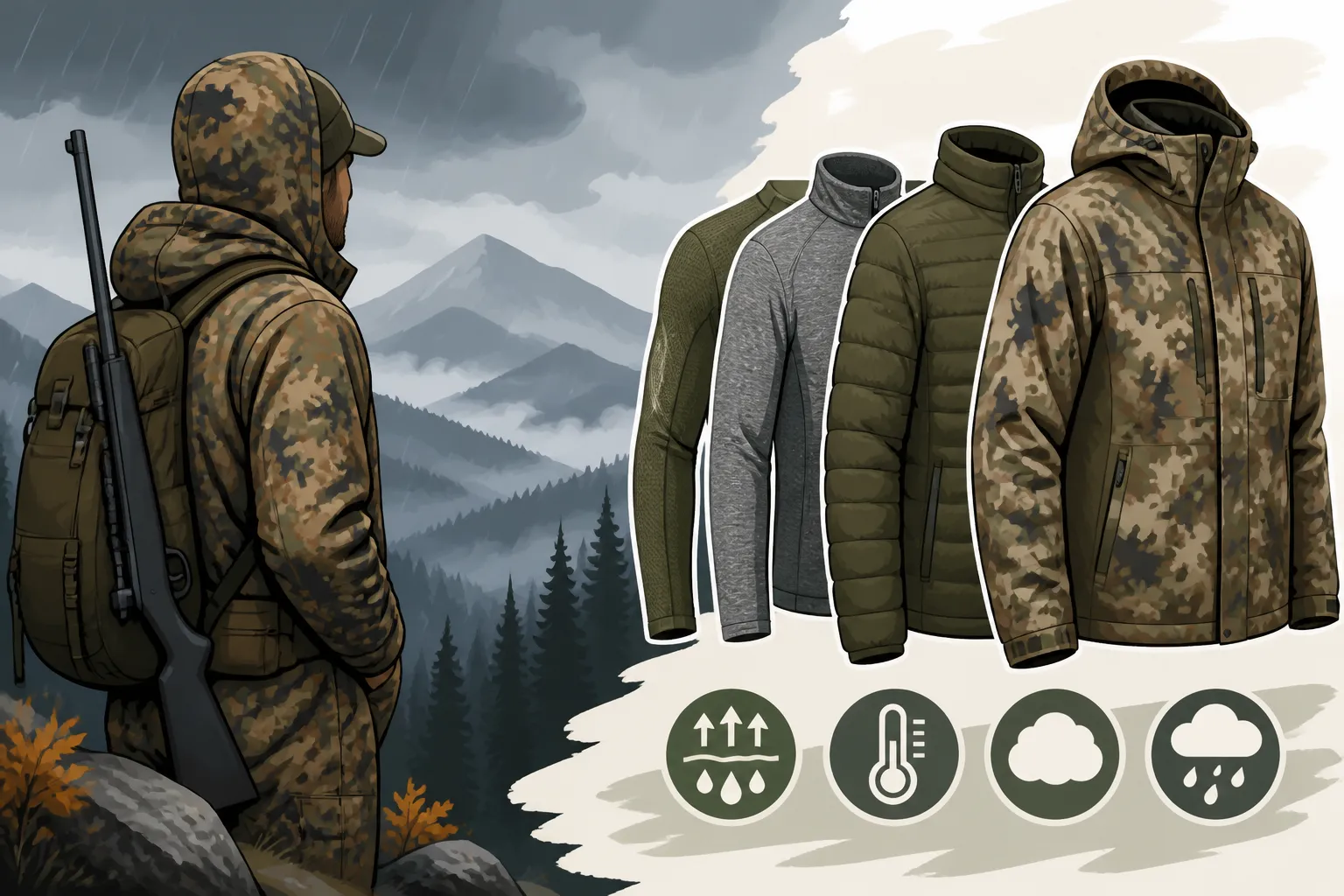
The secret to conquering New Hampshire's wet and wild weather lies in mastering the three-layer system. This isn't just a catchy phrase; it's a functional approach to managing your body temperature and moisture, allowing you to adapt to changing conditions by adding or shedding layers.
Base Layer: Wicking Away Moisture
Your base layer is the foundation, and its primary job is moisture management. Think of it as your second skin, designed to pull sweat away from your body and move it to the outer layers, where it can evaporate. This is absolutely critical because even in cold weather, hiking uphill with a pack will make you sweat. If that sweat stays on your skin, it will chill you once you stop moving or the temperature drops.
- Material Matters: Forget cotton. Seriously, leave it at home. The best materials for base layers are merino wool or synthetic fabrics. Merino wool is fantastic because it's naturally antimicrobial, meaning it resists odor even after multiple days of wear, and it insulates even when wet. It's incredibly comfortable against the skin. Synthetics (like polyester blends) are often more affordable, dry even faster than wool, and are highly durable.
- Weight and Fit: Base layers come in different weights – lightweight, midweight, and heavy. For an unpredictable White Mountain day, a midweight base layer is often a good starting point, providing a balance of warmth and breathability. The fit should be snug against your skin to maximize its wicking ability, but not so tight that it restricts movement.
- Examples in Action: On a chilly, wet morning, you might start with a midweight merino wool long-sleeve top and bottoms. If you're busting brush or climbing a steep incline, that base layer will be working overtime to move sweat away, keeping you drier underneath your other layers. If it's just damp and cool, your base layer might be all you need under a shell to stay comfortable during active periods. Best Base Layer for a September Archery Sit provides excellent insights into selecting the right initial layer.
Mid Layer: Insulating for Warmth
Once you've managed moisture, your mid layer steps in to provide insulation and trap warmth. This is the layer that really keeps you cozy when the mercury drops or the wind howls. It's also the most flexible layer, often the one you add or remove most frequently throughout the day.
- Insulation Types:
- Fleece: A classic for good reason. Fleece is warm, relatively lightweight, breathable, and dries reasonably quickly if it gets damp. It comes in different weights (100-weight, 200-weight, 300-weight), with higher numbers indicating more warmth.
- Puffy Jackets (Down or Synthetic): These offer excellent warmth-to-weight ratios. Down is incredibly warm and compressible, but loses its insulating properties almost entirely when wet. Synthetic insulation (like PrimaLoft or Coreloft) is heavier and less compressible than down but retains much of its warmth even when damp, making it a safer bet for truly wet conditions in New Hampshire.
- Versatility is Key: Your mid-layer should be easy to put on and take off. A full-zip jacket is ideal for venting heat quickly when you're working hard, then zipping up for warmth when you stop. You might even carry two mid-layers: a thinner fleece for active periods and a puffy vest or jacket for sitting still.
- Real-World Scenario: Picture yourself still-hunting through a dense spruce stand in a cold, damp mist. Your base layer is doing its job, but you need more warmth. A 200-weight fleece jacket over your base layer will provide that crucial insulation. Later, when you find a promising stand and decide to sit for an hour, you might pull a lightweight synthetic puffy jacket out of your pack to wear over the fleece, adding a significant boost of warmth without much bulk. For more on layering for intense cold, check out Best Mid-Layer for a November Firearms Hunt.
Outer Layer: Protection from the Elements
The outer layer is your shield, your last line of defense against wind, rain, and snow. Its job is to keep external moisture out while still allowing the moisture vapor from your body to escape, preventing that clammy feeling inside.
- Waterproof and Breathable: This is the holy grail. You need a fabric that can shed water like a duck's back but also "breathe" to let sweat vapor escape. Technologies like Gore-Tex, eVent, or proprietary brand membranes are designed for this. A durable water repellent (DWR) finish on the outside of the fabric is also essential, helping water bead up and roll off.
- Sealed Seams: A jacket can be made of waterproof fabric, but if the seams aren't taped or welded, water will seep right through. Always look for fully seam-sealed garments.
- Features for Function: Look for an outer shell with an adjustable hood that can fit over a hat, waterproof zippers, and pit zips for ventilation. Cuffs that can be tightened to prevent water from running down your arms are also a big plus.
- Choosing the Right Shell: For a truly wet White Mountain day, you'll want a dedicated waterproof shell, not just a water-resistant one. The difference is significant. A water-resistant jacket will eventually wet out in a steady rain, leaving you soaked. A truly waterproof shell, especially one designed for serious outdoor use, will keep you dry through prolonged downpours. When considering options, you can often find detailed reviews and comparisons on outdoor gear sites, which a quick search via GoHunt might direct you to.
- Putting it all together: You've been hiking, shedding layers, now you're at your chosen spot. The wind picks up and the drizzle turns into a steady rain. You pull out your waterproof, breathable shell and don it over your base and mid-layers. The water beads up and runs off, the wind is blocked, and any residual moisture from your body is still able to escape. You're snug, dry, and focused on the hunt, not on how miserable you are. For specific recommendations, refer to Best Rain Gear for a Wet White Mountain Hunt.
Here's a quick comparison of popular outer layer types:
| Outer Layer Type | Pros | Cons | Best Use Case |
|---|---|---|---|
| Hardshell (Gore-Tex) | Extremely waterproof, durable, windproof | Can be less breathable than softshells, can be noisy | Prolonged rain, heavy wind, extreme conditions |
| Softshell | More breathable, flexible, quiet, comfortable | Only water-resistant (not fully waterproof) | Light rain, windy but dry conditions, active use |
| Rain Poncho | Very lightweight, inexpensive, excellent coverage | Limited durability, can be clumsy, poor breathability | Emergency, very light rain, minimal physical activity |
| Waxed Cotton | Extremely durable, quiet, natural look, repels water | Heavy, not truly breathable, requires re-waxing | Moderate rain, traditional hunting, less active pursuits |
Essential Gear Choices for Wet Weather
Beyond the basic three-layer system, there are specific pieces of gear that become non-negotiable when facing a wet White Mountain day. These are the items that often get overlooked until you're already in a miserable situation.
Waterproof Outerwear: Jackets and Pants
Having a waterproof jacket is only half the battle; your bottom half is just as susceptible to getting soaked. Sitting on a wet log, kneeling in damp leaves, or pushing through rain-soaked brush will quickly saturate your pants.
- Waterproof Pants: Invest in waterproof hunting pants or, at the very least, a pair of lightweight waterproof rain pants that can be easily pulled over your existing pants. Look for full-length side zippers if possible; these allow you to put them on and take them off without removing your boots, which is incredibly handy in a sudden downpour. They should be durable enough to withstand brush without tearing, but also breathable.
- Avoiding the Drip: Remember that water runs downhill. Ensure your jacket overlaps your pants sufficiently, and that the cuffs of your pants fit over your boots to prevent water from wicking up your legs or running into your footwear. This is a common oversight that leads to wet feet even with good boots.
Footwear: Boots and Gaiters
Wet feet are a fast track to misery and potential frostbite, even in moderate temperatures. The constant dampness can also lead to blisters, ruining your ability to cover ground.
- Waterproof Boots: This is non-negotiable for New Hampshire hunting, especially in the White Mountains. Look for boots with a waterproof membrane (like Gore-Tex) and ensure they are well-maintained. Apply waterproofing treatment regularly to the exterior. Choose boots that are appropriate for the terrain – good ankle support and aggressive tread for rocky, uneven ground.
- Gaiters: These are often overlooked but incredibly effective. Gaiters wrap around your lower leg and boot, forming a waterproof barrier that prevents rain, snow, and dew from getting into the tops of your boots. They also protect your pants from getting soaked when walking through wet vegetation. In the White Mountains, where you'll be navigating everything from muddy trails to wet, brushy slopes, gaiters are worth their weight in gold. Best Boots for White Mountain Granite Trails offers more insights into rugged footwear.
Headwear and Handwear: Crucial for Heat Retention
Your head and hands are critical areas for heat loss and dexterity. Protecting them from wetness is essential.
- Waterproof Hat: A warm, waterproof hat with a brim or hood is essential. A baseball cap alone won't cut it in a downpour. A wool or fleece beanie under a waterproof shell's hood works well. Keeping your head dry and warm helps regulate your overall body temperature.
- Waterproof Gloves/Mitts: Wet, cold hands are useless. You can't shoot accurately, work a call, or even zip a zipper. Carry at least two pairs of gloves: a thinner, fleece or wool pair for dexterity and a fully waterproof, insulated pair to pull over them when conditions turn truly nasty. Mittens offer more warmth than gloves because your fingers share body heat, but gloves offer better dexterity. Best Gloves for Cold-Weather Glassing emphasizes the importance of hand protection.
Practical Tips for Staying Dry and Warm in the Field
Knowing what to wear is only part of the equation; knowing how to manage your layers and other gear effectively in the field is what truly makes a difference.
Managing Sweat: The Silent Killer
Paradoxically, sweating too much can be just as dangerous as external rain. If your inner layers get soaked with sweat, you'll quickly become cold once you stop moving.
- Ventilation is Key: As soon as you start feeling warm during an uphill climb or strenuous activity, vent. Open your jacket, unzip your pit zips, open your collar, or even take off your mid-layer entirely for a short period. The goal is to avoid overheating and sweating profusely. It's much easier to prevent sweat than to dry out wet layers in the field.
- Pace Yourself: In challenging terrain, particularly the steep ascents and descents of the White Mountains, maintaining a moderate, steady pace can reduce exertion and, consequently, sweat production. You're not racing; you're hunting.
- Strategic Stops: Plan short stops for venting or shedding layers before you become drenched in sweat. It’s better to pause briefly to adjust than to suffer the consequences of wet clothing later.
Packing and Protecting Gear
What's in your pack needs to stay dry just as much as what's on your body.
- Waterproof Pack Cover: Even if your pack claims to be water-resistant, a dedicated waterproof pack cover is a smart investment. It keeps your pack's contents dry and prevents the pack itself from soaking up water and becoming heavier.
- Dry Bags/Stuff Sacks: For critical items like extra clothing layers, your first aid kit, map, compass, and electronics, use waterproof dry bags or plastic trash compactor bags inside your pack. This provides a secondary layer of protection even if your pack cover fails. Nothing is worse than reaching for your spare socks only to find them soggy.
- Keep Essentials Accessible: Store your rain gear (jacket and pants) in an easily accessible pocket or compartment of your pack so you can quickly grab them when the weather turns. Fumbling to dig out your rain shell from the bottom of your pack while a squall moves in is not ideal. Packing for a Nine-Day Moose Hunt offers excellent advice on organizing your pack for prolonged trips, much of which applies to shorter, wet-weather hunts.
Contingency Planning and Safety
Always have a backup plan and understand the limitations of your gear and your body.
- Extra Dry Clothes: Always carry at least one full set of dry base layers and socks in a waterproof bag. If your primary layers get soaked, changing into something dry can be a game-changer for morale and safety.
- Emergency Shelter: A lightweight emergency tarp or space blanket can provide crucial shelter from wind and rain if you get caught out longer than expected or need to stop due to injury.
- Fire Starting Kit: Even in wet conditions, a small, waterproof fire starting kit (lighter, waterproof matches, tinder) can provide warmth and comfort in an emergency.
- Hot Drinks/Food: A thermos of hot coffee, tea, or soup can work wonders for warming you from the inside out and boosting spirits on a miserable day. High-calorie snacks also help your body generate heat.
- Know When to Call It: The White Mountains are beautiful but unforgiving. If conditions become too severe, visibility drops, or you start experiencing early signs of hypothermia, know when to safely abort the hunt and head back. A deer or a turkey isn't worth risking your life.
- Using Navigation Tools: In thick fog or heavy rain, visibility can drop to just a few yards. This is where a reliable GPS or a mapping app like GoHunt on your phone (with downloaded offline maps) becomes your best friend. Always have a physical map and compass as a backup, and know how to use them. Using the Fish and Game App Without Cell Service is an important read for preparing for navigation in areas with limited connectivity.
Layering for a wet White Mountain day isn't just about throwing on some extra clothes; it's a strategic approach to hunting in some of New Hampshire's most challenging yet rewarding terrain. By understanding the three-layer system, choosing the right gear, and managing your body's moisture and temperature effectively, you can stay comfortable, safe, and focused on the hunt, no matter what the unpredictable New Hampshire weather throws your way.
Disclaimer
This article is for general informational purposes only and does not constitute professional advice. Laws, prices and regulations vary by location and change over time. Consult a qualified professional for guidance on your specific situation.