Best Rain Gear for a Wet White Mountain Hunt
There are few things more miserable, and frankly, dangerous, than being soaked to the bone in the White Mountains of New Hampshire. One moment you're enjoying a crisp, clear morning, and the next, a heavy, cold rain is blowing in, turning your day into a test of endurance against the elements. This guide is all about helping you understand what truly good rain gear looks like, so you can stay dry, comfortable, and safe on your hunts, no matter what the unpredictable New Hampshire weather throws your way.
Why Good Rain Gear Isn't a Luxury in the White Mountains, It's a Necessity
Out here in New Hampshire, especially when you venture into the White Mountains, the weather isn't just a backdrop to your hunt; it's an active participant, and often, an antagonist. Many hunters, myself included, have learned the hard way that cutting corners on rain gear is a mistake you only make once. It's not about being comfortable; it's about being able to continue your hunt effectively and, more importantly, safely.
The Unique Challenges of New Hampshire Weather
New Hampshire, particularly the White Mountains, is notorious for its rapidly changing weather patterns. You can start your day with bluebird skies and by noon be engulfed in a thick, cold fog, followed by driving rain. This isn't your typical, gentle summer shower. We're talking about precipitation that can come down with a vengeance, often accompanied by strong winds that cut right through inadequate layers. The higher you climb, the more exaggerated these conditions become. What might be a light drizzle at the base of a mountain can be freezing rain or even snow at the summit, even in what you might consider a mild season. It's this volatility that demands a higher standard from your gear.
Elevation plays a massive role here. For every thousand feet you gain, the temperature drops, and the likelihood of more severe weather increases. This means that a piece of rain gear that might suffice for hunting a low-lying beaver flowage could leave you shivering uncontrollably on a granite ridge saddle. The sheer amount of moisture in the air, especially during certain times of the year, is another factor. Whether it's persistent drizzle or an outright downpour, your gear needs to stand up to prolonged exposure, not just a quick dash through a shower.
Impact on Comfort and Safety
Being wet isn't just uncomfortable; it's a direct threat to your safety in the backcountry. Hypothermia is a very real danger, even when temperatures aren't at freezing. Your body loses heat much faster when wet, and if you're far from a heat source, your core temperature can drop to dangerous levels surprisingly quickly. This isn't just about shivering; it's about impaired judgment, loss of dexterity, and a significant reduction in your ability to react effectively in an emergency. Imagine trying to field dress an animal or navigate treacherous terrain when your hands are numb and your mind is foggy from the cold.
Beyond the severe risks, there's the simple fact that misery makes for poor hunting. If you're constantly focused on how cold and wet you are, you're not focusing on the hunt. You'll move less effectively, miss subtle signs, and be more inclined to cut your hunt short. Your essential gear – your phone, GPS, extra ammo, fire starters – also needs protection. A soaked map or a malfunctioning electronic device can turn an inconvenience into a full-blown survival situation. Good rain gear acts as your personal shelter, protecting both you and your vital equipment, allowing you to stay out longer and concentrate on the task at hand.
The Difference Between "Water-Resistant" and "Waterproof"
This is a critical distinction that often trips up new hunters. Many garments are labeled "water-resistant," which sounds appealing, but it's fundamentally different from "waterproof." Water-resistant gear typically has a Durable Water Repellent (DWR) coating that causes water to bead up and roll off the fabric surface. It's great for light dew, a brief sprinkle, or mist, but it will eventually wet out under sustained rain or pressure. The fabric itself will absorb water, making the garment heavier and colder, and eventually, the moisture will seep through.
True "waterproof" gear, on the other hand, relies on a waterproof membrane (like GORE-TEX, eVent, or various proprietary options) laminated to the fabric. This membrane has microscopic pores that are too small for liquid water droplets to pass through, but large enough for water vapor (perspiration) to escape, allowing the garment to "breathe." Crucially, for a garment to be fully waterproof, all seams must also be taped or sealed to prevent water from entering through the stitching holes. Without taped seams, even the best membrane is compromised. When you're facing a New Hampshire deluge, you absolutely need waterproof, not just water-resistant.
Understanding Rain Gear Materials and Technologies
The world of rain gear technology can feel like a maze of technical jargon, but understanding the basics of materials and construction will empower you to make informed choices. It's not just about a brand name; it's about how the fabric is engineered to keep you dry without turning you into a sweat lodge.
The Membrane Difference
At the heart of any truly waterproof and breathable rain gear is its membrane. The most well-known is GORE-TEX, which has set the industry standard for years. However, many other companies have developed excellent proprietary membranes that offer similar performance, sometimes at a different price point. Think of membranes as a finely tuned filter. They have billions of microscopic pores per square inch. These pores are significantly smaller than a single drop of liquid water, effectively blocking rain, sleet, and snow from entering.
The magic, however, lies in their breathability. These same pores are much larger than a molecule of water vapor (your sweat), allowing that vapor to escape from the inside out. This is crucial for hunters who are often active and generating heat. Without breathability, even a perfectly waterproof shell would quickly trap your perspiration, leaving you feeling damp and clammy from the inside, which can be just as chilling as external rain. Different membranes offer varying degrees of breathability and waterproofness, often measured in hydrostatic head ratings for waterproofness and MVTR (Moisture Vapor Transmission Rate) for breathability. A higher number in both usually means better performance. Many serious hunters use platforms like GoHunt to research gear reviews and compare different brands' rainwear technologies and see how they stack up in real-world conditions.
Face Fabrics and Durability
While the membrane does the waterproofing, the "face fabric" is the outer layer that provides the garment's durability, quietness, and initial water repellency. This is the material you actually touch and see. For hunting, the choice of face fabric is paramount. You want something that can withstand brush, thorns, and general abuse encountered while still-hunting white mountain national forest timber or navigating dense undergrowth. Denier ratings often indicate fabric thickness and toughness; a higher denier usually means more robust, but also potentially heavier and less packable.
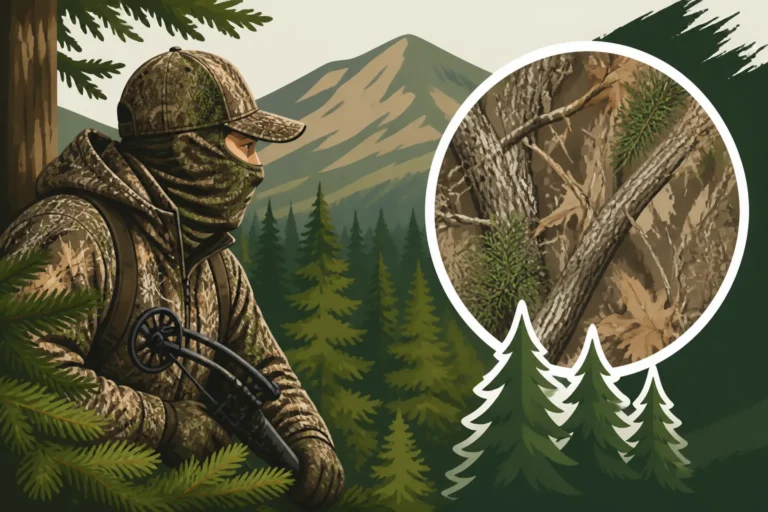
Equally important for hunters is quietness. A stiff, crinkly rain jacket can ruin a stalk. Manufacturers use various treatments and fabric weaves to reduce noise, such as brushed finishes or soft-shell laminates. Some brands, like Sitka and Kuiu, invest heavily in developing face fabrics that are both durable and whisper-quiet, specifically for the demanding needs of hunters. This outer layer is usually treated with a DWR coating. While the membrane handles the bulk of the waterproofing, a good DWR keeps the face fabric from "wetting out." When the DWR fails, the fabric absorbs water, making it heavier, colder, and potentially reducing the membrane's breathability as it struggles to push vapor through a saturated outer layer.
Seams and Zippers
You could have the most advanced waterproof membrane in the world, but if the seams aren't sealed, water will find its way in. Every stitch hole is a potential entry point for moisture. That's why fully taped seams are non-negotiable for truly waterproof rain gear. Manufacturers apply a waterproof tape over all the sewn seams on the inside of the garment, effectively creating a continuous, impenetrable barrier. Look for "fully taped seams" in the product description; "critically taped seams" means only the most exposed seams are sealed, which isn't enough for a proper White Mountain downpour.
Zippers are another common failure point. Standard zippers are notoriously leaky. High-quality waterproof rain gear will feature water-resistant zippers, often identified by brands like YKK AquaGuard. These zippers have a polyurethane coating that creates a much tighter seal, preventing water from seeping through the coil. While not 100% waterproof in all situations, they are vastly superior to standard zippers. Flaps or storm cuffs over zippers also add an extra layer of protection, particularly on main closures and pockets. Don't overlook these seemingly small details; they can make or break your comfort when the weather turns nasty.
Here's a quick comparison of common rain gear construction types:
| Construction Type | Description | Key Benefits | Best For |
|---|---|---|---|
| 2-Layer | Membrane laminated to the face fabric, with a separate mesh or fabric liner on the inside to protect the membrane. | More affordable, comfortable against the skin due to liner, good for general use. | Day hunts, less intense activity, casual wear. |
| 2.5-Layer | Membrane laminated to the face fabric, with a thin protective coating (often a printed pattern) on the inside instead of a full liner. | Lightweight, very packable, often more breathable than 2-layer, good value. | Backpacking, emergency layers, active hunting where weight/packability are key. |
| 3-Layer | Membrane is sandwiched and laminated between a durable face fabric and a tough inner backer fabric. All three layers are bonded together. | Most durable, best protection, typically highest waterproof/breathability ratings, often quieter face fabrics. | Extended backcountry trips, extreme weather, demanding physical hunts, Packing for a Nine-Day Moose Hunt. |
Key Features to Look For in Hunting Rain Gear
Choosing the right rain gear for a wet White Mountain hunt goes beyond just finding something labeled "waterproof." It's about how the garment functions in a dynamic hunting environment, allowing you to remain agile, comfortable, and effective even when the skies open up.
Fit and Layering
This might sound obvious, but the fit of your rain gear is paramount, especially when layering is involved. Your waterproof shell should be roomy enough to comfortably accommodate your base layers and an insulated mid-layer without feeling restrictive. If it's too tight, it will compress your insulation, reducing its effectiveness, and hinder your movement, making climbing over blowdowns or drawing your bow incredibly awkward. Conversely, if it's too baggy, it can catch on brush, create excess noise, and potentially allow wind and rain to sneak in.
Think about the movements you'll make while hunting. Can you raise your arms above your head without the cuffs pulling up to your elbows? Can you bend, crouch, or climb without feeling like you're wrestling your jacket? Pay attention to the sleeve length, torso length, and overall cut. Many hunting-specific brands design their rain gear with articulation in the elbows and shoulders to allow for a full range of motion. When you're Layering for New Hampshire's Cold Hunting Season, your outermost rain shell needs to seamlessly integrate with your entire clothing system to perform its job effectively.
Pockets, Zippers, and Hoods
These seemingly small details have a huge impact on the functionality of your rain gear in the field. Pockets, for instance, need to be accessible even when you're wearing a backpack with a hip belt. Chest pockets or high-mounted hand warmer pockets are often ideal. They also need to be waterproof, with sealed zippers, to protect your phone, calls, or other small essentials from getting soaked. Pit zips – zippers located under the armpits – are absolutely essential for regulating your temperature. When you're hiking uphill or during periods of high exertion, pit zips allow you to dump excess heat and moisture without having to remove your entire jacket, which would expose you to the rain.
The hood is another critical component. It should be fully adjustable to provide maximum protection without obstructing your vision or muffling sounds. Look for multiple adjustment points (around the face opening and at the back of the head) that allow you to cinch it down tightly in high winds and heavy rain, and ideally, allow it to move with your head so your peripheral vision isn't compromised when you turn to scan for game. A stiff brim also helps keep rain out of your eyes and off your binoculars.
Packability and Weight
When you're out chasing deer or turkey in the White Mountains, especially on longer hunts or when navigating varied terrain, every ounce in your pack matters. Rain gear, by its very nature, is often carried more than it's worn, meaning packability and weight are significant considerations. You need a shell that can compress down to a small, manageable size, easily stowing away in your backpack until the weather turns.
Lightweight does not necessarily mean flimsy. Modern advancements in fabric technology mean that many high-performance 2.5-layer and 3-layer rain shells offer excellent protection without a hefty weight penalty. However, there's always a trade-off. The most durable, feature-rich jackets will generally be heavier and bulkier than minimalist emergency shells. Your choice should reflect your hunting style and the typical conditions you expect. If you're on a multi-day backcountry trip, investing in a robust, yet still packable, 3-layer system is wise. For shorter, less exposed hunts, a lighter, more compact 2.5-layer option might suffice. Before hitting the White Mountain trails, a good resource like GoHunt can help you assess the terrain and potential weather patterns, informing your gear choices.
Rain Gear Care and Maintenance
Even the most expensive, high-tech rain gear won't perform optimally if it's not properly cared for. Neglecting your waterproof garments can lead to premature failure, leaving you wet and miserable when you least expect it. A little effort in maintenance goes a long way in extending the life and performance of your investment.
Washing and Re-proofing
Over time, dirt, body oils, and residues from sunscreen or insect repellent can clog the pores of your waterproof membrane and degrade the DWR coating on the face fabric. This causes the fabric to "wet out," meaning it absorbs water instead of shedding it, making the garment feel damp and reducing its breathability. Washing your rain gear periodically is crucial, but you can't just throw it in with your regular laundry detergent. Most conventional detergents contain surfactants and fabric softeners that can damage the membrane and strip the DWR.
Instead, use technical washes specifically designed for waterproof breathable fabrics, such as Nikwax Tech Wash or Granger's Performance Wash. Follow the garment's care instructions carefully. After washing, you might notice that water still isn't beading up as effectively. This means it's time to re-proof the DWR. You can restore the DWR by tumbling the garment in a dryer on low heat (if the care tag allows) or by applying a spray-on or wash-in DWR treatment like Nikwax TX.Direct or Granger's Performance Repel. This process revitalizes the water-repellent properties of the outer fabric, ensuring water beads off, allowing the membrane to breathe properly. Consistent re-proofing will keep you dry through many seasons of Hunting the December Archery Close or even Hunting the Rut in Early-to-Mid November.
Field Repairs and Emergency Fixes
Accidents happen. A sharp branch, a snag on barbed wire, or a stray spark from a campfire can put a hole in your expensive rain gear. While you can't perform a factory-level repair in the field, knowing a few emergency fixes can save your hunt. For small tears and punctures, adhesive patches like Tenacious Tape are lifesavers. These patches are specifically designed for outdoor gear, creating a strong, waterproof seal. Simply clean the area, cut the patch to size (rounding the corners helps prevent peeling), and apply it firmly. It's always a good idea to carry a small roll or a few pre-cut patches in your hunting pack.
For larger rips or if you don't have specialized patches, a piece of heavy-duty duct tape can provide a temporary seal. While not as long-lasting or aesthetically pleasing as Tenacious Tape, it will get you through the rest of your hunt and prevent further water ingress. Remember to apply it to a clean, dry surface as best you can. These quick fixes are not permanent solutions, but they'll keep you dry enough to finish your day or get back to camp without risking hypothermia.
Storage Tips
How you store your rain gear between hunts or seasons also impacts its longevity. Never store wet or damp rain gear. Always ensure it's completely dry before putting it away to prevent mildew growth, which can damage the fabric and membrane and leave an unpleasant odor. Hang jackets and pants in a cool, dry, well-ventilated area, avoiding direct sunlight for extended periods, as UV radiation can degrade fabrics.
Avoid compressing your rain gear tightly for long periods, especially if it's stored in a stuff sack. This can put undue stress on the membrane and DWR coating, potentially leading to premature wear or creasing that reduces performance. If you have a specific DWR treatment applied, check the product instructions for any special storage considerations. Proper storage, much like proper cleaning, is a small effort that pays big dividends in extending the life of your rain gear, ensuring it's ready to perform reliably season after season, whether you're stalking deer or Still-Hunting White Mountain National Forest Timber.
Disclaimer
This article is for general informational purposes only and does not constitute professional advice. Laws, prices and regulations vary by location and change over time. Consult a qualified professional for guidance on your specific situation.