Best Game Cart for Hauling Out a Moose
Hauling a moose out of the New Hampshire backcountry is one of the most physically demanding, yet rewarding, challenges a hunter can face. It's a task that can stretch well into the night, test your resolve, and leave you questioning your life choices, especially when you're miles deep in a swamp or halfway up a granite ridge. This guide is all about helping you conquer that incredible feat by choosing the absolute best game cart to transform that back-breaking pack-out into a manageable, albeit still strenuous, undertaking.
The Reality of a New Hampshire Moose Recovery
Let's be real. When you get that coveted New Hampshire moose tag, you dream of the hunt, the shot, and the incredible experience. What often gets overlooked in those daydreams is the sheer, undeniable reality of what happens after the moose is down. It's not like field dressing a whitetail deer and dragging it out by yourself. A moose is an entirely different beast, one that demands respect, planning, and the right gear to recover.
Why a Game Cart Becomes Essential for Moose
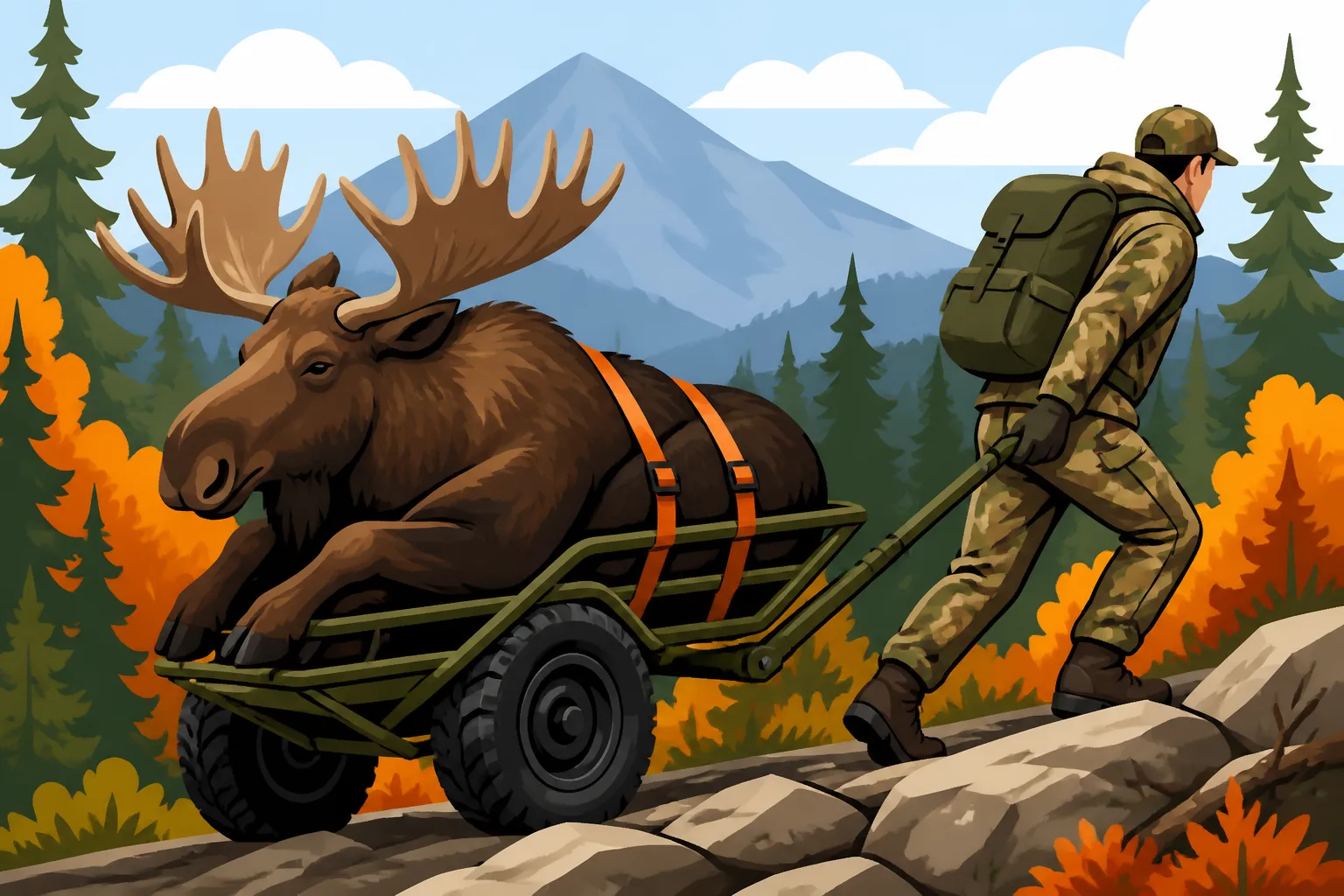
Imagine a creature that can weigh upwards of 800 to 1,200 pounds, sometimes even more. Now imagine trying to move that behemoth through dense alders, over rocky terrain, or across a soft, spongy bog. The truth is, a full-grown moose is too massive to drag whole, even with multiple people. Even breaking it down into quarters, each quarter can still weigh 150-300 pounds, not to mention the head, hide, and various other cuts. Your back, your knees, and your hunting partners will thank you for having a robust game cart designed for heavy loads and challenging terrain. Without one, you're looking at multiple, back-breaking trips, potentially extending a successful hunt into an exhausting, multi-day ordeal that could compromise the quality of your hard-earned meat. The physical toll on you and your hunting party is immense, and efficiency in the field becomes paramount, especially when facing dropping temperatures or a long hike out before dark.
The Limitations of Other Hauling Methods
When a moose hits the dirt, the first thought might be, "How do we get this out?" For deer, a simple drag rope often suffices, or maybe a small game cart. For moose, those methods fall woefully short. Dragging even a quartered moose for any significant distance, especially uphill or through thick brush, is an exercise in futility and extreme strain. You'll quickly shred the meat, destroy the hide, and wear yourself out before you've barely begun.
Backpacking is another common method, where the moose is quartered, deboned, and packed out in large frame packs. While this is often necessary for particularly rugged or remote locations where a cart simply cannot go, it's still an incredibly strenuous process. Each pack-load is immense, and you’ll still be making multiple trips. The amount of gear needed for a proper backpack extraction – large game bags, sturdy frame packs, knives, bone saws – adds to the weight you carry in. You might use mapping software like the GoHunt app to plan your route, but no app can lighten the load itself. A well-chosen game cart can significantly reduce the number of trips and the individual load weight, saving your energy for butchering and navigating the tricky New Hampshire landscape.
As for ATVs or other vehicles, while they are invaluable when permitted and practical, many moose hunting areas in New Hampshire are deep in wilderness or designated wildlife management areas where motorized vehicle access is strictly limited or entirely prohibited beyond established roads. You might get lucky and have a moose drop near a logging road, but more often than not, you're going to be a good distance from easy access. This is precisely where a high-quality game cart bridges the gap, allowing you to move heavy loads over rough terrain to the nearest accessible point. For more on the specifics of the hunt, check out Moose Hunting New Hampshire's North Country.
Key Features to Look for in a Moose Game Cart
Choosing the right game cart for a New Hampshire moose means looking beyond the basic deer carts you see at big box stores. This isn't about convenience; it's about necessity and capability in extreme conditions. You need something built like a tank, ready to withstand heavy loads and the relentless punishment of the wild.
Robust Frame and Weight Capacity
This is arguably the most critical factor. A moose is exceptionally heavy, and its individual parts are no joke. You need a cart with a frame constructed from heavy-gauge steel or, if you're looking to save some weight, aircraft-grade aluminum. Don't skimp here. The frame needs to handle the concentrated weight of a moose quarter (easily 150-250 pounds each) without bending, twisting, or breaking. Look for a stated weight capacity of at least 500-800 pounds, but mentally factor in the reality of uneven loading and dynamic forces as you push or pull over obstacles.
Inspect the welds and connection points. Are they solid? Are there gussets or reinforcements in high-stress areas? A flimsy frame will buckle under the pressure of a New Hampshire bull, leaving you stranded miles from the truck with an immovable load. While individual brands will have their own specifications, focus on durability and strength over lightweight portability if you’re primarily targeting moose. You might appreciate a lighter cart on the way in, but you’ll bless the sturdy one on the way out.
Wheel Type and Size for New Hampshire Terrain
The wheels are the engine of your game cart, and for New Hampshire's diverse and often unforgiving terrain, they need to be robust.
- Pneumatic (Air-Filled) Tires vs. Solid Tires: While solid tires are puncture-proof, they offer zero shock absorption, making for a jarring ride over rocks and roots. Pneumatic tires are generally preferred for moose carts because they absorb shock better, providing a smoother ride for your precious cargo and reducing strain on the cart and you. They also offer superior traction on loose or soft ground. The trade-off is the risk of a flat, so always carry a small tire repair kit or at least a patch.
- Large Diameter Wheels: This is non-negotiable for moose country. Large wheels (18-24 inches in diameter) are essential for rolling over logs, rocks, stumps, and navigating uneven terrain without getting hung up. Small wheels will constantly get stuck, forcing you to lift and drag, which defeats the purpose of the cart.
- Wide Tires: New Hampshire can be wet, especially in moose habitat. Bogs, muddy trails, and stream crossings are common. Wide tires (3-5 inches wide) distribute the weight more effectively, preventing the wheels from sinking too deep into soft mud or spongy ground. This "flotation" is critical for maintaining forward momentum when you're Hunting a New Hampshire North Country Moose Bog. Narrow tires will cut into the mud like a knife, turning your cart into an anchor.
Ergonomics and Maneuverability
Even the strongest cart is useless if it's a nightmare to operate.
- Handle Design: Look for comfortable, non-slip grips. Adjustable handles are a huge plus, allowing hunters of different heights to find a comfortable pushing or pulling position. This is especially important when you're working with a partner. Some carts feature a "T-handle" or "U-handle" design that allows for different hand positions and leverage points.
- Balance: A well-designed cart balances the load over the axle, minimizing the weight you have to bear on the handles. When pushing or pulling hundreds of pounds, even a slight imbalance can significantly increase perceived weight and fatigue. Look for designs where the cargo bed is positioned directly over or slightly forward of the axle.
- Maneuverability in Tight Spaces: New Hampshire woods are often thick. While moose carts are inherently large, some designs offer better maneuverability. A narrower profile might seem counterintuitive for a moose, but if the wheels are large enough, it can help navigate between trees. For general use, a cart that can articulate or has a decent turning radius will save you frustration when working through dense timber or around boulders. While less common for moose, some specialized carts have a single-wheel design, which can be more maneuverable in extremely tight quarters but sacrifices stability and capacity.
Practical Considerations for Moose Cart Use
Beyond the physical features of the cart itself, there are practical aspects of using a game cart for a moose recovery that can make or break your success in the field. Ignoring these details can turn a promising plan into a desperate struggle.
Assembling and Disassembling in the Field
Moose hunting often involves long hikes to remote areas, so your game cart needs to be portable. Most heavy-duty carts are designed to break down for transport in your truck bed or even to be carried a short distance to the hunting zone.
Look for a cart that can be assembled quickly and easily, preferably with minimal or no tools. Fumbling with wrenches and small bolts in the dark, with cold fingers, after a successful hunt is the last thing you want. Quick-release pins or intuitive locking mechanisms are ideal. Consider the packed-down size and weight of the cart itself. While the primary goal is strength, a cart that's excessively heavy or cumbersome before you even load a moose on it can be a deterrent to bringing it along in the first place. Some hunters opt for a cart that’s light enough to strap to a backpack for the initial trek in, even if that means a slightly less robust frame. This balance is key and often depends on how far you anticipate having to carry the empty cart.
Loading and Securing a Moose
Getting hundreds of pounds of moose onto a cart in the field is a challenge in itself. It’s not just about brute strength; it’s about technique and leverage.
- Loading Strategy: Often, the easiest way is to position the cart as close as possible to the quartered moose. Some carts have a lower profile or a dropping tailgate feature that can make sliding heavy quarters on easier. If not, rolling or dragging heavy quarters onto a tilted cart, then slowly lowering it, is a common technique. This usually requires at least two people, if not three, to manage the weight effectively.
- Securing the Load: Once loaded, the meat needs to be secured tightly. High-quality ratchet straps are your best friend here. Don't rely on bungee cords or flimsy ropes. The load needs to be cinched down firmly to prevent shifting, especially when navigating uneven terrain. A shifting load can throw off the cart's balance, make it incredibly difficult to control, and potentially damage the meat or the cart itself. Think about how you’d strap down an ATV – that’s the level of security you need. Ensure the straps are long enough and that there are ample attachment points on the cart frame. Using game bags for the meat before loading them onto the cart will not only keep the meat clean but also make it easier to handle and secure.
Maintenance and Storage
A high-quality moose cart is an investment, and like any good hunting gear, it requires proper care to ensure it’s ready for your next adventure.
- Cleaning: After hauling out a moose, your cart will inevitably be covered in blood, mud, hair, and forest debris. Clean it thoroughly as soon as possible. A hose and stiff brush are usually sufficient. Pay special attention to the wheel axles, bearings, and any moving parts to prevent rust and ensure smooth operation.
- Inspection: Before storing, give the cart a thorough inspection. Check the tires for punctures, cracks, or excessive wear. Inspect the frame for any bends, cracks in welds, or loose bolts. Check all straps and buckles for fraying or damage. Addressing small issues proactively can prevent major problems in the middle of a remote extraction.
- Storage: Store your cart in a dry place, away from direct sunlight if possible, to prevent degradation of tires and painted surfaces. If you have pneumatic tires, periodically check their pressure, especially before a hunt. Properly maintained, a good moose game cart will serve you for many successful seasons.
Specific Situations and How Carts Perform
New Hampshire's diverse landscape means a single moose recovery can involve a variety of challenging conditions. Understanding how different cart features perform in these specific scenarios is crucial for selecting the right tool for the job.
Navigating Bogs and Wet Terrain
Anyone who has hunted the North Country knows the challenge of a beaver flowage or a soggy lowland bog. A successful moose hunt in these areas often means dealing with soft, yielding ground that can swallow boots, let alone a loaded game cart.
In these conditions, the criticality of large-diameter, wide pneumatic tires cannot be overstated. Wide tires provide the necessary flotation to prevent the cart from sinking deep into the mud and getting bogged down. The larger diameter helps clear submerged logs or uneven terrain you can't always see. Even with the best cart, bogs are tough, and you'll likely need to work with a partner, one pulling and one pushing, to maintain momentum. Sometimes, even laying down logs or branches to create a temporary path is necessary, using your GoHunt app to find the firmest possible ground. For more insights into these challenging environments, consider Hunting a Beaver Flowage Edge.
Steep Grades and Rocky Paths
New Hampshire isn't called the Granite State for nothing. Many of our hunting areas, particularly in the White Mountains or the Monadnock Region, involve steep climbs and descents over rocky, uneven terrain. Hauling a heavy moose quarter uphill on a cart is a monumental effort.
Here, the cart's overall balance and sturdy handle design become paramount. A cart that distributes the weight well over the axle will make uphill climbs more manageable, though still grueling. Good traction from your pneumatic tires is important, but your own footwear and footing are equally critical. For downhill sections, control is key. Some heavy-duty carts might have hand brakes, but most rely on the hunter's strength to slow the descent. If you're tackling incredibly steep pitches, it might be safer to partially unload the cart or use a rope to help control its speed and prevent a runaway load. Maneuvering around large boulders and exposed roots on a steep path with a heavy cart demands patience and teamwork. Hunting a Granite Ridge Saddle is a prime example of where these challenges come to life.
Dense Timber and Blowdowns
New Hampshire's woods are often thick, especially in regeneration areas or mature timber stands with a lot of undergrowth. Blowdowns from past storms can create an impassable maze of tangled trunks and branches.
A game cart, by its nature, is wider than a single person. This can be a significant hindrance when trying to squeeze through tight timber or around dense blowdowns. A cart with a relatively narrow profile (while still maintaining a wide stance for stability) can be advantageous. Durable wheels and a robust frame are essential to withstand impacts from trees and rocks. Sometimes, even with a cart, you might have to temporarily break down the moose into smaller, more manageable pieces to navigate a particularly dense section, then reassemble the load once you reach more open ground. It's a constant calculation of effort versus efficiency, always keeping the integrity of your meat in mind.
Here's a look at some characteristics to consider when sizing up a heavy-duty game cart for moose:
| Feature | Ideal for Moose Recovery | Less Ideal for Moose Recovery |
|---|---|---|
| Frame Material | Heavy-gauge Steel or Aircraft-grade Aluminum | Thin-walled steel or lightweight plastic |
| Weight Capacity | 500-800+ lbs | 300 lbs or less |
| Wheel Type | Large Diameter (18-24"), Wide (3-5") Pneumatic Tires | Small diameter, narrow solid tires |
| Maneuverability | Good balance, adjustable handles, manageable width | Imbalanced, fixed low handles, overly wide/clunky |
| Terrain Suitability | Bogs, rocks, steep grades, dense timber | Smooth trails, open fields, gentle slopes |
| Foldability | Easily collapsible, tool-less assembly preferred | Permanent fixed frame, requires tools, complex breakdown |
| Attachments | Multiple tie-down points, strong straps included | Few tie-down points, flimsy ropes |
When you're out there tackling the challenge of moose hunting, having the right gear is critical. Whether you're planning your route with GoHunt or scouting potential travel lanes, remembering the demands of extraction will save you immense hardship. Knowing that you have a reliable cart, built for the rigors of the New Hampshire wilderness, will give you peace of mind and allow you to focus on the truly special experience of your Packing Out a New Hampshire Moose once you've made the shot. It's an unforgettable adventure, and being prepared means enjoying the harvest as much as the hunt itself.
Disclaimer
This article is for general informational purposes only and does not constitute professional advice. Laws, prices and regulations vary by location and change over time. Consult a qualified professional for guidance on your specific situation.