Calling a Bull Moose in Late October
Trying to call a bull moose in late October can feel like you're speaking a foreign language into an empty forest. The intensity of the early rut has passed, and those boisterous bulls seem to vanish, leaving many hunters frustrated and wondering if their calls are even being heard. This comprehensive guide will equip you with the specific knowledge and strategies to effectively call a bull moose during this challenging, yet rewarding, late-season window in New Hampshire.
Understanding Late October Moose Behavior and Receptiveness
As the vibrant fall foliage begins to fade and the crisp chill of late October truly settles into the New Hampshire woods, moose behavior shifts significantly from the chaotic peak of the rut. You're no longer dealing with a bull driven purely by the urge to breed, but rather a more cautious, often solitary animal. Understanding these changes is critical to adjusting your calling strategy.
The Post-Rut Shift in Bull Activity
The primary breeding period for moose, typically in late September and early October, has wound down by the end of October. Those aggressive, bellowing bulls that would charge into a challenging grunt are now far less common. They've either successfully bred, or they've been exhausted by the effort. Their testosterone levels are dropping, and their focus quickly turns to recovery and preparing for the long, cold winter ahead. This means they are less likely to respond to aggressive challenges and more likely to be wary. However, this doesn't mean they're entirely unresponsive; it just means you need a more nuanced approach.
What you might encounter in late October is residual breeding activity or a "secondary rut." This occurs when cows that weren't bred during the primary rut come back into estrus. While less intense, it can still make a bull receptive to a cow call. Additionally, some younger, less dominant bulls who were intimidated during the peak rut might now be more willing to investigate. They're still looking for companionship, even if it's not with the same urgency. The key is to convey a non-threatening presence or the allure of a lone cow.
Feeding Patterns and Habitat Preferences
By late October, moose are on a mission to put on as much weight as possible before winter truly sets in. Their diet shifts to include more woody browse, like balsam fir, aspen, and willow, as deciduous leaves drop. This means they'll be spending a lot of time in areas with abundant feed. Think regenerating clear-cuts, young timber stands, and the edges of swamps or bogs where browse is plentiful. They're less likely to be wandering aimlessly and more likely to be found in specific feeding zones.
When scouting for these late-season bulls, look for areas with fresh sign: heavily browsed saplings, rubs on smaller trees (indicating a bull, even if not rut-crazed), and large tracks. These feeding areas become prime locations to set up a calling sequence. If you can locate a specific feeding area, you'll have a much better chance of calling a bull that's interested in food and potentially a lingering cow, rather than just blind calling into dense timber. Tools like the GoHunt app can be incredibly helpful for identifying potential browse areas and mapping out strategic access points to these zones.
Essential Calling Techniques for Late-Season Bull Moose
Calling a bull moose in late October requires a shift in your vocal repertoire. Forget the loud, aggressive challenges of the peak rut. Now, it's all about subtlety, patience, and mimicking the sounds of a lost or receptive cow, or perhaps a less dominant bull.
The Melancholy Cow Call
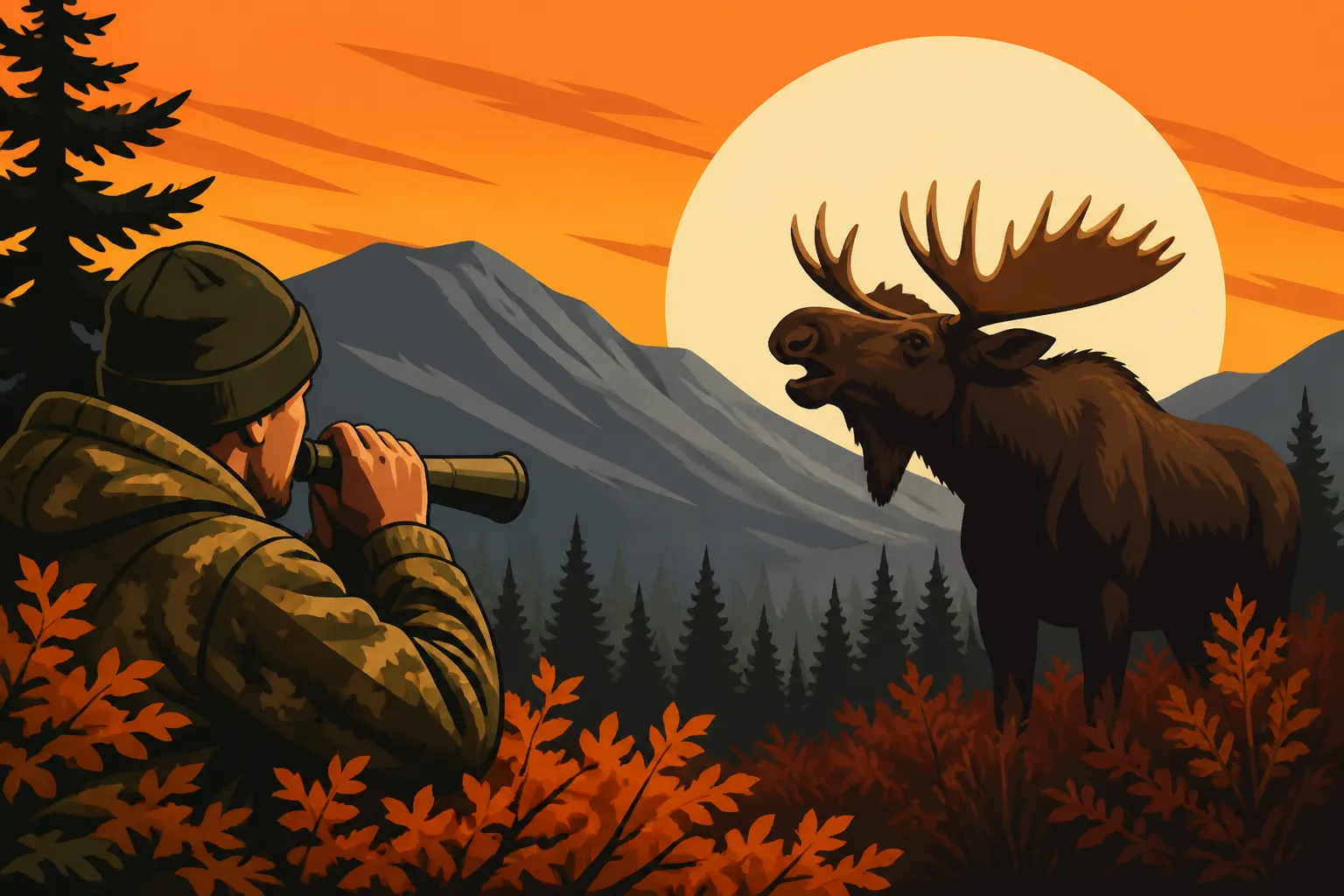
In late October, a lost or lonely cow call is often your best bet. Bulls are still interested in cows, especially if there's a chance of a secondary rut or if they're simply seeking companionship. The late-season cow call should be softer, more drawn out, and have a touch of melancholy to it. It's not a frantic, urgent call, but rather a long, drawn-out "Moooooaaaaannnn" that sounds like a cow searching for company.
Imagine a cow that's been separated from her calf or a small group, or perhaps one that’s still looking for a bull. The call should typically last 2-4 seconds, with a slight rise and fall in pitch, ending on a lower, softer note. You can achieve this with a variety of calls, including a birch bark megaphone, an open-reed call, or even by cupping your hands. The key is to practice the sound until it has that genuine, unhurried quality. Sometimes, just one or two of these softer calls, followed by a long period of silence, can pique a bull's curiosity without making him feel threatened.
Subtle Bull Grunts and Raking Sounds
While aggressive bull grunts are usually out, a softer, less dominant bull grunt can sometimes entice a late-season bull, especially if he perceives it as a lesser challenge or simply a social signal. These grunts should be shorter, deeper, and less frequent than those used during the peak rut. Think of it as a low, guttural "Uhh-uhh-uhh" that suggests a bull casually feeding or moving through the area, not one spoiling for a fight.
Combining these subtle grunts with natural sounds can be incredibly effective. Raking a small tree or bush with a paddle or even your call's cone mimics a bull rubbing his antlers. This sound suggests a bull is in the area but isn't necessarily challenging. Use a small branch or even a moose scapula (if you're lucky enough to have one!) to scrape against trees. The sound of antlers breaking branches can also be achieved by snapping small sticks. These auditory cues can paint a picture for a distant bull, making him believe another moose is simply going about its business, potentially drawing him in for a closer look.
The Power of Silence and Observation
Perhaps the most underrated calling technique, especially in late October, is silence. After a calling sequence, whether it's a series of cow calls or subtle grunts and raking, resist the urge to immediately call again. Give it time. Moose are incredibly curious animals, but they are also masters of stealth. A bull might circle downwind, approach silently, or simply take a long time to decide if he wants to investigate.
Table: Late-Season Moose Call Effectiveness
| Call Type | Sound Impression | Late October Effectiveness | Best Use Scenario | Notes |
|---|---|---|---|---|
| Lost Cow Call | Long, mournful "Moooooaaannnn" | High | Searching for companion/secondary rut | Soft, drawn-out, less urgent than peak rut. |
| Estrus Cow Call | Series of higher-pitched "Maaaaaah" sounds | Moderate | Trying to locate a receptive bull | Use sparingly, can attract bulls or cows. |
| Soft Bull Grunt | Low, guttural "Uhh-uhh-uhh" | Moderate | Casually feeding/moving through area | Non-threatening, social grunt. |
| Antler Raking | Scraping antlers on small trees, branch breaking | Moderate | Mimicking a bull browsing or rubbing | Adds realism to bull presence, suggests non-aggressive behavior. |
| Calf Bleat | High-pitched "Meeehh" | Low (occasional) | Distress call, can attract protective cow/bull | Use very sparingly, can attract predators too. |
Sit still, scan the area with your binoculars, and listen intently. Pay attention to subtle sounds like snapping twigs, rustling leaves, or even the faint smell of moose. A bull might not respond vocally but could be approaching cautiously. Waiting 15-30 minutes, or even longer in prime areas, before another calling sequence is not uncommon. Many successful late-season moose encounters happen because the hunter was patient enough to let the moose come to them on their terms.
Optimizing Your Set-Up for Late-Season Calling
A perfect calling sequence is only as good as your set-up. In late October, moose are often more cautious, meaning your position, cover, and understanding of the wind are paramount.
Wind Direction is Non-Negotiable
This is perhaps the most critical factor in any moose hunt, but especially in late October when bulls are more cautious. A moose's sense of smell is legendary, and even the faintest whiff of human scent will send a bull running in the opposite direction, often without you ever knowing he was there. You absolutely must position yourself downwind of where you expect the moose to come from.
Before you even start calling, take the time to evaluate the wind. Use a wind checker or a piece of string to constantly monitor its direction. If the wind shifts, you may need to reposition. This might mean making a wide loop to get to a different vantage point or finding new cover. Never compromise on wind direction, even if it means sacrificing what seems like a perfect visual set-up. A moose will forgive a bad call, but rarely a bad scent. For those long days in the woods, especially when Hunting the December Archery Close, always prioritize wind.
Utilizing Terrain and Cover Effectively
New Hampshire's diverse terrain, from dense bogs to rolling hardwood hills, offers plenty of opportunities for strategic set-ups. When calling, choose a spot that gives you good visibility while simultaneously providing ample cover to conceal your movements. A natural blind, such as a thick stand of fir trees or a cluster of blowdowns, can be ideal. You want to be able to see a moose approaching from a distance, but not be easily seen yourself.
Consider the acoustics of your chosen location. Calling from slightly elevated ground can help your sound carry further, but be mindful that it also makes you more visible. Conversely, calling from a low-lying area, like the edge of a beaver flowage or a dense swamp, might conceal you better, but your calls might not travel as far. Often, a good compromise is to set up on a ridge or knoll overlooking a feeding area or a travel corridor, with thick cover immediately behind you. This allows your calls to project while providing a quick escape route or concealment if a bull approaches too quickly. You can often find great areas for Hunting a Ridge-Top Saddle for Rutting Bucks which will translate well to moose.
Patience is a Virtue
Late-season moose calling often demands extreme patience. Unlike the peak rut where bulls might charge in, late October bulls might approach very slowly, stopping frequently to listen, look, and smell. They might take 20 minutes to travel 100 yards. This is where many hunters make the mistake of calling too soon or moving too quickly. After a calling sequence, settle in for a long wait. Sometimes, a bull will silently approach your location, appearing as if out of nowhere.
If you don't get an immediate response, don't pack up. Instead, try a different sequence, or simply wait longer. A single, soft cow call followed by 30-45 minutes of silence can be more effective than a rapid-fire series of calls. It implies confidence and a non-threatening presence. Remember, these animals are huge and powerful, but they are also incredibly wary. Allowing them to feel safe and curious enough to investigate on their own terms is the secret sauce to success in late October.
Essential Gear and Scouting for Success
You wouldn't head out for a Moose Hunting New Hampshire's North Country trip without the right gear and a solid plan, and late-season calling is no different. A thoughtful combination of equipment and pre-hunt scouting can significantly increase your odds.
Choosing the Right Calls and Optics
For late-season moose calling, you'll want versatile calls that can produce subtle sounds. A good quality birch bark megaphone is a classic for a reason; its natural resonance projects sound incredibly well and allows for a wide range of cow and bull sounds. Open-reed calls are also excellent, offering hands-free operation and precise control over tone and volume. Consider a mouth diaphragm call as well, which can create very soft, intimate cow sounds. Having a variety allows you to adapt to different scenarios.
Optics are non-negotiable. High-quality binoculars (10×42 or 10×50 are popular choices) are essential for scanning dense cover, picking up subtle movements, and identifying a bull at a distance before he identifies you. In the low light of late October mornings and evenings, good light-gathering capabilities are paramount. A rangefinder is also extremely useful, not just for shot placement but also for measuring distances to potential moose habitat or identifying reference points during your wait. When you're Glassing a Bog for a Bull Moose, quality optics truly make a difference.
Pre-Season Scouting and Digital Mapping
Your homework before the season starts is just as important as your in-the-field calling. Pre-season scouting, even without a call in hand, helps you identify prime moose habitat. Look for areas with abundant browse, signs of historical moose activity (old rubs, droppings, trails), and proximity to water sources. Identifying potential moose bedding areas and travel corridors will give you a much better starting point.
Digital mapping apps, such as GoHunt, are invaluable tools for this. You can use satellite imagery to pinpoint clear-cuts, thick softwood stands, and water features like ponds and beaver flowages that moose frequent. GoHunt also allows you to mark potential calling locations, egress routes, and even wind direction predictions. This kind of detailed planning, especially for something as intensive as Packing for a Nine-Day Moose Hunt, can save you countless hours of wandering aimlessly and greatly improve your chances of setting up in an area where a bull is likely to be. Remember to scout not just for fresh sign, but also for areas that offer natural advantages for calling, like good visibility combined with cover.
Avoiding Common Mistakes in Late October Moose Calling
Even experienced hunters can make mistakes, and when chasing a wary late-season bull moose, those mistakes can cost you dearly. Being aware of these pitfalls can help you fine-tune your approach.
Overcalling and Impatience
One of the most common errors in late-season moose calling is simply calling too much or not waiting long enough for a response. During the peak rut, aggressive bulls might respond quickly and vocally. In late October, a bull is far more cautious. If you hit him with a series of loud, frantic calls, he might perceive it as unnatural, or worse, as a threat. Instead of drawing him in, you could be pushing him further away.
The solution is to embrace patience and subtlety. After an initial series of soft cow calls and perhaps some subtle raking, give the woods time to respond. Wait 15, 30, even 45 minutes without making another sound. Many successful hunters describe moose appearing silently, having taken their time to circle downwind and investigate. If you're constantly calling or fidgeting, you're disrupting this natural investigative process. Think of it as a chess match – each move must be deliberate and well-considered. This is especially true when you're doing something like Hunting a Beaver Flowage Edge, where they might be bedded nearby and easily spooked.
Ignoring Wind and Human Scent
We've touched on it already, but it bears repeating: ignoring the wind is the single biggest determinant of failure when calling moose. It doesn't matter how perfect your calls are, how realistic your raking sounds, or how pristine your set-up is; if a bull smells you, the hunt is over before it even began. Moose can detect human scent from incredible distances, and their response is almost always immediate departure.
Always approach your calling location from downwind. Once you're set up, constantly monitor the wind direction, and be prepared to adjust your position if it shifts. This might mean moving to a new vantage point or even abandoning a spot if the wind becomes unfavorable. Scent control measures, like specialized detergents for hunting clothes and scent-eliminating sprays, can help, but they are never a substitute for playing the wind correctly. Never take chances with scent, especially when the odds are already a bit tougher in late October.
Calling in Suboptimal Habitat
You can be the world's best moose caller, but if you're calling into a vast, empty forest with no moose present, you're simply practicing your technique. Many hunters make the mistake of blind calling in areas that don't hold moose, especially later in the season when animals are more concentrated in specific feeding and bedding areas.
This is where your pre-season scouting and digital mapping truly pay off. Focus your efforts on areas known to have high moose density or those with fresh sign indicating recent activity. Look for the browse-rich zones, the edges of bogs, clear-cuts with regenerating growth, or dense softwood pockets where moose will bed down. If you're not finding fresh sign, don't waste valuable hunting time calling in that spot. Move to an area where you know moose are likely to be. Your knowledge of New Hampshire Moose Density by WMU can also guide your initial scouting efforts, helping you narrow down your search to more productive areas.
Field Ethics and Respect for the Game
Hunting moose in New Hampshire is a privilege, a once-in-a-lifetime experience for many. It's crucial to approach every hunt with the utmost respect for the animal, the land, and fellow hunters.
Ethical Shot Placement and Recovery
When a bull moose finally responds to your calls and presents an opportunity, ethical shot placement is paramount. Moose are large, tough animals, and a poorly placed shot can lead to a long, arduous tracking job, or worse, a lost animal. Always wait for a clear, broadside shot to the vital organs (lungs/heart). Avoid rushing the shot, even if the moose is close. If the shot isn't perfect, it's better to let the animal walk away and perhaps call him in again another day, than to risk wounding it.
After the shot, give the moose time. Even if he looks like he's down, approach cautiously and be ready for a follow-up shot. Once the animal is clearly deceased, take a moment to appreciate the incredible animal and the successful hunt. Remember that New Hampshire has specific regulations about registering a deer and other big game, including moose. You can often register a moose online, but be aware of situations like Registering a New Hampshire Deer In Person During the Blackout Days for other species, which may give you an idea of alternative methods if online systems are down.
Leaving No Trace and Respecting the Land
Moose often inhabit remote, wild areas of New Hampshire. It's our responsibility as hunters to leave these places as we found them, or better. Pack out everything you pack in, including spent shell casings, food wrappers, and any other trash. If you're using flagging tape for tracking or marking, remove it after the hunt.
Respect private property boundaries and public land regulations. If you're hunting near developed areas, be extra mindful of noise and safety. By demonstrating responsible and ethical behavior, we ensure that hunting opportunities for moose and other game continue for future generations. Knowing about specific regulations, like those for New Hampshire Hunter Education Requirements, is part of being a responsible hunter and ensuring the future of our sport.
Disclaimer
Hunting is an inherently dangerous activity. Always prioritize safety, understand and follow all New Hampshire Fish and Game laws and regulations, and respect the land and wildlife. This guide provides informational content and should not be considered a substitute for professional instruction or direct experience. Always check the current year's New Hampshire Fish and Game Digest for the most up-to-date rules and season dates.