Best Call for a New Hampshire Fall Flock
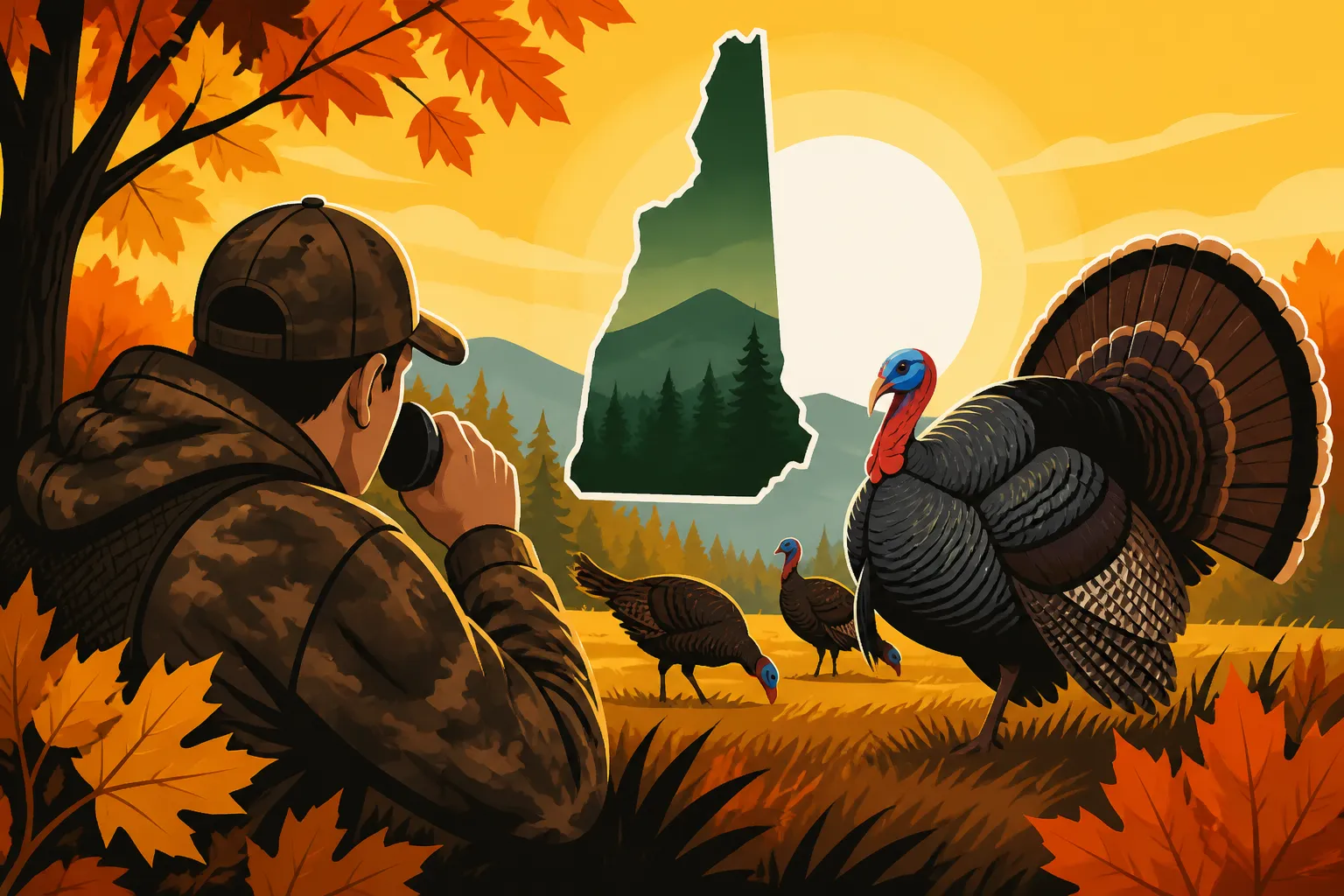
The crisp air of a New Hampshire autumn brings a different kind of challenge for turkey hunters. Unlike the loud, boisterous spring gobblers, fall flocks are often focused on feeding and survival, making them far more wary and a real puzzle to figure out. If you've ever found yourself struggling to get a response from a silent fall flock, or felt like your spring calling techniques just aren't cutting it, you're not alone. This guide will walk you through the nuances of fall turkey behavior and help you pick and master the best calls and strategies to bring those elusive birds within range during New Hampshire's unique fall turkey season.
The Unique Challenges of a New Hampshire Fall Flock
Hunting fall turkeys in the Granite State is a world away from the spring's thunderous gobbling. Many hunters who find success in May can feel completely lost come October or November, and it’s not hard to see why. The birds' priorities have shifted dramatically, and so must our approach if we want to fill a tag.
Why Fall Turkeys Are Different From Spring Birds
In spring, the game is all about breeding. Gobblers are strutting, vocalizing, and actively seeking hens. They're driven by instinct to reproduce, making them vulnerable to calls that mimic a receptive hen. Fall, however, is about survival and sustenance. Flocks, often made up of a lead hen and her brood, are focused on feeding, establishing pecking orders, and avoiding predators. They move as a cohesive unit, and their vocalizations are primarily for communication within that unit, or for re-grouping if they get scattered. You won't hear much gobbling, if any, and a lone hen yelp might be met with silence or suspicion rather than a curious approach. This fundamental shift requires a completely different mindset and calling strategy.
It's easy to get frustrated when the aggressive calling that worked so well in the spring yields nothing but empty woods in the fall. The mistake many hunters make is treating fall turkeys like spring turkeys. But imagine a mother hen with her brood – her main goal isn't to find a mate, it's to keep her family together, feed them, and protect them. Her calls reflect that. She's not interested in a lone, lovelorn gobbler call. She wants to hear her flock, or a sound that suggests a safe, food-rich area. Understanding this drives every successful fall turkey hunt.
Reading Fall Flock Dynamics
Fall turkey flocks in New Hampshire are typically larger than spring groups, often consisting of multiple hens and their poults (young turkeys hatched that year), sometimes joined by jakes (yearling males) or even mature gobblers. These groups can range from a handful of birds to dozens. Their movements are often dictated by food sources, which can vary widely across the state's diverse habitats, from oak ridges in the Monadnock Region to agricultural fields in the Merrimack Valley. A critical part of successful fall hunting is understanding that these birds are highly social and rely on each other for safety.
When you locate a flock, observe their behavior. Are they feeding calmly? Are they moving quickly through timber? Are they already scattered? This initial observation informs your calling strategy. If they're undisturbed and feeding, an aggressive approach might spook them. If they've been busted or scattered, that's where calling becomes immensely powerful. Often, a good scouting session with mapping tools like those offered by GoHunt can help you identify potential feeding areas or travel corridors where these flocks are likely to be found. Knowing their typical patterns before the season even begins gives you a huge advantage.
The Impact of Habitat and Food Sources
New Hampshire's varied landscape directly influences where fall turkeys will be found and, consequently, how you should call them. Acorn crops in hardwood forests, abandoned apple orchards, cornfields in agricultural areas, and even bugging grounds can all draw fall flocks. A bountiful mast crop year means birds might be more dispersed across larger areas, while a poor crop year can concentrate them in specific pockets. This impacts both scouting and calling. If birds are spread out, you might need to cover more ground and use louder, more far-reaching calls to locate them. If they're concentrated, softer, more subtle calls might be effective.
Consider the Fall Turkey Hunting New Hampshire's Eight WMUs for specific regional insights. For instance, in a WMU rich with oak flats, turkeys will be focused on acorns in early fall. As winter approaches, they might shift to standing corn or persistent mast sources. Your calling strategy should account for these shifts. A sharp lookout for tracks, droppings, and scratched leaf litter can tell you what they're eating and where they're spending their time. Scouting before New Hampshire Fall Turkey Season Dates helps immensely in understanding these food patterns.
Essential Calls for Fall Turkey Hunting in New Hampshire
Just like a chef needs the right knives for different tasks, a fall turkey hunter needs a versatile set of calls. While some calls excel at locating birds, others are perfect for the soft, reassuring clucks and purrs that draw scattered birds back together. Forget the loud, aggressive gobbler calls of spring; fall calling is about convincing birds they're rejoining their family.
The Versatility of a Box Call
The box call is a cornerstone for many turkey hunters, and its versatility shines in the fall. It's relatively easy to learn, can produce a wide range of realistic hen and poult vocalizations, and offers good volume control. In the fall, you'll be using it primarily for yelps, clucks, and kee-keess. The yelp, in particular, is crucial for simulating the contact calls of a lost bird or a hen trying to reassemble her flock.
To use a box call effectively for fall turkeys, focus on softer, more drawn-out yelps, mimicking a hen searching for her brood. You can also vary the pitch to sound like different birds within a flock. Practice the "kee-kee" run, which is the high-pitched whistle of a young turkey. This call is incredibly effective for young birds trying to locate their siblings or mother. The beauty of the box call is its tactile feedback; you can feel the rhythm and pressure needed to create different sounds. It's often my go-to when I'm trying to Breaking Up a Fall Turkey Flock and then call them back in.
Slate and Pot Calls for Realistic Sounds
Slate calls (also known as pot calls) are another fantastic tool for fall turkey hunting, offering excellent realism and nuanced sounds. They consist of a pot with a striking surface (slate, glass, aluminum, etc.) and a striker. By dragging or tapping the striker across the surface, you can produce a myriad of turkey sounds, from soft purrs to sharp cutts. For fall, their ability to create subtle, contented clucks and purrs is invaluable.
The purr is particularly effective when birds are close and you want to offer reassurance. Imagine a hen and her poults feeding calmly – they'll often purr softly to each other. Replicating this sound can bring wary birds the last few yards. The slate call also excels at the kee-kee run, especially when you need a little more control over the rhythm and tone than a box call might offer. Different strikers and surfaces will produce different tones, so experimenting with a few combinations can help you find the sound that works best for the specific birds you're targeting. These calls are especially useful in New Hampshire's often dense timber, where sound doesn't travel as far and realism is key.
Diaphragm Calls for Hands-Free Calling
For advanced turkey hunters, diaphragm (or mouth) calls are indispensable, especially for the hands-free operation they offer. Once mastered, a diaphragm call allows you to call while shouldered, aiming, or even during the final moments of a turkey's approach. In the fall, this can be a game-changer when you're trying to re-call scattered birds without giving away your position with hand movements.
With a diaphragm call, you can mimic almost any turkey vocalization – yelps, clucks, purrs, and the all-important kee-kee run. The kee-kee run is arguably one of the most effective fall calls, sounding like a lost or anxious young turkey. It's a high-pitched, almost whistling sound that often elicits a response from scattered poults or hens. Practice makes perfect with diaphragm calls; it takes time to develop the mouth shape and air pressure needed. Starting with a single-reed call can make the learning curve a bit smoother before moving to more complex double or triple reeds for a wider range of tones. The ability to subtly purr or cluck as a bird approaches, without moving a muscle, is a huge advantage.
Locator Calls for Pinpointing Flocks
While not strictly turkey vocalizations, locator calls are essential for finding fall flocks. Unlike spring gobblers that might respond to owl or crow calls, fall flocks are often less responsive to these traditional locators. However, a sharp hawk scream, a crow call, or even a coyote howl can sometimes get a shock gobble or a series of yelps from an otherwise silent flock, especially if they feel threatened or curious.
Another effective fall locator is the pileated woodpecker call. Its loud, distinct call can often trigger a response from a turkey without putting the birds on high alert. The key with any locator call in the fall is to use it sparingly and listen intently. Fall turkeys aren't as vocal as their spring counterparts, so a soft, distant yelp might be all you get. When scouting, especially in unfamiliar public lands, tools like those from GoHunt can help you identify likely roosting or feeding areas, narrowing down where you'll want to deploy your locator calls. Remember, sometimes the best locator call is just patiently listening as you move through good habitat.
Mastering Fall Calling Strategies for New Hampshire Turkeys
Knowing how to make the sounds is one thing; knowing when and why to make them is the art of fall turkey hunting. Fall strategies are often about disruption and then offering reassurance, playing on the birds' strong social bonds.
Breaking Up the Flock and Re-Gathering
This is the quintessential fall turkey tactic and often the most successful. The basic premise is to deliberately scatter a flock, then set up and call the birds back together. Turkeys, particularly young birds, have a strong instinct to reassemble once separated. This strategy leverages that inherent need for social cohesion. The ideal scenario is to rush a feeding flock, sending birds flying or running in every direction.
Once the flock is completely scattered, wait about 15-30 minutes for things to settle down. Then, position yourself at the break-up point or a nearby, concealed location. Start with soft, reassuring clucks and purrs, perhaps followed by the high-pitched kee-kee run of a lost poult. This is where your box, slate, or diaphragm calls really shine. Avoid loud, aggressive calling initially, as you don't want to spook birds that are still nervous. As time passes and responses become more frequent, you can increase the intensity of your yelps, mimicking multiple birds trying to find each other. The goal is to sound like the very flock they're desperate to rejoin. This technique, when done correctly, is incredibly effective, and understanding how to effectively Breaking Up a Fall Turkey Flock is paramount.
Simulating Hen and Poult Vocalizations
In the fall, your calls should primarily mimic the sounds of hens and young turkeys. Forget the gobble; it simply doesn't play the same role. Focus on a range of yelps, from the soft, contented assembly yelps of a lead hen to the more frantic, questioning yelps of a lost bird. The kee-kee run, as mentioned, is golden, especially when paired with soft clucks. This mimics a young turkey that’s just finding its voice or is slightly disoriented.
The key is to sound like multiple birds, not just one. Use different calls to achieve this: a soft yelp from a slate call, followed by a slightly different pitched yelp from a box call, punctuated by a kee-kee from a diaphragm. This creates the illusion of a scattered flock trying to re-group, making your setup incredibly enticing to real turkeys. If you've managed to break up a large flock, remember they'll have multiple family groups within them. Varying your calls to sound like both the "mother" hen and her "children" can draw in birds of all ages. This is far more important than any single call you can use.
Decoying and Setup for Fall Success
While not always necessary, using decoys in the fall can add a visual element that boosts confidence for wary birds, especially when you're calling. A simple setup of one or two hen or jake decoys can be enough. Avoid aggressive gobbler decoys, as they can sometimes intimidate a fall flock focused on internal group dynamics rather than breeding. A submissive jake or feeding hen posture usually works best.
Your setup location is critical. After scattering a flock, try to position yourself where you have good visibility and shooting lanes, but remain concealed. Use natural cover like blowdowns, dense pines, or rock outcroppings. Make sure your backdrop is solid to break up your outline. Remember that turkeys will often approach cautiously, circling or staying out of direct line of sight before committing. Setting up near a travel corridor, a logging road, or a field edge can be very productive. For specific tactics, consider Run-and-Gun Turkey Tactics on Public Land if you're working a lot of ground in the fall. Always be aware of your surroundings, and if hunting with a shotgun, be mindful of safe shooting zones.
Adapting to Pressure and Terrain
New Hampshire's hunting landscape can vary greatly, from the rugged White Mountains to more suburban fringes in the southern part of the state. Hunting pressure, especially on public lands, can make fall turkeys even warier. If birds have been called to and scattered multiple times, they become "call shy." In such cases, less is often more. Extremely subtle calling, almost whispering your yelps and purrs, can sometimes be the ticket. Sometimes, simply sitting quietly in a known feeding area and waiting for them to appear on their own is the best strategy.
Terrain also dictates your calling. In thick, brushy cover, calls won't carry as far, and turkeys might be more reluctant to travel long distances to re-group. Here, you'll need to be closer to the break-up point and focus on softer, more frequent calls. In more open woods or near fields, calls will carry further, and you might have more leeway in your setup distance. Always consider wind and thermals, especially in hilly terrain. Turkeys have excellent hearing and vision, and any unnatural sounds or movements will quickly send them packing. Utilizing resources like the New Hampshire Turkey Population Estimate can give you an idea of bird density in your chosen WMU, which can influence how you adapt your calling style.
| Call Type | Primary Fall Use | Best For | Learning Curve |
|---|---|---|---|
| Box Call | Lost hen yelps, kee-kees, clucks | Re-grouping scattered flocks, general calling | Easy |
| Slate/Pot Call | Soft purrs, contented clucks, realistic kee-kees | Close-range reassurance, subtle calling | Medium |
| Diaphragm Call | Hands-free calling, kee-kees, varied yelps | Advanced hunters, calling while aiming | Hard |
| Locator Calls | Crow, owl, hawk, pileated woodpecker | Locating distant flocks, shock gobbling | Easy |
Ultimately, becoming proficient at calling fall turkeys in New Hampshire is a journey of practice, observation, and adaptability. Don't be discouraged if your first few attempts aren't booming successes. Every outing is a chance to learn more about these fascinating birds and refine your approach. With the right calls and a deep understanding of their fall behavior, you'll be well on your way to enjoying some incredibly rewarding hunting experiences in the Granite State. Good luck out there, and remember to check New Hampshire Turkey Season Rules before you head afield!
Disclaimer
This article is for general informational purposes only and does not constitute professional advice. Laws, prices and regulations vary by location and change over time. Consult a qualified professional for guidance on your specific situation.