Best Goose Decoy Spread for a Northern Zone Field
Hunting geese in the open fields of New Hampshire's Northern Zone can be a real challenge. You scout for days, find that perfect corn stubble field where the geese are piling in, set up before dawn in the bitter cold, and then watch in frustration as flock after flock flares just out of range, never committing to your spread. It’s enough to make you wonder if you’re doing something wrong with those expensive decoys. This guide is here to help you dial in your goose decoy spreads specifically for those tough Northern Zone field conditions, giving you the best chance to draw those wary Canada geese right into your lap.
Understanding Northern Zone Goose Behavior in Fields
When you're out there in the sprawling fields of New Hampshire's North Country, trying to entice a flock of geese, it's crucial to first understand their perspective. Geese aren't just flying targets; they're intelligent, highly social birds with keen eyesight and an ingrained sense of self-preservation. In the Northern Zone, especially as the season progresses and hunting pressure mounts, they become incredibly wary of anything that looks or feels out of place. This means your decoy spread needs to tell a convincing story.
Why Field Hunting is Different in Northern New Hampshire
Hunting geese in a vast, open field in northern New Hampshire presents a unique set of challenges compared to hunting over water or in smaller, more sheltered areas. First off, there's a distinct lack of natural cover. Those big Canada geese, with their incredible eyesight, are scanning the landscape from hundreds of feet up. They can spot anything amiss – a rogue piece of blind material, a decoy out of place, or a glint of sun off something metallic – long before they're within shooting range.
The food sources also play a critical role here. Northern Zone geese are often hitting agricultural fields, especially after the corn has been cut, or finding waste grain in harvested oat or wheat fields. They're looking for sustenance, especially as the temperatures drop. Their behavior in these feeding grounds is typically relaxed, almost lazy, as they peck away at scattered kernels or grass. Your spread needs to emulate this natural, unhurried feeding behavior. Any hint of unnatural crowding or an "ambush" setup will send them packing. The relentless cold that can sweep through areas like Pittsburg or the Great North Woods also pushes them to feed efficiently. New Hampshire Northern Zone Waterfowl Dates can bring some truly brutal conditions, and geese are acutely aware of energy conservation.
Reading Goose Flight Patterns and Landing Zones
Successful field hunting hinges on your ability to predict how geese will approach your spread and where they'll want to land. Wind direction is your absolute best friend here. Geese, like all waterfowl, prefer to land and take off into the wind. This is a non-negotiable aspect of their biology, offering them lift and control. Therefore, your decoy spread must be positioned so that the "landing zone" – the open area where you want them to commit – is directly into the prevailing wind, relative to your blind.
Observe the flight path of geese as they enter the field before you even set up. Are they typically approaching from a certain tree line, river bend, or higher elevation? This gives you clues on how they'll work the field. They'll often make several passes, circling, checking out the scene below before deciding to commit. During these passes, they're scrutinizing your spread. Are the decoys facing realistically? Is there enough open space? Does the overall picture look like a safe place for a weary traveler to touch down and feed? When geese are heavily pressured, they'll circle wider and higher, making a decision at the last possible moment. Your job is to make that decision an easy "yes." Using a tool like GoHunt can help you visualize these flight paths over aerial maps and plan your approach effectively before you even step foot in the field.
Essential Decoy Types and Their Role in Your Spread
Alright, let's talk about the tools of the trade: your decoys. Not all goose decoys are created equal, and knowing when and how to use each type can dramatically improve your success. It's not just about throwing a bunch of plastic birds out there; it's about building a scene.
Full-Body Decoys, Shells, and Silhouettes
The realism of your spread starts with the decoys themselves. Each type has its pros and cons, and often, a mix is the most effective strategy for the discerning Northern Zone goose.
-
Full-Body Decoys: These are the kings of realism. They stand on stakes, mimicking the exact shape, size, and often the posture of real geese. When viewed from above, they are incredibly convincing. The downside? They're bulky, heavy, and expensive. Transporting a large spread of full-bodies can be a workout, especially if you're hiking into a remote field. However, their realism is unmatched, especially on bright, clear days when geese have excellent visibility. They cast natural shadows, adding to the three-dimensional effect. For hunting particularly wary birds or in high-pressure situations, a core group of full-bodies can make all the difference.
-
Shell Decoys: These are essentially the top half of a goose, designed to sit on the ground or on small stakes. They offer a good balance between realism and portability. While not as lifelike as full-bodies from all angles, they're much easier to carry and deploy in larger numbers. Many hunters will use shells to bulk up their spread, creating the illusion of more birds. They're great for replicating feeding geese, as they sit low to the ground. If you're building a massive spread to draw attention from afar, shells are an excellent way to add volume without breaking your back or your bank account.
-
Silhouette Decoys: These are flat, two-dimensional cutouts of geese, usually made of corrugated plastic or aluminum. They are incredibly lightweight, portable, and can be deployed rapidly in huge numbers. Their major advantage is volume and ease of transport. You can carry dozens of silhouettes in a small bag. When positioned correctly, especially into the sun, they can be surprisingly effective, giving the appearance of a large flock. However, their two-dimensional nature means they can disappear when viewed from certain angles, and they lack the full realism of other decoys. They excel at drawing distant birds' attention and are often used on the fringes of a full-body or shell spread to extend its visual footprint.
Here's a quick comparison:
| Decoy Type | Realism | Portability | Setup Speed | Cost (per decoy) | Best Use Case |
|---|---|---|---|---|---|
| Full-Body | Excellent | Low | Moderate | Higher | Core of spread, wary birds, sunny days |
| Shell | Good | Medium | Fast | Moderate | Adding bulk, feeding geese, varied conditions |
| Silhouette | Fair | High | Very Fast | Lower | Large numbers, distant visibility, quick setups |
Motion Decoys and Flaggers
Movement is absolutely critical, especially on those still, windless days when your static spread looks dead. Real geese are rarely completely still; they're constantly moving their heads, flapping their wings, or interacting with each other. Incorporating motion can breathe life into your spread and make it irresistible to passing birds.
-
Motion Decoys: These can range from simple jerk-cord systems that cause a decoy to swim or "feed" on the ground, to battery-operated flapping wing decoys (like a motorized flying goose). While motorized decoys can be incredibly effective, always double-check current regulations, as some areas have restrictions on battery-powered devices for migratory birds. Simple jerk-cord systems are often perfectly legal and allow you to impart realistic movement to one or more decoys with a tug of a line from your blind. A feeding goose, suddenly raising its head to look around, can trigger a natural response in incoming birds.
-
Flaggers: A flagger is essentially a goose wing or silhouette on a stick, designed to be manually waved from your blind. This is one of the most underutilized and effective tools in a goose hunter's arsenal. A flagger perfectly mimics the landing motion or wing-stretch of a real goose. When you spot a distant flock, a few well-timed flags can draw their attention and encourage them to investigate. As they get closer, a subtle flag can guide them into the landing zone. The key is subtlety and realism; don't just wildly wave it around. Watch real geese, and try to mimic their natural movements. A flagger, especially when used in conjunction with a well-placed decoy spread, can be the final piece of the puzzle that convinces a hesitant flock to commit. It's a fantastic way to introduce movement without relying on batteries or complicated setups, and it's always legal. You can also use flaggers to simulate landing geese in your open "kill hole."
Mastering the Classic Decoy Spreads for Fields
Now that we understand the types of decoys and why movement matters, let's get into the nitty-gritty of actual decoy spreads. There are a few tried-and-true configurations that consistently bring geese into range, especially in those wide-open New Hampshire fields. The goal is always to create a natural-looking landing strip and make the geese feel safe as they approach.
The "J" or "U" Spread: The Feeding Flock
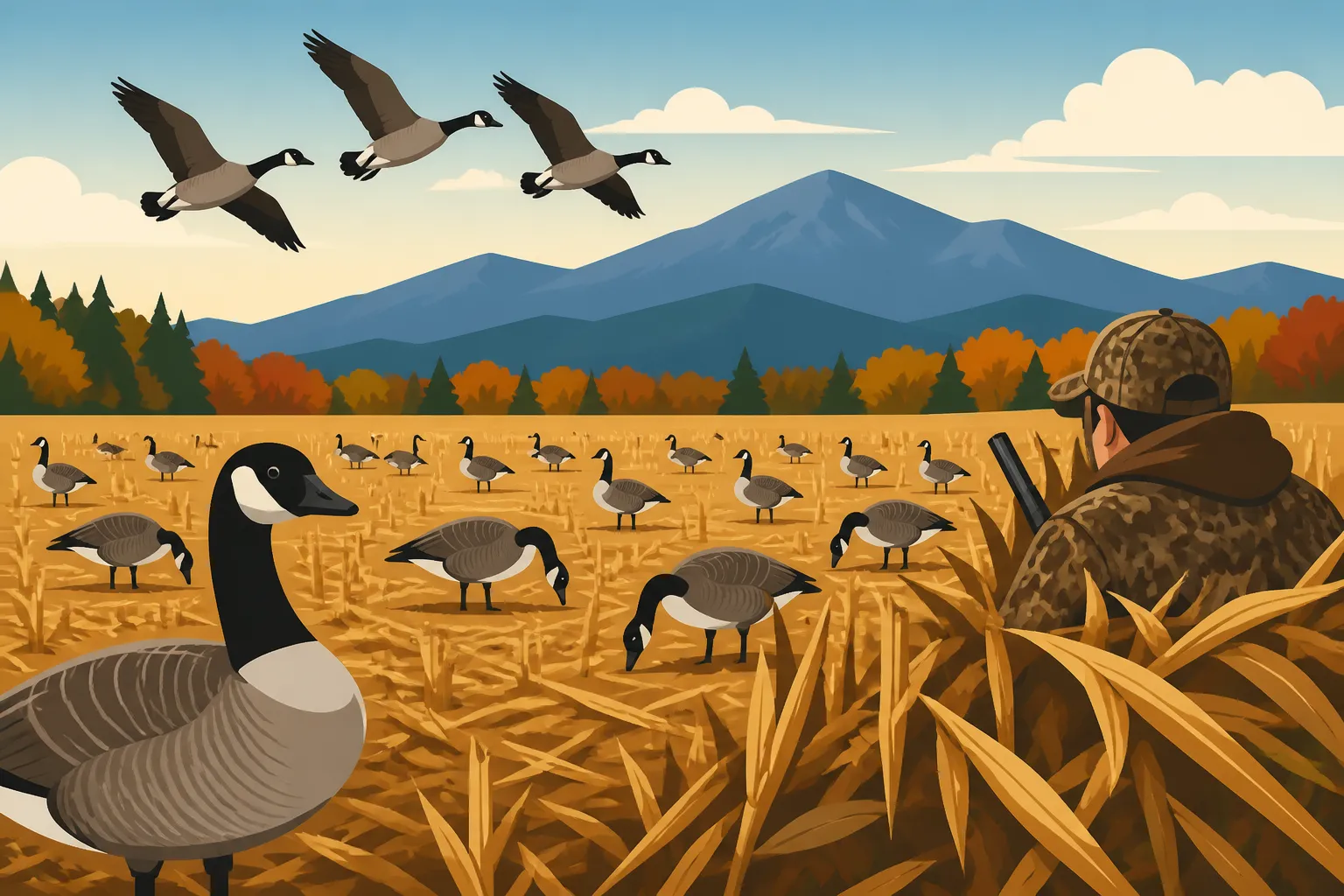
The "J" or "U" spread is perhaps the most classic and widely used field spread for Canada geese. It's designed to mimic a feeding flock with a natural opening that encourages birds to land right in front of your blind.
To set it up:
- Identify Your Blind Location: This is your anchor point. Your blind should be at the "hook" of the J or the bottom of the U, always downwind of your main spread.
- Determine Wind Direction: Geese will land into the wind. Your landing zone needs to be open to the wind, directly in front of your blind.
- Form the Body of the "J": Start deploying decoys (a mix of full-bodies, shells, and silhouettes works great) in a long, somewhat loose line that extends upwind and then curves back towards your blind, forming the main body of the "J" or one side of the "U." These decoys should primarily be in feeding or relaxed postures, facing generally into the wind or quartering into it.
- Create the "Hook" or "Arm": On the other side of your landing zone, place a shorter arm of decoys, also facing into the wind. This creates the "cup" or "hook" of the J.
- The Landing Zone: The crucial part is the open space directly in front of your blind, between the two arms of decoys. This is your "kill hole." Geese, seeing a large, relaxed flock with a clear, inviting space, will naturally want to land there. Keep this zone completely free of decoys and as clear of obstructions as possible.
The beauty of the J or U spread is that it funnels birds right where you want them. As geese approach, they see the natural void and feel safe descending into it. Their final approach will put them directly in front of your blind, typically within 20-30 yards. Remember that even on relatively calm days, geese will still have a preferred landing direction, so pay close attention to any subtle air movement or drift. Setting Up on a Connecticut River Field Edge also shares insights into how geese use open areas.
The "X" or "V" Spread: Guiding the Approach
While the J or U spread focuses on a frontal landing, the "X" or "V" spread can be excellent for guiding birds along a preferred approach, especially in fields where crosswinds might be a factor or if you have multiple blinds spread out.
To set it up:
- Define Your Target Zone: This spread works well when you want geese to land at the "point" of the V or the "intersection" of the X.
- Establish Arms: Create two distinct lines of decoys that converge at your desired landing zone, forming a V-shape. For an X, you'd have four lines converging. These lines don't need to be perfectly straight; natural, meandering lines are often more effective.
- Place Blinds: Your blinds would typically be positioned at the ends of these arms, or slightly off to the side, looking towards the "V" or "X" intersection. This allows you to have geese landing in the middle, or flying directly between the arms.
- Decoy Spacing: In this spread, consider slightly tighter groupings along the arms, with an emphasis on feeding and sentry (heads-up) positions. The sentry decoys, with their heads up, add to the illusion of a vigilant flock, which makes the incoming birds feel secure.
The X or V spread excels at giving geese a clear visual corridor to follow. If you have a predominant crosswind, you can angle the V so that the geese are landing into the wind as they approach the intersection. This spread can also be effective when you're targeting a larger number of birds, as it can accommodate more decoys and potentially more landing options. Think about using this when you're really trying to draw a bead on multiple birds in a bigger flight.
The Family Group Cluster: Natural and Intimate
Sometimes, less is more, especially if you're hunting smaller flocks or dealing with exceptionally wary birds that might be spooked by a massive spread. The "Family Group Cluster" spread is all about recreating the intimate, natural look of small groups of geese feeding and resting together.
To set it up:
- Small, Irregular Pockets: Instead of large, flowing lines, create several smaller, distinct clusters of 3-7 decoys. These clusters should be somewhat irregular in shape, mimicking how a real family group or small gaggle would naturally settle down to feed.
- Varied Postures: Within each cluster, mix feeding, resting, and a few sentry decoys. This makes the group look alive and content. A sentry decoy or two looking around suggests vigilance but also safety.
- The "Hole": Position your blinds (again, downwind) at the edge of this scattered pattern, with a clear shooting lane or "hole" for birds to drop into. This hole will likely be less defined than in a J spread, but still a clear, open space.
- Spacing: The clusters should be spread out, allowing plenty of open ground between them. This wide spacing makes the entire field look less cluttered and more inviting. This is where quality over quantity really shines.
This spread works wonders when geese are shy or when you're targeting smaller flocks that might be hesitant to commit to a huge, overwhelming spread. It gives them the comfort of numbers without the artificiality of a tightly packed formation. It's also much easier to set up and take down if you're moving frequently or hunting smaller, private parcels in areas where Hunting Small Private Tracts in New Hampshire is common. GoHunt can be invaluable here for identifying these smaller, less-pressured fields.
Advanced Tactics and Real-World Adjustments
Setting out a classic spread is a great start, but real-world hunting in New Hampshire’s Northern Zone demands flexibility. Geese don’t always read the textbook, and conditions change. Mastering the art of the decoy spread means being able to adapt on the fly.
Adapting to Weather and Pressure
The weather in New Hampshire can change on a dime, especially in the North Country. What starts as a calm, clear morning can quickly turn into a blustery, overcast day, or even a snow squall. Each of these conditions requires a different approach to your decoy spread.
-
Wind Changes: If the wind shifts mid-hunt, you absolutely must adjust your spread. Geese will always land into the wind. If your landing zone is no longer oriented correctly, they will flare. Even a subtle change in wind direction can necessitate moving your decoys to redefine the landing strip. On very windy days, geese fly lower and faster, so your spread needs to be more visible from directly overhead. Consider adding more upright sentry decoys or even full-body flyers on poles to catch their eye. Don’t be afraid to pull up half your spread and re-position for the new wind. It's a pain, but it's often the difference between success and watching birds sail by.
-
High-Pressure Situations: As the season wears on, geese become incredibly educated. They've seen every spread in the book, and they've been shot at numerous times. In high-pressure scenarios, less can often be more. Reduce the number of decoys, space them out even wider, and focus on absolute realism. Eliminate any shine from your decoys and blinds. Think about adding more feeder decoys and fewer sentries to convey a sense of ultimate safety. Some days, a simple setup of a dozen full-bodies in a tight feeding group with one or two sentries can be more effective than a hundred decoys. They might fly past the big, flashy spreads and commit to something that looks small and unassuming. This is where those smaller, family group clusters truly shine.
-
Cold Fronts and Snow: A severe cold front or early season snow can completely alter goose behavior. They become more focused on feeding, needing calories to burn. Your spread should heavily emphasize feeding postures. In snowy conditions, white "snow socks" or covers for your decoys can help them blend in and prevent them from looking like dark blobs on a white landscape. Remember, your goal is to look completely natural in whatever environment you're in. This is also where scouting with a tool like GoHunt can reveal how feeding patterns change with the weather.
Blending Your Blind into the Spread
This is arguably one of the most overlooked aspects of field hunting, and it’s a make-or-break detail. You can have the most realistic decoy spread in the world, but if your blind sticks out like a sore thumb, those geese will simply flare. Your blind must become part of the natural landscape, and ideally, part of your decoy spread.
- Natural Cover is King: Always try to set up your blind against or within existing natural cover, like a fencerow, a patch of standing corn stalks, or a large clump of weeds. Don't just plop a layout blind in the middle of a barren field. If natural cover is sparse, you'll need to create it.
- Brushing In Your Blind: This means adding natural vegetation from the surrounding field to your blind. If you're in a cornfield, cut corn stalks and weave them into your layout blind or panel blind. If it's a stubble field, use dried grasses and weeds. The goal is for your blind to disappear entirely into the background, breaking up its silhouette. This is a critical step, and it should never be rushed. Have someone walk out 50-70 yards and look back at your setup; if they can spot your blind easily, you need more brushing. Brushing In a Blind on a Field Edge offers more detailed tips.
- Decoy Placement Around the Blind: Don't be afraid to place decoys very close to your blind, even right up against it. This helps to further break up the blind's outline and makes it appear as just another part of the feeding flock. Geese are often so focused on the open landing zone that they don't scrutinize the edges of the spread as much, especially if there's a decoy right there. Just make sure those closest decoys don't interfere with your shooting lanes!
Decoy Maintenance and Realism
Your decoys are an investment, and like any investment, they need care. Faded, dirty, or shiny decoys will stand out and sabotage your efforts.
- Cleanliness: Mud, dust, and grime can dull the realistic paint schemes on your decoys. Regularly clean your decoys, especially after a muddy hunt. A simple wipe-down with a damp cloth can work wonders.
- Touch-Ups: Over time, paint will chip and fade, particularly on the highest points of full-body decoys or the edges of silhouettes. Keep a small kit with matte-finish paints (black, white, and brown) to touch up any worn spots. Shiny spots are a big no-no; geese can see that unnatural glint from a long way off. Always use flat or matte paints.
- Variety of Postures: A spread where every goose is in the exact same feeding posture looks unnatural. Invest in decoys with varied head positions: feeders (head down), sentries (head up, looking around), and even resting postures (head tucked). This diversity adds realism and makes the flock look relaxed and content.
- Proper Storage: Store your decoys in bags or totes to prevent unnecessary wear and tear during transport. While they're tough, constantly banging around in the back of a truck will degrade them faster.
By paying attention to these details, you're not just setting out decoys; you're painting a picture for those wary Northern Zone geese, telling them a convincing story of safety, food, and companionship. The more believable that story is, the more likely they are to commit and give you that perfect shot opportunity. And remember, tools like GoHunt can help you scout and plan your optimal spread locations, giving you an edge before you even deploy your first decoy. New Hampshire Goose Daily Bag Limit offers a great incentive to perfect your spread!
Disclaimer
This article is for general informational purposes only and does not constitute professional advice. Laws, prices and regulations vary by location and change over time. Consult a qualified professional for guidance on your specific situation.