Best Release Aid for a Treestand Bowhunt
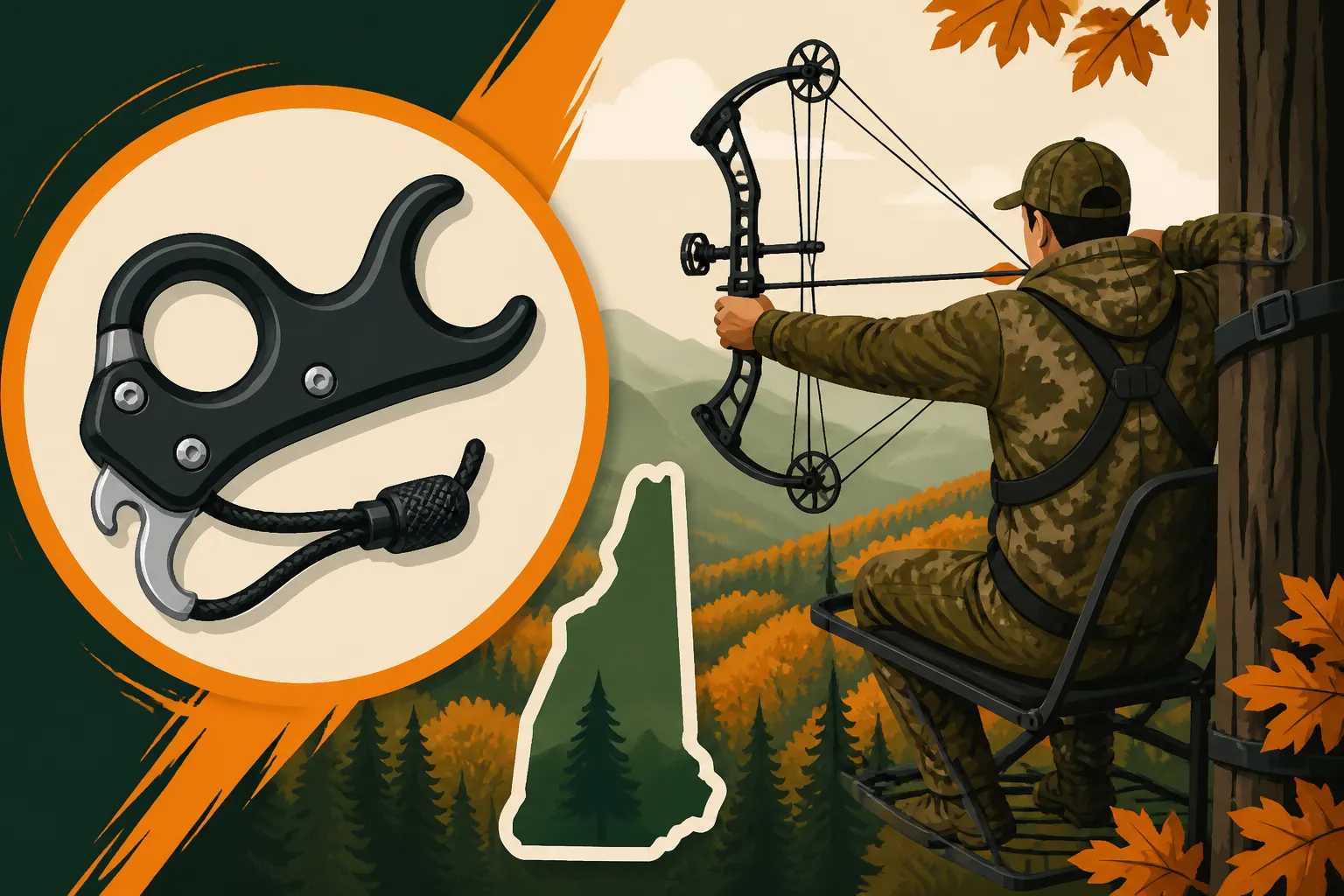
Anyone who’s ever spent a frosty New Hampshire morning perched in a treestand, bow in hand, knows the immense challenge of staying still, staying warm, and, most importantly, making a clean shot when that elusive whitetail finally steps into range. The moment of truth often comes down to the smallest details, and one of the most critical pieces of your archery setup for treestand success is your release aid. It's not just about flinging an arrow; it's about consistency, comfort in varying conditions, and silent operation. This guide is dedicated to helping you navigate the world of release aids, ensuring your chosen one performs flawlessly when it truly counts on a New Hampshire hunt.
Understanding the Different Types of Release Aids for Treestand Hunting
Choosing a release aid can feel a bit like picking out a fishing lure – there are so many options, each promising a different advantage. For us treestand hunters in New Hampshire, the choice boils down to more than just personal preference; it’s about what will work best when you’re bundled up, potentially shaking from cold or adrenaline, and need absolute precision. Let’s break down the most common types.
Index Finger Trigger Releases: Pros and Cons from a Treestand
The index finger release, often simply called a "trigger release," is probably what most people visualize when they think of a bow release. These releases typically attach to your wrist with a strap, leaving your hand free until you hook the release onto your D-loop. You then draw your bow, place your index finger on the trigger, and squeeze when ready to shoot, much like a rifle. They are incredibly popular for a reason: ease of use and immediate familiarity.
For a New Hampshire treestand hunter, the wrist strap style offers security. You can clip it on and forget about it until a deer comes into view, ensuring it's not fumbled or dropped from thirty feet up. This is especially comforting when you're climbing into your stand in the pre-dawn dark or trying to adjust your gear in a strong wind. However, the "trigger" action can sometimes lead to what's known as "punching the trigger," which means you anticipate the shot and jerk your finger, pulling the arrow off target. This can be exacerbated by cold, numb fingers or the immense pressure of a big buck standing broadside.
Consider a scenario: you've been sitting for three hours, the temperature has dropped into the teens, and you're wearing bulky gloves to keep your hands from freezing. A mature buck steps out. You need to draw smoothly, settle your pin, and execute a perfect shot. With a wrist-strap trigger release, your gloved hand still has to fit around the body of the release, and your finger needs to find that trigger. Some triggers are small and recessed, making them incredibly difficult to manipulate with thick gloves. A larger, more accessible trigger or a specific ergonomic design for cold weather can make a huge difference in these situations. You want a release that allows for consistent finger placement and a smooth squeeze, even when your dexterity is compromised by the elements.
Thumb Button Releases: Control and Accuracy in the Stand
Thumb button releases are often seen as a step up in precision from index finger triggers, favored by many target archers and now increasingly by hunters who seek a cleaner, more surprise-like shot. These releases are typically handheld, meaning they don't attach to your wrist with a strap (though some models offer a lanyard for security). You activate the release by pressing a small button with your thumb, which retracts the hook or jaws holding the D-loop.
The primary benefit of a thumb button release is its ability to promote a more consistent, "back tension" style of shot execution, even if it's still finger-activated. By using your thumb, it's generally harder to "punch" the shot compared to an index finger. The release often breaks cleaner, with less perceived movement, which can significantly reduce string torque and improve accuracy. For a treestand hunter, this can mean tighter groups and more ethical shot placement, particularly when that deer is a bit further out than you'd like.
However, the handheld nature can be a double-edged sword. While it allows for excellent form, it also means it's another piece of gear you need to actively manage. Imagine drawing your bow with one hand, getting your thumb button release from your pocket or off a hook with the other, clipping it to your D-loop, and then transitioning to a shooting grip—all while trying to stay quiet and unseen by a deer. This multi-step process can be challenging, especially if you're wearing heavy layers or if the animal appears unexpectedly close. Many hunters who use thumb releases often keep them attached to a lanyard around their neck or on a specific pouch, ensuring it's always accessible but still not physically attached to their wrist. The precision offered, however, makes the extra attention worthwhile for many dedicated New Hampshire bowhunters looking for every edge.
Back Tension (Hinge) Releases: Form and Precision for the Serious Hunter
Back tension releases, also known as hinge releases, are the pinnacle of shot execution for many seasoned archers. Unlike trigger or thumb button releases, these have no active trigger to "press" or "squeeze." Instead, you activate them by rotating your hand and activating the release through continuous expansion of your back muscles. The idea is to achieve a true "surprise" release, where you don't know exactly when the arrow will fire, eliminating target panic and promoting flawless follow-through.
While incredibly accurate and a fantastic tool for developing strong shooting form, back tension releases come with a significant learning curve. They demand dedicated practice to master, as any conscious attempt to "fire" the release by twisting your wrist can lead to erratic shots. For a treestand hunter, especially one who might only shoot a few arrows a month outside of hunting season, investing the time to truly master a hinge release can be a challenge. You wouldn't want to bring a new hinge release into the New Hampshire woods without hundreds, if not thousands, of practice shots under varying conditions. Many bowhunters who utilize these releases spend considerable time perfecting their form in their backyard or at the range, often utilizing resources like GoHunt's detailed gear reviews to understand the nuances of each model.
However, if you're someone committed to achieving the highest level of archery precision, a hinge release can be a game-changer. The complete elimination of trigger punching means that when the moment of truth arrives, your focus remains entirely on your aiming point and form, rather than anticipating the shot. This can be invaluable when you're locked onto a big buck and every ounce of mental fortitude is required. Just be mindful that they require careful handling and often a small safety mechanism to prevent accidental firing during the draw, something you'll need to disengage silently and smoothly in a hunting situation. For many, the commitment required often makes them more popular for target shooting than for the fast-paced, unpredictable nature of hunting from a treestand.
Key Considerations for Treestand Release Aid Selection in New Hampshire
Hunting from a treestand in New Hampshire isn't like shooting at a brightly lit indoor range. We deal with frigid temperatures, stiff breezes, bulky clothing, and the absolute necessity of silence. Your release aid needs to stand up to these real-world demands, and overlooking these factors can lead to missed opportunities or, worse, a wounded animal.
Cold Weather Performance and Ergonomics
New Hampshire archery season can start mild in September, but it quickly descends into serious cold by late October and certainly through Hunting the December Archery Close. This means your hands will be cold, possibly gloved, and certainly less dexterous than they are on a warm summer day. The ergonomics of your release aid become paramount. A small, sleek release that feels great with bare hands might be a nightmare to operate with insulated gloves.
Think about the material: metal releases can become painfully cold to the touch, chilling your fingers even through gloves. Some manufacturers use composite materials or offer textured grips that are more forgiving in the cold. The size and shape of the trigger or button are also critical. Can you easily locate it and apply pressure consistently with a gloved thumb or finger? Many veteran hunters will practice shooting with their actual hunting gloves on before the season, just to ensure their release aid is manageable. If you find yourself fumbling or struggling to get a clean break during practice, it's a huge red flag. You want a release that feels like an extension of your hand, even when your hand is encased in layers of fleece and insulation, allowing you to maintain consistency while Layering for New Hampshire's Cold Hunting Season.
Quiet Operation and Stealth
Noise is the enemy of the treestand hunter. Any metallic clink, plastic scrape, or loud "click" from your gear can send a wary New Hampshire deer bounding away before you even have a chance to draw. Your release aid, being a small metal or plastic object, has the potential to create unwanted noise.
Consider how the release attaches to your D-loop: some designs have a spring-loaded hook that can make a distinct "clack" when you attach it. Others have jaws that might open and close with an audible snap. While practicing, pay close attention to the sounds your release makes during all phases of operation – drawing, attaching, releasing, and even when it's just hanging there. Can you quietly engage it with your D-loop? Does the trigger mechanism make a loud "click" before the shot? Some releases are specifically designed with silent mechanisms, often using internal dampeners or cam systems that minimize noise. You might also want to look at models with a lanyard so it doesn't accidentally clang against your stand or bow riser if you drop it. The last thing you want is a loud clink from a dropped release ruining your chances when a prime buck is Hunting a Funnel Between Two Woodlots.
Ease of Attachment and Removal
The act of getting into and out of your treestand, and sometimes even moving around in it, means your hands will be busy. Fumbling with a release aid, especially one that requires intricate movements to attach or detach, can be frustrating and even dangerous.
Wrist-strap releases are generally easier in this regard, as they stay attached to your wrist. However, even within this category, some straps are fiddlier than others. Do you have a quick-release buckle, or do you have to thread a strap through a clasp with cold fingers? For handheld releases, how do you secure it when not actively shooting? A simple lanyard can prevent drops, but if it's too long, it can swing and get caught. If you're using a Climbing Stand for New Hampshire Hardwoods, you need your hands free and clear during ascent and descent. The ideal release aid for a treestand hunter minimizes the need for fine motor skills during critical moments. You want something that can be engaged quickly and quietly when a deer approaches, and secured just as easily when you need to climb, adjust your position, or simply grab a snack from your pack. A lot of seasoned hunters using mapping apps like GoHunt to Scouting New Hampshire Public Land Before Season will also spend time considering their entire gear setup, ensuring everything can be operated smoothly, even in the most challenging conditions.
Practicing with Your Treestand Release Aid for Success
Having the "best" release aid on paper means nothing if you haven't put in the time to become proficient with it in realistic hunting scenarios. The practice range is a crucial starting point, but a treestand hunt adds layers of complexity that need to be replicated in your training.
Simulating Hunting Scenarios
Shooting from a treestand is rarely a comfortable, perfectly squared-up stance like you get at the archery range. You'll be shooting at awkward angles, often twisted, sometimes kneeling or sitting, and frequently at steep downward angles. Your practice should reflect this reality. Don't just shoot from flat ground; get in your treestand (or a simulated treestand height) and practice.
Shoot from a seated position, from a kneeling position, and practice drawing while twisted to your left and right. Practice at targets at various distances and elevations, simulating shots at deer walking directly below your stand or angling away down a slope. Wear your full hunting gear – gloves, jacket, facemask – even if it's warm, to get a feel for how your release aid performs under those conditions. If you're running a specific type of release, like a thumb button, practice drawing your bow and then quietly acquiring your release and clipping it to your D-loop without looking. The more you simulate the pressures and physical constraints of a real hunt, the more automatic and consistent your shot execution will become when the actual opportunity arises, whether you're targeting a deer during New Hampshire's November Firearms Deer Season or sticking to archery only.
Maintenance and Care in the New Hampshire Woods
Your release aid is a mechanical device, and like all mechanical devices, it requires proper care and maintenance, especially when exposed to the elements of a New Hampshire fall. Rain, snow, dirt, and even condensation can impact its performance.
Regularly check your release for any signs of wear, especially on the jaws or hook that engage the D-loop. Make sure there's no grit or debris in the trigger mechanism. A sticky trigger is a dangerous trigger. Keep it clean and lightly lubricated according to the manufacturer's instructions. When you're out in the woods, protect it. If it’s raining, keep it tucked away in a waterproof pocket when not in use. After a wet hunt, bring it inside, let it dry thoroughly, and then inspect it. Many hunters carry a small, dedicated pouch or case for their release to protect it from dings and dirt. A well-maintained release will function flawlessly season after season, giving you the confidence that it won't fail you when you have a New Hampshire whitetail in your sights. This kind of attention to detail is something I often see among serious hunters who use tools like GoHunt to plan every aspect of their hunt, from mapping out ideal stand locations to ensuring their gear is in top shape.
Here's a quick comparison of popular release aid types for treestand hunting:
| Release Type | Pros for Treestand Hunting | Cons for Treestand Hunting | Best For |
|---|---|---|---|
| Index Finger Trigger | Easy to learn, secure (wrist strap), quick to deploy | Prone to "trigger punching," can be noisy, awkward with gloves | Beginners, hunters prioritizing quick shots, those valuing simplicity |
| Thumb Button | Clean break, promotes better form, reduces string torque | Handheld (can be dropped), requires practice, harder with numb fingers | Intermediate to advanced hunters, those seeking precision and consistency |
| Back Tension (Hinge) | Eliminates target panic, promotes purest form, highly accurate | Steep learning curve, not for quick shots, very sensitive | Experienced archers committed to form, ultimate accuracy seekers |
Matching Your Release to Your Hunting Style and Bow Setup
Ultimately, the best release aid for a treestand bowhunt isn't just about what's technically superior, but what genuinely fits your hunting style, your comfort level, and your specific bow setup. It's a highly personal choice, and what works for one hunter in the White Mountains might be a poor fit for another hunting in the Merrimack Valley.
Aggressive vs. Patient Hunters
Consider your hunting personality. Are you an "aggressive" hunter who prefers to draw as soon as a deer is within range, ready for a quick, decisive shot? Or are you a "patient" hunter who might hold at full draw for an extended period, waiting for the animal to take that perfect, broadside step?
For the aggressive hunter, an index finger release with a crisp, easily found trigger might be ideal. The speed and familiarity can be invaluable when a deer pops out unexpectedly. However, the risk of "punching" the trigger under pressure is higher. For the patient hunter, a thumb button or even a back tension release might be a better fit. These releases promote a more controlled, deliberate shot process that can be maintained during a longer hold at full draw. They allow you to focus on aiming while your back muscles or thumb slowly activate the release, minimizing conscious thought about the actual shot. When you're waiting for that buck to turn perfectly, knowing your release will break cleanly without you anticipating it can be a huge confidence booster. This is especially true if you are Hunting the Rut in Early-to-Mid November, when bucks can be unpredictable.
Bow Specifics and Tuning Considerations
Your release aid isn't an isolated piece of equipment; it's part of your overall bow system. How it interacts with your bow's D-loop, string, and cams can affect your arrow flight. Different releases apply tension to the D-loop in slightly different ways, which can introduce or eliminate string torque.
When choosing a release, consider how it feels on your D-loop. Does it create any noticeable twisting? Does it feel consistent shot after shot? A good pro shop can help you Tuning a Bow for Broadhead Flight and ensure your release complements your bow's setup. They might suggest a specific type of D-loop material or length that works best with your chosen release. For example, some releases, particularly thumb buttons or hinges, are designed to minimize torque by pulling straight back on the D-loop, which can be beneficial for consistent arrow flight. Others might have a slightly different geometry. Ultimately, the best release aid is one that you can consistently operate quietly, smoothly, and accurately, helping you to make the most of your Bowhunting New Hampshire's Long Archery Season. Always test your chosen release extensively with your specific bow and arrows, at various distances and angles, to ensure it performs optimally in real hunting conditions.
Disclaimer
This article is for general informational purposes only and does not constitute professional advice. Laws, prices and regulations vary by location and change over time. Consult a qualified professional for guidance on your specific situation.