Best Gaiters for Bog Hunting
There's nothing quite like the unique blend of beauty and challenge that comes with hunting New Hampshire's bogs and wetlands. You're out there, boots sinking into that glorious, mucky earth, navigating through tangled brush and across uncertain footing, all in pursuit of whatever game calls these watery havens home. But anyone who's spent more than ten minutes in a real New Hampshire bog knows the frustration: water and mud sloshing over your boot tops, soaking your socks, chilling your feet, and leaving you miserable for the rest of the day. This comprehensive guide is dedicated to conquering that very problem, helping you understand why gaiters are an absolute game-changer for bog hunting and how to choose the very best pair to keep you dry and comfortable.
Why Gaiters Are Non-Negotiable for New Hampshire Bogs
Let's be honest, hunting in the Granite State often means dealing with varied and sometimes unforgiving terrain. From steep, rocky ridges to dense timber, we see it all. But bogs, swamps, and beaver flowages present a whole different kind of challenge, one that can quickly turn a promising hunt into a soggy mess. This is precisely where gaiters earn their stripes, becoming an indispensable part of your kit.
The Bog Challenge: Water, Mud, and Debris
New Hampshire's bogs aren't just a little damp; they're dynamic, living ecosystems that will test every piece of your gear. Picture this: you're quietly making your way along the edge of a beaver flowage, eyes scanning for movement, when suddenly your boot sinks deeper than expected. It's not just water; it's a thick, viscous mix of mud, decaying vegetation, and who-knows-what-else. This isn't a mere puddle; it's a watery trap designed to penetrate any weakness in your footwear.
Traditional hunting boots, even the best waterproof models, have a critical vulnerability: the opening at the top. No matter how high your boots are, if you step into water or mud deep enough to reach that opening, it's game over. The cold, dirty water pours right in, rendering your waterproof boots useless and your socks instantly soaked. Beyond the obvious discomfort, this can quickly lead to cold feet, blisters, and even the early stages of hypothermia in colder months, sidelining your hunt prematurely. This is especially true when you're deeply committed to something like Hunting a Beaver Flowage Edge where you know you'll be dealing with consistent wet ground.
Moreover, bogs are notoriously messy. Submerged branches, sharp rocks, hidden stumps, and a constant barrage of muck and debris are par for the course. These aren't just minor annoyances; they're actively working to compromise your gear. A stray twig can scratch an expensive waterproof membrane, a sharp rock can abrade your pants, and the sheer volume of mud will try to work its way into every crevice. Without an additional layer of protection, your boots and pants are taking a beating, and your comfort is constantly at risk. Imagine trying to stay stealthy with squelching boots.
Protecting Your Boots and Pants
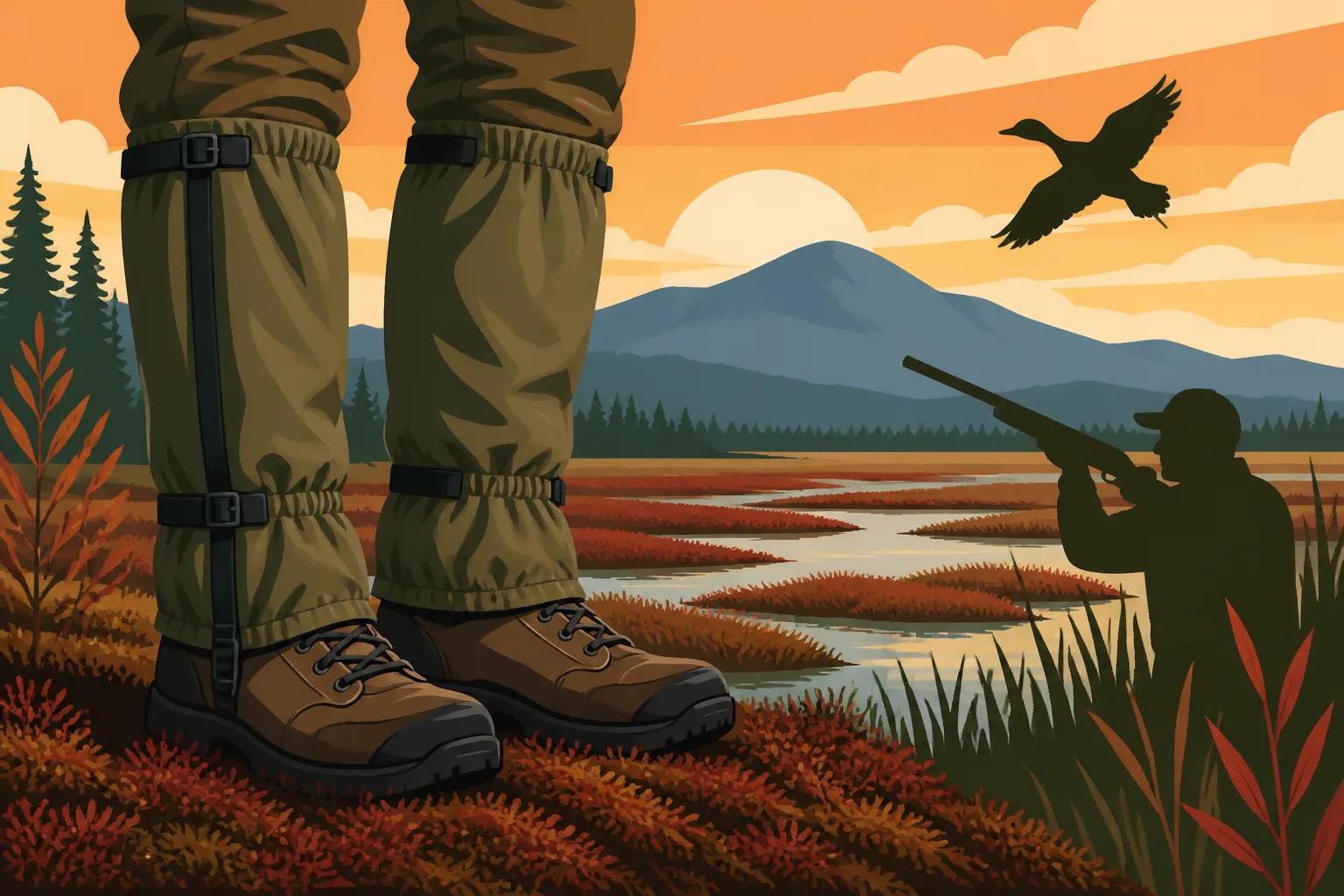
This is where gaiters step in as your silent, unsung heroes. Their primary job is to create a seamless, waterproof barrier from just above your boots up to your knees (or higher, depending on the model), effectively sealing off that vulnerable boot opening. They fit snugly over your boots and the bottom of your pants, preventing any water, mud, snow, or debris from getting in. This means when you inevitably sink into that calf-deep muck, the water simply washes over the gaiter, leaving your pants and boot interiors completely dry.
But the protection extends far beyond just waterproofing. Think about the physical abuse your lower legs and gear endure when pushing through thick brush or navigating a rocky, mucky shoreline. Gaiters provide a robust, durable shield for your expensive hunting boots and pants. They take the brunt of thorns, briars, sharp sticks, and abrasive rocks, preventing tears, snags, and scuffs that can degrade your gear over time. This not only keeps you more comfortable but also significantly extends the lifespan of your boots and hunting apparel, saving you money in the long run.
Consider the effort involved in Recovering a Deer From a Beaver Flowage. You're not just walking; you're pushing, pulling, and slogging through the worst of it. Gaiters ensure that as you scramble over downed logs and wade through muddy channels, your pants don't get shredded and your boots remain impenetrable. They act as sacrificial armor, allowing you to focus on the task at hand rather than worrying about your feet.
Key Features to Look for in Bog Hunting Gaiters
Choosing the right gaiters for New Hampshire's bogs isn't just about grabbing any old pair. The specific conditions demand specific features. You need gear that can stand up to constant moisture, abrasive terrain, and the general abuse of a long hunting season.
Material Matters: Waterproofing and Durability
When it comes to bog hunting, waterproofing is paramount, but it needs to be paired with exceptional durability. You'll often hear terms like Gore-Tex, Pertex, Cordura, or various proprietary membranes. All these materials aim to offer that crucial balance: keeping water out while allowing sweat vapor to escape, so your legs don't feel like they're in a sauna. A true 100% waterproof membrane is essential. Look for gaiters that boast a high waterproof rating and taped seams, which are critical points of failure if not properly sealed.
Beyond waterproofing, the material's ability to resist abrasion and punctures is non-negotiable. Cordura nylon, often in weights like 500D or 1000D, is a fantastic choice for the lower sections of gaiters where they’ll rub against boots and brush. Some gaiters even feature reinforced instep patches made from extra-tough materials like Hypalon to resist crampon spikes (though less relevant for bog hunting, it speaks to durability) or sharp rocks and ice. Don't compromise here; a flimsy gaiter will tear on the first briar patch or sharp branch you encounter, rendering its waterproofing useless.
Also, pay attention to the Durable Water Repellent (DWR) coating on the outer fabric. While not the primary waterproof barrier, a good DWR causes water to bead up and roll off, preventing the face fabric from "wetting out." This helps maintain breathability and keeps the gaiter lighter in wet conditions. When comparing options, a brand like GoHunt often features reviews where experienced hunters discuss the real-world performance and longevity of various materials in different terrains, which can be incredibly helpful for making an informed decision.
Fit, Fasteners, and Under-Boot Straps
A gaiter is only as good as its fit and how securely it stays in place. A poorly fitting gaiter will sag, bunch up, and inevitably allow water or debris to sneak in. Look for models that offer a snug, anatomical fit around your calves and boots without being overly restrictive. Many gaiters come in different sizes based on boot size and calf circumference, so take measurements seriously.
The closure system is another critical component. Common options include full-length zippers, hook-and-loop (Velcro) closures, or a combination of both. Zippers, especially robust ones with storm flaps, can provide a very secure seal, but they can sometimes get clogged with mud. Hook-and-loop closures are quick and easy but can collect burrs and lose effectiveness over time if not kept clean. Some high-end gaiters use a combination, with a zipper for initial closure and a wide hook-and-loop flap over it for ultimate security and weather protection. Small buckle adjustments at the top cinch the gaiter around your calf, preventing it from slipping down.
The under-boot strap is arguably the most vital part of a bog hunting gaiter. This strap is constantly under tension and subject to immense abrasion from rocks, roots, and general footfall. Cheap elastic or flimsy fabric straps will fray and break quickly. Look for straps made from durable, abrasion-resistant materials like Hypalon (a synthetic rubber), heavy-duty coated nylon webbing, or even steel cables on some mountaineering-grade options. These straps should also be easily adjustable, allowing you to create a tight seal between the bottom of the gaiter and your boot. A secure strap ensures the gaiter doesn't ride up, keeping that critical seal intact even when you're navigating uneven ground or deep mud during a long day of Hunting New Hampshire's Long Archery Season.
Height and Coverage for Deep Conditions
For bog hunting in New Hampshire, forget anything less than knee-high gaiters. Seriously. Ankle gaiters are fine for dusty trails or light dew, but they are utterly useless when you're slogging through standing water, thick mud, or deep snow. The very nature of a bog means you will encounter conditions where water or mud is several inches deep, easily breaching anything shorter than knee-height.
Knee-high gaiters, typically ranging from 15 to 18 inches in height, provide the necessary coverage to protect your lower legs and the tops of your boots from most boggy encounters. Some models even extend higher, providing near-thigh protection, which can be incredibly beneficial in exceptionally deep or unpredictable wetlands. The extra height provides a greater margin of error, allowing you to navigate varying depths without immediately compromising your dryness.
Think about the times you've been Hunting a Beaver Flowage Edge – the water levels can fluctuate dramatically even within a few steps. A taller gaiter gives you confidence to push through areas that might otherwise seem impassable, knowing your feet will stay dry. Without adequate height, you're essentially just extending the waterproof membrane of your boots a few inches, which isn't enough to tackle the unpredictable and often deep conditions characteristic of a true New Hampshire bog.
Choosing the Right Gaiter Style for Your Hunt
Just as there are different types of hunts, there are different styles of gaiters. For the specific demands of bog hunting in New Hampshire, making the right choice in style can significantly impact your comfort and the success of your outing.
Full-Length vs. Ankle Gaiters (and why full-length wins for bogs)
Let's cut right to the chase: for bog hunting, full-length gaiters are the undisputed champion. Ankle gaiters, sometimes called low gaiters or trail gaiters, typically only extend a few inches above the top of your hiking or hunting boots. Their purpose is primarily to keep small debris like pebbles, sand, light dust, or perhaps some light dew from getting into your footwear. They are fantastic for dry, well-maintained trails or areas with minimal undergrowth.
However, in a New Hampshire bog, ankle gaiters are about as useful as a screen door on a submarine. As discussed, the water, mud, and decaying organic matter in bogs often reach well above ankle height. If you're wading through any significant depth of water or sinking into deep mud, ankle gaiters will be instantly overwhelmed. The water will simply flow over the top, straight into your boots.
Full-length gaiters, conversely, extend from your boots all the way up to just below your knees. This provides a substantial barrier against water, mud, snow, and dense brush. They wrap around the lower leg, creating a protective sheath that seals off the vulnerable opening of your boots. When you're slogging through a beaver flowage or crossing a flooded section of woods, these gaiters are what keep your feet dry and your resolve strong. Their robust construction and extensive coverage make them the only sensible choice for the intense, wet conditions you'll encounter when hunting a bog.
Specialized Features for Extreme Wet and Cold
While core waterproofing and durability are universal requirements, some specialized features can really shine when bog hunting in particularly extreme wet and cold conditions. If you frequently find yourself hunting late in the season, perhaps during the Muzzleloader Deer Hunting in New Hampshire season when temperatures drop and the water edges start to freeze, you might consider gaiters with some level of insulation.
Some gaiters are designed with an internal fleece lining or a slightly thicker membrane to add a bit of thermal protection. This can make a huge difference in keeping your lower legs warm, especially if you're stationary for long periods or dealing with slushy conditions. However, balance this with breathability; you don't want your legs to sweat excessively, as that can also lead to chilling.
Another specialized feature to look for, particularly if you anticipate deeper wading, are gaiters designed with drain holes at the bottom. While the goal is to keep water out, sometimes a misstep or an unexpected plunge can lead to water getting inside the gaiter itself. Small, reinforced drain holes allow this water to escape, preventing your gaiters from acting like buckets and making them heavy and cumbersome. This also aids in quicker drying if they do get thoroughly soaked.
Finally, consider the overall design for ease of movement. While robust, gaiters shouldn't feel like leg casts. Articulated knee sections or stretch panels can improve comfort and flexibility, allowing you to climb over obstacles or squat down without feeling restricted. For the serious New Hampshire hunter who demands top performance in the toughest environments, it’s worth researching brands that prioritize these nuanced features. Checking out detailed product specifications or user reviews on sites like GoHunt can provide valuable insights into how different models perform in real-world, challenging environments.
Practical Tips for Using and Maintaining Your Gaiters
Having the best gaiters in the world won't do you much good if you don't use them correctly or take care of them. A little bit of attention to detail before, during, and after your hunt can vastly extend their life and ensure they perform optimally when you need them most.
Donning and Adjusting for Optimal Seal
The key to effective gaiter use is achieving a tight, secure seal around both your boots and your pants. Start by putting on your boots and pants first. Then, open the gaiter's main closure (zipper, hook-and-loop) and slide it over your foot, pulling it up your calf. Make sure the under-boot strap is underneath your boot sole, positioned just forward of your heel.
Next, close the main closure. If it's a zipper, ensure it's fully zipped and the storm flap (if present) is securely fastened over it. If it's a hook-and-loop closure, press it firmly along its entire length. Now, adjust the top strap or buckle to cinch the gaiter snugly around your calf. It should be tight enough to prevent slipping but not so tight that it restricts blood flow or causes discomfort.
Finally, adjust the under-boot strap. This is crucial. It needs to be tight enough that the bottom edge of the gaiter sits firmly against your boot, creating a continuous seal. The metal boot hook at the front of the gaiter should latch securely onto your boot laces. This hook prevents the gaiter from riding up, especially important when you're taking high steps or pushing through deep muck. Before heading into the thick of it, give a few practice steps and check that everything feels secure. A quick check, especially if you're about to venture deep into a known wet area like the Umbagog Lake Wetlands, can save you a world of discomfort later.
Cleaning and Care to Extend Lifespan
Gaiters, especially bog hunting gaiters, are going to get filthy. It's part of their job! But leaving them caked in mud, dirt, and organic matter will significantly shorten their lifespan and compromise their performance. As soon as you get home from your hunt, make it a habit to clean them.
Start by rinsing off as much mud and debris as possible with a hose. For stubborn grime, a soft brush and mild soap (like a specialized gear wash designed for waterproof fabrics, or even just mild dish soap) can be used. Avoid harsh detergents, bleach, or fabric softeners, as these can strip the DWR coating and damage the waterproof membrane. Pay particular attention to the closures and under-boot straps, as dirt can accumulate there and cause wear.
After cleaning, the most important step is proper drying. Hang your gaiters to air dry completely, preferably in a well-ventilated area away from direct sunlight or excessive heat. Do not tumble dry unless specifically instructed by the manufacturer, as high heat can damage the waterproof membrane. Ensure they are bone-dry before storing them to prevent mildew and odors. Store them loosely folded or hung, not crammed into a bag, to maintain their shape and prevent creases that could compromise the fabric. Consistent, mindful cleaning and drying, as often recommended in gear care guides from sources like GoHunt, will ensure your gaiters remain a reliable part of your hunting kit for many seasons to come.
Gaiter Feature Comparison
Here's a quick look at some key features to consider when choosing your bog hunting gaiters:
| Feature | Ideal for Bog Hunting | Less Ideal | Why it Matters |
|---|---|---|---|
| Height | Knee-High (15-18+ inches) | Ankle/Low | Prevents water/mud ingress in deep conditions. |
| Material | Heavy-Duty Nylon (e.g., Cordura 500D-1000D), Gore-Tex/Proprietary Membrane | Light Ripstop Nylon, Non-Waterproof Fabrics | Durability against punctures/abrasion; 100% waterproof seal. |
| Under-Boot Strap | Hypalon, Coated Nylon, Steel Cable | Thin Elastic, Basic Fabric | Resists wear and tear, keeps gaiter secure against boot. |
| Front Closure | Full Zipper with Storm Flap, Robust Hook-and-Loop, or Combined | Small Zipper, Flimsy Hook-and-Loop | Secure seal, easy to use (even with gloves), resists mud clogging. |
| Top Closure | Adjustable Webbing Strap/Buckle | Simple Elastic | Cinchable fit prevents slipping down calf, enhances seal. |
| Boot Lace Hook | Strong Metal | Plastic, Absent | Secures gaiter to laces, preventing ride-up. |
| Reinforcements | Extra fabric layers at instep and bottom edges | Uniform material throughout | Protects high-wear areas from sharp objects and abrasion. |
| Breathability | High (e.g., Gore-Tex, eVent) | Low (e.g., basic coated nylon) | Allows sweat to escape, preventing internal condensation and clamminess. |
| Special Features | Drain holes, Insulated lining (for extreme cold) | No specialized features | Enhances comfort and performance in specific, challenging bog conditions. |
Bog hunting in New Hampshire offers some incredible opportunities, but it demands proper gear. Don't let soggy feet or ripped pants cut your hunt short. By investing in the right gaiters and understanding how to use and care for them, you'll be able to focus on the hunt, not the discomfort. These durable, waterproof shields are truly the unsung heroes of any successful trek into our state's wild, wet places. So, gear up, stay dry, and enjoy the adventure!
Disclaimer
This article is for general informational purposes only and does not constitute professional advice. Laws, prices and regulations vary by location and change over time. Consult a qualified professional for guidance on your specific situation.