Best Freezer Setup for a Season’s Worth of Game
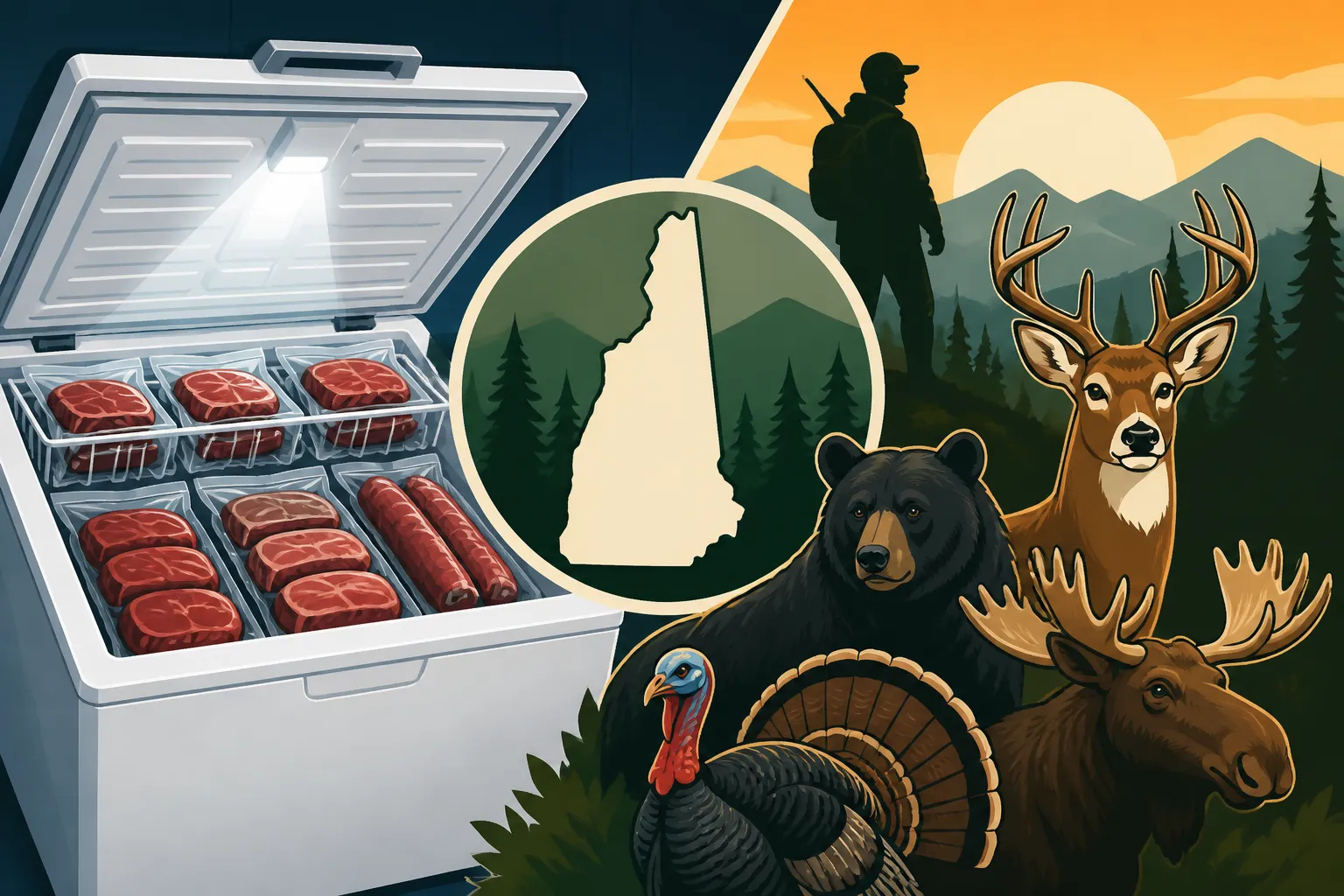
There's nothing quite like the immense satisfaction of a successful hunt in the New Hampshire wilderness, whether it’s a big buck from the Monadnock Region or a brace of turkeys from the Lakes Region. But after the exhilaration of the harvest and the hard work of field dressing, a new challenge often arises: how do you properly store all that delicious wild game so it stays fresh for months, or even a full year? Many hunters find themselves staring into an overflowing kitchen freezer, struggling to make space, and wondering if their hard-won meat will actually last. This guide is here to walk you through setting up the best freezer system to confidently preserve a season's worth of game, ensuring every meal tastes as good as the day it was taken.
Assessing Your Needs: What Kind of Hunter Are You?
Before you even start looking at freezer models, it’s crucial to take an honest look at your hunting lifestyle and what you realistically expect to bring home over a season. It’s easy to get swept up in the dream of multiple trophy animals, but planning for your typical harvest will serve you best in the long run. Thinking strategically about your game storage needs before the season kicks off can save you a lot of headache and potential freezer burn later. This assessment will guide your decisions on freezer size, type, and necessary accessories.
Your Harvest Potential: Deer, Moose, Bear, or Small Game?
The type and quantity of game you typically pursue will drastically influence your freezer requirements. A dedicated deer hunter in New Hampshire, who might harvest one or two deer in a season, will have very different needs than someone who draws a coveted moose permit or consistently bags multiple turkeys and small game animals. Consider the average yield from each species you pursue.
For instance, a mature white-tailed deer can yield anywhere from 40 to 70 pounds of boneless meat, depending on its size and how meticulously you butcher it. If you’re like many New Hampshire hunters and aim for a deer each year, you're looking at a significant volume. If you're fortunate enough to draw a tag for Moose in New Hampshire's North Country, you're talking about hundreds of pounds – a whole different ballgame for storage. Even smaller game, like several New Hampshire Ruffed Grouse and Woodcock or a few snowshoe hares, can add up quickly over the season and take up valuable space in your freezer. It’s not just the big showstoppers; the cumulative effect of small game, waterfowl, and even fish can fill a freezer faster than you'd think. Think about your goals for the season. Are you focusing on White-Tailed Deer Across New Hampshire, or do you plan to diversify and chase Wild Turkeys in New Hampshire in the spring and fall, perhaps even adding some Small Game and Predator Hunting in New Hampshire to the mix? Each species contributes to the overall volume you'll need to store.
Processing Habits: DIY Butcher or Professional Service?
How you handle your game after the shot also plays a huge role in your freezer setup. Are you a dedicated do-it-yourselfer, breaking down your deer or bear on your garage workbench? Or do you prefer the convenience of taking your animal to a professional butcher? Both approaches have implications for your freezer space and organization.
If you’re processing your own game, you’ll likely be dealing with larger cuts initially, possibly even bone-in sections for a short period before further breakdown. This requires more immediate bulk space. You might also be creating a wider variety of cuts—steaks, roasts, ground meat, stew meat, and even specialty items like sausage or jerky. This diversity means you'll want a system that allows for good organization. On the flip side, if you utilize a local meat processor, your game will typically return to you pre-packaged and ready for the freezer. This can save you a lot of time and mess at home, but you’ll want to confirm their packaging methods. Some processors use traditional freezer paper, while others might vacuum seal, which significantly impacts how long your meat stays fresh. Regardless of your choice, knowing your processing plan allows you to anticipate the form your game meat will take and how best to accommodate it in your freezer system. Using tools like GoHunt to research potential harvest areas can help you anticipate how much game you might bring in, allowing you to plan your processing strategy accordingly.
Types of Freezers: Chest vs. Upright
When it comes to dedicated freezers for wild game, the decision often boils down to two main types: chest freezers and upright freezers. Both have their ardent supporters and distinct advantages, as well as some drawbacks that might make one a better fit for your specific needs and available space. Understanding these differences is key to making an informed choice that will serve you well for many seasons to come.
Chest Freezers: The Workhorses of Wild Game Storage
Chest freezers are often the go-to choice for hunters and homesteaders who need serious bulk storage. Imagine bringing home a quartered deer after a successful hunt during New Hampshire's November Firearms Deer Season, or even a bear from Bear Hunting New Hampshire's Bait and Hound Season. You need a place where those large, awkward cuts can just fit, and chest freezers excel at this. Their design, with a lid on top, means that cold air naturally sinks and stays put. This gravitational advantage makes them incredibly efficient. When you open the lid, less cold air escapes compared to an upright model, which translates to lower energy consumption and better temperature retention, especially if the power goes out.
The interior of a chest freezer is typically a large, open cavity, sometimes with a few wire baskets along the top for smaller, more frequently accessed items. This vast space is perfect for stacking large game packages, whole fish, or bulk bags of ground venison. However, this expansive, cavernous nature is also their biggest organizational challenge. It's notoriously easy for items to get lost at the bottom, leading to what many hunters call "freezer archaeology"—a desperate dig through frozen packages to find that last forgotten package of backstrap from two seasons ago. You might find yourself emptying half the freezer to get to something buried deep below. Despite this, for sheer volume and cold-holding ability, especially for big game, a chest freezer is hard to beat.
Upright Freezers: Convenience and Organization
On the other hand, upright freezers offer a completely different user experience, prioritizing convenience and organization. Designed like a traditional refrigerator, they feature shelves, and sometimes drawers or door bins, making it much easier to see and access your frozen game. No more digging! If you tend to process your game into a variety of smaller, neatly packaged cuts – individual steaks, burger patties, stew cubes – an upright freezer allows you to arrange them logically, perhaps by cut, species, or even by meal type. This organized approach can be particularly beneficial if you're managing meat from different animals, like deer, turkey, and maybe some waterfowl from Waterfowl Hunting New Hampshire's Two Zones.
While their shelved design is fantastic for organization, upright freezers generally come with a few trade-offs. They are typically less energy-efficient than chest freezers because every time you open the door, a significant amount of cold air "spills out" due to convection. They also tend to be less forgiving during a power outage; without constant cooling, the temperature can rise more quickly. Many upright models are "frost-free," which sounds like a dream come true for maintenance. However, the frost-free technology works by periodically warming the interior just enough to melt frost, and this slight temperature fluctuation, over time, can contribute to freezer burn if your game isn't packaged exceptionally well, often faster than in a manual-defrost chest freezer. Despite these points, if you value easy access, a smaller physical footprint in terms of floor space (they go up, not out), and hate the idea of rummaging, an upright freezer might be your perfect match.
Freezer Comparison Table
To help you decide, here’s a quick overview of the key differences:
| Feature | Chest Freezer | Upright Freezer |
|---|---|---|
| Storage Capacity | Generally more cubic feet for the price. Excellent for bulk storage of large game quarters. | Often less capacity for the price. Better for organized storage of various cuts. |
| Organization | Challenging. Relies on baskets and digging to find items at the bottom. | Easier with shelves and drawers. Quick access to specific cuts. |
| Energy Efficiency | Typically more efficient. Cold air sinks, so less escapes when opened. | Less efficient. Cold air can spill out when the door is opened. |
| Power Outage | Holds temperature longer due to design. Less air exchange. | Warms up faster. More air exchange when door is opened (even accidentally). |
| Footprint | Wider, requires more floor space. | Taller, often fits into smaller floor areas. |
| Defrosting | Manual defrost is common, can be a chore but prevents freezer burn. | Frost-free models common, convenient but can lead to faster freezer burn on unwrapped items. |
| Cost (Initial) | Often lower per cubic foot. | Generally higher per cubic foot. |
Essential Accessories and Practices for Optimal Storage
A good freezer is just the foundation; to truly maximize the quality and longevity of your wild game, you need the right tools and a disciplined approach to storage. Many hunters invest significant time and effort in the hunt itself, only to neglect the critical final steps of preservation. Don't let your hard work go to waste with subpar storage. These accessories and practices are vital for keeping your game tasting its best months down the line.
Vacuum Sealers: The Unsung Hero of Long-Term Preservation
If there's one piece of equipment that will revolutionize your wild game storage, it's a quality vacuum sealer. Freezer burn is the arch-nemesis of preserved meat, turning delicious cuts into dry, unappetizing fare. It occurs when meat is exposed to air, causing dehydration and oxidation. A vacuum sealer removes virtually all the air from around your meat before it's frozen, creating an airtight barrier that effectively prevents freezer burn for extended periods – often a year or even longer. Imagine pulling out a venison roast from last year's Hunting the Rut in Early-to-Mid November that tastes as fresh as if it was harvested yesterday. That's the power of a vacuum sealer.
There are various types of vacuum sealers, from entry-level handheld models to heavy-duty chamber sealers. For most hunters dealing with a season's worth of game, a reliable external clamp-style sealer, paired with good quality, thick vacuum bags, is an excellent investment. Don't skimp on the bags; cheaper, thinner bags are more prone to punctures and tears, defeating the purpose of sealing. When packaging, ensure your meat is as dry as possible, as moisture can interfere with the seal. For cuts with bones, you might want to wrap the bony edges in a small piece of freezer paper or an extra layer of vacuum bag material to prevent punctures. This simple step, taking a few extra moments after processing, will pay dividends in the quality of your meals months later. Without a Best Vacuum Sealer for Wild Game, even the best freezer setup will struggle to maintain peak quality.
Labeling and Inventory: Don't Play Guessing Games
Once your beautifully packaged game is ready for the freezer, the next crucial step, and one often overlooked in the excitement, is proper labeling and inventory management. Nothing is more frustrating than pulling a mystery package from the depths of your freezer, only to realize you have no idea what cut it is, what animal it came from, or when it was processed. This uncertainty can lead to wasted food as older items get forgotten, or you simply avoid cooking something because you're unsure of its identity.
Every package should be clearly labeled with at least three pieces of information: the date it was processed, the type of cut (e.g., "venison backstrap," "ground bear," "turkey breast"), and if you hunt multiple species, the animal it came from. Adding the weight of the package can also be helpful for meal planning. Use a permanent, freezer-safe marker that won't smudge or fade. Beyond individual package labels, consider creating a simple inventory system. This could be a whiteboard mounted next to your freezer where you jot down what goes in and what comes out, or a more detailed spreadsheet on your computer. A system like this helps you rotate your stock, ensuring you eat older meat first, and gives you a clear picture of what you have on hand. It allows you to anticipate when you might need to restock or when you're running low on a favorite cut. Think of it as your personal game larder ledger – invaluable for meal planning and preventing waste.
Power Outage Preparedness and Backup Solutions
Living in New Hampshire, especially in the more rural areas, means occasional power outages are just a fact of life, particularly during severe winter storms or spring squalls. For a freezer full of valuable wild game, a prolonged power outage can be a source of immense anxiety. Losing a season's worth of meat due to a lack of planning is a heartbreaking and expensive experience. Therefore, preparing for such an event is an integral part of your freezer setup.
The first line of defense is simply not opening the freezer door during an outage. A full, well-insulated freezer will hold its temperature much longer than one that is half-empty or frequently opened. A chest freezer, with its top-opening lid, is inherently better at retaining cold during a power loss than an upright model because cold air sinks and stays put. For added protection, consider keeping insulating blankets or old sleeping bags handy to throw over your freezer if the power goes out. For longer outages, a portable generator is an excellent investment. You don't necessarily need a whole-house generator, but one capable of powering your freezer (and perhaps a few other critical appliances) can be a lifesaver. Run it periodically to keep the freezer sufficiently cold. As you manage your hunting efforts and look up season dates on platforms like GoHunt, remember to also factor in seasonal weather patterns that might impact power stability and thus your freezer strategy. Always have a plan for how you'll keep your game frozen if the grid goes down for an extended period.
Integrating Your Freezer System into Your Home and Hunting Lifestyle
Having a robust freezer system isn't just about the appliance itself; it's about how it fits into your daily life and supports your passion for hunting. The physical placement of your freezer and how you maintain it over time are critical factors that directly impact its efficiency, the longevity of your game, and your overall peace of mind. Let's talk about making this system work seamlessly for you.
Location, Location, Location: Finding the Right Spot
Where you decide to put your freezer can have a significant impact on its operational efficiency and the overall lifespan of the unit. Many hunters opt for the basement or a garage, and these are often excellent choices, but there are a few things to consider. Basements are generally good because they maintain a more stable, cooler temperature year-round, which helps the freezer run more efficiently. Garages, on the other hand, can experience wide temperature swings from the brutal cold of a New Hampshire winter to the sweltering heat of August. These extreme fluctuations force the freezer's compressor to work harder, consuming more energy and potentially shortening its life.
Regardless of the location, ensure there is adequate ventilation around the freezer, especially around the coils. Don't push it flush against a wall; allow a few inches of space for air to circulate. Placing it in a cool, dry area, away from direct sunlight or heat sources like a furnace or water heater, is ideal. Also, consider accessibility. You'll be loading and unloading large, heavy packages of meat, so make sure the path to the freezer is clear and that you have ample space around it to work comfortably. Nobody wants to be struggling with a quartered Black Bears in New Hampshire in a cramped corner. The ideal spot balances convenience with optimal operating conditions for your appliance.
Routine Maintenance and Cleaning
Just like your hunting rifle or your trusty ATV, your freezer needs a little TLC to perform at its best year after year. Neglecting maintenance can lead to reduced efficiency, premature breakdown, and potentially compromised meat quality. One of the most important tasks for manual defrost freezers (which many chest freezers are) is regular defrosting. While it might seem like a chore, allowing ice to build up more than about a quarter-inch thick acts as an insulator, making the freezer work harder and costing you more in electricity. It also reduces usable storage space. Plan to defrost your chest freezer at least once a year, preferably when your game reserves are at their lowest, typically before the new hunting season begins.
Beyond defrosting, routinely check the door or lid seals. A compromised seal allows warm air to leak in, leading to frost buildup and inefficiency. You can test a seal by closing the door on a piece of paper; if you can pull the paper out easily, the seal might need attention. Keep the condenser coils (usually on the back or bottom of the unit) clean and free of dust and debris, as this impacts heat exchange and efficiency. Finally, avoid overloading the freezer, especially if it's struggling to maintain temperature. While a full freezer runs more efficiently than an empty one, a freezer packed so tightly that air can't circulate can create warm spots. By incorporating these simple maintenance steps, you'll ensure your freezer provides reliable service, preserving your hard-earned harvest for many delicious meals to come, truly supporting your hunting lifestyle whether you're bringing home a buck or learning to process Knives and Processing Gear for Field Dressing.
Disclaimer
This article is for general informational purposes only and does not constitute professional advice. Laws, prices and regulations vary by location and change over time. Consult a qualified professional for guidance on your specific situation.