Best Arrow Rest for a Hunting Setup
Nothing is more frustrating than putting in all the scouting, the early mornings, and the patient sits, only to have your arrow not fly true when the moment of truth arrives. Often, the culprit isn't the bow or the arrow itself, but a small, yet critical, piece of equipment: your arrow rest. This guide will walk you through understanding the different types of arrow rests available, what to look for when choosing one for New Hampshire's diverse hunting conditions, and how to get it perfectly tuned for repeatable, accurate shots.
Understanding the Different Types of Arrow Rests
When you first start looking at arrow rests, it can feel like a whole new language. There are so many options, and each one seems to promise something slightly different. The key is to understand the fundamental mechanics of how each type supports and releases your arrow, and how that impacts your shot. You need something that provides consistent support and allows for clean fletching clearance, especially when you're dealing with the demanding terrain and wary game we have here in New Hampshire.
Fixed-Position Rests
These are the most basic and often the most affordable rests you'll find. They essentially provide a static platform or prongs for your arrow to sit on. Think of them as the old reliable workhorses.
Simple Brush and Prong Rests
Brush rests, as the name suggests, use a circle of stiff bristles or a combination of bristles and prongs to hold the arrow. They offer full containment, meaning your arrow isn't going anywhere once it's seated, which is a huge plus when you're still-hunting through thick timber or climbing into a treestand in a spot like the White Mountain National Forest. You don't have to worry about your arrow clanking off the rest or falling off completely, which can be a real hunt-killer. They're also incredibly durable and forgiving if your form isn't absolutely perfect. For a beginner or someone who hunts in really rough, brushy country and prioritizes simplicity and ruggedness, a brush rest is a fantastic choice. The downside is that the bristles can create some friction on your fletching as the arrow leaves the bow, which can slightly affect accuracy, though many hunters achieve excellent results with them.
Prong rests are similar but use two or three flexible prongs, often made of plastic or metal, to cradle the arrow. These offer slightly less contact than a full brush rest, potentially improving fletching clearance. They still provide decent containment, but typically not as "full" as a brush rest. They are often seen as a step up in precision from a brush rest, but still fall into that simple, fixed-position category. Both types are generally quiet and don't have moving parts to fail in freezing rain or get gunked up with mud and pine needles.
Containment Rests
Moving beyond the simplest fixed rests, you enter the world of rests designed specifically to keep your arrow secure while offering improved fletching clearance. These are incredibly popular with serious bowhunters for a good reason – they blend peace of mind with enhanced accuracy.
Full-Containment Drop-Away Rests
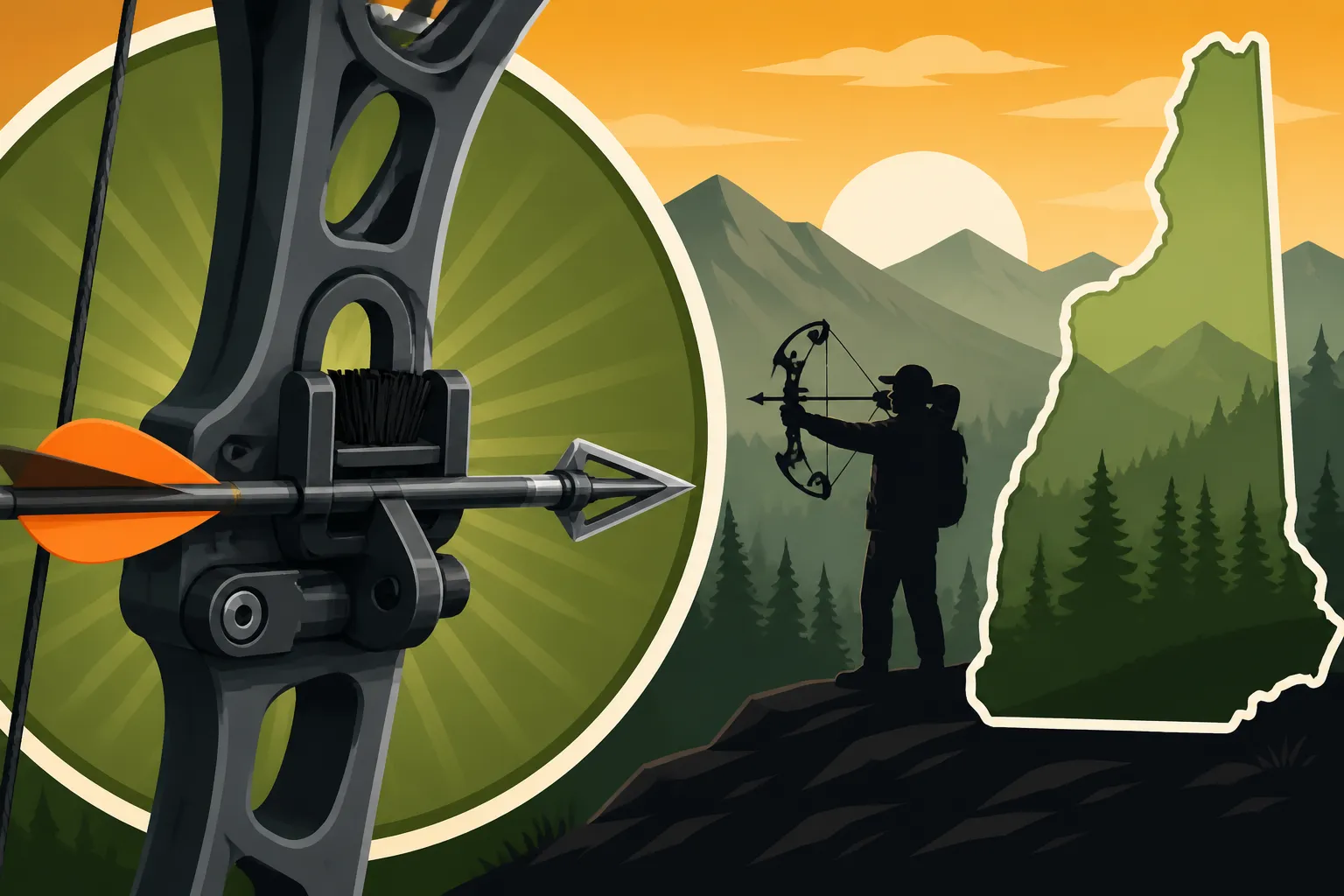
This is where things get really interesting for hunters, especially those chasing whitetails in the diverse New Hampshire landscape or preparing for a big adventure like Moose Hunting New Hampshire's North Country. Full-containment drop-away rests are designed to hold your arrow securely in place, often in a cradle or capture system, from the moment you nock it until the shot breaks. The "drop-away" part means that just as your arrow begins its forward motion, the rest mechanism falls out of the way, allowing for absolutely zero fletching contact. This is critical for maximizing accuracy, especially with broadheads.
There are a couple of common ways these rests operate:
- Cable-Driven Drop-Aways: These rests are typically tied into your bow's down cable. As you draw the bow, the cable pulls the rest into the "up" position, cradling your arrow. When you release, the cable slackens, and the rest quickly drops down and out of the way. They are very reliable and a favorite for many, offering precise timing with your shot. Many popular models from brands you'll find reviewed on sites like GoHunt fall into this category.
- Limb-Driven Drop-Aways: These are tied into one of your bow's limbs. As you draw, the limb tension pulls the rest up. When you release, the limb recoils, and the rest quickly drops. The advantage many hunters see with limb-driven rests is that the timing is often perceived as more direct and consistent with the actual shot cycle, less affected by cable stretch or tuning nuances. They offer superb fletching clearance and are known for their consistent performance.
The full containment aspect means you can stalk through dense undergrowth, climb into your stand, or make awkward shots without your arrow shifting or falling off the rest. This is invaluable when you're hunting wary animals and need every advantage you can get. If you're Hunting New Hampshire's Archery Season Into December, you'll appreciate a rest that performs flawlessly even with colder, stiffer cables and limbs.
Blade Rests
While less common for hunting, especially for beginners, blade rests are worth a brief mention. These typically consist of a thin, flexible metal or plastic blade that supports the arrow. They are incredibly precise and offer minimal contact, which makes them a favorite among target archers and competitive shooters looking for every possible ounce of accuracy. However, for hunting, their open design means they don't offer containment, making it easy for an arrow to fall off. They can also be a bit more delicate and prone to damage in rugged field conditions. If you're a serious hunter who also shoots competitive 3D or spots, you might use one of these for practice, but most New Hampshire hunters opt for something more robust and secure in the woods.
Key Features to Consider for New Hampshire Hunting
Choosing the right arrow rest for hunting in New Hampshire means thinking about our unique challenges. It’s not just about what looks cool or what your buddy uses; it’s about what will perform flawlessly when you’re facing a spitting rain, a climb up a steep ridge, or bitter cold. You need gear that stands up to the demands of the Granite State, whether you're deer hunting or perhaps even considering Fall Turkey Hunting New Hampshire's Eight WMUs.
Durability and Weather Resistance
New Hampshire weather can be notoriously unpredictable. One day it's crisp and sunny, the next it's a torrential downpour or a sudden snowfall. Your arrow rest needs to be built to handle it all. Look for rests made from robust materials like aircraft-grade aluminum, with stainless steel components where possible. Avoid rests with too many small, exposed moving parts that could freeze up, get clogged with mud, or break when you brush against a sapling.
Consider how the rest will perform in rain. Can water pool in mechanisms? Will ice affect its drop-away function? A rest that keeps working through a driving rainstorm, or after you've broken through a patch of slush, is far more valuable than one that fails when you need it most. Many experienced hunters learn this lesson the hard way, wishing they'd invested in something more durable upfront. GoHunt is a great resource to read up on user reviews that often highlight how different rests perform in real-world, harsh conditions.
Noise Reduction
Silence is golden in the deer woods. A noisy arrow rest, whether it's the click of the rest engaging as you draw, or a thud as it drops away, can absolutely blow your chance at a deer. Think about a mature buck, ears swiveling, trying to pinpoint that unnatural sound. You want a rest that operates as silently as possible.
Look for rests with rubber coatings, felt pads, or other sound-dampening materials on any contact points or moving parts. Test them out in a quiet environment. Draw your bow slowly, listen for any squeaks or clicks. Fire an arrow, listening for the drop-away mechanism. You'll often find that quality rests from reputable manufacturers have invested heavily in making their products as quiet as possible, understanding that a few decibels can make all the difference. This is especially true when you're Rattling and Grunting New Hampshire Bucks – any other noise can negate your efforts.
Full Arrow Containment
This feature is paramount for active hunting, and honestly, even for passive stand hunting. How many times have you been climbing into a treestand, or picking your way through a blowdown, and accidentally bumped your arrow off the rest? It happens to everyone. A full-containment rest ensures your arrow stays put until you decide to shoot.
Whether it’s a brush rest, or a more advanced drop-away rest with a capture bar or cage, knowing your arrow isn’t going to fall off the string or clank against your riser at the worst possible moment is a huge confidence booster. When you're trying to stay hidden while getting into position for a shot, every little bit of security helps. It's the kind of feature you might not fully appreciate until you don't have it and your arrow clatters to the ground when a deer is just out of sight.
Ease of Adjustment and Tuning
Even the best arrow rest in the world isn't going to do you any good if you can't properly tune it to your bow and arrows. Look for rests that offer micro-adjustments for both horizontal (windage) and vertical (elevation) alignment. These fine adjustments allow you to dial in your broadhead and field point groups precisely, ensuring consistent arrow flight.
A rest that's easy to adjust means you're more likely to spend the time needed to get it perfect. Some rests require special tools or complicated procedures, while others have simple knob adjustments. Consider your own mechanical aptitude and patience. While it’s always a good idea to have a pro shop help with initial setup, you might need to make minor tweaks in the field or between hunting seasons. The ability to quickly and accurately adjust your rest means less frustration and more confidence in your setup. If you're meticulous about your setup, you'll also be meticulous about things like Best Broadhead for New Hampshire Whitetails and ensuring it flies true.
Setting Up Your Arrow Rest for Optimal Performance
Even the fanciest, most expensive arrow rest won't do you a bit of good if it's not set up correctly. This isn't a "slap it on and go" kind of deal. Proper installation and tuning are absolutely vital for consistent accuracy, especially when you're planning to take ethical shots at game in New Hampshire's varied terrain. It’s an investment in your success, and honestly, in the ethical pursuit of game.
Nocking Point and D-Loop Installation
Before you even think about the rest itself, you need a properly installed nocking point and D-loop. The nocking point is where your arrow nock sits on the string. This establishes the vertical position of your arrow. The D-loop, a small string loop tied around your main bowstring, connects your release aid to the string. It protects the serving on your main string and provides a consistent anchor point.
The bottom of your D-loop should be positioned so that your arrow sits perfectly level (90 degrees) or very slightly nock-high on your bowstring when resting on your arrow rest. This is often checked with a bow square. If your arrow is too nock-high or nock-low, you'll experience inconsistent arrow flight, regardless of how good your rest is. This initial step is foundational; get it wrong, and everything else will be off. Many seasoned hunters will check and re-check their D-loop and nocking point multiple times throughout the season, especially before a big hunt.
Center Shot Adjustment
This is arguably the most critical adjustment for your arrow rest. "Center shot" refers to the horizontal alignment of your arrow in relation to the bowstring and the riser. Ideally, your arrow should be perfectly aligned so that it passes through the center of your bow's riser and string. If it's too far left or right, your arrow will not fly straight, especially at longer distances.
There are several methods for achieving proper center shot:
- Visual Alignment: A good starting point is to visually align your arrow so it appears to be centered through your bow's riser from both the front and back.
- Laser Alignment Tools: Some tools use a laser to project a line through your string and arrow, making visual alignment more precise.
- Paper Tuning: This is a fantastic diagnostic tool. You shoot an arrow through a piece of paper suspended a few yards away. The tear in the paper reveals how your arrow is exiting the bow. A perfect bullet hole tear means your arrow is flying perfectly straight. If you see horizontal tears, your center shot needs adjustment.
- Walk-Back Tuning: This advanced method involves shooting at a vertical line on a target at various distances. By observing where your arrows impact in relation to the line, you can fine-tune your center shot. This method can also help identify any torque issues with your grip.
Proper center shot ensures that the forces on your arrow are balanced as it leaves the bow, leading to maximum accuracy. This takes patience, but it's worth every minute. You can find detailed guides on GoHunt that walk you through each of these tuning methods, which is incredibly helpful.
Timing Your Drop-Away Rest
If you're using a drop-away rest, timing is everything. The rest needs to be in the "up" position, supporting the arrow, when you're at full draw. Then, it needs to drop completely out of the way before your fletching passes over it. If it drops too early, you lose support. If it drops too late, your fletching will hit the rest, causing erratic arrow flight.
- Cable-Driven Rests: The timing of these rests is adjusted by how much slack is in the cord connecting the rest to your down cable. You typically want just enough slack so that the rest is fully upright at full draw, and then it drops quickly upon release.
- Limb-Driven Rests: These are usually tied directly to one of your bow's limbs, often the top limb. The timing is a bit more direct as it follows the limb's movement. You still need to ensure the cord is tensioned correctly so the rest comes up fully and drops cleanly.
You can check timing by drawing your bow and having a friend watch the rest, or by slowly letting down and seeing when the rest begins to drop. A very light powder or lipstick on your fletching, followed by shooting into a target, can also reveal fletching contact if the timing is off. A perfectly timed drop-away rest is essential for achieving the clean, repeatable arrow flight you need for hunting success, particularly when you're Tuning a Bow for Broadhead Flight where any contact issues are magnified.
Practice and Consistency
Once your rest is installed and tuned, the final, crucial step is practice. Shoot countless arrows. Become intimately familiar with how your setup feels, sounds, and performs. Practice from different positions, mimicking the kinds of shots you might encounter in the New Hampshire woods – kneeling, standing, from a treestand, or Using a Ground Blind on Public Land.
Consistency in your form is also vital. Even with a perfectly tuned rest, sloppy shooting form can introduce errors. Focus on a repeatable anchor point, a smooth release, and follow-through. The best arrow rest in the world can't compensate for a poor shot. Trust your equipment, trust your practice, and you'll be ready when that big New Hampshire buck steps out.
Arrow Rest Comparison Table
To give you a quick overview of the different types of arrow rests, here's a table summarizing their key characteristics, pros, and cons. This can help you weigh your options as you decide which style best suits your hunting needs and budget.
| Rest Type | Key Characteristics | Pros | Cons | Ideal for New Hampshire Hunting Scenarios |
|---|---|---|---|---|
| Brush Rest | Full circle of bristles/plastic rods holding the arrow. | Full containment (arrow won't fall off), very durable, quiet, forgiving of minor form flaws, affordable. | Can have slight fletching contact impacting ultimate accuracy, bristles wear over time. | Beginners, hunters in dense brush/timber, those prioritizing ruggedness and simplicity, close-range shots. |
| Prong Rest | Two or three flexible prongs cradling the arrow. | Better fletching clearance than brush, good durability, quiet, decent containment. | Less secure containment than brush, can still have some fletching contact. | Similar to brush, but for hunters wanting a slight edge in clearance without complex parts, good for Still-Hunting White Mountain National Forest Timber. |
| Cable-Driven Drop-Away | Rest tied to down cable; drops upon release. | Excellent fletching clearance for maximum accuracy, full containment when drawn, very reliable. | More moving parts than fixed rests, requires precise timing adjustment, generally higher cost. | Most serious bowhunters seeking precision and containment, adaptable to various hunting styles. |
| Limb-Driven Drop-Away | Rest tied to bow limb; drops upon release. | Superior fletching clearance, consistent timing with limb movement, full containment when drawn. | More moving parts, typically higher cost, specific limb attachment required, delicate in harsh conditions. | Hunters prioritizing ultimate accuracy and minimal fletching contact, good for Hanging a Stand on a Granite Ridge and open shots. |
| Blade Rest | Thin, flexible blade supports arrow; no containment. | Minimal contact for extreme accuracy, lightweight. | No containment (arrow can fall off), fragile, not ideal for active hunting or beginners. | Target shooting, competitive archery, very specialized hunting scenarios where ultimate precision outweighs containment. |
Common Arrow Rest Issues and Troubleshooting
Even with the best arrow rest and a meticulous setup, you might run into issues. It's frustrating, but it's part of bowhunting. Knowing how to diagnose and address common problems can save you a lot of headaches, especially when you’re far out in the woods and need your gear to perform. We've all been there, scratching our heads in the backyard, wondering why our arrows suddenly aren't flying right.
Fletching Contact
This is probably the most common issue, especially with drop-away rests that aren't timed correctly, or fixed rests where your fletching might be too large or stiff for the rest.
Diagnosing the Problem
The tell-tale signs of fletching contact are inconsistent arrow flight (arrows going high, low, or unpredictably), unusual wear marks on your fletching, or even a distinctive sound as the arrow leaves the rest. You can easily check for contact by applying a light powder (like foot powder) or even some lipstick to your fletching, then shooting an arrow into a target at close range. If you see residue from the powder or lipstick on your rest, you've got contact. Another method is to use a bare shaft at close range. If the bare shaft impacts differently from your fletched shafts, it’s a strong indicator of fletching contact.
Solutions
- Adjust Drop-Away Timing: For drop-away rests, adjust the cord tension so the rest drops faster and earlier, clearing the path for your fletching. Sometimes, it's a very subtle adjustment that makes all the difference.
- Check Nocking Point/D-Loop: Ensure your arrow is nocked correctly. If it's too high or too low, it can cause the fletching to strike the rest. Re-check with your bow square.
- Rotate Nock: Try rotating your arrow's nock slightly to change the orientation of your fletching, ensuring the odd fletch is pointing away from the rest.
- Consider Shorter/Softer Fletching: If you consistently have issues with a fixed rest, you might need to use shorter fletchings or fletchings made of a softer material that flexes more easily.
- Broadhead Tuning: Sometimes fletching contact issues are only evident once you switch to Best Broadhead for New Hampshire Whitetails. Go through the tuning process again with your broadheads, as their larger profile can amplify any contact problems.
Arrow Falling Off the Rest
This is a scenario every hunter dreads: you’re drawing back on a deer, or simply walking to your stand, and your arrow clatters to the ground. This can spook game, damage your arrow, or simply ruin your shot opportunity.
Diagnosing the Problem
If your arrow is falling off, it’s usually quite obvious! It will happen when you draw, during let-down, or while moving.
Solutions
- Ensure Full Containment: If you're using a drop-away rest, make sure the containment features (like a capture bar or cage) are properly adjusted and actually capturing the arrow. Sometimes they can be set too wide.
- Check Rest Up-Position: Ensure your drop-away rest is consistently rising to its full upright position at full draw. If the timing cord is too loose, it might not come all the way up.
- Brush/Prong Wear: For brush or prong rests, check for excessive wear. If the bristles are broken or the prongs are bent out of shape, they won't hold the arrow securely. It might be time for a replacement.
- D-Loop Position: Sometimes an improperly tied or rotating D-loop can cause the arrow to sit at an odd angle, making it prone to falling off.
- Arrow Nock Fit: Is your arrow nock too loose on the string? It should have a snug but not overly tight fit. If it's too loose, the arrow can easily slip off.
Rest Bouncing Back Up
This is a more subtle issue that primarily affects drop-away rests. If your rest bounces back up after dropping, even momentarily, it can cause fletching contact and erratic arrow flight. The rest is supposed to drop and stay down until the shot sequence is complete.
Diagnosing the Problem
This can be hard to see with the naked eye. Some people use slow-motion video to capture the rest's movement. You might also notice consistent low hits or horizontal string tears on paper tuning, even if your initial center shot seems good.
Solutions
- Check Spring Tension: Many drop-away rests have a spring or dampening system. Ensure it's functioning correctly and providing enough downward force to keep the rest down.
- Inspect Mounting: Make sure the rest is securely mounted to your bow's riser and isn't rotating or wobbling during the shot.
- Limb-Driven Tension: For limb-driven rests, ensure the cord tension is correct. Too much tension can sometimes cause a slight rebound effect.
- Professional Help: If you suspect a bounce-back issue, it's often best to take it to a qualified pro shop. They have the experience and sometimes specialized tools to diagnose and fix these more complex timing issues. This kind of nuanced troubleshooting is why many hunters rely on resources like GoHunt to compare expert advice and user experiences when selecting and maintaining their gear for crucial hunts, whether they're after deer or even Bear Hunting New Hampshire's Bait and Hound Season.
Remember, your arrow rest is a vital part of your archery setup. Don't overlook it, and don't hesitate to spend the time (or a little money at a pro shop) to ensure it's performing perfectly. The confidence you gain from a well-tuned system is priceless when you're facing a critical shot in the New Hampshire woods.
Disclaimer
This article is for general informational purposes only and does not constitute professional advice. Laws, prices and regulations vary by location and change over time. Consult a qualified professional for guidance on your specific situation.