Entry Routes Through a Cut Cornfield
For many hunters in New Hampshire, the sight of a freshly cut cornfield can be a mix of excitement and frustration. On one hand, you know those whitetails are absolutely feasting on the leftover kernels and finding refuge in the stubble; on the other, figuring out how to get to your stand without spooking every deer in the county feels like a puzzle with no clear solution. This guide is designed to help you unravel that mystery, providing actionable strategies for stealthy and effective entry routes into those irresistible cut cornfields.
The Irresistible Pull and Hidden Depths of Cut Cornfields
Cut cornfields are veritable magnets for white-tailed deer, particularly as the season progresses here in New Hampshire. They offer a unique combination of food, cover, and thermal protection that can make them incredibly productive, yet equally challenging, to hunt.
Why Deer Flock to Cut Corn
Deer aren't just passing through a cut cornfield; they're often living in it, especially during the colder months. The reasons are multifaceted, but they all boil down to survival and comfort.
First and foremost, it's about food. Even after the combines have roared through, there's always a substantial amount of waste grain left on the ground. Those dropped kernels of corn are a high-energy, readily available food source that deer absolutely crave, especially when natural browse starts to dwindle or become less appealing after multiple frosts. Deer can spend hours methodically picking through the stubble, turning a seemingly barren field into an all-you-can-eat buffet. This becomes a particularly important factor when considering Late-Season Food Sources for New Hampshire Whitetails as winter approaches and other options become scarce.
Beyond the food, cut cornfields offer surprising levels of cover. While it might just look like a field of broken stalks to us, to a deer, that dense stubble provides excellent visual cover, especially when they're bedded down. It helps them disappear from the sightlines of predators and hunters, giving them a sense of security. They can move through these fields, often using existing rows or trails created by equipment, with remarkable stealth. It's not uncommon for deer to bed right in the field itself, especially if there's a slight depression or a thicker patch of stubble that offers a bit more concealment.
Finally, thermal regulation plays a significant role. The residual stalks and uneven ground of a cut cornfield can break up the wind, creating microclimates that are noticeably warmer than wide-open spaces. This shelter from biting New Hampshire winds and cold helps deer conserve energy, making the cornfield an even more attractive place to spend time, whether feeding or bedding.
Understanding Deer Movement Within These Fields
To truly hunt a cut cornfield effectively, you need to think like a deer. Their movement patterns are influenced by pressure, food availability, and the proximity of thicker cover.
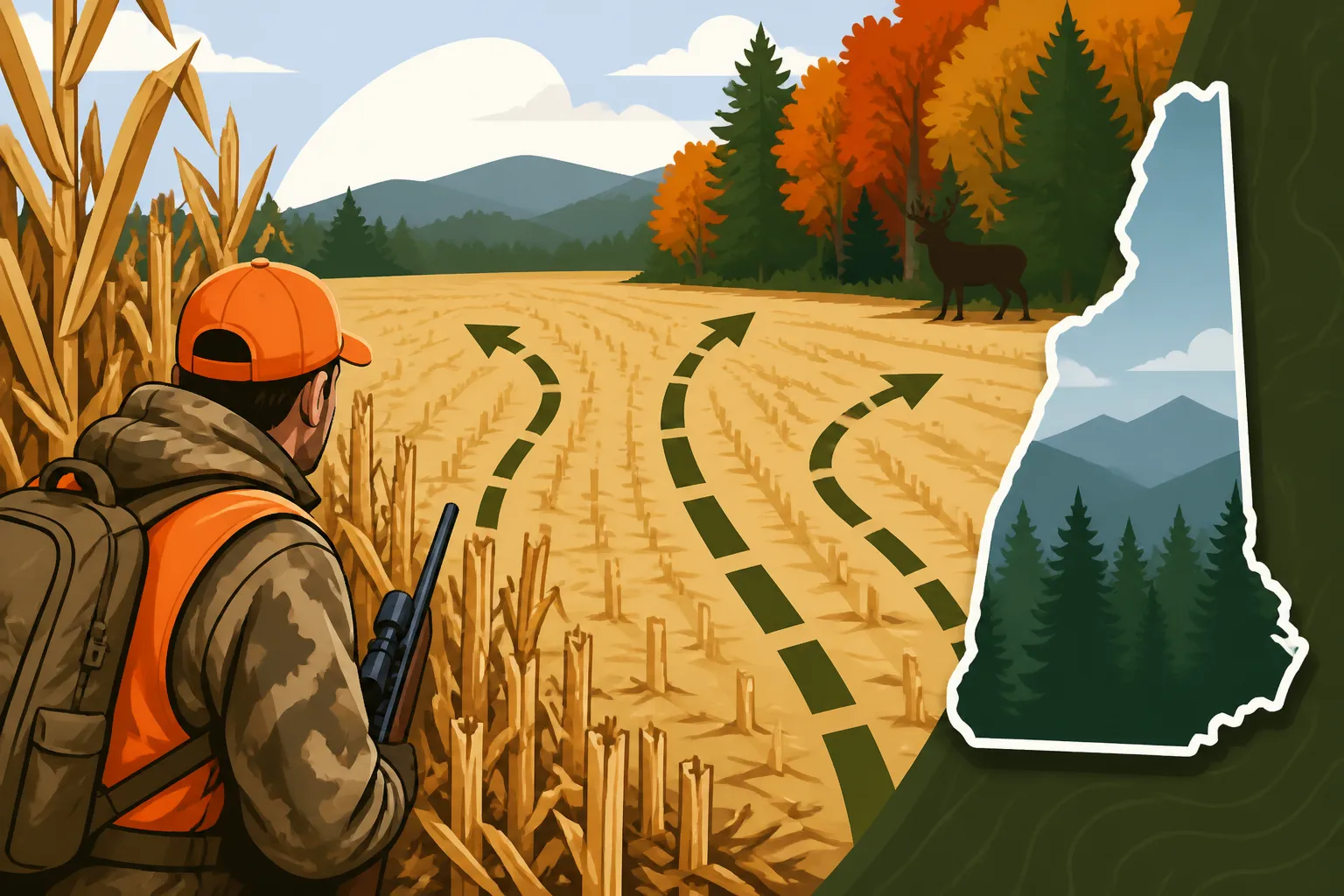
Deer rarely just appear in the middle of a cut cornfield. They typically use specific entry and exit points, often dictated by natural terrain features or edges of heavier cover. They'll travel along the edges of the woods that border the corn, follow fencerows, use creek bottoms, or even small hedgerows that might bisect the field. These natural travel corridors act as their highways, guiding them from bedding areas to their feeding zones in the corn. Identifying these "invisible highways" is paramount to success. Understanding these patterns is key, just as it is when Reading a White Mountain Deer Yard to predict wintering behavior.
While deer will primarily feed during low-light hours (dawn and dusk), don't assume they're absent during the day. If the field offers good cover and low hunting pressure, deer will often bed down right in the stubble or in the thick cover immediately adjacent to the field, making short forays into the corn throughout the day. They might spend midday chewing their cud, standing up occasionally to grab a few more kernels before bedding back down. This is especially true for mature bucks who are notoriously wary and will often delay movement into the wide-open field until well after dark, preferring the safety of the edges or interior cover during daylight.
As the season progresses, and particularly during the rut or in the late season when other food sources have been depleted, the importance of cut cornfields only increases. Deer will often prioritize these fields, even if it means moving a bit more during daylight, especially if they are feeling less pressured. This makes understanding entry and exit routes even more critical, as you're trying to intercept animals that are highly motivated to be there.
Scouting for Invisible Highways: Identifying Key Entry Routes
You can’t just walk into a cut cornfield and expect to find the perfect entry route. It requires meticulous scouting, both from afar and on the ground, to decode the deer’s preferred paths. Think of it as detective work, piecing together clues to reveal the hidden highways deer use.
Pre-Season and Post-Harvest Reconnaissance
Your scouting efforts should begin long before the first kernel hits the ground, and intensify immediately after the harvest. This two-phase approach gives you a comprehensive understanding of the landscape.
Start with aerial photos and mapping applications. Tools like GoHunt, onX, or even Google Earth are invaluable. Zoom in on the cornfields you're interested in and look for features that might funnel deer movement. Are there small woodlots adjacent to the field? Creek beds that run along or through it? Fence lines, power line cuts, or even subtle changes in elevation that create pinch points? These are all potential deer magnets. Identifying these features from an aerial perspective allows you to pinpoint likely travel corridors without putting human scent on the ground. This kind of digital scouting is as crucial for a cornfield as it is for Reading Aerial Photos for North Country Deer to find remote deer habitat.
Once the corn is cut, and ideally when hunting pressure is low or in the off-season, it's time for boots on the ground. However, be strategic. Resist the urge to tromp all over the field, as you'll leave your scent everywhere and educate the deer. Instead, focus on walking the perimeter. Look for well-worn trails leading into and out of the field, especially where the corn meets heavier cover like woods, swamps, or even thick brush rows. Pay attention to fence crossings – deer will often jump fences in the same spot repeatedly, creating distinct trails. These are your primary candidates for entry and exit routes. You might find tracks leading from a hardwood ridge to the corn, indicating a preferred route for bucks during the rut.
Trail cameras are another powerful tool in your scouting arsenal. Once you've identified a few potential entry points or travel corridors, place cameras there. Set them up discreetly along the edge of the woods where a trail enters the corn, or on a fencerow crossing. A good camera, like those from Moultrie or Browning, placed on a well-used trail can tell you when deer are using that route, how many, and even what size bucks are moving through. Remember to set them up for a specific purpose, as you would when thinking about Where to Hang a Camera on a Logging Road. Check them remotely if they're cellular, or approach them only during high wind or rain to minimize your impact.
Reading Deer Sign at the Edge
Deer leave a breadcrumb trail of activity, and knowing how to read it will confirm your suspicions about entry routes and active feeding areas.
Fresh tracks are your most undeniable evidence. Look for tracks leading directly into the cut cornfield, particularly those that appear fresh and have crisp edges. Heavy concentrations of tracks, especially where multiple trails converge, indicate a major thoroughfare. Pay attention to the size of the tracks – larger, more spread-out tracks often belong to mature bucks. If you find tracks entering the field from a dense cedar swamp, you know you’ve likely found a bedding-to-feeding route.
Beyond tracks, look for other signs of deer activity. Rubs and scrapes along the field edge, especially at the transition point between the corn and the woods, are clear indicators of buck presence. These spots often mark territories or points where bucks pause before entering the open field. A line of fresh rubs along a treeline bordering a cornfield is a high-value find, similar to how you’d analyze Scrape Lines Along a Logging Road. Droppings, particularly in large piles or scattered consistently along a trail, confirm regular use. The freshness of droppings can also tell you how recently deer have been in the area.
Finally, keep an eye out for browsing. While deer are primarily focused on waste grain, they might also nibble on any remaining corn stalks or low-lying vegetation along the field edge. This subtle sign can show you exactly where they're pausing to feed before fully committing to the field, offering clues about where to position your stand for a shot.
Mastering Stealth: Approaching Your Stand Undetected
Once you’ve identified those crucial entry routes and selected your stand location, the real challenge begins: getting there without alerting the keen senses of a New Hampshire whitetail. Stealth is not just about being quiet; it’s a holistic approach that considers every factor, from the wind to your every step.
The Critical Role of Wind and Thermals
In New Hampshire, where terrain can be varied and winds often unpredictable, understanding air currents is paramount. Deer rely heavily on their sense of smell, making the wind your most important consideration.
Scent Control is Non-Negotiable: You can have the best entry route in the world, but if your scent is blowing directly into where the deer are, your hunt is over before it begins. Always, and I mean always, approach your stand with the wind in your favor, meaning it should be blowing your scent away from any area where you expect deer to be. This means having multiple stand locations for different wind directions, or being willing to pack up and hunt elsewhere if the wind isn't right for your chosen spot. Use scent-eliminating sprays, wash your hunting clothes in scent-free detergent, and store them in airtight containers. Even if you're just still-hunting White Mountain National Forest timber, scent control is key. When dealing with variable conditions, especially near terrain features, remember the general principles of Wind and Thermals in Steep Granite Terrain, even if your cornfield is flat. Air currents, even subtle ones, will carry your scent.
Understanding Thermals: Beyond prevailing winds, thermals are crucial, particularly during dawn and dusk. In the mornings, cooler, heavier air sinks, causing thermals to drop into low-lying areas. This means your scent will be carried downhill. In the evenings, as the ground cools, warmer air rises, and thermals lift, carrying your scent upwards. If you're hunting a field bordered by a creek bottom, for example, a morning hunt might require you to approach from a higher elevation to keep your scent from settling into the deer's approach path. Conversely, an evening hunt in the same spot might be more forgiving, as your scent will rise. Always consider how thermals interact with the topography around your chosen cut cornfield.
Minimizing Noise and Visual Impact
Deer have exceptional hearing and eyesight. Any unnatural sound or movement can send them bounding into the next county.
Walk Softly, Think Tactically: When moving through or near a cut cornfield, every step matters. Utilize existing features to mask your noise. If there are old tractor paths or rows that run parallel to the field edge but slightly inside the timber, use them. The ambient noise of the wind rustling through the remaining corn stalks can be your friend, providing a natural sound buffer to cover your approach. If you must walk through stubble, pick your feet up high to avoid the crunching sound. If hunting a thick timber edge, avoid snapping twigs and shuffling leaves. This disciplined approach is essential when you're Hunting a Muzzleloader Tag Before Firearms Opens and deer are extra wary.
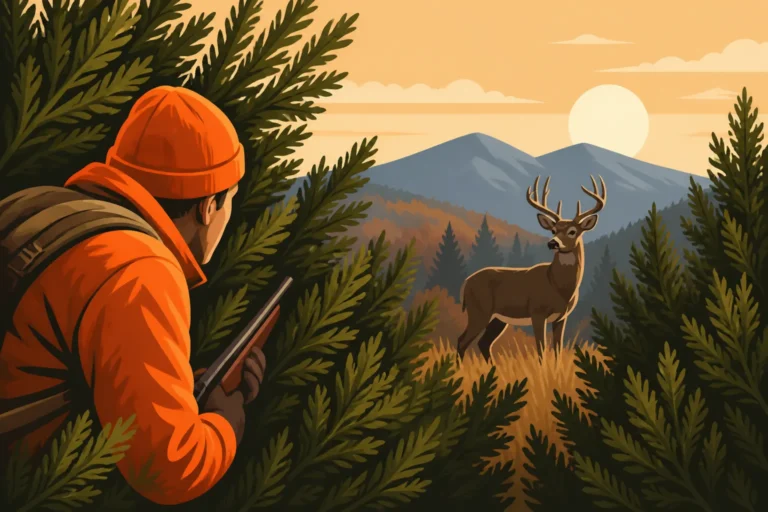
Blend In and Break Up Your Outline: Your visual signature needs to be as minimal as your auditory one. Wear camouflage that matches the surroundings. If you're in a field of golden stubble, opt for lighter, more open patterns. If you're tucked into a dark treeline, use darker, more broken-up camo. Avoid wearing anything shiny that could reflect sunlight. The most common mistake is silhouetting yourself against the skyline. Always try to approach with a background behind you, whether it's a stand of trees, a hill, or even the shadows of first light. For instance, when Using a Ground Blind on Public Land, ensure it's well-brushed in and blends seamlessly with the surroundings.
Utilize Low Light for Entry: The best time to enter your stand location is almost always well before legal shooting light for a morning hunt, or several hours before dusk for an evening hunt. This allows you to get settled, calm down, and for the woods to return to their natural state of quiet before deer start moving. Entering in pitch darkness can be disorienting, but it ensures you’re in position long before deer are even thinking about heading to the corn. A good headlamp with a red light setting is indispensable for these pre-dawn treks, preserving your night vision while allowing you to navigate safely.
Specific Entry Route Strategies
There isn't a one-size-fits-all approach. Your strategy needs to adapt to the specific layout of the field and its surrounding cover.
The Treeline Crawl: This is often the safest bet. If your cut cornfield has a contiguous treeline or a thick fencerow along one side, use it. Stay 10-20 yards inside the timber, moving slowly and deliberately. The trees provide visual concealment and help muffle sound. This allows you to approach your stand location from a direction that keeps the woods between you and the open field, where deer might already be. It’s an effective way to stay hidden until you are ready to climb into your stand or ground blind.
The Ditch or Swale Approach: Natural low points in the landscape offer excellent concealment. Many cornfields have drainage ditches, shallow creek beds, or even just subtle swales. These provide a natural trench to move through, keeping you below the deer’s line of sight. This strategy is particularly effective in flat terrain where other cover is sparse. It's a method that often proves fruitful when Working a Creek Bottom for Late-Season Deer, as deer naturally use these features for travel too. Be mindful of water or mud, especially if you're in hip waders or chest waders.
The "Sacrifice" Route: Sometimes, the most direct path to your stand might also be a path deer frequently use. In these situations, you might intentionally use that path as your entry, knowing full well you are "contaminating" it with human scent. The key here is to only use it when the wind is perfectly in your favor, blowing your scent far away from where deer are likely to be. You also commit to not expecting to see deer on that specific path during the hunt. This route is purely for ingress and egress, designed to get you to a stand that overlooks other deer travel paths or feeding areas, far from your entry. This strategy requires advanced planning, often utilizing detailed satellite imagery from tools like GoHunt to visualize and commit to your route.
Strategic Stand Placement for Cut Cornfields
Having scouted the field and perfected your entry, the final piece of the puzzle is selecting the ideal stand location. This is where all your hard work culminates, putting you in a position for a shot.
Setting Up on the Edge
For many hunters, the most common and often most effective strategy is to set up on the very edge of the cut cornfield, right where it transitions into another type of cover. This maximizes your chances of intercepting deer as they move between bedding and feeding areas.
Your primary consideration for an edge setup is always to position yourself on the downwind side of where you expect deer to approach or feed. If deer are coming from a bedding area to the west and entering the corn from the north, you want your stand to the east or south, with the wind blowing from the deer, past you, and away from their approach. This is crucial for avoiding detection. For example, if you're trying to intercept deer moving into a field near the Connecticut River, you'd want to be mindful of prevailing winds off the water.
Look for transition zones – these are natural funnels where two different types of habitat meet, or where the cornfield itself narrows. Common transition zones include:
- Where the cornfield meets a dense woodlot or a thicket of young growth.
- Where a creek bottom or drainage ditch emerges from cover and skirts the cornfield.
- Areas where a fencerow or old stone wall provides a natural linear travel corridor.
- Small fingers of timber or brush that jut out into the cornfield, creating a natural ambush point.
These are the places where deer feel safest moving in daylight and are classic spots for deer to stage before entering the wide-open field. Thinking about Hunting a Funnel Between Two Woodlots gives you an idea of the type of narrow passage you're looking for.
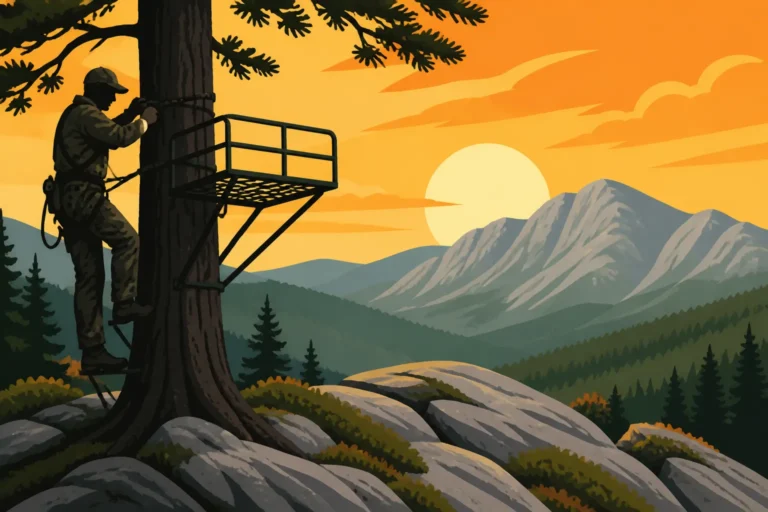
Finally, ensure your stand is positioned within thick cover. Whether it's a treestand overlooking the field edge from a mature oak, or a ground blind tucked into a dense hedgerow, you need to break up your silhouette. Don’t set up in a sparse tree or expose yourself against the sky. If using a ground blind, take the time to Brushing In a Blind on a Field Edge thoroughly, making it an indistinguishable part of the landscape. The goal is to be invisible, giving you time to react when a deer presents a shot opportunity.
Interior Setups for Aggressive Hunters
While edge setups are standard, for the more aggressive or adaptable hunter, venturing into the interior of a cut cornfield can sometimes yield spectacular results, especially if deer are spending more daylight hours within the field itself due to pressure or specific food concentrations.
One option is a stubble stand. If the remaining corn stubble is particularly tall and dense, or if there are slight rises or depressions that offer good concealment, a low-profile ground blind can be incredibly effective right in the middle of the field. This works best when you’ve observed deer entering the field well before dark and bedding down within it. The key here is not just concealment, but also your entry and exit strategies; you must be able to get in and out without being seen or heard, often under the cover of complete darkness. This is a more advanced technique but can be deadly if executed properly, especially for a hunter thinking about Hunting a Standing Corn Field for Deer before it's cut.
Another great interior spot is to look for islands of cover. Sometimes, a farmer might have left a small clump of trees, a thicket of brush, or a rocky outcrop right in the middle of the cornfield. These "islands" become natural sanctuaries for deer within the field. Setting up a treestand or a ground blind on one of these islands can put you right in the heart of the action, intercepting deer that are feeding or moving between different parts of the field. These areas offer the dual advantage of cover and an elevated vantage point.
Finally, don't overlook water sources within or immediately adjacent to the field. Any small, stagnant puddle, a seasonal seep, or even a low spot that collects rainwater can become a vital watering hole for deer, especially if other water sources are frozen or distant. Setting up near a water source, coupled with a good food source like cut corn, can create an irresistible attraction for deer, making it a prime location for a stand. Just ensure you can approach it without contaminating the water or the immediate area with your scent. Just as with Hunting a Clover Plot at First Light, knowing what draws deer to a specific spot is key.
Remember, every cut cornfield is different, and the deer within it will adapt to pressure and food availability. Flexibility and a willingness to adapt your strategy are the most important tools in your New Hampshire hunting arsenal.
Disclaimer
Always consult the latest New Hampshire Fish and Game Department regulations and local ordinances before hunting. This guide provides general information and recommendations, but it is your responsibility to understand and adhere to all applicable laws.