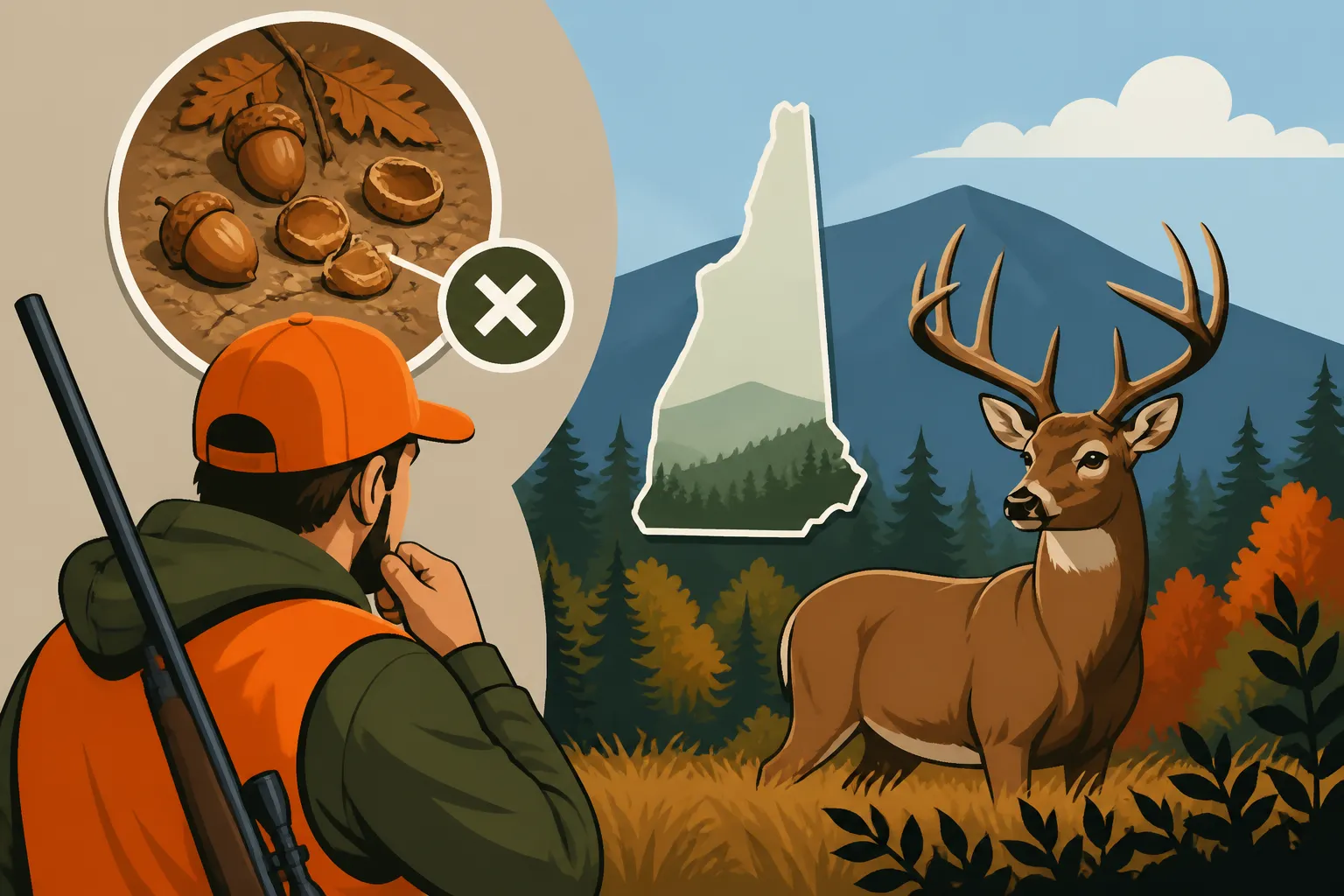
Hunting After a Poor Acorn Year
There’s nothing quite like the sting of a poor acorn year in New Hampshire. You've spent months, maybe even a full year, watching those mighty oaks, dreaming of deer piling into those prime feeding areas come fall. Then, late summer rolls around, and you walk through the woods only to find a meager scattering of acorns, or worse, none at all. It’s disheartening, frustrating, and can leave you wondering where on earth the deer will be. But don't despair! This guide is all about helping you adapt your hunting strategies to successfully chase New Hampshire whitetails when the main mast crop fails.
Understanding the Impact of a Poor Acorn Year
When Mother Nature throws a curveball and a critical food source like acorns dwindles, it sends ripples through the entire deer ecosystem. The consequences for deer behavior and, by extension, our hunting strategies, can be profound. It's not just about one food item missing; it's about a complete shift in how deer navigate their world.
The Critical Role of Acorns in a Deer's Diet
Acorns are, simply put, a powerhouse food source for white-tailed deer. They are incredibly rich in carbohydrates and fats, providing the essential energy deer need to pack on weight before the harsh New Hampshire winter. Think of them as high-octane fuel for deer. When acorns are abundant, deer become quite patterned, often spending significant time in oak flats, gorging themselves. This makes scouting and predicting their movement relatively straightforward. They’ll often hit these spots at predictable times, moving from nearby bedding areas. For hunters, finding those hot oak stands is often half the battle.
However, when this crucial food source is scarce, deer can’t rely on those easy calories. This dietary gap forces them to seek out other, often less desirable, forage. The absence of a strong acorn crop can leave deer physiologically stressed, especially leading into the late season. It directly impacts their energy reserves, which are vital for surviving the rigors of the rut and the brutal cold and deep snow that often defines winters here in the Granite State. Understanding these physiological needs is the first step in predicting their altered behavior and can inform your approach to hunting in a given year, especially when considering Late-Season Food Sources for New Hampshire Whitetails.
How Deer Behavior Shifts Without Abundant Mast
The most immediate and noticeable change in deer behavior during a poor acorn year is their dispersal. Instead of congregating in concentrated oak areas, deer spread out, often traveling much further distances to find sustenance. This makes them feel less "patternable" and can lead to a sense of frustration for hunters who are used to setting up on predictable food plots or oak ridges.
Their daily routines also become more erratic. With no single, dominant food source, deer might browse more sporadically throughout the day, spending less time in one location. This means they are constantly on the move, searching for anything edible. This increased movement can be both a challenge and an opportunity. While it’s harder to pinpoint a specific feeding time or location, the sheer act of constant foraging means deer are moving more during daylight hours, which can work in a hunter's favor if you're in the right place at the right time. Furthermore, deer might become less tolerant of hunting pressure in preferred areas, pushing them into thicker, less accessible cover, or making them largely nocturnal if disturbed too often. Adapting to these shifts requires a deep understanding of alternative food sources and strategic adjustments to your scouting and hunting methods.
Shifting Your Focus: Alternative Food Sources
When the acorns aren't dropping, New Hampshire deer don't just throw up their hooves and give up. They adapt, and so must we. Their survival instinct kicks in, driving them to find any other viable food source available. As hunters, our job is to anticipate these changes and scout accordingly. This often means looking beyond the traditional "big three" and expanding our understanding of a deer's palate in the Granite State.
Browsing and Foraging in New Hampshire's Woods
In the absence of a strong mast crop, deer revert to being primary browsers. This means they'll be seeking out tender shoots, leaves, and twigs from a wide variety of plants and trees. New Hampshire’s diverse forests offer a surprisingly rich buffet, even in tough years. Look for areas with dense undergrowth, young saplings, and briar patches. Specific species that become more crucial include:
- Maple Shoots: Young maple growth is highly palatable and digestible for deer. Focus on recently logged areas or clear-cuts where sunlight hits the forest floor, promoting new growth. These areas often turn into deer magnets, offering both food and cover. A great example of this would be Hunting a Clear-Cut Regrowth Edge.
- Aspen and Birch: The tender buds and twigs of these trees can provide essential nutrition. Areas with a mix of deciduous trees, especially where logging has occurred in the last 5-10 years, will often have a good supply of this browse.
- Dogwood, Viburnum, and Witch Hazel: These shrubs and small trees often grow in the mid-story of the forest and provide consistent browse. Look for heavily "hedged" branches where deer have been nipping away.
- Conifers (Hemlock and Balsam Fir): While not a preferred food source, deer will browse on the needles of hemlock and balsam fir during periods of extreme food scarcity, particularly in deep winter. You'll often find these deer wintering yards (DWYs) in thick softwood stands, offering both thermal cover and a last-resort food source.
When scouting for these browse sources, remember that deer will work these areas repeatedly. Look for fresh signs of nipped twigs, tracks, and droppings. A tool like the GoHunt app can help you identify recent timber harvests or dense cover areas that might be holding these browse species.
Agricultural Fields and Forgotten Orchards
For hunters in the more settled parts of New Hampshire, or those hunting near farm country, agricultural fields become incredibly important in a lean mast year. While New Hampshire isn't a huge agricultural state compared to some others, pockets of farming exist, offering high-energy alternatives.
- Corn Fields: If standing corn is still available, deer will absolutely hammer it. Even after harvest, they will pick through leftover kernels. Scout the edges of these fields, especially where they meet thick cover, for entry and exit points.
- Hay Fields/Clover Plots: While less calorie-dense than corn, deer will still graze on these, particularly in the early bow season. Sometimes, a farmer's neglected hayfield can be an unexpected hot spot.
- Apple Orchards: New Hampshire has many old, forgotten apple orchards, some still producing fruit. These are gold mines in a poor acorn year. Deer will travel significant distances for apples, which are high in sugar. Look for dropped apples, disturbed ground, and fresh tracks. Remember, Hunting a Standing Apple Orchard requires careful scouting to find active trees.
- Private Gardens: Don't overlook smaller, private plots. A farmer's forgotten potato patch or a backyard pumpkin patch can become a major draw for deer in a tough year. Always ensure you have explicit permission before hunting on or near private property.
These man-made and semi-natural food sources offer concentrated energy that deer desperately need. The key is finding them, understanding how deer are accessing them, and setting up accordingly.
Soft Mast and Other Hard Mast Options
Beyond acorns, there are other natural mast crops that might provide some relief for deer, though often on a smaller, more localized scale.
- Wild Grapes: Often found along field edges, old stone walls, or climbing through trees, wild grapes offer a sweet, high-energy snack. Look for areas with heavily browsed vines and droppings beneath them.
- Beechnuts: While not as widespread or reliable as acorns, if you have American Beech trees in your hunting area that happen to have a good crop, deer will absolutely seek them out. Beechnuts are also high in fat. However, good beechnut years are often cyclical and can be just as scarce as acorns.
- Crabapples and Wild Pears: Similar to cultivated apples, wild crabapple and pear trees, often found along old farmsteads or fencerows, can be incredibly attractive to deer. These are often overlooked by other hunters.
The beauty of these alternative food sources is that they are often less obvious to the casual observer, and therefore, potentially less pressured. Finding these hidden gems requires diligent scouting and a keen eye for deer sign.
Strategic Scouting and Stand Placement
A poor acorn year isn't just a challenge; it's an invitation to become a better, more adaptable hunter. It forces you to shed old habits and really "read" the woods. Your scouting efforts become paramount, shifting from simply looking for oak flats to becoming a detective, piecing together the subtle clues deer leave behind.
Scouting Beyond Oak Flats
This is where your boots-on-the-ground effort really pays off. Forget those traditional oak ridges for a while. You need to expand your search to areas you might have previously overlooked or only considered secondary.
- Focus on Browse: As discussed, identify those clear-cuts, young timber stands, and thickets. Look for signs of heavy browsing – twigs nipped cleanly, often with a rough edge from deer teeth, and an absence of leaves or buds up to about four feet high. Follow trails into and out of these areas.
- Explore Waterways and Swamp Edges: These areas often support different vegetation, including more succulent plants and shrubs that hold moisture and provide consistent browse. Deer will often stick to these low, damp areas for both food and cover, especially when the uplands are dry or barren. A good example of this could be Hunting a Beaver Flowage Edge.
- Old Logging Roads and Trails: These offer easy travel corridors and often have regenerating growth along their edges, making them prime browsing spots. They also provide natural funnels for deer movement between bedding and feeding areas.
- Utilize Mapping Technology: Tools like GoHunt or the New Hampshire Fish and Game App become invaluable. Use satellite imagery to identify different forest types, clear-cuts, and potential agricultural fields. Look for changes in canopy cover that indicate younger growth or recent disturbance. Cross-reference this with topo maps to find saddles, ridges, and low-lying areas that might concentrate deer movement. When you're Scouting With the New Hampshire Fish and Game App, pay close attention to land ownership overlays to ensure you're within public hunting boundaries or have permission for private land.
Remember, scouting isn't just about finding deer. It's about understanding why deer are where they are, and then predicting where they'll go next based on available resources. In a poor mast year, those resources are scattered, making the deer more scattered too.
Targeting Travel Corridors Between Sparse Food
With food sources more spread out, deer will inherently travel more between bedding and feeding areas. This makes focusing on travel corridors, pinch points, and funnels more critical than ever. Instead of staking out a food source directly, you might be better served by intercepting deer as they move to and from these scattered food patches.
- Natural Funnels: Look for terrain features that naturally constrict deer movement. This could be a narrow strip of woods between two open fields, a saddle between two ridges, or a strip of thick cover bordering a creek. These are high-percentage areas to catch deer moving during daylight hours. A perfect example would be Hunting a Funnel Between Two Woodlots.
- Man-Made Funnels: Old fencerows, stone walls, logging roads, or even utility lines can act as deer highways. Deer often prefer to follow the path of least resistance, especially when covering more ground.
- Bedding to Feeding Routes: Even in tough years, deer still follow a pattern of bedding during the day and moving to feed. Identify the thickest, most secure bedding cover (softwood swamps, dense clear-cuts, laurel thickets). Then, using your knowledge of alternative food sources, try to pinpoint the most direct, secure travel routes between these bedding areas and the newly identified food. This is where understanding Where New Hampshire Bucks Bed in Thick Cover becomes critical.
When placing stands, consider the wind direction carefully, especially if deer are constantly moving. A mobile approach with hang-and-hunt setups can be more effective than relying on a single fixed stand, allowing you to adapt to new sign as you find it.
Adapting to Increased Pressure and Deer Movements
Poor food years often mean increased hunter pressure on the few accessible food sources that do exist. This can make deer even warier and more nocturnal. To counter this, you'll need to think strategically about where and when you hunt.
- Hunt the "In-Between" Areas: Instead of directly on a pressured food source, consider setting up a bit deeper into the cover, along a travel corridor that leads to that food. Deer might stage here before heading out into the open, or they might browse their way in slowly.
- Focus on Thick Cover: Deer will use dense cover not just for bedding but also as safe travel routes during daylight. Look for strips of thick softwood, blowdowns, or dense regeneration that provide security. This is particularly true for mature bucks.
- Adjust Your Timing: If deer are going nocturnal on popular feeding areas, shift your focus to early mornings when they are returning to bed, or late afternoons when they are first emerging. Sometimes, even a brief mid-day movement can occur as deer slowly browse.
- Minimize Your Impact: With deer already stressed and wary, reduce disturbance. Park further away, use quiet entry and exit routes, and be mindful of your scent. Every little bit helps. New Hampshire's White-Tailed Deer Across New Hampshire are known for their resilience, but they are also incredibly sensitive to pressure.
Adapting Hunting Methods in Tough Years
When acorns are scarce, relying on old habits might leave you empty-handed. This is the year to dust off those neglected hunting techniques and really put your woodsmanship to the test. The name of the game is adaptability, and sometimes, that means trading a comfortable sit for a more active approach.
Still-Hunting and Tracking for Success
In a year where deer are more scattered and constantly on the move for browse, a static stand might not always be the most effective strategy. This is where still-hunting and tracking truly shine.
- The Art of Still-Hunting: Still-hunting means moving slowly and deliberately through the woods, taking a few steps, then pausing for several minutes to observe, listen, and scan for deer. This method allows you to cover more ground, finding deer as they browse or travel between sparse food sources and bedding areas. Focus on areas with good visibility but also enough cover for deer. Ridges, benches, and the edges of thickets are prime candidates. In a place like the White Mountain National Forest, mastering Still-Hunting White Mountain National Forest Timber can be incredibly effective when deer aren't concentrated. You're essentially taking the hunt to them, rather than waiting for them to come to you.
- Reading the Tracks: When deer are moving more, fresh tracks become a crucial indicator. Look for distinct tracks that show direction and gait, especially in soft earth, mud near water sources, or fresh snow. If you find a fresh set of tracks, especially a larger buck's, carefully consider tracking it. This is an extremely challenging but rewarding method. Pay attention to how the deer is moving: are they browsing as they go (short, meandering steps) or on a mission (longer, more direct strides)? Understanding these nuances can help you anticipate their next move.
- Wind and Thermals are Your Best Friends: When still-hunting, wind direction and thermals are paramount. Always try to hunt into the wind or with a quartering wind, allowing your scent to be carried away from where deer might be. In hilly New Hampshire terrain, thermals often rise in the morning and fall in the evening; use this to your advantage to approach areas undetected.
Ground Blinds and Ambush Sites
While stand hunting can be challenging in a poor mast year due to scattered deer, setting up a well-brushed-in ground blind can be an excellent alternative, especially if deer are seeking out thicker cover.
- Leveraging Thick Cover: When acorns are scarce and pressure might be higher, deer, particularly older bucks, will often stick to the densest cover available. This could be a thick softwood stand, a laurel thicket, or a regenerating clear-cut. A ground blind allows you to slip into these thick areas and set up a concealed ambush. You're effectively taking the hide to the deer, rather than trying to get them to an elevated position. Learning Using a Ground Blind on Public Land can open up a lot of new hunting opportunities in these situations.
- Strategic Placement: Place your ground blind along a confirmed travel corridor within thick cover, or on the downwind side of a concentrated browse area. Make sure it's brushed in thoroughly with natural vegetation to break up its outline. Deer are incredibly wary, and any unnatural shape will stand out.
- Patience is Key: Just like stand hunting, success with a ground blind often comes down to patience. Be prepared for long waits, as deer might move slowly through these dense areas, browsing as they go.
Re-evaluating Calls and Scents
In a poor acorn year, traditional calling and scent strategies might need a tweak.
- Rattling and Grunting: While bucks might not be as active during the rut in a nutritionally stressed year, rattling and grunting can still be effective, especially if deer are more spread out and trying to locate each other. Keep your rattling sequences shorter and less aggressive. Bucks might be more cautious. You might find that Rattling Volume in Thick Softwood Cover needs to be adjusted; a quieter, more subtle approach could be better.
- Doe in Estrus Scents: These can still pull in bucks looking for does, regardless of food availability. However, remember that deer might not be as eager to cover long distances for a scent if their energy reserves are low. Place scents strategically on known travel routes.
- Food-Based Lures (Where Legal): If permitted in your WMU, some food-based attractants (like apple or persimmon scents) could help draw deer to an area. Always check New Hampshire Fish and Game regulations for your specific WMU on the legality of lures and attractants.
By being flexible and willing to experiment with different methods, you can significantly increase your chances of success even when the acorn crop disappoints. The best hunters are those who can read the signs, understand deer behavior, and adapt their strategies to the current conditions, no matter what nature throws their way.
Disclaimer
Hunting involves inherent risks, including but not limited to injuries from falls, firearms, or interactions with wildlife. Always prioritize safety by following all New Hampshire Fish and Game laws and regulations, wearing appropriate safety gear, and practicing responsible hunting ethics. This guide is for informational purposes only and should not replace formal hunter education or professional guidance. Always verify current regulations and season dates with the New Hampshire Fish and Game Department before heading afield.