Checking the Hunting Digest for Your WMU’s Bear Dates
There's nothing quite as frustrating as meticulously planning your New Hampshire bear hunt, only to realize you're not absolutely sure if the season is actually open for your specific spot and your chosen method. Those dates can feel like a moving target, varying wildly depending on which Wildlife Management Unit (WMU) you're in and whether you're baiting, hunting with hounds, or still-hunting. This guide will walk you through exactly how to confidently navigate the New Hampshire Fish and Game Department's official Hunting Digest to pinpoint your bear season dates, saving you a headache and potential legal trouble.
The Frustration of Fragmented Bear Season Dates
It's a common lament among New Hampshire hunters: "Why can't all the bear seasons just be the same?" The reality is, they can't, and that's often where the confusion and frustration begin. You hear a buddy talk about his successful hunt, but then you check the calendar for your area and find the dates don't match up. It's enough to make you second-guess everything.
Why Dates Aren't One-Size-Fits-All
The varied bear season dates across New Hampshire's landscape aren't arbitrary; they're a carefully managed strategy by the New Hampshire Fish and Game Department. Biologists consider several critical factors when setting these complex regulations. For starters, bear population densities aren't uniform across the state. The sprawling wilderness of the North Country, for example, often supports a healthier, more robust bear population compared to the more suburbanized regions in the southern part of the state. This means different hunting pressure can be tolerated and is, in fact, sometimes desired, in various WMUs.
Furthermore, food availability plays a huge role. Early mast crops, the presence of agricultural fields, or even drought conditions can significantly influence bear movement and feeding patterns. Setting season dates that align with these biological realities helps ensure a sustainable harvest, allowing bears to forage and fatten up for winter, while also providing ample hunting opportunities. It’s all part of the larger picture of New Hampshire's WMU-Specific Bear Season. These biological and ecological nuances directly influence Why Bear Dates Vary by WMU and Method. From a hunter's perspective, this complexity means you can't just assume the dates you know for one area will apply to another, even if it's just a short drive away.
The Trap of Misinformation and Outdated Sources
In today's fast-paced world, it's incredibly easy to fall into the trap of misinformation. A quick scroll through social media, a casual conversation at the local diner, or even a glance at last year's digest can lead you down a very wrong path. I've heard countless stories of hunters relying on outdated information, only to find themselves inadvertently hunting out of season. It's not just frustrating; it can carry serious legal consequences, including hefty fines and even license revocation. Imagine putting in all that effort scouting, setting up stands, or prepping your hounds, only to realize you were hunting illegally.
The internet, while a fantastic resource, is also a minefield of old PDFs and unofficial summaries. Many well-meaning forums or blogs might reference past regulations without clearly stating that dates change annually. The key takeaway here is that when it comes to legal hunting, "close enough" is not good enough. You absolutely must consult the official, most current source to ensure your hunt is legitimate and ethical. This diligent approach is paramount to avoiding unnecessary stress and ensuring a legal hunting experience.
Your GPS to Bear Season: The Official Hunting Digest
Given the complexities, the New Hampshire Fish and Game Department's annual Hunting Digest is your absolute best friend. Think of it as your official, legally binding map to all things hunting in the Granite State. It’s the single source of truth for season dates, regulations, and all the nitty-gritty details that keep you on the right side of the law.
Where to Find the Latest Digest Online and In-Person
Finding the current year's digest is the first, and arguably most important, step. The most reliable place to find it is always the official New Hampshire Fish and Game Department website. They typically publish the new digest well in advance of the fall hunting seasons, making it easily accessible as a downloadable PDF. This digital version is incredibly convenient; you can save it to your phone or tablet, meaning you have the complete rulebook with you even when you're deep in the North Country with no cell service. Many hunters use mapping apps like GoHunt which often integrate regulation summaries or provide direct links to the official digest, making it even easier to keep all your planning in one place.
If you prefer a physical copy – and I know many of us do, myself included, for marking up with notes – you can typically pick one up at any New Hampshire licensing agent. This includes most sporting goods stores, town clerk's offices, and even some general stores that sell hunting and fishing licenses. Always confirm you're grabbing the current year's edition, as they are updated annually, sometimes with significant changes. Don't just grab the first one you see; double-check the publication year prominently displayed on the cover.
Navigating the Digest to Pinpoint Your WMU's Bear Dates
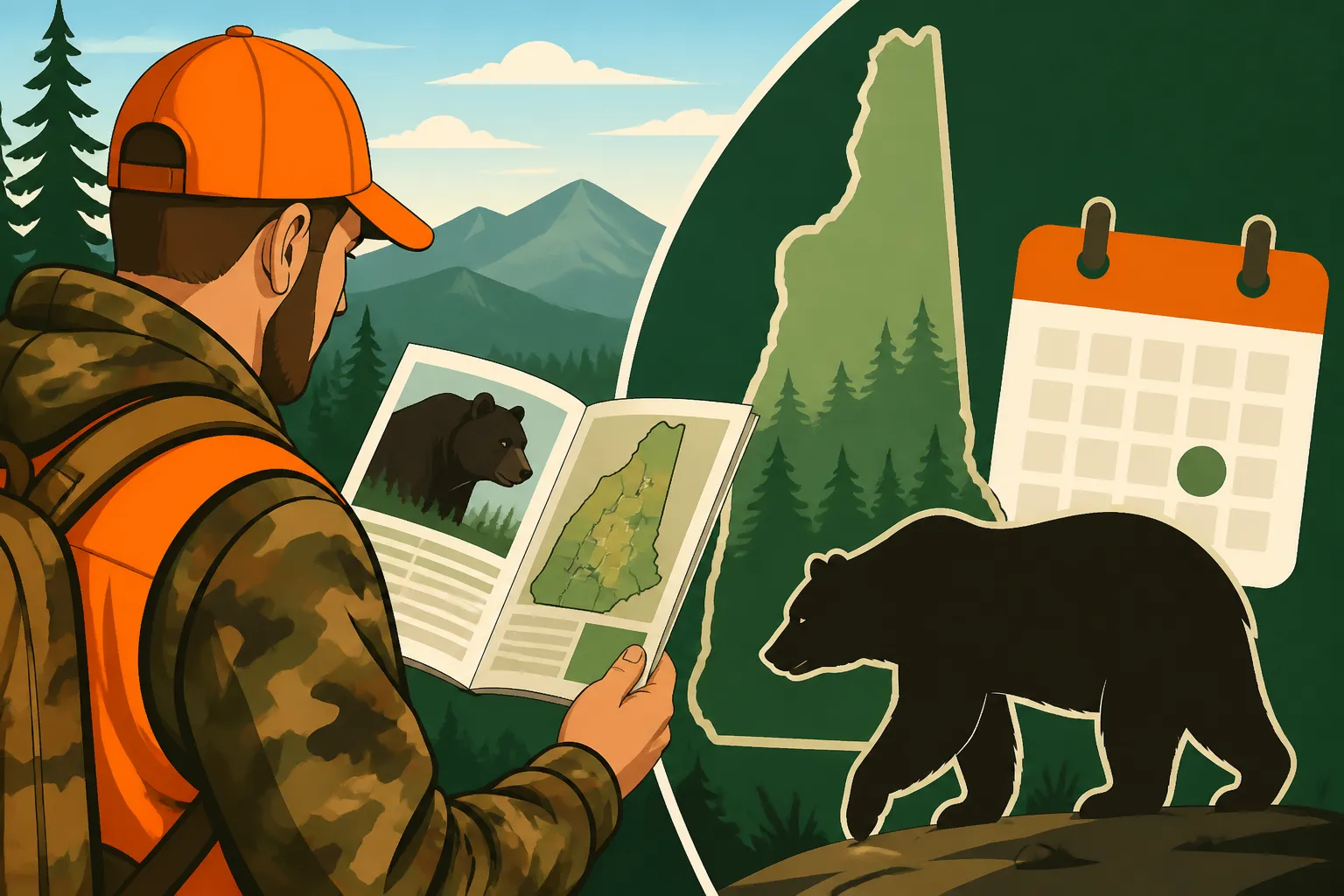
Once you have the digest in hand, or pulled up on your screen, the next step is navigating its pages to find the bear specific information. Don't just start flipping randomly; use the table of contents! It's usually clearly laid out and will have a dedicated section for "Bear Hunting" or "Big Game Seasons."
Here's a general step-by-step approach:
- Locate the Bear Section: Find the page numbers for bear hunting in the table of contents.
- Identify the Season Dates Table: Within the bear section, look for a table or a dedicated list of "Bear Season Dates." This is usually where the magic happens.
- Find Your WMU: The table will almost always be organized by WMU (Wildlife Management Unit). You'll need to know which WMU your hunting area falls into. WMUs are typically identified by letters (e.g., A, B, C1, C2, D1, D2, etc.).
- Cross-Reference by Method: Crucially, within each WMU's listing, you'll see different dates for different hunting methods:
- Baiting Season: This often has its own specific start and end dates.
- Hound Season: Similarly, hunting with hounds has distinct legal periods.
- Still-Hunting/Stalking: For those not using bait or hounds, there's usually a general season, often overlapping with firearms deer season in some areas.
Pay close attention to these distinctions. For example, the season for Baiting New Hampshire Bears Legally by WMU will be different from Hunting Bear With Hounds by WMU. The digest will lay this out clearly, often in a grid format, making it easier to read. Remember, even a single day difference can mean the difference between a legal harvest and a violation.
Understanding New Hampshire's WMU System for Bear Hunting
The concept of Wildlife Management Units (WMUs) is central to New Hampshire's approach to managing all game species, and bears are no exception. These units are more than just arbitrary lines on a map; they are the backbone of sustainable wildlife management.
Decoding Wildlife Management Units WMUs
WMUs are essentially geographical areas delineated by the New Hampshire Fish and Game Department for the purpose of managing wildlife populations. These boundaries often follow natural features like major rivers, mountain ranges, or roads, and they group areas with similar habitat, bear densities, and human population characteristics. For instance, the vast, unbroken timberlands of WMUs A and B in the North Country will have vastly different bear management goals and population dynamics than WMU M in the more fragmented, developed southeastern corner of the state.
Understanding which WMU you're hunting in is non-negotiable. It dictates not just bear season dates, but often bag limits, legal weapons, and even some baiting or hound-running regulations. If you're unsure about your WMU, the Fish and Game Department website offers interactive maps, and many sophisticated hunting apps like GoHunt or onX Hunt provide WMU overlays that display your precise location within these boundaries. This is especially useful if your hunting area is near a WMU border. You can also find detailed information about the specific characteristics of New Hampshire Wildlife Management Areas within the digest, which can help you understand the rationale behind the regulations for each unit.
How Bear Season Dates Differ by WMU and Method
The variations in bear season dates are a direct reflection of the nuanced management strategies applied to each WMU. For example, some WMUs might have a longer baiting season to allow for greater harvest potential where bear populations are high or causing nuisance issues, while others might have shorter seasons or restrictions due to lower bear numbers or higher human density.
Let's look at a simplified, illustrative example of how these dates might appear in the digest, highlighting the common differences:
| WMU | Baiting Season (Start – End) | Hound Season (Start – End) | Still-Hunting/Stalking (Start – End) |
|---|---|---|---|
| A | Sep 1 – Oct 15 | Sep 1 – Oct 31 | Sep 1 – Nov 30 |
| B | Sep 1 – Oct 15 | Sep 1 – Oct 31 | Sep 1 – Nov 30 |
| C1 | Sep 1 – Oct 15 | Sep 1 – Oct 31 | Sep 1 – Oct 15 (closes earlier) |
| D2 | Sep 1 – Oct 25 | Sep 1 – Nov 15 | Sep 1 – Nov 15 |
| K | Sep 1 – Oct 15 | Sep 1 – Oct 31 | Sep 1 – Oct 15 (closes earlier) |
(Note: These dates are illustrative and not current official New Hampshire bear season dates. Always consult the current year's NH Fish and Game Hunting Digest for precise, legally binding information.)
As you can see, even in this simplified table, the closing dates can vary significantly. WMUs with a higher bear population or in more remote areas might have longer seasons, especially for still-hunting, which often overlaps with the general firearms deer season. Conversely, WMUs closer to population centers, like K, might have earlier closing dates to manage hunter density or address potential conflicts. The specific rules for New Hampshire Bear Baiting and Hound Rules also play into these date variations, often having their own distinct openings and closings. It's crucial to consult New Hampshire Bear Season Dates by WMU directly in the digest for your specific area. Don't forget, you'll also need to be aware of New Hampshire Bear Hunting Permit Requirements before you even step foot in the woods.
Planning Your Hunt Around Confirmed Dates
Once you've navigated the digest and locked down your precise bear season dates for your chosen WMU and method, you're not just ready to hunt; you're ready to strategize. Knowing these dates isn't just a legal necessity; it's a fundamental part of effective hunt planning.
The Criticality of Pre-Season Scouting and Date Awareness
Pre-season scouting is always important, but when you're targeting bears, knowing the exact season dates before you scout makes your efforts far more efficient. For example, if you plan to bait, knowing the precise opening date of the Baiting New Hampshire Bears Legally by WMU season means you can plan your bait site setup, pre-baiting, and trail camera placement with perfect timing. Starting too early could be illegal, and starting too late might mean bears have already established patterns elsewhere. Similarly, if you're Hunting Bear With Hounds by WMU, understanding the specific hound season window dictates when you can begin your dog training and conditioning runs in the field.
Furthermore, these dates inform your scouting strategy. If the season opens early September, you'll be looking for signs of bears still heavily reliant on summer food sources like berries, apples, and early mast crops. If the season extends later into October, your focus might shift to acorn flats, beech ridges, or even agricultural fields as bears pack on calories for winter. This intelligent scouting, paired with confirmed dates, directly contributes to your success. Many hunters are also leveraging tools like the Scouting With the New Hampshire Fish and Game App to cross-reference their field observations with official regulations and WMU maps.
Double-Checking and Staying Updated Throughout the Season
You've got your dates, you've scouted, you're ready. But wait, there's one more crucial step: vigilance. While season dates are generally set well in advance, circumstances can sometimes lead to emergency closures, extensions, or other modifications. This is rare, but it does happen, especially in response to unforeseen events like disease outbreaks or extreme weather.
It's a good practice to periodically check the NH Fish and Game website for "News Releases" or "Season Updates" as the season approaches and even during the hunt. Many state wildlife agencies also offer email or text alerts you can subscribe to, keeping you directly informed of any critical changes. Think of it as always having GoHunt or a similar platform open for real-time updates – even if you're not using an app, the principle of staying informed is the same. By doing this, you're not just being a responsible hunter; you're ensuring that all your hard work and planning align perfectly with the current legal framework.
Common Pitfalls and How to Avoid Them
Even with the digest in hand, it's easy to make a misstep. I’ve seen it happen to even the most seasoned hunters. Understanding these common errors and how to proactively avoid them will save you a world of trouble and ensure your bear hunt is both enjoyable and legal.
The "I Thought I Knew" Syndrome
This is perhaps the most insidious pitfall: the conviction that you already know the rules, dates, and regulations. We've all been there – that comfortable familiarity that breeds a slight complacency. Maybe you've hunted bears in New Hampshire for twenty years, or you've hunted in a neighboring state with similar regulations. This "I thought I knew" syndrome can lead you to overlook critical annual updates or subtle differences between WMUs. For instance, the general New Hampshire Bear Population Estimate might be trending up statewide, but specific WMUs could see management adjustments based on localized factors, leading to minor date shifts.
The reality is, regulations change, even if only slightly, year to year. A closing date might shift by a week, a specific method might be tweaked, or new reporting requirements could be introduced. The solution is simple: approach each season as if you're a new hunter looking at the digest for the very first time. Don't rely on memory; rely on the printed word or the official digital version of the current year's digest. A quick, thorough review each season can prevent a costly and embarrassing mistake. This goes hand-in-hand with understanding New Hampshire Bear License Costs which can vary, so ensure your license is current and covers all the right permissions.
Not Cross-Referencing WMU Maps
Another common mistake, particularly in areas near WMU boundaries, is not accurately knowing which WMU you're physically standing in. Imagine your prime bear bait site is just a stone's throw from a WMU line. One side might be open for baiting until late October, while the other closes in early October. Hunting on the wrong side of that invisible line, even by accident, means you're out of season.
To combat this, a detailed WMU map is essential. The New Hampshire Fish and Game Department provides these, and again, mapping apps like GoHunt or onX Hunt are invaluable. These apps use GPS to show your precise location relative to WMU boundaries, often color-coded for clarity. Before you head into the woods, especially to a new spot or an area near a boundary, take the time to:
- Identify your hunting parcel: Pinpoint it on a map.
- Overlay WMU boundaries: See which WMU your parcel falls into.
- Note nearby WMUs: Be aware of adjacent WMUs and their boundaries.
- Confirm dates for your WMU: Double-check the digest for the dates specific to that WMU.
This meticulous approach eliminates guesswork and ensures that every minute you spend Hunting the November Firearms Opener or Bowhunting New Hampshire's Long Archery Season (if those dates overlap for bear in your WMU), you are doing so within the legal framework. Even when discussing general topics like Why New Hampshire's CWD Prevention Rules are important, remembering that WMU boundaries are often used for disease surveillance and management reinforces the importance of knowing your specific unit.
Disclaimer
Please remember that hunting regulations, season dates, and licensing requirements can change annually. The information provided in this guide is for general informational purposes only and is based on general knowledge of New Hampshire hunting regulations. It is not a substitute for the official, current New Hampshire Fish and Game Department Hunting Digest. Always consult the most recent official digest and any updated regulations from the New Hampshire Fish and Game Department before engaging in any hunting activities to ensure compliance with all state laws.