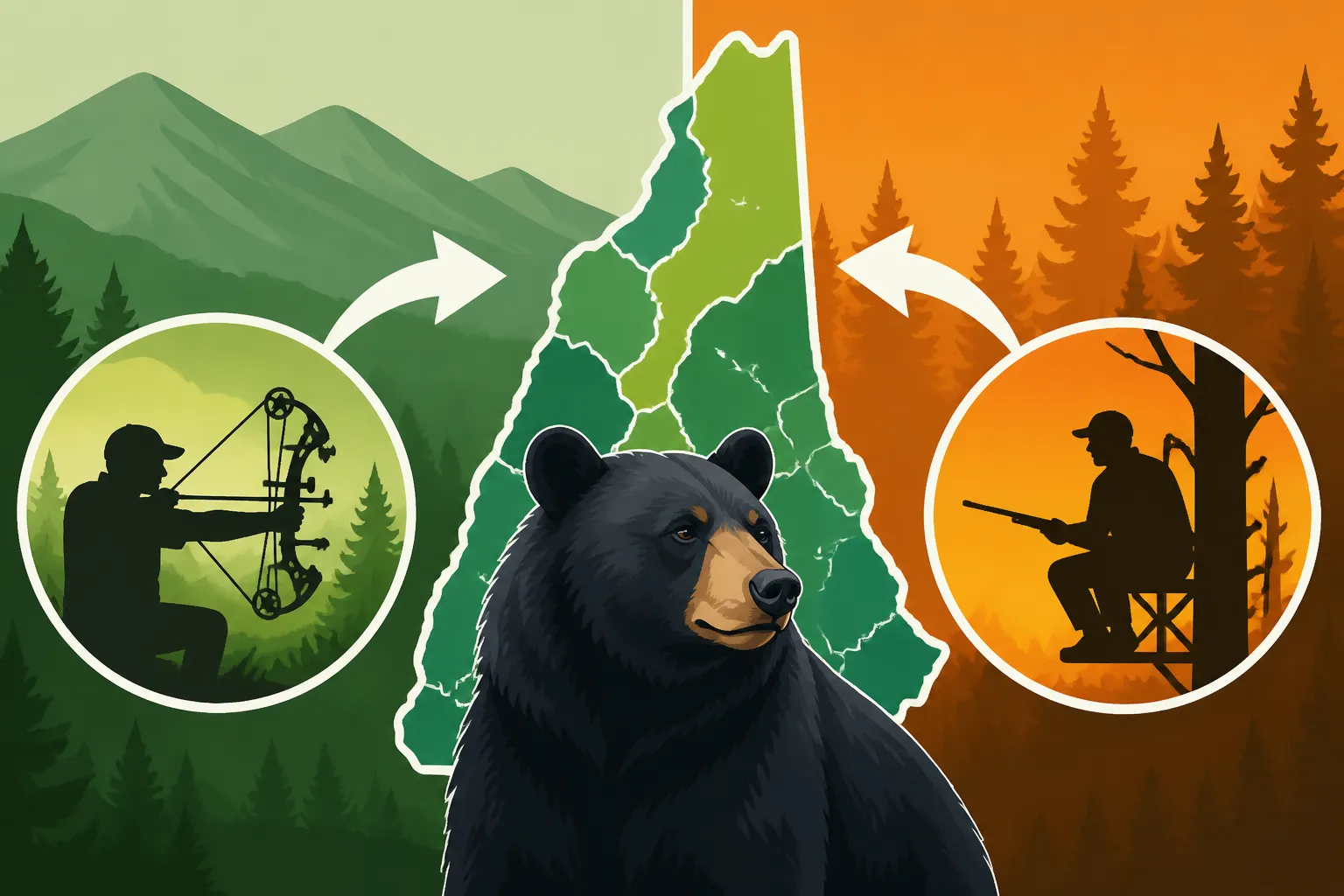
Why Bear Dates Vary by WMU and Method
It's incredibly frustrating, isn't it? You've got your calendar marked, your gear ready, but then you look at the New Hampshire hunting digest, and the bear season dates are a puzzle. Why is it that some areas allow baiting earlier, or hound hunting later, or even have different general season lengths? It feels like you need a degree in wildlife management just to figure out when you can legally pursue a bear. This guide is here to untangle that complexity, explaining the crucial reasons why bear season dates vary so much by Wildlife Management Unit (WMU) and hunting method across the Granite State, so you can plan your adventure with confidence.
Understanding New Hampshire's Wildlife Management Units WMUs
One of the biggest head-scratchers for hunters, especially those new to New Hampshire, is this concept of Wildlife Management Units, or WMUs. You might be looking at a map and seeing these lines dividing the state into zones, each with its own set of rules. It’s not just to make things complicated, I promise! These WMUs are the bedrock of how New Hampshire Fish and Game manages all wildlife, including our robust black bear population.
The Geographic and Ecological Basis for WMUs
Imagine trying to manage a single farm when some fields are rich, fertile bottomland and others are rocky, barren hillsides. You wouldn't treat them the same way, right? That's essentially why WMUs exist. They're scientifically defined regions of the state that share similar ecological characteristics, habitat types, and human population densities. For example, the expansive, timbered tracts of the North Country, encompassing WMUs like A, B, and C, are vastly different from the more fragmented, suburban-adjacent landscapes you might find in WMUs H2 or K in the southern part of the state.
These differences directly impact everything from available food sources (like mast crops and berries) to potential denning sites, and even how bears interact with people. In the vast wilderness of northern Coos County, bears have massive territories and fewer human encounters, whereas a bear in the Lakes Region might be accustomed to raiding bird feeders or compost bins. NH Fish and Game biologists use these units to implement management strategies that are tailored to the specific needs and conditions of the wildlife and human communities within that particular zone. This local approach allows for more precise control over populations and better resource allocation.
Bear Population Dynamics Across the Granite State
The varying habitat and human presence translate directly into differing bear population densities across New Hampshire. You've got areas, particularly in the northern and western parts of the state, where black bear populations are thriving and quite dense. These are the regions where bears have ample contiguous forestland, a buffet of natural foods, and less disturbance. Contrast that with some of the more developed southern WMUs, where bear numbers, while still healthy, might be slightly lower due to smaller tracts of suitable habitat and higher human density.
Understanding the New Hampshire Bear Population Estimate for each WMU is critical for Fish and Game. They meticulously collect data from various sources: bear nuisance complaints, road-killed bears, capture-and-release studies, and perhaps most importantly for hunters, harvest reports. Every time a bear is registered, valuable information is collected, like weight, sex, and age, which helps biologists paint a clearer picture of the local bear population's health and trends. If a WMU consistently shows high bear numbers and a strong growth rate, the season might be longer, or more liberal. Conversely, if a population is showing signs of stress or slowing growth in a particular unit, the season might be shortened or have stricter rules to ensure sustainability. It’s all about maintaining a healthy balance.
How Hunting Methods Influence Season Dates
Beyond the ecological differences that define WMUs, the method you choose to hunt bears also plays a huge role in when you can be in the woods. New Hampshire offers several distinct bear hunting methods, each with its own timing and strategic purpose, designed to manage the population effectively while providing diverse opportunities for hunters.
The Baiting Season: Timing and Management Goals
Baiting is a popular and effective method for harvesting bears in New Hampshire. You'll notice that the baiting season often opens earlier in the fall, sometimes even in late August or early September, long before the general firearms deer season. This isn't arbitrary; it's a strategic decision. Bears are trying to put on as much weight as possible before denning for the winter, and in these early weeks, natural food sources can sometimes be unpredictable. A well-maintained bait site can draw bears in reliably.
The early timing serves several management goals. First, it allows hunters to target bears before they are less active and more difficult to locate as natural food sources diminish or as they begin to prepare for denning. Second, baiting can be particularly effective in areas where biologists want to achieve a higher harvest rate to control burgeoning populations or mitigate human-bear conflicts. Establishing Baiting New Hampshire Bears Legally by WMU requires careful planning and adherence to specific regulations, including setback distances and types of bait. For hunters, it means dedicating time to scouting and preparing your site well in advance, often throughout the summer, before the season even opens. Using tools like GoHunt can be incredibly helpful for understanding property lines and setbacks when planning your bait site locations, especially when you're also trying to coordinate with specific WMU dates.
Hound Hunting: Unique Considerations and Timing
Hunting bears with hounds is a deeply traditional and highly effective method, and its season dates also have unique considerations. Typically, the hound season will open sometime after the baiting season has begun, and often overlaps with or runs parallel to parts of the archery or firearms seasons. The timing is crucial because hound hunting relies on bears being actively moving and leaving a scent trail for the dogs to follow.
Optimal conditions for hound hunting often involve cooler temperatures and moist ground, which helps dogs pick up the scent. While leaves on the trees can make visibility difficult in the early fall, a leaf-off period can actually assist in tracking the dogs and observing the treed bear. The hound season also extends the bear hunting opportunity across vast, rugged terrain where other methods might be less successful. The effort involved in Running Hounds on a New Hampshire Bear is immense, requiring dedicated training of the dogs and a deep understanding of bear behavior and local topography. This method is particularly valuable for managing bears in the more remote, mountainous regions, allowing hunters to cover large areas and locate bears that might otherwise be difficult to access.
Still-Hunting and Stalking: Integrated Seasons
For many hunters, pursuing a bear through still-hunting or stalking is a solitary, challenging endeavor, and these opportunities are generally integrated into the broader deer hunting seasons. You'll often find that the bear season for still-hunting is open concurrently with Bowhunting New Hampshire's Long Archery Season and New Hampshire's November Firearms Deer Season, allowing hunters to pursue bear incidentally while deer hunting.
This integration makes sense because still-hunting for bear requires similar tactics to deer hunting – moving slowly, observing keenly, and understanding game trails and feeding areas. While it might not yield as high a harvest rate as baiting or hounds in some areas, it provides a valuable opportunistic harvest, especially in WMUs with healthy bear populations. For example, while you're still-hunting white mountain national forest timber for a big buck, you might encounter a bear foraging on beechnuts. The season dates align with when bears are still actively feeding and ranging widely before denning, providing a window for hunters who prefer this more traditional, unassisted approach. It also caters to hunters who might not have the resources or time for a dedicated baiting or hound hunt.
The Role of Harvest Data and Management Objectives
Ultimately, the complex tapestry of New Hampshire's bear season dates, varying by WMU and method, isn't just a jumble of rules. It’s a carefully constructed management strategy, meticulously refined by the dedicated professionals at New Hampshire Fish and Game. Their decisions are rooted in science, data, and a deep understanding of the state's bear population.
Data-Driven Decision Making at NH Fish and Game
New Hampshire Fish and Game biologists aren't just guessing; they're constantly analyzing a wealth of data to make informed decisions about bear seasons. Each year, they pour over New Hampshire Bear Harvest Numbers by Method, breaking down the total harvest by WMU, by bait, by hounds, and by still-hunting. They look at the age and sex ratios of harvested bears, average weights, and reproductive rates. This information tells them if a population is growing, stable, or declining. They also consider factors like cub survival rates and the overall health of the herd.
For example, if a specific WMU shows a consistently high proportion of younger bears in the harvest, it might indicate a robust, growing population that can sustain a longer or more liberal season. Conversely, an increasing number of nuisance complaints in a particular region might prompt biologists to extend opportunities there to reduce human-bear conflict. They also factor in environmental conditions, like acorn or berry crop failures, which can influence bear movements and vulnerability. It's a dynamic process, and season lengths and timing are adjusted annually or bi-annually based on these real-world findings. This ensures that the management practices are adaptive and responsive to the current state of the bear population.
Balancing Hunter Opportunity and Population Health
The ultimate goal of New Hampshire's bear management is a delicate balance: providing ample and diverse hunting opportunities while ensuring the long-term health and sustainability of the black bear population across the state. The varied season dates and methods are tools to achieve this balance. By having distinct baiting, hound, and still-hunting seasons, NH Fish and Game can:
- Spread out the harvest: Different methods and staggered dates allow more hunters to participate without over-concentrating pressure at one time.
- Target specific population segments: Baiting, for instance, can be very effective at targeting adult bears, which can help regulate population growth.
- Address regional needs: As discussed, a WMU with high bear density or nuisance issues might have a longer season or more liberal rules to help manage those specific challenges, whereas a WMU with a smaller population might have a shorter, more restrictive season.
This comprehensive approach allows New Hampshire to boast a thriving black bear population, providing incredible hunting experiences for residents and non-residents alike. Before heading out, always consult the official hunting digest, and use resources like GoHunt to confirm Checking Your WMU's Bear Season Dates. It’s also wise to be aware of regulations like New Hampshire's CWD Prevention Rules, even if they don't directly apply to bear, as they are part of responsible hunting in the state. Remember, Scouting New Hampshire Public Land Before Season is crucial, and using Reading Aerial Photos for North Country Deer can also help locate prime bear habitat.
Here's a simplified look at how season dates might vary by WMU and method:
| WMU Region | Primary Habitat | Typical Baiting Season Start | Typical Hound Season Start | Typical Still-Hunting (Firearms) | Management Focus |
|---|---|---|---|---|---|
| North Country | Extensive Forests, Bogs | Early September | Mid-September | Mid-November | Population Management, Hunter Opportunity |
| Lakes Region | Forests, Fragmented Habitat | Late August | Early October | Mid-November | Nuisance Control, Population Stability |
| Southwest Hills | Mixed Forest, Rural Farmland | Early September | Late September | Mid-November | Moderate Harvest, Human-Bear Coexistence |
| Seacoast/Southeast | Smaller Woodlots, Suburban | Mid-September | Late October | Mid-November (often shorter) | Targeted Nuisance Management, Limited Opportunity |
Note: These are generalized examples. Actual dates vary significantly year-to-year and by specific WMU. Always consult the current New Hampshire Fish and Game Digest.
Understanding the 'why' behind these varied dates empowers you as a hunter. It shows that New Hampshire isn't just throwing darts at a calendar; they're implementing science-backed management to ensure healthy bear populations for generations to come, while also giving us plenty of opportunity to enjoy Public Hunting Land in New Hampshire.
Disclaimer
The information provided in this guide is for general informational purposes only and is not a substitute for the official New Hampshire Fish and Game hunting regulations. Hunters are responsible for knowing and adhering to all current laws and regulations, which can change annually. Always consult the most recent New Hampshire Hunting Digest before planning any hunting trip.