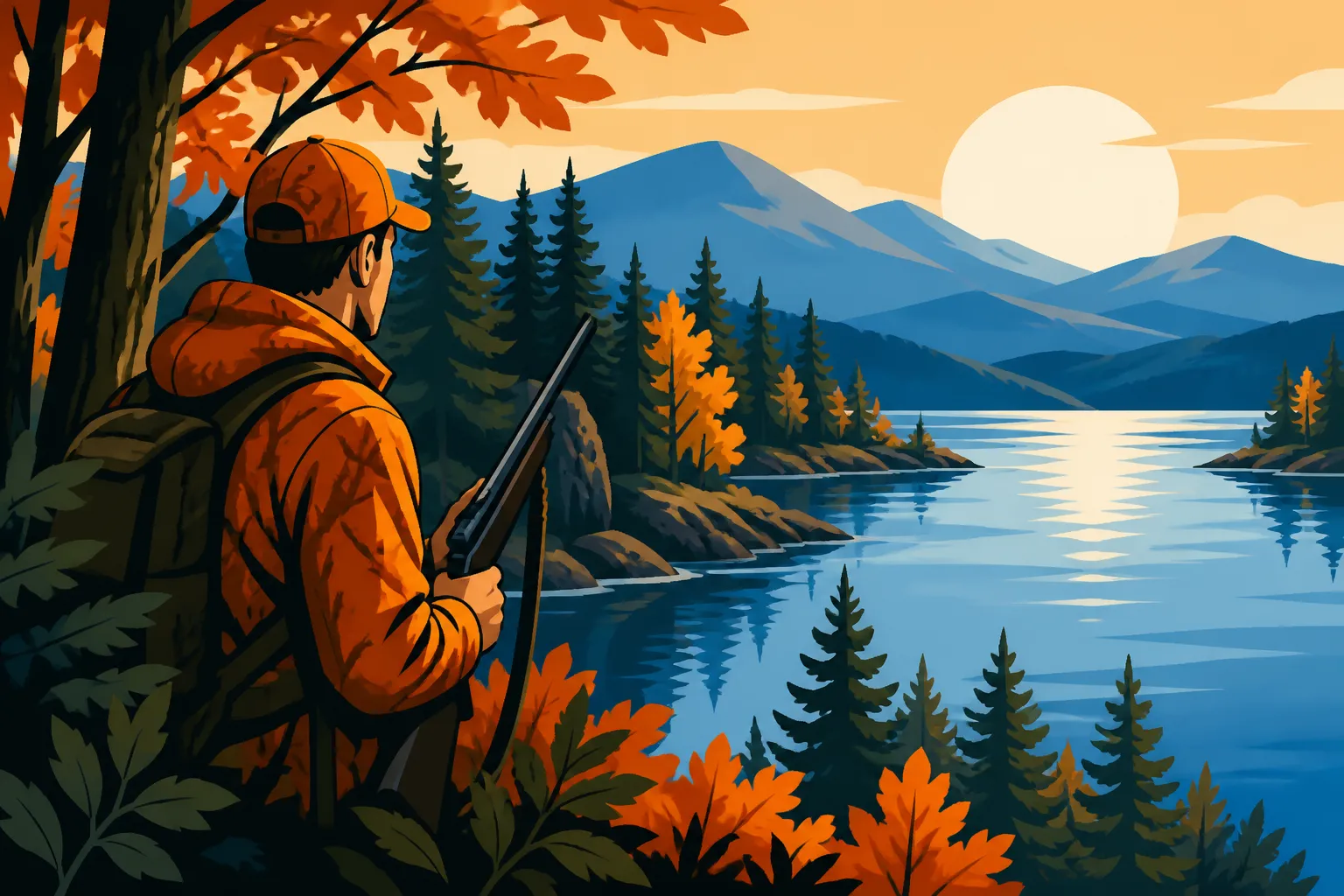
Hunting the Lakes Region Shoreline
Many hunters who look at a map of New Hampshire's Lakes Region might just see a lot of water and assume it's too developed or busy for good hunting. But that couldn't be further from the truth. The unique blend of water, varied terrain, and often overlooked pockets of cover along the shorelines offer fantastic, often under-pressured opportunities for deer, turkey, and waterfowl, if you know how to approach it. This guide will walk you through how to understand these specific habitats, what tactics work best, and how to navigate the complexities of hunting near water.
The Unique Appeal of Lakes Region Shoreline Hunting
The Lakes Region, with its sprawling Lake Winnipesaukee, picturesque Squam Lake, and countless smaller ponds and rivers, creates a distinct hunting environment unlike the deep woods of the North Country or the agricultural fields of the Connecticut River Valley. The presence of water dictates everything, from game movement to available cover and food sources. It's a landscape that demands a slightly different approach, rewarding the observant and adaptable hunter.
Understanding the Habitat Mosaic
Shorelines are rarely uniform; they're a patchwork quilt of different habitat types, often in close proximity. You might have a steep, rocky bank giving way to a small, marshy cove, then transition into a stand of mature hardwoods or a dense cedar swamp. This diversity is precisely what makes these areas so attractive to game. Deer, in particular, thrive on edge habitat, and the meeting of land and water creates an extensive, dynamic edge.
Consider a typical section of Lake Winnipesaukee shoreline. You might find pockets of red maple and black ash along the damp edges, perfect for providing browse and cover. Further back from the immediate water, you could encounter white pine and hemlock stands offering thermal cover, especially important as the season progresses. Small peninsulas, often overlooked by boaters and hikers, can act as natural travel corridors and bedding areas for deer. Islands, especially those connected by low water during dry spells or those with small, secluded coves, can also hold surprising numbers of deer. For waterfowl, these same marshes and coves provide crucial feeding and resting areas, especially during migration. Knowing how to read these subtle shifts in habitat, perhaps using a detailed mapping application like GoHunt, is key to uncovering hidden gems.
Why Shorelines Attract and Hold Game
Game animals, especially whitetail deer, utilize shorelines for several critical reasons, making them prime hunting locations. Firstly, water acts as a natural barrier, often limiting access for humans and creating areas of less hunting pressure. Deer learn quickly where they can find sanctuary. They’ll often use dense cover right up to the water’s edge to avoid detection, slipping along the bank to move between bedding and feeding areas.
Secondly, shorelines offer unique food sources. Aquatic vegetation, overhanging branches, and mast crops from trees like oaks and beeches dropping close to the water can be irresistible. In the fall, apples from abandoned homestead orchards near the water, or even late-season green browse in sheltered coves, will draw deer. For waterfowl, the shallow edges and marshy inlets provide rich foraging grounds for invertebrates and plant seeds. The constant availability of water itself is also a significant draw, especially during dry periods. Think about a small creek bottom working its way down to a larger lake; this creates a perfect funnel. Deer will use these corridors for centuries. This combination of security cover, diverse food, and ready access to water makes shorelines magnets for wildlife throughout the hunting season, from the early archery opener right through to the late firearms season.
Strategic Deer Hunting Along the Water's Edge
Hunting deer in the Lakes Region shoreline can be incredibly rewarding, but it requires different tactics than still-hunting vast timber tracts or sitting over a distant clear-cut. The key is to think like a deer that lives by the water, understanding how they use these unique features to their advantage.
Scouting for Shoreline Whitetails
Before you even think about setting up a stand, extensive scouting is paramount. Start by studying aerial maps, looking for obvious funnels like narrow peninsulas, points of land that jut into a lake, or areas where dense cover meets open water. Identify pinch points where deer are forced to travel close to the edge. Look for natural barriers like rock ledges or steep slopes that might funnel deer movement to a specific path along the water.
Once on the ground, focus on finding fresh sign. Look for tracks in the soft mud along the water's edge, indicating recent travel. Rub lines on trees, especially saplings close to the water, can signal buck activity. Scrapes, particularly those along distinct travel corridors or old logging roads that parallel the shore, are also critical. Don't forget to look for bedding areas in dense cedar swamps or thickets adjacent to the water. Deer will often bed with the water at their back, using it as a barrier and an escape route if pressured. A good mapping tool like GoHunt or the New Hampshire Fish and Game App can help you mark these finds and understand property boundaries. Remember, deer will use water to escape pressure, so understanding their likely exit routes is as important as knowing their entry points. Consider scouting methods discussed in articles like Reading Aerial Photos for North Country Deer, which can be adapted for the Lakes Region.
Effective Stand and Still-Hunting Tactics
When hunting Lakes Region shorelines, your approach needs to be flexible. Still-hunting can be highly effective, especially in areas with broken cover and irregular terrain. Move slowly, using the contours of the land and the dense vegetation for concealment. Pay close attention to wind direction, as thermals along water can be tricky, often drawing scent down to the water in the mornings and rising up the banks in the afternoons.
For stand placement, focus on those funnels, pinch points, and transition areas identified during scouting. A stand overlooking a narrow strip of land between a lake and a marsh, or positioned to intercept deer traveling along a cedar swamp edge, can be deadly. Consider hunting a beaver flowage edge, as these areas often concentrate deer activity. If legal and safe, using a ground blind brushed into thick cover near a game trail can also be very effective, especially where treestand options are limited by small trees or dense undergrowth. Think about the specific challenges of Hanging a Stand on a Granite Ridge – while not strictly ridges, the principles of adapting to terrain remain.
Table: Deer Hunting Strategies for Lakes Region Shorelines
| Strategy Type | Best Conditions | Target Areas | Key Considerations |
|---|---|---|---|
| Still-Hunting | Broken cover, varied terrain, light wind | Marsh edges, dense thickets, small peninsulas | Slow movement, utilize cover, watch wind/thermals |
| Treestand | Clear funnels, travel corridors, overlooking food sources | Pinch points between water bodies, old logging roads | Access quietly, consider wind, escape routes for deer |
| Ground Blind | Limited treestand options, thick cover, near bedding | Cedar swamps, overgrown shorelines, transition zones | Brush in thoroughly, scent control, minimal movement |
| Watercraft Access | Secluded coves, islands, less accessible shorelines | Remote points, areas with challenging land access | Noise discipline, legal landing spots, safe navigation |
Pursuing Waterfowl in New Hampshire's Lake Country
While deer hunting gets a lot of attention, the Lakes Region offers some fantastic, albeit often overlooked, opportunities for waterfowl hunters. New Hampshire sits squarely on the Atlantic Flyway, and its extensive network of lakes, ponds, and connecting rivers provides vital resting and feeding grounds for migrating ducks and geese.
Identifying Key Duck and Goose Hotspots
Waterfowl gravitate towards specific features in the Lakes Region. Look for shallow bays, sheltered coves, and the mouths of feeder creeks and rivers where they enter larger lakes. These areas typically offer calmer water, abundant aquatic vegetation, and invertebrates. Smaller, less accessible ponds that are surrounded by good cover (like cattails or wooded edges) can also be prime spots, especially for wood ducks and resident mallards. Don't overlook river sections that connect the lakes; these can act as major highways for ducks and geese. Identifying areas with minimal boat traffic or human disturbance is also crucial; waterfowl are incredibly sensitive to pressure. A good topographical map or an app that shows water depths can help you find those shallow feeding areas that ducks love. For a broader understanding of regional waterfowl, check out New Hampshire Waterfowl on the Atlantic Flyway.
Decoying and Calling for Success
Waterfowl hunting in the Lakes Region often calls for slightly different decoy spreads and calling strategies compared to hunting big rivers like the Connecticut. For smaller coves and ponds, a modest spread of a dozen decoys can be very effective. Mix your spread with mallard, wood duck, and perhaps a few teal decoys to mimic a natural resting flock. In larger bays or open water, you might need to expand your spread, but always focus on creating a natural-looking landing zone. Motion decoys, like a spinning-wing decoy (Mojo), can add realism and attract attention from a distance, especially on calm mornings.
Calling is equally important. Master the basic mallard quack, greeting call, and feeding chuckle. For wood ducks, their distinct "wooo-eek" call can be incredibly effective in timbered coves, drawing in these agile forest dwellers. Geese, too, frequent the larger lakes, often feeding in adjacent fields. If you find geese using a specific field near the water, consider setting up a field spread. Remember to practice ethical hunting, ensuring you understand duck and goose bag limits and specific season dates for your zone. Tactics for Decoying Ducks on New Hampshire's Connecticut River can be a good starting point, adjusting for the specific features of the Lakes Region's water bodies.
Navigating Access, Regulations, and Safety
Hunting the Lakes Region shoreline presents unique challenges regarding access and adherence to regulations. With a mix of private residences, public boat launches, and scattered parcels of state-owned land, understanding where you can legally hunt and how to do so safely is paramount.
Public vs. Private: Knowing Where You Stand
Many hunters assume the Lakes Region is entirely private land. While much of the immediate shoreline is indeed privately owned, there are numerous public access points, conservation lands, and state forests that offer hunting opportunities. The challenge is often locating these smaller, fragmented parcels. Websites for the New Hampshire Fish and Game Department, as well as town conservation commissions, are excellent resources. Mapping applications like GoHunt become indispensable here, allowing you to clearly see property boundaries, landowner names, and public land designations. Always verify land status before hunting.
If you are considering private land, Getting Private Land Permission in New Hampshire is essential reading. A friendly, respectful approach can open doors. Often, landowners, especially those with larger undeveloped tracts, are open to hunters who demonstrate respect for their property. Always ask for written permission and carry it with you. Remember, trespassing laws are strictly enforced, and hunting within safety zones around dwellings is illegal. Understanding these boundaries, particularly in a region with numerous seasonal camps and year-round homes, is critical to a successful and legal hunt. Don't assume that just because a property looks unkempt or vacant that it's okay to hunt.
Essential Water-Specific Rules and Best Practices
When hunting near or on water, additional rules and safety considerations come into play.
- Discharge of Firearms: New Hampshire has strict rules regarding discharging a firearm near occupied dwellings. Always be aware of the 300-foot safety zone around any occupied building. This can be tricky near lakes with numerous homes.
- Watercraft Use: If you're using a boat to access hunting spots, ensure all your watercraft are legally registered, carry appropriate safety equipment (life jackets, signaling devices), and adhere to boating regulations. Never load or unload a firearm while the boat's motor is running or underway. When traveling by boat to a hunting spot, always unload and case your firearm or bow until you've reached your designated hunting location and are ready to hunt.
- Blaze Orange: Remember the New Hampshire Blaze Orange Requirements during the firearms season, even if you are hunting waterfowl from a boat or blind. This is a crucial safety measure to make yourself visible to other hunters and recreationists.
- Retrieving Game: If game falls on private property, you generally need the landowner's permission to retrieve it. If it falls into the water, you are typically allowed to retrieve it if it's safe to do so, but be mindful of property lines when bringing it ashore.
- Respect Other Users: The Lakes Region is popular for fishing, boating, and hiking. Be courteous to other outdoor enthusiasts. Your actions reflect on all hunters, and maintaining a positive public image is vital for preserving hunting opportunities.
Hunting the Lakes Region shoreline is a unique experience that offers a different kind of challenge and reward. By understanding the habitat, employing specific tactics, and always prioritizing safety and respect for the land and its users, you can unlock some truly memorable hunting adventures in this beautiful part of New Hampshire.
Disclaimer
Hunting is an inherently risky activity. Always prioritize safety, follow all local, state, and federal regulations, and obtain appropriate licenses and permits. The information provided in this guide is for informational purposes only and should not be considered legal advice. It is the responsibility of each individual hunter to know and adhere to all applicable laws and regulations.