Hunting Standing Cover Left After Harvest
The crisp air of late fall in New Hampshire often brings with it a familiar frustration for deer hunters: the sudden disappearance of whitetails from previously productive areas. Once the corn is cut, the beans are harvested, or a timber stand has seen the felling crew, those deer that seemed so predictable vanish, leaving many of us scratching our heads. This guide is all about understanding where those deer go and, more importantly, how to effectively hunt the vital standing cover they inevitably retreat to after their primary habitat has been altered. It's about adapting your strategy to find their new safe havens.
The Whitetail's Post-Harvest Retreat: Why Standing Cover Becomes Critical
When the landscape changes overnight, whether due to agricultural harvest or timber operations, deer don't just pick up and leave the country. Instead, they shift their patterns to the remaining pockets of security and sustenance. Understanding this behavioral adaptation is the first step to staying in the game when fields turn bare.
Understanding the Shift in Deer Behavior
Deer are incredibly adaptable creatures, driven primarily by two instincts: survival and food. When a farmer harvests a cornfield or a logger clears a section of timber, they aren't just taking away a food source; they're obliterating a major source of security. What was once a dense, private sanctuary becomes an open, vulnerable expanse. This sudden change forces deer to abandon their usual routines and seek out the closest, densest remaining cover available. They'll gravitate towards areas that offer visual obstruction, protection from the elements, and often, overlooked food sources.
Think about a whitetail that has spent weeks feeling safe in a towering cornfield. Suddenly, that field is gone. Its primary bedding area and feeding ground are exposed. That deer isn't going to wander miles away if it doesn't have to; it's going to slide into the nearest patch of thick woods, a dense swamp, or even just an overgrown fencerow that offers a sense of security. They’re looking for places where they can melt away and avoid detection from both human and natural predators. The more hunting pressure they’ve experienced, the deeper and thicker they’ll try to get.
Thermal and Security Needs
As New Hampshire transitions from the milder days of archery season into the colder November firearms season and then the often frigid muzzleloader month, the importance of thermal cover cannot be overstated. Dense evergreens, like hemlock or spruce thickets, and especially low-lying cedar swamps, offer crucial protection from biting winds and falling snow. This isn't just about hiding from hunters; it's about conserving energy and staying warm. A deer that can find good thermal cover doesn't have to burn as many calories just to survive, leaving more energy for escaping danger or seeking food.
Beyond thermal benefits, any standing cover provides essential security. Deer feel safest when they can't be seen. This means brushy creek bottoms, gnarly regenerating clear-cuts, or even just small, unmanaged woodlots become incredibly valuable. These areas allow deer to move, bed, and browse with a greater sense of anonymity. Hunters who understand this fundamental need for both warmth and visual concealment are better equipped to predict where deer will be holding once the landscape simplifies itself after harvest.
Identifying and Locating Prime Standing Cover in New Hampshire
Knowing why deer use standing cover is one thing, but knowing where to find it in the diverse New Hampshire landscape is key. Our state offers a variety of terrain, from the farmlands of the Connecticut River Valley to the dense forests of the North Country, and each offers different types of crucial cover.
Swamp and Riparian Thickets
Cedar swamps are absolute goldmines for late-season whitetails in New Hampshire. These low-lying areas, often found along rivers like the Connecticut or the Merrimack, or surrounding smaller brooks and beaver flowages, offer an almost impenetrable canopy of dense cover. The cedars retain their needles year-round, providing excellent thermal protection from snow and wind, while the tangled undergrowth makes them difficult for predators (and hunters) to navigate. Deer will often bed deep within these swamps, emerging only at dawn and dusk to feed along the edges or venture into nearby woods.
Hunting these areas requires patience and a willingness to get a little wet and tangled. Look for slight elevations within the swamp, often called "islands," where deer might bed to stay drier. Also, pay close attention to the transitions where the swamp meets higher ground, as these are natural travel corridors. Even smaller, brushy pockets along riverbanks (riparian thickets) can hold deer, acting as linear safe zones for travel between larger cover areas. These aren't always easy to access, but if you can locate key entry and exit points, they can be incredibly productive. You might find success by Hunting a Beaver Flowage Edge in these types of locations.
Unharvested Patches and Overgrown Edges
Farmers, bless their hearts, don't always harvest every single square foot of a field. You'll often find small, irregular patches of corn or beans left standing because the ground was too wet, too rocky, or the machinery couldn't reach it efficiently. These overlooked pockets immediately become magnets for deer. They're already accustomed to the area, and now these small patches offer both food and instant security.
Similarly, overgrown fencerows, unmanaged brush lines, or small stands of pines bordering fields often serve as critical "soft edges." While the main field is harvested, these neglected borders offer cover and sometimes even browse that deer will exploit. Don't overlook these smaller, seemingly insignificant bits of cover. Deer often use them to stage before entering a larger woodlot or to sneak between bedding and feeding areas. They provide just enough visual break to make a deer feel safe enough to move, especially under moderate hunting pressure. These are often the key Entry Routes Through a Cut Cornfield that can make or break a hunt.
Regenerating Timber Cuts and Young Plantations
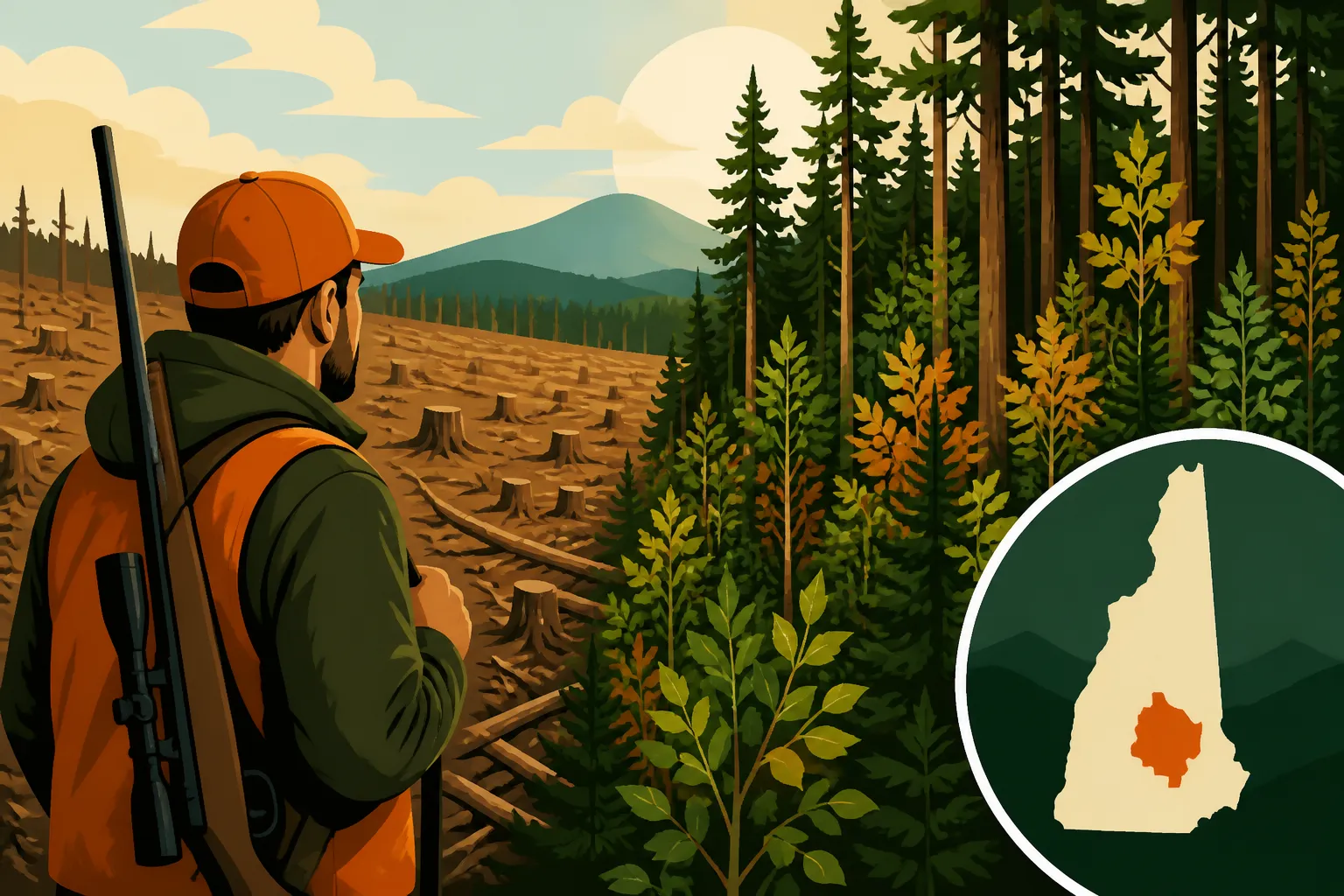
New Hampshire's timber industry creates some of the best, albeit most challenging, deer cover. Regenerating clear-cuts, typically 2-5 years post-harvest, are absolute havens. The dense regrowth of saplings, briars, and brush creates an almost impenetrable jungle that deer can move through relatively easily, but which is incredibly difficult for hunters. These areas provide phenomenal security cover, allowing deer to bed, browse, and hide in plain sight.
Young conifer plantations (like spruce or fir) also offer exceptional cover once they reach a certain height and density. The tight rows of young trees create dark, secluded corridors that whitetails love. While these areas are tough to hunt – movement is noisy, and visibility is minimal – they will hold deer. The key is finding the trails within them or, more commonly, focusing on the edges and funnels where deer are forced to enter or exit these thick areas. Using a mapping platform like GoHunt can help you pinpoint recent timber activity and identify these regenerating zones even before you step foot in the woods. This kind of thick, tangled cover is where New Hampshire bucks love to Bed in Thick Cover.
| Type of Standing Cover | Characteristics | Deer Behavior | Hunting Challenge |
|---|---|---|---|
| Cedar Swamps | Dense, evergreen, wet, thick undergrowth | Thermal cover, security bedding, often overlooked browse | Difficult movement, poor visibility, scent control crucial |
| Unharvested Patches | Small, irregular, remaining crop/brush | Immediate food source, quick security retreat, staging areas | Small footprint, often high pressure, requires precise setup |
| Overgrown Edges | Fencerows, brush lines, field borders | Travel corridors, subtle bedding, staging before larger woods | Narrow targets, careful wind analysis, often close to human activity |
| Regenerating Clear-cuts | Dense saplings, briars, tangled regrowth | Extreme security, bedding, browse, nearly impenetrable for humans | Noisy movement, very limited visibility, hard to track |
| Young Plantations | Dense rows of young conifers | Excellent thermal and visual cover, secure travel, low human intrusion | Dark, tight, confusing to navigate, difficult to spot deer early |
Effective Strategies for Hunting These Hidden Sanctuaries
Hunting standing cover requires a different mindset and strategy than glassing open fields or still-hunting mature hardwoods. It’s about understanding confined spaces, anticipating deer movement, and using every advantage you can.
Precision Scouting and Mapping
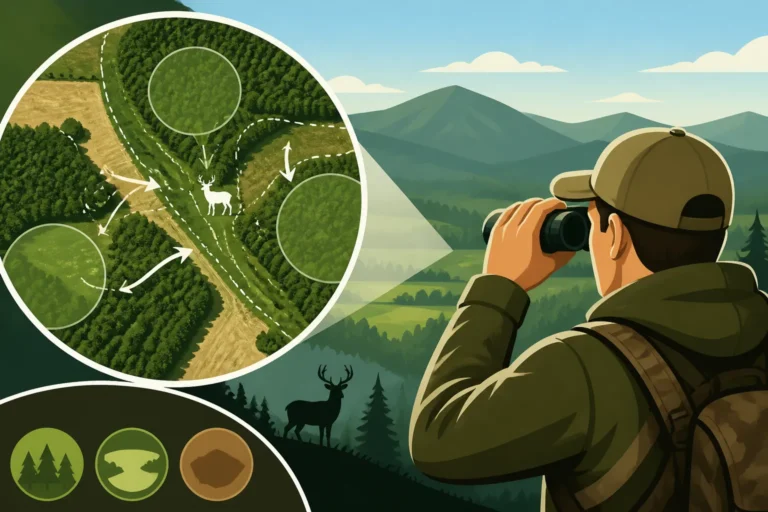
Before you even think about stepping into these dense pockets, precision scouting is absolutely vital. You can't just blunder in. Use aerial maps, like those available through GoHunt, to identify potential standing cover. Look for color differences indicating evergreen stands, irregular field edges, or areas with dense, younger tree growth that signifies past logging activity. Pay close attention to how these cover types connect to known food sources, water, or other larger timber blocks.
Once you have identified potential spots on the map, a pre-season or immediate post-harvest boots-on-the-ground scouting trip is essential. You're looking for specific funnels, pinch points, and, most importantly, clear entry and exit routes that deer are using into and out of these thick areas. Deer, even in dense cover, will often take the path of least resistance. Find those subtle trails, often just tunnels through the brush, that lead to scrapes, rubs, or bedding areas. Knowing where deer are entering and leaving gives you precise locations for stand placement. I always emphasize Scouting New Hampshire Public Land Before Season because it allows you to identify these areas before the pressure begins.
Stand Placement and Wind Considerations
Unlike open woods where you might have multiple shooting lanes, hunting standing cover usually means focusing on very specific, narrow travel corridors. Your stand placement should be on the edges of these covers, watching the trails leading in or out. Trying to set up deep inside truly dense cover is often futile due to minimal visibility and noisy access. The goal is to catch deer as they transition in or out of their sanctuary.
Wind is absolutely paramount when hunting these tight spaces. Deer living in thick cover are often extremely wary, relying heavily on their nose. A slight shift in wind can blow your cover instantly. Always play the wind meticulously, ensuring your scent cone is blowing away from any expected deer approach. If the wind isn't right for a particular stand, don't hunt it. It’s better to wait for the perfect conditions or move to an alternative location. Understanding Wind and Thermals in Steep Granite Terrain can also give you an edge, especially in hilly terrain bordering thickets, as deer use these thermal drafts to their advantage.
Still-Hunting and Drives (Carefully Applied)
Still-hunting can be incredibly effective when done slowly and deliberately on the fringes or through sparse sections of heavy cover. This isn't about crashing through the brush; it's about taking one or two steps, pausing for minutes, and observing every detail. Look for subtle movements, flicking ears, or patches of deer hair. You're trying to sneak up on bedded deer or catch them moving slowly within the thicket. This requires immense patience and a keen eye. Often, you're better off still-hunting along the edge of a thicket, peeking in, rather than trying to penetrate its densest parts.
Small, organized drives, executed safely and ethically with 2-4 hunters, can be a highly effective tactic to push deer out of these otherwise impenetrable thickets to waiting standers. The drivers move slowly and deliberately through a section of cover, making just enough noise to encourage deer to move, while standers are positioned on known exit routes. This method demands clear communication, a thorough understanding of the area, and strict adherence to safety protocols. Make sure everyone knows property lines and safe shooting lanes. For more information on group tactics, consider researching Deer Drives With Three or Four Hunters.
Gear, Patience, and Adaptability for Success
Hunting these challenging areas in New Hampshire requires not only a shift in strategy but also the right gear and, perhaps most importantly, a healthy dose of patience and adaptability.
Essential Gear for Navigating Thick Cover
Navigating dense New Hampshire cover demands robust and reliable gear. Forget your quiet, lightweight hiking boots; you'll want durable, waterproof boots that can handle mud, briars, and potentially shallow water. Look for options with good ankle support to prevent twists and turns on uneven terrain. Brands like Irish Setter and Lacrosse offer excellent choices for hunters tackling wet, brushy environments. Quiet, brush-resistant clothing is also a must – ripstop fabrics are a friend here, preventing snags and tears while minimizing noise.
A reliable GPS or a mapping app like GoHunt with downloaded offline maps is non-negotiable. Visibility can drop to mere yards in thick cover, and it's incredibly easy to get disoriented. Mark your entry and exit points, stand locations, and any significant deer sign you find. Don't forget a quality headlamp for those pre-dawn walks in or post-sunset retrieves. For wet, boggy conditions, you might even consider specific Boots for North Country Bog Hunting.
The Role of Patience and Reading Deer Sign
Hunting thick cover is a slow game. Deer in these sanctuaries are often reluctant to move, especially during daylight hours. You'll likely spend long periods seeing nothing, which is where patience becomes your greatest asset. Resisting the urge to move too soon, or to crash through the brush, is critical. Allow the woods to settle, and trust that deer are often closer than you think.
Learning to identify fresh deer sign within and around these areas is paramount. Look for fresh tracks in soft ground along the edges, subtle rubs on small saplings, and droppings. More importantly, look for bedding areas – depressions in the leaves or snow, often with a clear exit trail. These tell-tale signs confirm deer presence and can help you fine-tune your stand placement for future hunts. A keen eye for Reading New Hampshire Mud for Fresh Deer Movement can reveal crucial travel patterns.
Adapting to Changing Conditions
New Hampshire weather is notoriously fickle, and adapting your hunting strategy to changing conditions is key to success in standing cover. A fresh blanket of snow, for instance, can be a game-changer. It not only quietens your approach but, more importantly, it makes deer tracks incredibly obvious. Suddenly, those subtle trails through the thicket become easy to read, revealing exactly where deer are bedding, feeding, and traveling. This is when still-hunting the edges of dense cover, carefully following fresh tracks, can be incredibly productive.
Similarly, a sudden cold snap can drive deer even deeper into thermal cover. Those cedar swamps and dense evergreen thickets become even hotter spots. Understanding these environmental influences allows you to adjust your focus and prioritize certain types of standing cover. Conversely, a warm spell might make deer less reliant on thermal cover, causing them to move more freely along less dense edges. Always be prepared to change your game plan based on the day’s conditions, knowing that Hunting Deer After a Cold Front requires different tactics than a mild afternoon.
Disclaimer
Hunting is an inherently dangerous activity. Always prioritize safety, adhere to all New Hampshire Fish and Game laws and regulations, and respect private property. Always wear blaze orange as required, understand your target and beyond, and hunt responsibly. This guide is for informational purposes only, and personal safety should always be your paramount concern in the field.