Working a Timbered Fence Line for Deer
For any New Hampshire deer hunter, the frustration is real when those elusive whitetails seem to vanish into thin air, especially during pressured seasons. We scout, we plan, we sit for hours, and sometimes it feels like the deer are always one step ahead. But what if one of their most consistent travel corridors is often overlooked? This guide will dive deep into why timbered fence lines are often deer magnets and how to effectively hunt them, turning those missed opportunities into success stories.
The Undeniable Appeal of Timbered Fence Lines for Deer
It might seem counterintuitive to focus on something as seemingly mundane as a fence line, but deer, like all wildlife, are creatures of habit driven by safety, food, and breeding. A timbered fence line, especially in the varied terrain of New Hampshire, offers a unique combination of these critical elements, making it an ideal, albeit sometimes subtle, hunting spot.
Natural Cover and Security
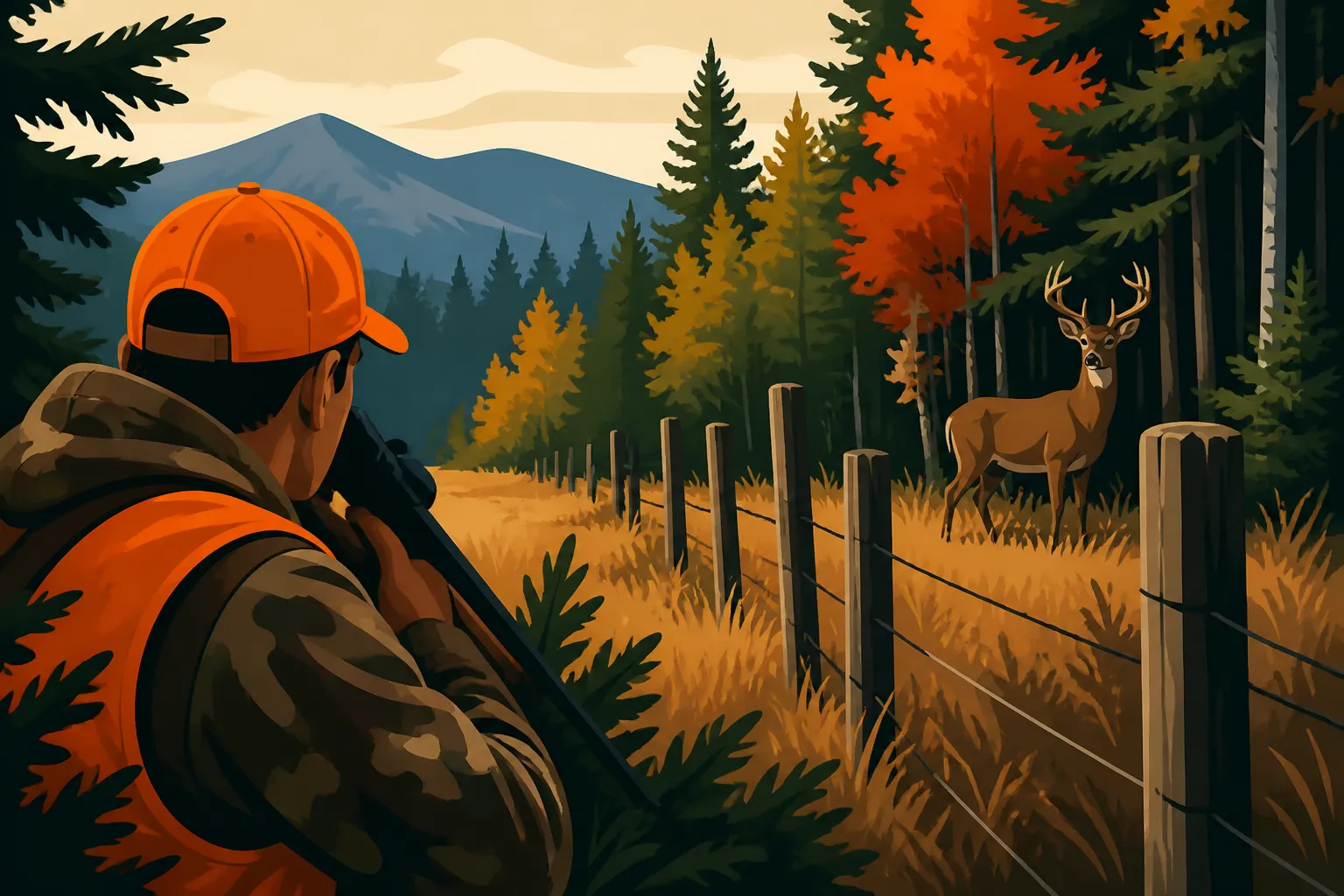
Think about a typical New Hampshire landscape. You've got sprawling hardwoods, dense softwood thickets, open fields, and often, old boundary lines. A timbered fence line is essentially a linear strip of varying cover that provides an incredible sense of security for deer. It's not just a fence; it's an edge. Deer feel inherently safer along edges because they can quickly duck into thicker cover or observe their surroundings before venturing into the open. This edge effect is amplified by the timber itself – whether it’s mature trees forming a canopy, or overgrown brush and saplings creating a visual barrier. Deer will travel these lines, sometimes for miles, using them as safe routes between bedding areas and food sources.
Imagine a deer moving from a dense cedar swamp to an oak flat after a cold snap. Instead of walking through the middle of an open woodlot where they're exposed, they'll often stick to a line of mature maples and pines that marks an old stone wall or property boundary. This offers them concealment from predators, including us hunters. It also allows them to move quietly, especially on frosted leaves, as the fence line often provides slightly different ground cover or even softer soil from decades of accumulated organic matter. You can learn a lot about how deer utilize cover by understanding their travel habits; our article on Where New Hampshire Bucks Bed in Thick Cover offers further insights.
Funneling Deer Movement
Beyond just providing cover, timbered fence lines act as natural funnels, dictating how deer move across the landscape. These linear features often connect disparate habitat types – a dense bedding area to a prime feeding spot, a thicket to a watering hole, or one woodlot to another. They might run along the edge of an agricultural field, a clear-cut, or a swamp. When deer need to get from point A to point B, they'll often choose the path of least resistance that also offers the most security.
Consider a long, overgrown fenceline that divides a dense spruce stand from an open hardwood ridge. Deer will inevitably use that fenceline to move between the two. During the rut, this funneling effect becomes even more pronounced. Bucks will cruise these lines, scent-checking for does, knowing that any doe moving between these habitat types is likely to cross or travel along the fence. This creates predictable travel patterns, which is exactly what we, as hunters, are looking for. Our piece on Hunting a Funnel Between Two Woodlots expands on this crucial concept for identifying deer movement.
Access to Diverse Food Sources
Timbered fence lines, especially old ones, are often ecological hotspots, providing a variety of food sources that deer find irresistible. Overgrown brush along a fence line can include native berry bushes, hawthorns, apple trees from old homesteads, or even wild grapes and honeysuckle. These provide browse and soft mast throughout the year. The diverse timber along the line itself might include oak trees dropping acorns, or beech trees producing nuts, which become critical late-season food sources.
These linear strips of habitat often mark transitions between soil types or moisture levels, leading to a richer variety of plants. You might find a mix of early successional growth alongside mature timber, creating a buffet for deer. In areas where late-season food sources are scarce, these fence lines can be absolute magnets, especially after agricultural fields have been harvested or natural mast crops are depleted. Our article on Late-Season Food Sources for New Hampshire Whitetails delves into what deer are looking for when the temperatures drop.
Mastering the Art of Scouting Timbered Fence Lines
You can’t just walk up to any timbered fence line and expect to find deer sign. Effective scouting is paramount, and it involves understanding how deer use these specific features throughout the year. It’s about reading the landscape, interpreting the clues deer leave behind, and using tools to your advantage.
Reading the Ground for Deer Sign
When scouting a timbered fence line, you're looking for the usual suspects: tracks, droppings, rubs, and scrapes. However, pay close attention to where these signs appear along the fence line. Are the tracks consistently crossing at a particular point? Is there a well-worn trail running parallel to the fence, just inside the timbered edge? Look for entry and exit points where deer might be coming from a thicket or entering an open field.
Fresh tracks in mud or soft soil are golden indicators. If you find multiple sets of tracks, especially varying in size, it tells you multiple deer are using that corridor. Droppings, the size and consistency of which can tell you how recent the activity is, are also key. Don't just look on the ground; scan the timber itself. Rubs on saplings and smaller trees indicate bucks are actively using the area, often working their way along the fence line. Scrapes, particularly during the rut, are communication hubs, and finding a fresh scrape line along a fence can be like hitting the jackpot. Understanding how to interpret these signs is crucial; our guide on Reading a New Hampshire Mud for Fresh Deer Movement can help sharpen your skills.
Utilizing Mapping Tools and Aerial Imagery
Before you even step foot in the woods, a good mapping application like GoHunt can be an invaluable asset for scouting timbered fence lines. Use aerial imagery to identify potential fence lines that may not be obvious from the ground. Look for subtle changes in vegetation, linear breaks in tree cover, or old roads and property lines that appear as overgrown strips. Many of these older boundaries are perfect candidates for deer travel.
Pay attention to how these fence lines connect different habitat types. Does a fence line run from a dense bedding area, perhaps a thick pine stand on public land, to a known feeding area like an abandoned apple orchard or an active cornfield? Does it cross a low saddle or a bench on a ridge? GoHunt allows you to mark these potential hotspots, measure distances, and plan your approach routes before you ever hit the field. Our article on Scouting With the New Hampshire Fish and Game App or using onX Layers for New Hampshire Land Status also offers great insights into leveraging technology for scouting.
Seasonal Considerations for Fence Line Usage
Deer use fence lines differently throughout the year. In early archery season, when green browse is abundant, they might use them to access shaded bedding areas or secluded water sources. As fall progresses, and especially during the pre-rut and rut, bucks will actively cruise these lines. During these peak times, a timbered fence line becomes a superhighway for bucks looking for does. Hunting The Rut in Early-to-Mid November on a well-used fence line can be incredibly productive.
Later in the season, when snow covers the ground, deer might use the slight elevation or thermal cover offered by certain fence lines, especially those with dense evergreen components. The varied food sources along these lines become even more critical when other forage is buried. For example, a fence line bordering an old farm might still have leftover apples or persistent browse that deer can access. Always consider the time of year and how that influences deer behavior and their reliance on these linear features.
Strategic Stand Placement and Hunting Approaches
Finding a well-used timbered fence line is only half the battle. The other, arguably more important half, is knowing how to effectively hunt it. This means strategic stand placement, understanding wind and thermals, and choosing the right hunting method.
Optimal Stand Setup Along the Line
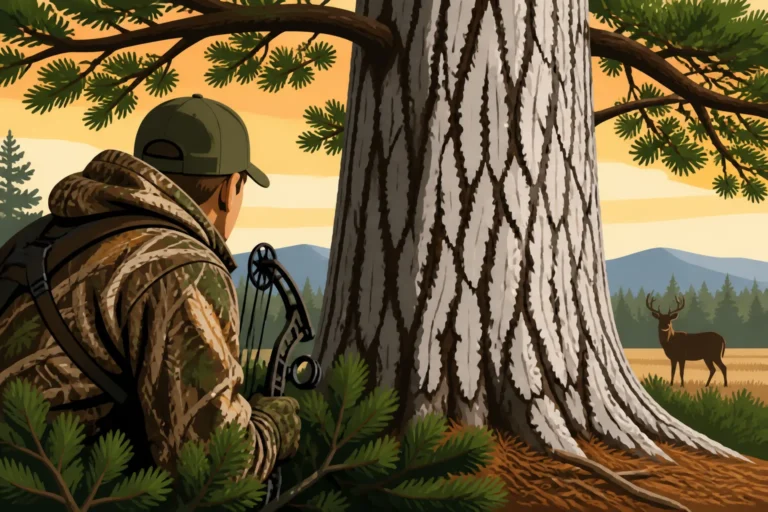
The beauty of hunting a timbered fence line is that it often provides natural cover for your stand. Look for a large, mature tree that offers good concealment and a clear shooting lane along the fence line, as well as into the adjacent cover. Your stand should be placed in a position that intercepts deer as they travel along the line, or as they cross it to access different areas. Often, this means setting up 15-20 yards off the primary travel path, allowing for a good shot angle without being directly in their line of sight.
Consider where the fence line creates a pinch point or bottleneck – perhaps where it narrows between two dense thickets, or where it forces deer to cross a more open area. These are prime locations for a stand. Ensure your entry and exit routes to the stand are quiet and don't spook deer. This might mean approaching from the opposite side of where you expect deer to come from, or using a creek bed or natural depression to mask your movement. Whether you're hanging a traditional ladder stand or utilizing a climbing stand, our guide on Hanging a Stand on a Granite Ridge provides valuable insights into securing your setup, which can be adapted for fence line hunting.
Playing the Wind and Thermals
New Hampshire's varied topography means that understanding wind and thermals is absolutely critical, especially when hunting linear features like fence lines. Wind direction will dictate your scent cone, and thermals, which are localized air currents that rise and fall with temperature changes, can carry your scent in unexpected ways.
When setting up your stand, always position yourself so that your scent blows away from where you expect deer to approach. In hilly or mountainous terrain, morning thermals typically pull scent up the slope, while evening thermals push it down. If your fence line runs along a ridge or through a valley, you need to account for this. A good rule of thumb is to hunt the side of the fence line that allows the wind or thermal to carry your scent away from the deer's likely approach. If the wind is swirling or unpredictable, it might be a day for still-hunting or using a ground blind. For more on this complex topic, check out Wind and Thermals in Steep Granite Terrain.
Ground Blinds Versus Treestands
While treestands are popular for elevated vantage points, a well-brushed-in ground blind can be incredibly effective when hunting timbered fence lines, especially if the timber is dense or if you need to be more mobile. A ground blind offers excellent concealment and allows for more movement, which can be beneficial on longer sits. It's also a great option if suitable treestand trees are sparse along a specific section of fence line.
If you opt for a ground blind, ensure it's set up well in advance of your hunt, giving deer time to get accustomed to its presence. Natural materials from the surrounding area – branches, leaves, pine boughs – can be used to break up its outline and make it blend seamlessly into the environment. Placing a ground blind near a cluster of thick evergreens or a large downed tree along the fence line provides additional natural camouflage. Our article on Using a Ground Blind on Public Land gives excellent advice on setting these up effectively and legally.
Advanced Tactics and Considerations
Beyond the basics, there are always ways to refine your approach and adapt to the ever-changing habits of New Hampshire whitetails. Hunting timbered fence lines effectively often comes down to these nuanced tactics.
Incorporating Calls and Decoys
During the rut, a timbered fence line can be a prime location for aggressive calling and even decoy setups. As bucks cruise these lines, they are actively looking for other deer. A well-timed grunt call or a rattling sequence can pique their curiosity and draw them in for a closer look. Because fence lines naturally funnel deer, a buck might only have one or two clear lanes of approach, making a shot opportunity more predictable.
If the fence line is relatively open or runs adjacent to a field, consider a buck or doe decoy. Place the decoy where it's visible from a distance but allows for a good shot opportunity before the approaching deer gets too close and realizes it's a fake. The key is to make it look as natural as possible, as if a deer is casually moving along or feeding near the fence. Remember, the goal is to stop them long enough for a shot. For more detailed strategies on drawing in those elusive bucks, our article on Rattling and Grunting New Hampshire Bucks is a fantastic resource.
Timing Your Hunts
Timing is everything, and this holds especially true for hunting timbered fence lines. Early morning and late afternoon are generally prime times for deer movement, as they travel between bedding and feeding areas. However, during the rut, bucks might cruise these lines at any time of day, making an all-day sit a worthwhile endeavor.
Also consider the impact of weather. A cold front often increases deer activity, as they anticipate upcoming changes and may feed more heavily. Light rain or drizzle can dampen leaves, making for quieter travel, which is great for still-hunting or sneaking into your stand. Heavy winds, on the other hand, can make deer feel more exposed and might cause them to bed down, or at least move very cautiously. Knowing Hunting Deer After a Cold Front can drastically improve your success rate on fence lines.
Respecting Boundaries and Regulations
When hunting timbered fence lines, especially those that might border private property or different WMUs, it's absolutely crucial to know and respect all boundaries and regulations. Use a mapping app like GoHunt to clearly identify property lines. In New Hampshire, it is always best practice to have written permission if you are hunting on private land, even if the fence line appears to be on public access. Make sure you know your New Hampshire Public Land Hunting Hours and local ordinances for discharge of firearms.
Always be aware of which WMU you are in, as regulations can vary. The New Hampshire Fish and Game Department's website is an excellent resource for all current rules and regulations. If you're on a fence line that serves as a boundary between public and private land, ensure that any shot you take, and any game you recover, is done legally and respectfully. If a deer crosses onto posted private land after being shot, you must obtain permission from the landowner to retrieve it. Being a responsible and ethical hunter is paramount.
| Fence Line Type | Deer Usage Profile | Hunting Strategy Considerations |
|---|---|---|
| Old Stone Walls | Often overgrown with brush, provide cover, elevated travel. | Great for ground blinds; bucks often cruise for scent. |
| Barbed Wire/Woven | Less natural cover, but often mark habitat edges. | Focus on adjacent timber; deer may duck under rather than over. |
| Overgrown Fencerows | Dense brush, diverse food sources, excellent linear cover. | Prime for treestands within the thicket; morning/evening movement. |
| Field Edge Fences | Connect feeding areas to bedding; high traffic. | Setup for clear shots into field and along fence; rut hot spots. |
| Logging Road Edges | Less defined "fence," but act as linear breaks; transition zones. | Watch for crossings; good for still-hunting if timber allows. |
Disclaimer
Please ensure you always consult the most current New Hampshire Fish and Game Department regulations before engaging in any hunting activities. Laws and rules can change, and it is the hunter's responsibility to be fully informed and compliant. This guide is for informational purposes only and should not replace official state hunting digests or legal advice.