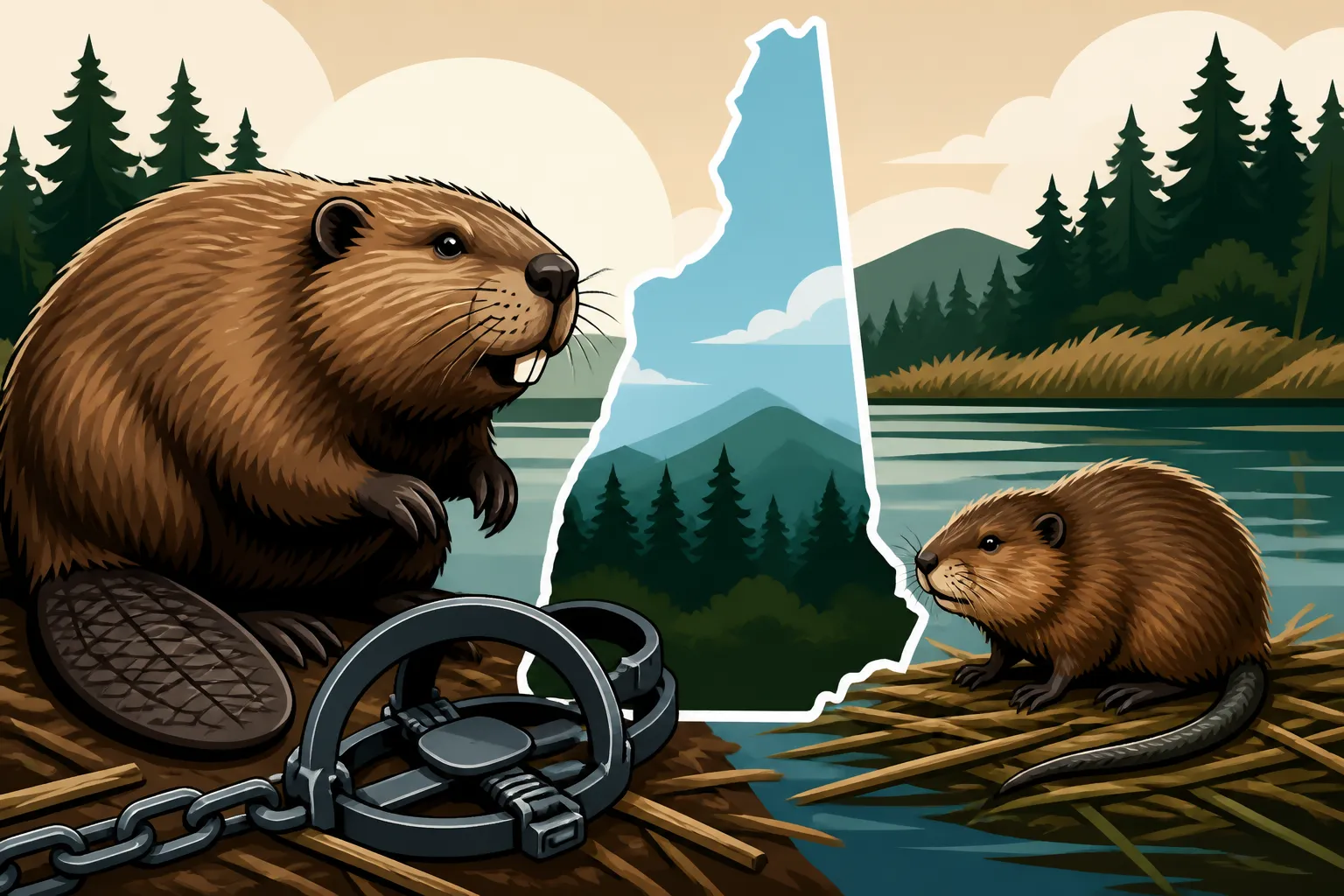
Trapping New Hampshire Beaver and Muskrat
Trapping beaver and muskrat in New Hampshire can feel like a daunting endeavor, especially with the ever-evolving regulations and the sheer amount of wilderness out there. Many aspiring trappers worry about understanding species behavior, choosing the right equipment, or even knowing where to begin with licensing. This guide is here to demystify the process, offering practical, in-depth advice on everything from understanding these elusive furbearers to successfully running your own trapline in the Granite State.
Understanding the Quarry: Beaver and Muskrat in the Granite State
Before you ever set a trap, truly knowing the animals you're pursuing is paramount. Beaver and muskrat are both aquatic rodents, but they differ significantly in size, behavior, and the habitats they prefer, which directly influences successful trapping strategies here in New Hampshire.
Beaver: New Hampshire's Master Engineers
Beaver, North America's largest rodent, are incredible engineers, constantly altering the landscape with their dam-building and lodge-constructing activities. In New Hampshire, you'll find them in a variety of aquatic environments, from slow-moving rivers and streams to ponds, lakes, and even the fringes of larger wetlands. Their presence is often unmistakable: freshly cut alders and aspens, mud and stick dams backing up waterways, and large dome-shaped lodges protruding from the water.
New Hampshire's beaver population has seen its ups and downs over the centuries, but careful management by the New Hampshire Fish and Game Department has ensured a healthy and sustainable population today. They are typically most active from dusk till dawn, meticulously working on their dams or foraging for woody vegetation. Understanding their seasonal movements is key. In early fall, they're busy caching food for winter, making them very active. As winter progresses, they become more reliant on their underwater food caches, venturing less outside their lodges. Come spring, as ice melts, they become active again, often repairing winter damage and expanding their territories. Trapping success often hinges on identifying active travel lanes, dam breaches, and food caches. For more on their impact, check out New Hampshire Beaver Population and Damage.
Muskrat: The Smaller, More Abundant Aquatic Rodent
Muskrats, much smaller than beaver, are often overlooked but offer excellent trapping opportunities in New Hampshire. These semi-aquatic rodents thrive in almost any freshwater habitat with stable water levels and abundant emergent vegetation. Think marshes, bogs, slow-moving creeks, and the vegetated edges of ponds and lakes. Unlike beavers, muskrats don't typically build large, complex dams. Instead, they construct smaller "huts" of vegetation in shallow water or burrow into banks, creating intricate tunnel systems with underwater entrances.
Their diet consists mainly of aquatic vegetation, such as cattails, sedges, and water lilies. You'll often see tell-tale "feeding rafts" of clipped vegetation where muskrats have been dining. New Hampshire boasts a robust muskrat population, and their prolific breeding habits mean they can quickly repopulate areas. They are active year-round, though their activity might be less visible in deep winter under the ice. Their tendency to stick to well-defined travel lanes, especially along bank edges and through dense vegetation, makes them predictable and, therefore, good targets for strategic trap placement. You can learn more about general furbearer trends in New Hampshire Muskrat and Mink Trapping Trends.
Navigating New Hampshire's Trapping Regulations and Licensing
The world of trapping in New Hampshire, while rewarding, is heavily regulated to ensure ethical practices and sustainable populations. It’s not enough to simply know how to set a trap; you absolutely must understand and adhere to all the rules. Ignorance of the law is never an excuse, and a single misstep can lead to hefty fines or the loss of your trapping privileges.
Essential Licenses and Permits
Before you even think about purchasing traps, you need the correct licensing. In New Hampshire, anyone 16 years of age or older who wishes to trap furbearers must possess a valid trapping license. This isn't just a formality; it's a testament to your commitment to responsible wildlife management. The process usually involves completing a certified trapper education course, which covers everything from animal identification and handling to trap types, regulations, and ethical considerations. If you're new to trapping, this course is invaluable.
The cost of a trapping license varies depending on residency. As a New Hampshire resident, your license will be more affordable than for non-residents. Beyond the base license, always be aware of any additional permits or stamps that might be required for specific species or certain public land areas. For instance, while a general trapping license covers beaver and muskrat, staying informed about any changes is crucial. You can often purchase these licenses online through the New Hampshire Fish and Game portal, or in person at various vendors. For specific details on costs, refer to New Hampshire Trapping License Cost and New Hampshire Trapping License Requirements.
Season Dates, Legal Trap Types, and Setbacks
New Hampshire's trapping seasons are meticulously set to coincide with the best pelt primeness and to manage populations effectively. Beaver and muskrat seasons generally run from late fall through early spring, often extending through the ice-over period. These dates are crucial; trapping outside the legal season is a serious violation. Always consult the most current New Hampshire Fish and Game Digest, which is updated annually. Using tools like the GoHunt app or website can also be incredibly helpful for quickly referencing season dates and regulations specific to your location.
Trap types are another critical area. New Hampshire specifies which traps are legal for different species and situations. For beaver, common choices include Conibear-style body grip traps (often 330 or 280 sizes) set underwater or submerged snares. For muskrats, smaller body grip traps (like 110 or 155 sizes) are popular, as are small leghold traps (often #1 or #1.5 size) set to drown the animal. The regulations also stipulate requirements like jaw spread limits on leghold traps and the need for drowning sets for certain species in certain situations to ensure humane dispatch.
Setbacks are equally important. Traps cannot be set within specific distances from dwellings, public roads, or other areas where they might pose a risk to people or non-target animals. These distances are clearly outlined in the regulations and are non-negotiable. Furthermore, identifying property lines is paramount, as you need landowner permission to trap on private land. This is where resources like GoHunt's mapping layers can be indispensable for distinguishing public land from private and identifying ownership. Misplaced traps are a common reason for New Hampshire Wildlife Violation Penalties, so always verify your location. The table below summarizes key regulatory aspects for beaver and muskrat trapping in New Hampshire:
| Feature | Beaver Trapping in NH | Muskrat Trapping in NH |
|---|---|---|
| Typical Season | Late Fall – Early Spring (often extending through ice-over). Always check current year's digest. | Late Fall – Early Spring (often extending through ice-over). Always check current year's digest. |
| Legal Traps | Body Grip (e.g., 330, 280 sizes) set underwater, Submerged Snares. | Body Grip (e.g., 110, 155 sizes), Leghold Traps (#1, #1.5) as drowning sets, Cage Traps (less common for fur). |
| Setback Rules | Specific distances from dwellings, public roads, and designated public areas. Always consult current regulations. | Specific distances from dwellings, public roads, and designated public areas. Always consult current regulations. |
| Drowning Sets | Often required for leghold traps set for beaver in open water to ensure humane dispatch. Body grips underwater also achieve quick dispatch. | Often required for leghold traps set for muskrat in open water or near shore, to ensure humane dispatch. Body grips underwater also achieve quick dispatch. |
| Daily Checks | All traps, snares, and sets must be checked at least once every 24 hours. | All traps, snares, and sets must be checked at least once every 24 hours. |
| Carcass Tagging | Carcass tagging rules may apply, especially for larger furbearers or in specific situations. | Generally not required for individual muskrat carcasses, but record-keeping of harvest is usually expected. |
| Bait/Lure | Castor lure, commercial beaver lures, fresh woody cuttings (as visual attractants). | Muskrat gland lure, oil of anise, cut apples, carrots, or parsnips. |
Effective Trapping Methods for Beaver and Muskrat
Once you've got your license and you're well-versed in the regulations, it's time to dive into the practical side of trapping. Success isn't just about throwing a trap in the water; it's about understanding the animal, reading the landscape, and executing a well-placed, effective set.
Scouting and Set Selection
Effective trapping begins long before the season opens. Scouting New Hampshire Public Land Before Season is not just for deer hunters; it's crucial for trappers too. You need to identify promising locations where beaver or muskrat activity is evident. For beaver, look for fresh cuttings, active dams, lodges, and established travel runs into or out of the water. For muskrats, focus on areas with abundant aquatic vegetation, bank burrows, feeding platforms, and narrow channels they use for travel. A good pair of Best Boots for North Country Bog Hunting will be your best friend during this phase.
When choosing a set, consider the species, the water conditions, and the time of year. For beaver, common sets include:
- Runway Sets: Placing a large body grip trap (e.g., a 330) directly in an active beaver runway, either in a dive hole leading to the lodge or a channel under a dam. These are often "blind sets," meaning no bait or lure is used, relying solely on the beaver's natural travel path. These traps must be completely submerged to be legal and effective.
- Caste Mound Sets: Beavers create caste mounds (small piles of mud and vegetation) and scent-mark them with castor, a powerful attractant. A trap set submerged just off a fresh caste mound, often paired with castor lure, can be highly effective.
- Under-Ice Sets: In winter, once the water freezes, special techniques are needed. Trappers often use "feed bed" sets near beaver food caches under the ice, or probe for active runs and set traps through the ice.
For muskrat, popular and effective sets include:
- Runway Sets: Similar to beaver, but using smaller body grip traps (e.g., 110 or 155) in their narrow channels or at entrances to bank burrows. These should also be submerged to ensure quick dispatch.
- Pinch Points/Channels: Muskrats often swim through narrow gaps in vegetation or along bank edges. Placing a small body grip trap in such a "pinch point" can be very productive.
- Bait Sets: Muskrats respond well to bait. A small leghold trap (#1 or #1.5) can be placed on a submerged platform or log near an active bank burrow, with a piece of apple, carrot, or even parsnip above it. It's critical to ensure these leghold sets are "drowning sets," meaning the animal can immediately reach deep water where it will quickly expire.
- Hut Sets: When muskrats build vegetation huts, a small body grip trap can be placed at an underwater entrance.
Always remember that safety is paramount. Handle body grip traps with extreme care, using setting tools to avoid injury. When trapping on public lands, such as those you might find while Hunting a Beaver Flowage on Public Land or exploring other Public Hunting Land in New Hampshire, be mindful of other users and place your traps discreetly and safely. This is where diligent use of resources like GoHunt to understand land boundaries and public access points becomes crucial. Finding New Hampshire Property Lines is not just good manners, it's the law.
Lure, Bait, and Trap Placement Nuances
The art of trapping lies in the details. Lure and bait, while not always necessary, can significantly increase your success rate, especially for specific sets.
- Beaver Lures: Castor is king for beaver. Trappers often use pure castor oil or commercially prepared beaver lures that contain castor. These are typically applied to caste mounds or nearby vegetation to mimic another beaver's presence and territorial marking. Fresh cuttings of aspen, poplar, or willow can also be strategically placed as visual attractants near underwater sets.
- Muskrat Lures and Baits: Muskrat gland lure can be effective, but often simple food baits work wonders. Sliced apples, carrots, or even parsnips are classic muskrat attractants. A few drops of oil of anise can also be appealing. These baits are usually impaled on a stick above a submerged trap or placed just beyond the trap to guide the muskrat into the jaws.
Trap placement requires precision. For body grip traps, ensure the trap is stable and level. If possible, anchor it securely to prevent the animal from moving it after being caught. For drowning sets, ensure there is sufficient depth and a clear path for the animal to dive into deep water immediately after stepping into the leghold trap. Cables, heavy weights, or slides can be used to ensure the quick dispatch of the animal once caught. When working near waterways, especially those flowing through areas that might be less accessible, remember to dress appropriately. Layering for New Hampshire's cold weather is key, as is having Best Boots for North Country Bog Hunting that will keep your feet dry and warm during what can often be wet, muddy, and icy work.
Field Care and Processing of Beaver and Muskrat Pelts
Successfully catching a beaver or muskrat is only half the battle. To truly maximize your efforts and respect the animal, proper field care and pelt processing are essential. The value of your fur, whether for personal use or market sale, depends almost entirely on how well you handle it after the catch.
Humane Dispatch and Field Dressing
Upon finding an animal in your trap, the first priority is a quick and humane dispatch. For submerged body grip traps or drowning sets, this is usually instantaneous. For any animal still alive, you must dispatch it quickly and humanely. A swift, decisive blow to the head with a heavy object is common and effective.
Once the animal is dispatched, field dressing begins. For muskrats, this is often straightforward: remove the entrails if you plan to eat the meat, but many trappers simply bring the whole carcass back for skinning. For beaver, which are much larger, field dressing is more critical, especially in warmer weather, to cool the carcass quickly. Open the abdominal cavity and remove the organs, paying attention to the castor glands (small, yellowish glands near the vent) and the oil sacs, which are valuable. The meat of both beaver and muskrat is surprisingly palatable to many, offering a lean, wild protein source.
Skinning, Fleshing, and Stretching
This is where the real art of fur handling comes into play. The goal is to prepare a clean, supple pelt that will command the best value.
- Skinning: Both beaver and muskrat are typically "cased skinned," meaning the skin is removed like pulling off a sweater, leaving the fur side in. For beaver, a "blanket skin" (opened flat) is also an option, particularly for taxidermy or specific crafts, but cased is more common for fur. Careful knife work is crucial to avoid cuts and tears in the hide. Always keep your knife sharp and work slowly.
- Fleshing: After skinning, the pelt will have varying amounts of fat and muscle tissue adhering to the leather side. This "flesh" must be meticulously removed in a process called fleshing. A fleshing beam and a specialized fleshing knife are invaluable tools. For muskrats, a dull knife or even a spoon can work, given the thinner flesh. For beaver, which have a thick layer of fat, fleshing is a more labor-intensive process, requiring careful scraping to get down to clean leather. Any remaining fat will "burn" the fur, causing hair slip and devaluing the pelt.
- Stretching: Once fleshed, the pelt needs to be stretched and dried. This is done on specific stretching boards or wire stretchers, designed to shape the pelt for market. Muskrats are stretched round, while beaver are typically stretched into an oval shape. The pelt is secured to the board, ensuring it's not overstretched (which thins the leather) or understretched. The fur side is usually turned out to dry after a period of air drying with the flesh side out. Proper ventilation is key to drying, but avoid direct heat, which can damage the fur.
Drying and Storage
Once stretched, the pelts need to dry completely in a cool, well-ventilated area, away from direct sunlight or heat. This process can take several days to a few weeks, depending on the pelt size, humidity, and airflow. A properly dried pelt will be firm and dry to the touch on the leather side, without any greasy feel.
Once fully dried, store your pelts in a cool, dark, and dry place, protected from insects and rodents. Hanging them individually or placing them in breathable cotton bags is ideal. Avoid plastic bags, which can trap moisture and lead to rot or mold. Keeping detailed records of your catch – species, date, location, and condition – can be helpful for personal tracking and understanding seasonal trends. You can often learn a great deal by reading New Hampshire's WMU-Based Deer Season Structure about how the state approaches wildlife management for other species, which provides context for furbearer regulations.
Trapping beaver and muskrat in New Hampshire is a heritage, a skill, and a deep connection to the land and its resources. By understanding these animals, respecting the regulations, employing effective techniques, and diligently preparing your harvest, you'll find a profound satisfaction in this ancient pursuit.
Disclaimer
This article is intended for informational purposes only and should not be considered legal advice. Trapping regulations, season dates, and license requirements are subject to change. Always consult the most current New Hampshire Fish and Game Department regulations and laws before engaging in any trapping activities. It is your responsibility to know and follow all applicable laws.