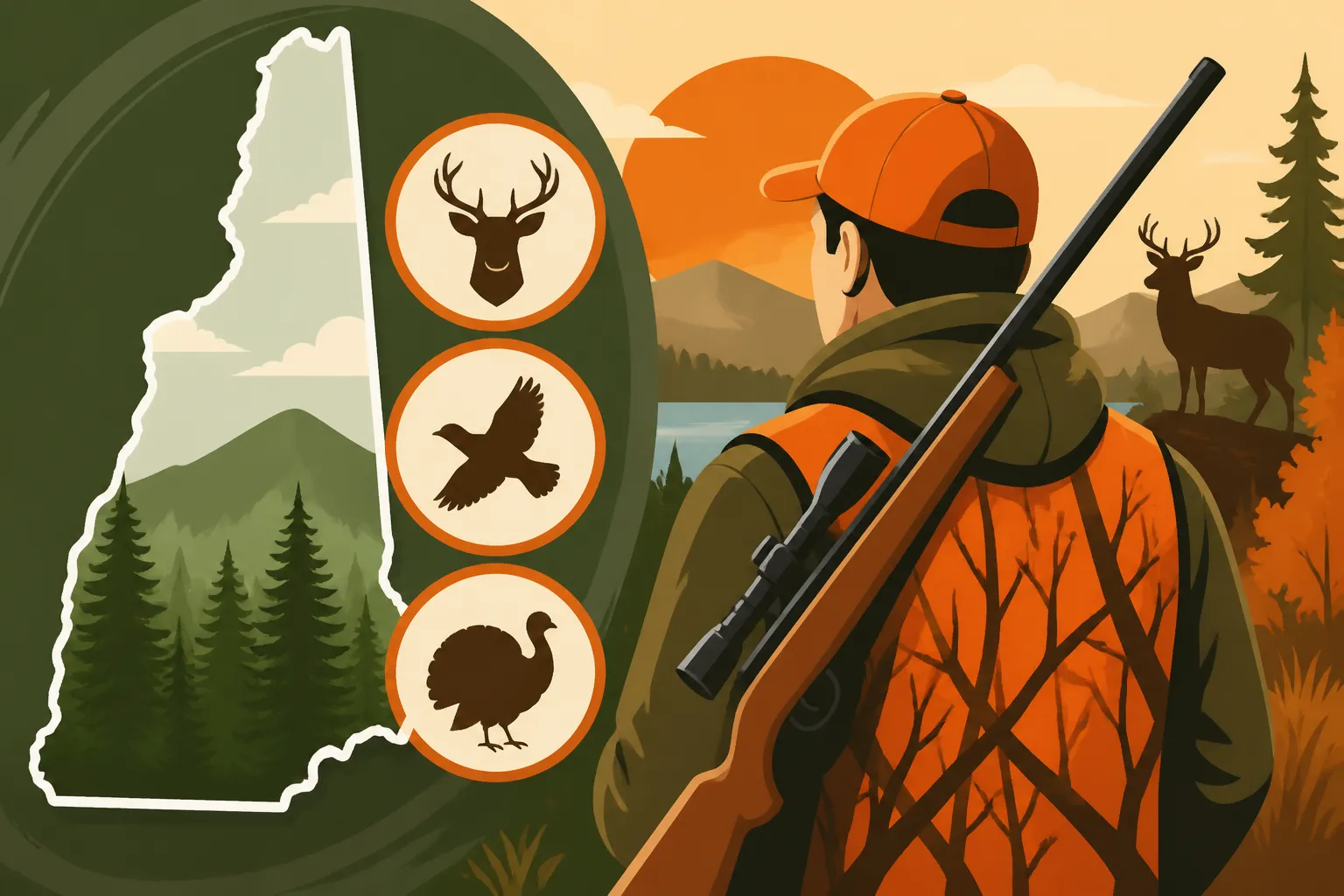
Legal Weapons During New Hampshire Firearms Season
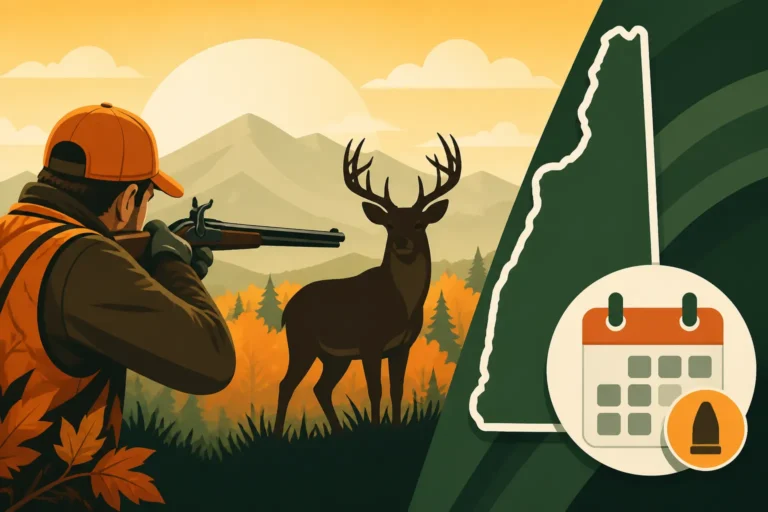
The crisp New Hampshire autumn air, the rustle of leaves underfoot, the anticipation of deer season – it's a feeling every Granite State hunter knows well. But before you head into the woods, it’s absolutely critical to understand the specific rules and regulations around legal weapons during our firearms season. Trying to decipher the New Hampshire Fish and Game digest can sometimes feel like a puzzle, leaving you wondering if your trusty rifle or shotgun is even allowed. This guide is here to cut through the confusion and ensure you're equipped legally and safely for your next hunt.
Navigating New Hampshire's Firearms Season for Deer
Hunting in New Hampshire isn't just about knowing where to find the deer; it's about respecting the framework that allows us to pursue these animals ethically and legally. The firearms season, especially for deer, is a time of high activity, and with that comes stringent rules to ensure safety for everyone in the woods, both hunters and other recreational users. These regulations aren't arbitrary; they're in place to manage our deer herd, ensure fair chase, and maintain public safety.
The Why Behind the Regulations
You might sometimes feel frustrated by what seems like a mountain of rules, especially when you just want to get out there and hunt. Believe me, I get it. We've all been there, scratching our heads over a specific caliber or magazine capacity rule. But these regulations, whether they relate to specific legal weapons during New Hampshire firearms season or broader safety measures like blaze orange requirements, are designed with a few key principles in mind. First and foremost is public safety. New Hampshire has a lot of public land, and different user groups share those spaces. Limiting certain firearm types or ammunition helps reduce risks. Secondly, there’s herd management. The Fish and Game Department uses harvest data, influenced by weapon types and seasons, to make informed decisions about population control. And finally, it’s about maintaining a fair chase. We want to ensure that hunting remains a challenging and rewarding pursuit, not an unfair advantage.
Essential Resources for Hunters
Navigating the nuances of hunting laws can be tricky, and it’s important to stay informed. The official New Hampshire Fish and Game Digest is your bible, and you should always have the current year's version with you, whether in print or on your phone. Beyond that, many hunters find digital tools incredibly helpful. Mapping apps, like GoHunt, can often have layers that show public versus private land, helping you stay on the right side of property lines, which can sometimes dictate weapon choices or permission needs. They also often integrate with state regulations, making it easier to check specifics while you're afield. Before you even set foot in the woods, take the time to review the current year's digest and utilize these modern resources to ensure you're compliant. Don't rely on what you heard last year, or what your buddy from another state says is legal. New Hampshire has its own way of doing things.
Rifles: The Backbone of New Hampshire Deer Hunting
For many New Hampshire deer hunters, the rifle is the quintessential tool. It’s what most people envision when they think of "firearms season." And for good reason – rifles offer accuracy, range, and knockdown power that make them incredibly effective in diverse terrain. Whether you're still-hunting the timber or sitting over a field edge, a well-placed shot from a legal rifle can quickly and humanely dispatch a deer.
Legal Calibers and Ammunition Types
New Hampshire is pretty open when it comes to legal rifle calibers for deer, generally allowing most centerfire cartridges. This means you've got a lot of options, from the ever-popular .30-06 Springfield and .308 Winchester to the versatile 6.5 Creedmoor or the hard-hitting .300 Winchester Magnum. The key is that it must be a centerfire cartridge, designed for big game. Rimfire cartridges, like the .22LR, are strictly prohibited for deer hunting because they lack the necessary power for a clean, ethical kill. When it comes to ammunition, you must use expanding projectiles. This means soft-point, hollow-point, or other bullet designs that mushroom upon impact, transferring energy and creating a wound channel that quickly incapacitates the animal. Full metal jacket (FMJ) bullets, which are designed to pass through without expanding, are illegal for hunting big game in New Hampshire. Always ensure your chosen ammunition is designed for hunting.
Restrictions and Safety Considerations
While New Hampshire allows a broad range of rifle calibers, there are still important restrictions to be aware of. There are no minimum barrel length requirements for rifles specifically, but standard rifle lengths are usually sufficient. However, the use of suppressors (silencers) is legal for hunting in New Hampshire, provided you possess the proper federal permits for the device. This is a relatively newer change that many hunters appreciate for hearing protection. A crucial safety consideration, especially in our densely wooded state, is your zone of fire. Always be aware of your backdrop, potential homes, roads, or other hunters beyond your target. This is paramount in a state with significant public land use. Before you ever pull the trigger, ensure you have a clear shot and that anything beyond your target is safe. Learning to read a White Mountain deer yard or understanding Hunting a Funnel Between Two Woodlots can help you predict deer movement and set up safer shots.
Choosing the Right Rifle for New Hampshire Terrain
New Hampshire's diverse landscape, from the steep, rocky slopes of the White Mountains to the rolling farmlands of the southern tier, influences rifle choice. For the tight timber and thick brush often found in the North Country, a shorter, more maneuverable rifle might be preferred. A bolt-action rifle is a classic choice, known for its reliability and accuracy, and perfectly suited for New Hampshire's conditions. Semi-automatic rifles, such as AR-10 platform rifles chambered in appropriate calibers, are also legal and increasingly popular for their quick follow-up shot capabilities. The weight of your rifle is also a consideration, particularly if you plan on doing a lot of still-hunting white mountain national forest timber. A lighter rifle is much appreciated when you're traversing uneven terrain all day. When selecting a rifle, don't forget about optics. A good variable power scope (e.g., 3-9x or 2-7x) is often ideal, allowing for wider fields of view in dense cover and enough magnification for longer shots across clearings or power lines. Consider reading up on Choosing a Scope Magnification for Timber Country for more tailored advice.
Shotguns: Versatility in Dense New Hampshire Cover
Shotguns often get a bad rap as less "accurate" than rifles, but in the right hands and the right conditions, they are incredibly effective and a completely legal option during New Hampshire's firearms season. For many years, shotguns were the only legal firearm for deer hunting in certain heavily populated areas, making them a traditional choice for many Granite State hunters. They still offer distinct advantages, especially in dense, brushy areas where shot distances are short, and maneuverability is key.
Slug Guns for Deer Hunting
When we talk about shotguns for deer, we're primarily talking about slug guns. A slug is a single, large projectile designed to be fired from a shotgun, providing significant knockdown power for big game. You have choices here: a smoothbore shotgun can shoot rifled slugs (Foster slugs) effectively, especially at closer ranges (up to 75-100 yards). These slugs have exterior rifling that helps them stabilize in flight, even from a smooth barrel. For increased accuracy and range, a rifled barrel shotgun firing sabot slugs is the way to go. Sabot slugs are smaller, aerodynamic projectiles encased in a plastic sleeve (sabot) that falls away after leaving the barrel, allowing the slug itself to spin and fly much like a rifle bullet. These setups can extend your effective range out to 150-200 yards with practice. Common gauges include 12-gauge and 20-gauge, with the 20-gauge gaining popularity for its lighter recoil and still ample power.
Buckshot Regulations and Effective Ranges
While slugs are the primary choice, buckshot is also legal for deer hunting in New Hampshire. However, there are very specific regulations you need to know, and frankly, its effective range is quite limited. New Hampshire allows shot sizes #1 buckshot or larger. The most common sizes are 00 Buck (double aught) and 000 Buck (triple aught). Buckshot consists of multiple large lead pellets. While powerful at close range, the spread pattern means fewer pellets are likely to hit a vital area at distance, leading to unethical wounding. Most experienced hunters agree that buckshot is only effective out to about 30-40 yards, maximum. Beyond that, the pattern opens up too much, reducing the chances of a clean kill. Therefore, its use is best reserved for extremely dense cover where shots are guaranteed to be very close, or for specific situations like deer drives with extreme caution. Always pattern your shotgun with buckshot before hunting to know its actual effective range.
Considerations for Dense Cover Hunting
Shotguns truly shine in New Hampshire's dense, almost impenetrable cover. When you're Hunting a Beaver Flowage Edge or navigating thick softwood stands, the shorter overall length of many shotguns makes them easier to handle and swing than a long rifle. The typically lower velocity of slugs also means less concern about over-penetration in thickly vegetated areas, though safety is always paramount. In these environments, shots are often quick and at close quarters, where the rapid aiming characteristics of a shotgun can be an advantage. Many shotgun hunters will opt for open sights, ghost ring sights, or a low-power variable scope (like 1-4x) that allows for quick target acquisition. When hunting these areas, especially on public land, wearing sufficient blaze orange is not just a legal requirement but a critical safety measure. You can review the specifics in New Hampshire Blaze Orange Requirements.
Handguns: A Specialized Tool for the New Hampshire Hunter
Hunting with a handgun certainly isn't as common as with a rifle or shotgun, but it's a perfectly legal and challenging pursuit during New Hampshire's firearms season. For those who embrace the close-range challenge and put in the practice, a handgun can be an incredibly satisfying way to harvest a deer. It requires a different skillset and an acute understanding of your firearm's capabilities and your own limitations.
Minimum Caliber and Barrel Length for Big Game
New Hampshire regulations specify that any handgun used for big game must be a centerfire pistol or revolver of at least .22 caliber and have a barrel length of at least 4 inches. While a .22 centerfire is technically legal, most ethical handgun hunters opt for significantly more powerful calibers for deer. Common choices include the .357 Magnum, .41 Magnum, .44 Magnum, .45 Colt, and for those seeking even more power, the .454 Casull or .500 S&W Magnum. These calibers deliver substantial energy transfer for a clean kill at appropriate distances. The 4-inch minimum barrel length is important for generating sufficient velocity and sight radius for accuracy, but many handgun hunters prefer longer barrels (6-8 inches or more) for improved ballistic performance and accuracy.
Ammunition and Ethical Shot Placement
Just like with rifles, handgun ammunition for big game must use expanding projectiles. Hollow-point or soft-point bullets designed for hunting are essential. Full metal jacket (FMJ) ammunition is prohibited for big game. Due to the inherent challenges of handgun hunting – shorter sight radius, increased recoil, and less stable shooting platforms – precise shot placement is absolutely critical. A deer's vital organs are a relatively small target, and a handgun hunter must be proficient enough to hit that target consistently under hunting conditions. This means extensive practice at the range, shooting from various positions (standing, kneeling, from a treestand), and at different distances to truly understand your effective range. It's often much shorter than with a rifle, typically within 25-50 yards, depending on the shooter and caliber. Knowing your personal limit is paramount to an ethical hunt.
Practical Application in New Hampshire Hunting
Handgun hunting is often a treestand or ground blind affair in New Hampshire. The close-range nature means you're waiting for that perfect, broadside shot when a deer is within your proven effective distance. Concealment is key, and the compact nature of a handgun makes it easier to manage in a treestand compared to a long rifle. You might consider Using a Ground Blind on Public Land as an excellent setup for handgun hunting, as it offers great concealment for close encounters. Some hunters also carry a handgun as a backup during rifle season, though the primary firearm must be used to make the initial shot on big game. Whether you're hunting with a revolver or a semi-automatic pistol, ensure it's sighted in perfectly, you're familiar with its operation in cold weather with gloves, and you've practiced enough to make an ethical shot when the moment arrives.
Understanding Archery and Crossbow Use During Firearms Season
It might seem counterintuitive to talk about bows and crossbows during firearms season, but New Hampshire allows for an overlap that can sometimes cause confusion. While there are dedicated archery seasons, both traditional archery equipment and crossbows (in specific WMUs) are legal during the general firearms season for deer. This means you have the flexibility to continue hunting with your bow if you choose, or to carry a crossbow in applicable areas, even when rifles and shotguns are also in play.
The Overlap: Bows and Traditional Archery
Yes, you can absolutely hunt deer with a traditional bow (compound, recurve, or longbow) during New Hampshire's firearms season. All the standard archery regulations regarding bow draw weight, arrow length, and broadhead type still apply. You must use a broadhead with at least two cutting edges and a minimum width of 7/8 inch. Expanding (mechanical) broadheads are also legal. Many dedicated archers prefer to stick with their bows throughout the entire deer season, appreciating the additional challenge and quiet approach it offers. If you enjoy the silent hunt, knowing that you can continue to pursue deer with your bow after the archery-only season closes and into the firearms period gives you more flexibility and time afield. For those looking to extend their season, understanding Hunting New Hampshire's Archery Season Into December might be helpful.
Crossbow Specifics in Approved WMUs
Crossbows in New Hampshire have a slightly more nuanced set of rules, particularly regarding which Wildlife Management Units (WMUs) they are legal in. Currently, crossbows are legal for deer hunting during the entire archery and firearms seasons in twelve specific WMUs: A, B, C, D1, D2, E1, E2, F, G, H1, H2, and I1. This means if you're hunting in one of these WMUs during the firearms season, you can legally use a crossbow, provided it meets the state's specifications (minimum draw weight of 150 lbs and a working safety). If you're hunting outside these designated WMUs, crossbows are not legal, even during firearms season, unless you possess a special permit due to a permanent disability. Always double-check New Hampshire's Twelve Crossbow-Legal WMUs before heading out to ensure you're in an approved zone. As with traditional bows, broadhead requirements remain the same for crossbows. Just remember, a crossbow does require proper setup and practice, just like any other hunting weapon, to ensure accuracy and ethical shots.
| Weapon Type | Primary Use (Deer) | Common Calibers/Gauges | Ammunition Type | Legal During Firearms Season | Notes |
|---|---|---|---|---|---|
| Rifle | Big Game (Deer, Bear, Moose) | .30-06, .308, 6.5 Creedmoor, .270 Win, .30-30 | Expanding Projectiles (Soft Point, Hollow Point) | Yes | Most common for deer. Versatile. |
| Shotgun | Big Game (Deer) | 12 Gauge, 20 Gauge | Slugs (Rifled, Sabot), #1 Buckshot or larger | Yes | Excellent in dense cover. Slugs for range, buckshot for very close. |
| Handgun | Big Game (Deer) | .357 Mag, .44 Mag, .45 Colt, .454 Casull | Expanding Projectiles (Hollow Point, Soft Point) | Yes | Specialized, close-range hunting. Must be centerfire, >= .22 cal, >= 4" barrel. |
| Compound/Recurve Bow | Big Game (Deer, Bear, Moose, Turkey) | N/A | Broadhead (2+ cutting edges, >= 7/8" width) | Yes | Archery rules apply. Offers extended season. |
| Crossbow | Big Game (Deer, Bear, Moose, Turkey) | N/A | Broadhead (2+ cutting edges, >= 7/8" width) | Yes (in 12 specific WMUs) | WMU specific. Min. 150lb draw, working safety. |
Crucial Prohibitions and Responsible Firearms Practices
Knowing what you can use is only half the battle; understanding what is strictly prohibited and practicing responsible firearm handling are equally, if not more, important. New Hampshire takes its hunting regulations seriously, and ignorance of the law is never an excuse. Staying on the right side of these rules is not just about avoiding penalties, but about upholding the integrity of our hunting heritage and ensuring everyone's safety.
What's Strictly Off-Limits
New Hampshire explicitly prohibits certain firearms and ammunition for hunting big game. This includes fully automatic weapons, which are battlefield implements and have no place in ethical hunting. Similarly, any ammunition that is specifically designed to be incendiary (tracer rounds) or explosive is strictly forbidden. While most hunting calibers are legal, always ensure you're not using any exotic or destructive devices. Also, as mentioned earlier, rimfire firearms (like .22LR rifles or pistols) are illegal for big game hunting, due to their insufficient power for a clean kill. The spirit of these prohibitions is clear: ensure the pursuit is fair, ethical, and safe, both for the animal and for anyone else who might be in the vicinity.
Magazine Capacity and Loaded Firearm Rules
New Hampshire does not have specific magazine capacity restrictions for hunting rifles or shotguns for deer. This means you can use standard capacity magazines for your legal firearms. However, it's always wise to exercise good judgment. A 30-round magazine might be legal, but it might not be practical or necessary for ethical deer hunting. More importantly, New Hampshire has strict rules about loaded firearms in vehicles. It is illegal to have a loaded firearm in or on any motor vehicle, including ATVs. A firearm is considered loaded if there is a round in the chamber, or if there is a loaded magazine attached to the firearm, even if the chamber is empty. The only exception is for those who hold a valid New Hampshire pistol/revolver license (Concealed Carry Permit) and are carrying a loaded handgun in the vehicle, but this specific exception generally applies to personal defense, not necessarily to hunting big game from a vehicle. Always unload your firearm before entering any vehicle.
Avoiding Common Missteps and Misunderstandings
The easiest way to avoid problems is to always consult the current year's New Hampshire Fish and Game Digest. Regulations can and do change, sometimes subtly, from year to year. What was legal last season might have a new caveat this year. Don't rely solely on word-of-mouth. If you have any doubts, call the New Hampshire Fish and Game Department directly and ask. They are there to help clarify the rules. Another common misstep involves property boundaries. Using tools like GoHunt or other GPS apps can help you understand Finding New Hampshire Property Lines and ensure you're not hunting on posted land without permission, which can sometimes lead to issues beyond just trespass, such as local ordinances on firearm discharge. Remember, responsible hunting is not just about the kill; it's about adhering to the rules, respecting the land, and ensuring a safe and ethical experience for everyone.
Disclaimer
The information provided in this guide is intended for informational purposes only and does not constitute legal advice. While we strive to be as accurate and up-to-date as possible, hunting regulations can change. It is always the hunter's responsibility to consult the most current New Hampshire Fish and Game Digest or contact the New Hampshire Fish and Game Department directly for official and definitive information regarding legal weapons, seasons, and licensing requirements before engaging in any hunting activities.