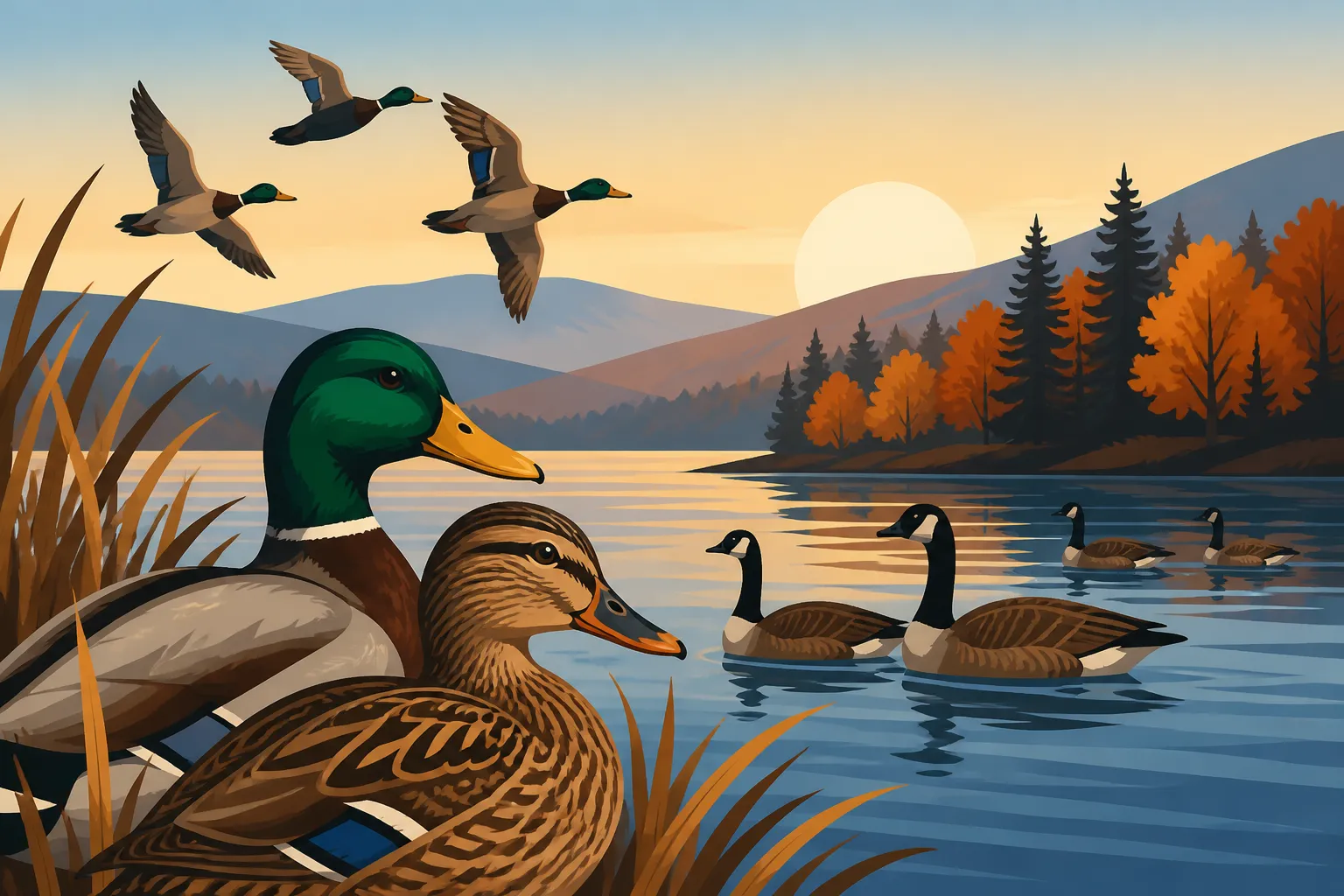
Mallards and Geese on the Connecticut River
For those of us who spend our autumns and early winters scanning the skies, few sights are as exhilarating as a flock of mallards banking hard over the water or a line of Canada geese cupping their wings, preparing to land. But chasing these magnificent birds on a big, flowing river like the Connecticut can feel like a whole different beast compared to a quiet marsh or small pond. The currents, the sheer scale of the landscape, and the unpredictable nature of migratory birds can make it incredibly challenging to consistently find success. This guide is here to break down the ins and outs of hunting mallards and geese on the Connecticut River, helping you understand the unique environment and refine your strategies to fill your strap or freezer.
Understanding the Connecticut River's Waterfowl Appeal
The Connecticut River isn't just a scenic waterway; it's a vital artery for migratory waterfowl, especially mallards and Canada geese, providing a critical north-south corridor that birds have used for millennia. From its headwaters in northern New Hampshire all the way to Long Island Sound, this river offers a smorgasbord of habitats and a relatively safe passage, drawing in birds from across the Atlantic Flyway. It’s a dynamic, ever-changing environment, and understanding its role in the waterfowl world is the first step to becoming a successful river hunter.
The River as a Migratory Highway
Think of the Connecticut River as an interstate highway for birds. Every fall, countless ducks and geese utilize this extensive river system as a primary migration route, pushing south from their northern breeding grounds. They follow the river not just for ease of navigation, but also because it consistently provides reliable food sources and protected resting areas. While some birds might be permanent residents, the vast majority are just passing through, making the river a constantly refreshed hunting ground throughout the season.
This constant influx of new birds means that hunting pressure on one section of the river might push birds downstream, only for a fresh wave to arrive a few days later. It's a double-edged sword: you might lose a group you were patterning, but new opportunities are always just around the corner. Keeping an eye on weather patterns to the north, especially strong cold fronts, can give you a major advantage in predicting when new flights of ducks and geese might be pushing into the New Hampshire stretch of the Connecticut River.
Prime Habitat Features
The Connecticut River offers an incredible diversity of habitats that are irresistible to waterfowl. You've got everything from wide, slow-moving oxbows and marshy backwaters to fast-flowing main channels, rocky shorelines, and adjacent agricultural fields. This variety means that ducks and geese can find exactly what they need, whether it's shallow water for dabbling, deep pools for diving, or secluded banks for roosting and loafing.
Specific features like beaver flowages along the riverbanks, flooded timber, cornfields, and soybean fields adjacent to the water are absolute magnets. These areas provide abundant food, from waste grain to aquatic vegetation, and offer crucial shelter from predators and harsh weather. Knowing how to identify these prime spots, whether through scouting or utilizing detailed mapping tools like those found on GoHunt, is key to positioning yourself where the birds want to be.
Seasonal Patterns and Movements
Waterfowl movements on the Connecticut River are largely dictated by the calendar and the weather. Early in the season, when temperatures are mild, ducks and geese are often spread out, taking advantage of abundant food sources across the landscape. As the season progresses and colder weather sets in, birds will begin to concentrate in larger flocks and favor specific areas that offer open water and reliable food.
During the initial weeks of the season, local birds might be found in smaller pockets. But once the hard freezes hit further north, usually by mid-October into November, you'll see a dramatic increase in migratory traffic. This is when the river truly shines as a waterfowl destination. The biggest challenge often lies in staying flexible and adjusting your approach as conditions change, moving from jump-shooting scattered birds in the early season to full-on decoy spreads for larger flocks later on. This adaptability is crucial for success, especially as winter approaches and Hunting the Split Inland Zone Waterfowl Season becomes a strategic puzzle.
Species Spotlight: Mallards and Canada Geese
While many species of waterfowl utilize the Connecticut River, mallards and Canada geese are undeniably the stars of the show for most hunters. They are abundant, offer excellent table fare, and provide some incredibly exciting hunting experiences. Understanding their specific behaviors and how to identify them will significantly improve your success rate and ensure you're targeting legal birds.
Mallard Behavior and Identification
Mallards are, for many, the quintessential duck. They’re common, they’re vocal, and they’re absolute acrobats in the air. On the Connecticut River, you'll find them frequenting shallow backwaters, oxbows, flooded timber, and even sloughs and puddles in nearby fields. They are dabbling ducks, meaning they feed by tipping up their bodies, tails in the air, to reach submerged vegetation, seeds, and invertebrates in shallow water.
Visually, drakes are instantly recognizable with their iridescent green heads, white neck rings, rust-colored chests, and gray bodies. Hens are a mottled brown but can be identified by their distinctive orange bills and the purplish-blue speculum (wing patch) bordered by white, visible in flight. Their quacking is unmistakable, often giving away their presence long before you see them. When mallards work a decoy spread, they often circle multiple times, giving you plenty of time to get ready, but also demanding patience and precise calling.
Canada Goose Habits and Identification
Canada geese are big, bold birds that command attention. On the Connecticut River, they often utilize larger, open stretches of water for roosting and loafing, especially around sandbars or islands. During the day, they'll fly to agricultural fields, like corn or hay fields, to feed, and then return to the safety of the river at night. Their size makes them a prominent target, and their wary nature makes them a rewarding challenge.
Canada geese are easily identified by their black heads and necks with a distinctive white "chinstrap." Their bodies are gray-brown, and their tail feathers are black with a white U-shaped band at the base. Their loud, resonant honking carries for long distances and is a key locator for hunters. Geese are often more cautious than ducks, frequently making wide passes over decoy spreads, scrutinizing every detail before committing. This means impeccable concealment and a realistic spread are absolutely vital.
Differentiating Between Resident and Migratory Birds
It’s an important distinction on the Connecticut River: are you hunting resident birds or fresh migrants? Resident geese, in particular, tend to be more acclimated to human activity and may not react as strongly to decoys and calls as truly wild, migratory birds. They often have established patterns, flying from specific roosting areas to feeding fields daily. Migratory birds, on the other hand, especially those pushed south by adverse weather, can be more susceptible to good calling and decoy spreads as they actively search for food and resting areas.
Observing flock behavior can offer clues. Large, tight V-formations high overhead, often arriving after a northern cold front, are typically migratory birds. Smaller, looser groups flying lower, often between local ponds and fields, are more likely residents. Both provide exciting hunting opportunities, but your strategies might need to be adjusted. For instance, residents often require less calling and might decoy more readily to a smaller, familiar spread, whereas migrants often need more aggressive calling and a larger, more eye-catching setup. Staying updated on New Hampshire Waterfowl Season and Zones is also critical, as season dates can vary for certain species or zones.
Key Hunting Strategies for the Connecticut River
Hunting the Connecticut River requires a blend of traditional waterfowl tactics and specific river-adapted techniques. The constant flow of water, the sheer size of the river, and the diverse habitats demand a versatile approach. Whether you're a seasoned waterfowler or new to river hunting, mastering these strategies will significantly increase your odds of success.
Decoying Techniques for River Currents
Setting up decoys on a flowing river is a unique challenge that still-water hunters rarely face. The current can drag your decoys downstream, tangle lines, and make them look unnatural if not set correctly. The key is to use heavier weights, longer lines, and strategically anchor your spread. A common and effective setup is a "J" or "V" shape, with the open end facing upstream, allowing birds to land against the current directly into your kill hole.
Motion decoys, especially those that create ripples or simulate feeding activity, are incredibly effective on the river. Spreader bars can also help create a larger, more realistic presence without a massive number of individual lines. When it comes to species-specific spreads, for mallards, think about smaller groups of 6-12 decoys in a sheltered eddy or quiet pocket. For geese, you'll want a larger spread, often 2-3 dozen full-body or shell decoys deployed on an adjacent sandbar or field. Remember, realism is paramount, so make sure your decoys are clean and well-maintained. If you're looking for more specific guidance on this, check out our guide on Best Duck Decoy Spread for the Connecticut River.
Blind Placement and Concealment
Concealment is non-negotiable on the Connecticut River. Waterfowl, especially geese, have incredible eyesight and will flare at the slightest unnatural glint or shape. Your blind needs to blend seamlessly into the natural surroundings. Options include natural vegetation along the bank (reeds, cattails, willow thickets), strategically placed layout blinds on sandbars or field edges, or even boat blinds brushed in with local flora. The constant flow of the river means birds often approach from multiple angles, so overhead cover is just as important as lateral concealment.
When selecting a spot, consider the sun's position – you want the sun at your back if possible, both to illuminate your decoys and to keep it out of the birds' eyes. Also, pay attention to the prevailing wind direction; birds almost always land and take off into the wind. Therefore, placing your blind downwind of your decoys, allowing birds to approach into the wind over your spread, can dramatically improve your shot opportunities. Don't underestimate how much a simple detail like the shine off your face can ruin a hunt; face masks and gloves are essential.
Jump-Shooting and Floating Tactics
While decoying is popular, jump-shooting and floating are incredibly effective, albeit more physically demanding, tactics on the Connecticut River, particularly for ducks. Jump-shooting involves quietly walking or drifting along riverbanks, sloughs, and backwaters, surprising ducks that are resting or feeding. It requires stealth, quick reflexes, and an intimate knowledge of the river's terrain. This method is often best in the early season when birds are more spread out and less wary, or during periods of heavy fog or rain when visibility is limited.
Floating tactics, often done from a canoe, kayak, or small jon boat, involve drifting silently downstream, letting the current carry you into areas where ducks are loafing. This requires excellent boat handling skills, a partner to help spot, and quick shooting. You must be incredibly mindful of safety, especially concerning river currents, obstacles like submerged logs, and other river users. Always wear your personal flotation device (PFD), and be aware of your surroundings. Remember, if you're planning on using these methods on private land, you'll need permission, even if you're only accessing via the river.
Essential Gear and Preparation for River Hunts
Hunting the Connecticut River isn't like a quick trip to a local pond. The conditions can be harsh, the access sometimes challenging, and safety paramount. Having the right gear, and knowing how to use it, is critical for both success and safety. From specialized watercraft to proper layering, your preparation directly impacts your experience.
Watercraft and Safety Considerations
A reliable watercraft is often indispensable for hunting the Connecticut River. Depending on the section you're targeting and your hunting style, this could range from a durable canoe or kayak for jump-shooting and accessing shallow backwaters, to a larger jon boat with a blind for decoy spreads in wider sections. Stability, maneuverability, and stealth are key attributes to look for. Always ensure your boat is registered, has all required safety equipment (PFDs for everyone on board, throw cushions, lights, horn), and is appropriate for the river conditions you expect.
River currents can be powerful and unpredictable, and water temperatures can be dangerously cold, especially later in the season. Never hunt alone if possible, always let someone know your float plan, and be realistic about your capabilities. Overloading your boat or taking unnecessary risks with fast currents or bad weather is a recipe for disaster. Investing in a good marine GPS or a hunting app with detailed mapping features (like GoHunt) is also highly recommended for navigating safely and marking key spots.
Waders and Weather-Appropriate Clothing
You're going to get wet, it's just a matter of how. Quality waders are non-negotiable for most Connecticut River waterfowl hunting. Choose chest waders with good insulation if you'll be hunting in cold weather, and make sure they fit well, allowing for comfortable movement but not so baggy that they become a hazard in the current. Breathable materials are a blessing for longer walks or warmer early-season days, preventing overheating. Our guide on Waders for New Hampshire Waterfowl Hunting offers more specific advice on choosing the right pair.
Beyond waders, layering is absolutely critical for dealing with New England's notoriously fickle weather. Start with moisture-wicking base layers, add insulating fleece or down mid-layers, and top it off with a waterproof and windproof outer shell in a camouflage pattern appropriate for your surroundings. Don't forget a warm hat, gloves or mittens, and thick, wicking socks. Temperatures can drop rapidly on the river, and staying warm and dry is essential for maintaining focus and preventing hypothermia.
Ammunition and Shotgun Selection
For mallards and geese on the Connecticut River, you'll want a reliable shotgun chambered for 12-gauge, capable of handling 3-inch or even 3.5-inch shells. Semi-automatics or pump-action shotguns are popular choices for their reliability and quick follow-up shots. As for ammunition, federal regulations mandate the use of non-toxic shot for all waterfowl hunting. Steel shot is the most common and affordable option, but bismuth or tungsten-based loads offer superior performance, especially at longer ranges, albeit at a higher cost.
Choosing the right shot size and choke is crucial. For mallards, #2 or #3 steel shot is often ideal, paired with a modified or improved cylinder choke for decoying birds. For geese, especially larger Canada geese, BB, BBB, or even T shot (in steel) is recommended, often with a modified or full choke to provide enough energy and pattern density for these tougher birds at greater distances. Always pattern your shotgun with your chosen loads before the season to understand its effective range and shot dispersion.
Navigating Regulations and Access on the Connecticut River
Hunting the Connecticut River isn't just about understanding the birds; it's also about understanding the rules and regulations governing public and private access, as well as specific waterfowl season dates and bag limits. Navigating these details can be confusing, but compliance is essential for ethical hunting and avoiding legal trouble.
New Hampshire Waterfowl Zone Boundaries
New Hampshire divides its waterfowl hunting opportunities into distinct zones, and understanding these boundaries is crucial, as seasons and bag limits can vary. The Connecticut River often forms a natural boundary, but its adjacent lands can fall into different zones. Most of the hunting opportunities on the Connecticut River itself will fall within the Inland Zone, but it's always best to double-check the latest New Hampshire Fish and Game digest or their website for precise New Hampshire Waterfowl Zone Boundaries.
Being aware of your exact location, especially if you're hunting near border areas, is critical. A mapping application like the one offered by GoHunt or the New Hampshire Fish and Game app can provide precise real-time location data relative to zone lines. Mistakes can lead to serious penalties, so investing the time to understand where you are and what rules apply is a non-negotiable part of responsible river hunting.
Public vs. Private Land Access Along the River
Access to the Connecticut River for hunting can be a patchwork of public and private land. While the riverbed itself and the waters are generally considered public navigable waterways, the adjacent banks, islands, and fields are often privately owned. This means that while you might be able to float or set decoys in the river, stepping onto dry land could require landowner permission.
It’s always best practice to seek permission from landowners if you intend to set up a blind on private land or retrieve game from their property. Many farmers along the river might be open to granting permission, especially if you ask respectfully and offer to help with any potential crop damage. Alternatively, scout for designated public access points, such as state boat launches, wildlife management areas (WMAs), or national wildlife refuges that border the river and allow hunting. Remember, just because you're on the water doesn't mean the banks are open to you.
Required Licenses and Stamps
Before you even step foot in a boat or set a decoy, you need to ensure you have all the necessary licenses and stamps for waterfowl hunting in New Hampshire. This typically includes a base New Hampshire hunting license, a New Hampshire waterfowl license or permit, a federal duck stamp, and Hip certification. The federal duck stamp is vital, and a portion of its cost goes directly towards wetlands conservation. For a comprehensive overview, read our guide on New Hampshire Hunting Licenses and What They Cost.
The requirements can sometimes feel a bit like a bureaucratic maze, especially for new hunters. However, all these requirements are in place to fund conservation efforts and ensure sustainable hunting practices. You can purchase most licenses and stamps online through the New Hampshire Fish and Game website or at authorized vendors. Always carry proof of all your licenses and stamps with you in the field. Checking the specific New Hampshire Federal Duck Stamp Requirement and New Hampshire HIP Certification for Bird Hunters is crucial.
Maximizing Your Success on Connecticut River Waterfowl
Consistently bringing home mallards and geese from the Connecticut River requires more than just showing up. It demands a dedicated approach to scouting, effective calling, and the flexibility to adapt to the river's ever-changing moods. These proactive strategies will help you transform good intentions into memorable hunts.
Scouting and Patterning Birds
Effective scouting is perhaps the single most important factor in consistent waterfowl hunting success on the Connecticut River. This isn't just a pre-season activity; it's an ongoing process throughout the season. Mallards and geese establish feeding and roosting patterns, and understanding these patterns is key to intercepting them. Spend time observing the river, preferably from a distance with good binoculars, identifying where birds are landing, feeding, and resting. Pay attention to their flight paths between different areas.
Look for fresh sign: tracks in the mud, droppings, and "picked" cornfields are all indicators of recent waterfowl activity. Scouting also includes checking water levels, identifying new sandbars or exposed mudflats, and noting changes in river currents. Utilizing mapping tools, like those available through GoHunt, can help you mark hot spots, plan entry and exit routes, and understand property boundaries. Knowing when and where birds are moving will allow you to be in the right place at the right time. Our article on Scouting New Hampshire Public Land Before Season offers broader tips that are still very relevant to river scouting.
Calling Strategies for River Ducks and Geese
Calling is an art form in waterfowl hunting, and on the Connecticut River, it can make or break your hunt. For mallards, a variety of calls is effective: the basic greeting call, a series of quick quacks to get attention; the comeback call, a louder, more urgent series of quacks to pull birds back; and the feeding chuckle, a soft, contented sound that tells approaching ducks it's safe to land. Practice makes perfect, and subtlety often trumps volume, especially with pressured birds.
For Canada geese, calling is equally vital, but the sounds are different. Basic honks, clucks, and moans are the foundation. A confident "honk" to get attention, followed by contented "clucks" and "moans" as they approach, can seal the deal. Remember, geese are wary; too much calling or unnatural-sounding calls will quickly send them flaring. Observe how birds react to your calling and adjust accordingly. Don't be afraid to experiment with different calls and sequences, but always prioritize realistic sounds.
Adapting to Weather and Water Conditions
The Connecticut River is a dynamic environment, constantly influenced by weather and water conditions. Successful river hunters are those who can adapt on the fly. Heavy rains can raise water levels, flood adjacent fields, and create new feeding opportunities, while also increasing currents and making navigation more challenging. Cold fronts, as mentioned earlier, bring new migratory birds but also demand warmer clothing and potentially different decoy setups.
Wind direction and speed are critical. Strong winds can make boat control difficult but can also encourage birds to fly lower and work decoys more aggressively. Conversely, calm, sunny days often mean birds are wary and require more subtle tactics. Always check the weather forecast before heading out, but be prepared for rapid changes. Being able to shift your blind location, adjust your decoy spread, or even change your hunting method (e.g., from decoying to jump-shooting) based on the day's conditions will dramatically increase your overall success and make you a more versatile and effective river hunter. Even something as simple as choosing to hunt on New Hampshire's Youth Waterfowl Weekend might mean adapting your approach for newer, younger hunters.
Disclaimer
Hunting is an inherently dangerous activity. This guide provides information for educational purposes only. Always prioritize safety, adhere to all local, state, and federal hunting regulations, and obtain proper licenses and permits before engaging in any hunting activities. Consult the New Hampshire Fish and Game Department's official regulations for the most current and accurate information. The author and publisher are not responsible for any accidents, injuries, or legal issues that may arise from the use of this information.