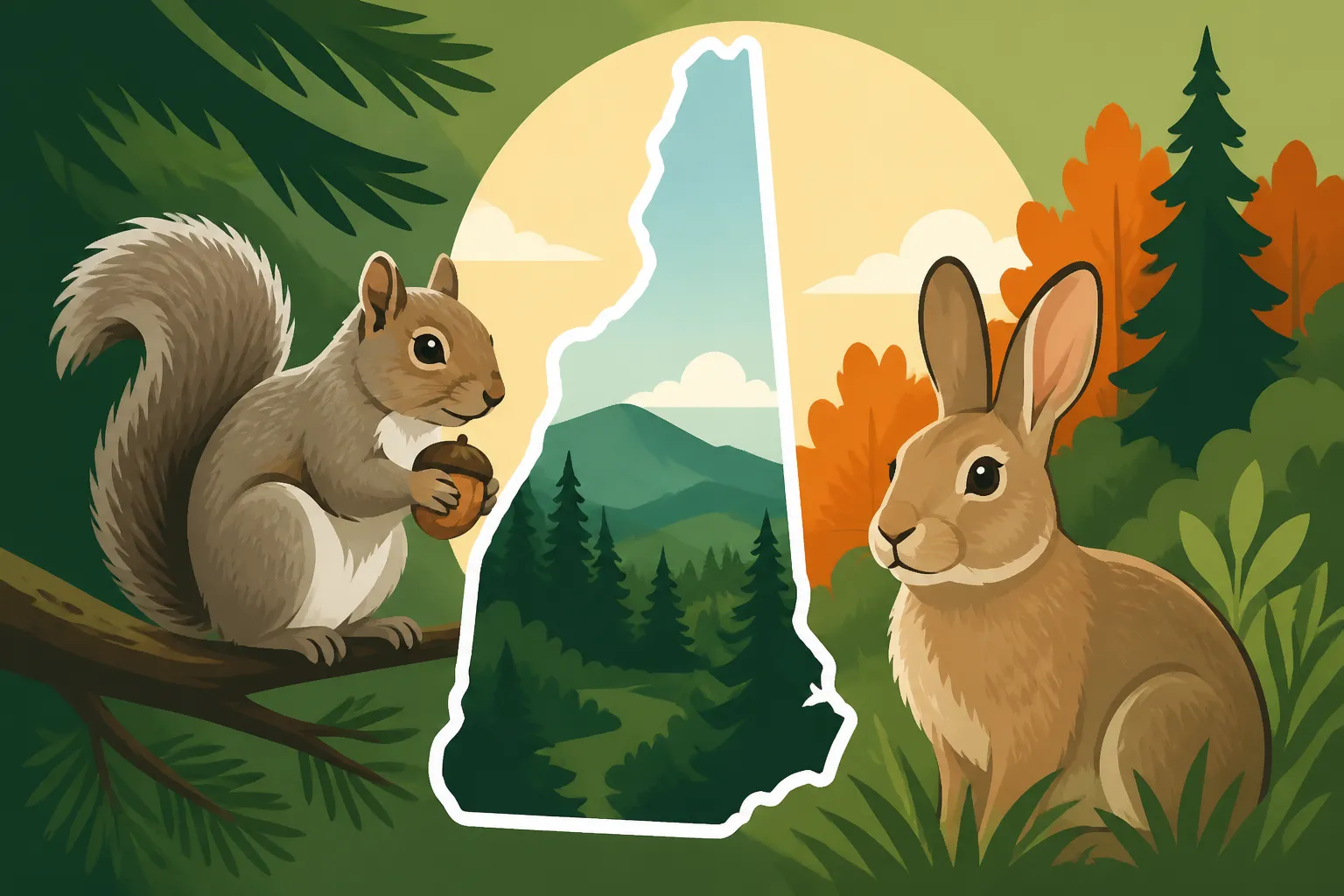
New Hampshire Squirrel and Rabbit Populations
For many hunters, the focus often shifts to big game like deer and moose, or the excitement of turkey season, but overlooking the abundant small game in New Hampshire would be a real shame. There's a distinct satisfaction in pursuing squirrels and rabbits, which often get dismissed as "starter" game, yet they offer incredible opportunities for skill building, delicious table fare, and extending your time afield. This comprehensive guide aims to shed light on the populations, habits, and hunting opportunities for these often-underappreciated creatures across the Granite State.
Understanding New Hampshire's Small Game Niche
Small game hunting often takes a backseat to the more heavily publicized big game seasons, but for many of us, it’s where we cut our teeth, learned to stalk, and developed a keen eye for subtle sign. It offers a quieter, often more relaxed, yet still challenging, experience that reinforces core hunting skills. The truth is, New Hampshire's woods and fields are teeming with these resilient, adaptable animals, providing a consistent hunting resource year after year.
Why Small Game Matters to Hunters
Think back to your early days in the woods, or perhaps your first successful hunt. For countless hunters, that memory involves a squirrel chattering from an oak, or a rabbit flushing from a briar patch. Small game teaches patience, stealth, marksmanship, and game processing skills on a smaller scale. It's an excellent way to introduce new hunters, especially youth, to the ethics and enjoyment of hunting without the intensity or commitment required for larger animals. Plus, the pressure on small game populations is generally lower than for big game, meaning more accessible opportunities for everyone. It's a fantastic way to sharpen your instincts and stay connected with the rhythms of the forest throughout a longer season.
Beyond skill development, small game offers practical benefits. The meat is lean, tasty, and perfect for stews, roasts, or frying. It provides a sustainable source of wild protein that many families have relied on for generations. Whether you're in the deep woods of Pittsburg or the suburban fringe of Nashua, the pursuit of small game can be incredibly rewarding, offering a chance to fill the freezer and spend quality time outdoors. It also gives you a deeper appreciation for the intricate ecosystems that support all wildlife, from the smallest mouse to the largest moose.
General Overview of Squirrel and Rabbit Populations
New Hampshire supports robust populations of several small game species, notably gray squirrels, red squirrels, eastern cottontail rabbits, and snowshoe hares. These animals thrive in a variety of habitats, from dense coniferous forests to mixed hardwoods, agricultural edges, and even suburban woodlots. Their populations are generally healthy, though local fluctuations can occur due to mast crop availability, severe winters, or predation pressures.
The state's diverse geography, from the thick spruce-fir stands of the North Country to the oak-hickory forests of the south, provides ample food and cover. While you won't find specific population numbers for small game in the same way you might for deer or moose, harvest reports and ongoing habitat assessments indicate stable, huntable populations. Wildlife agencies often monitor these trends to ensure sustainable hunting opportunities. Knowing where to look for specific habitats is key, and resources like GoHunt can be invaluable for mapping out potential areas and understanding land types that favor these animals.
Deciphering New Hampshire's Squirrel Populations
Squirrels are perhaps the most common and visible small game animal across New Hampshire, known for their acrobatic movements and often vocal presence. While several species exist, two stand out for hunters: the eastern gray squirrel and the red squirrel. Both offer different hunting experiences and occupy slightly different niches within the ecosystem.
Key Squirrel Species in New Hampshire
The eastern gray squirrel is probably what most people picture when they think of a squirrel. They're larger, typically gray with a lighter belly, and possess a magnificent bushy tail often fringed with white. These squirrels are highly adaptable and are found throughout New Hampshire's woodlands, from mature oak and hickory stands to suburban parks. They are a popular target for small game hunters due to their size and abundance. You'll often find them foraging on the forest floor, burying nuts, or scampering up the trunks of large trees.
The red squirrel, on the other hand, is smaller, reddish-brown, and has a more prominent eye ring. They are often more aggressive and vocal than their gray cousins, known for their incessant chattering and scolding calls. Red squirrels prefer coniferous and mixed forests, often where spruce, fir, and pine trees are abundant. They primarily feed on conifer seeds but will also consume nuts, berries, and even mushrooms. While smaller, they still provide a sporting challenge and excellent table fare. Understanding their distinct habits helps hunters pinpoint their preferred locations, which can be easily identified using mapping tools found on platforms like GoHunt. For more specific information on hunting these speedy creatures, check out our guide on Squirrel Hunting New Hampshire Hardwoods.
Habitat Preferences and Food Sources for Squirrels
Eastern gray squirrels are mast-eaters at heart. This means they thrive in mature hardwood forests rich in oaks, hickories, beeches, and other nut-producing trees. You'll find them concentrating in areas where acorns, beechnuts, and hickory nuts are plentiful, especially during the fall when they are actively harvesting and caching food for the winter. These areas provide both sustenance and ample cover in the dense canopy. They are also fond of cornfields bordering woods, where they can raid fallen ears for an easy meal.
Red squirrels, as mentioned, lean towards softwoods. Spruce, fir, and pine forests, common in the northern and higher elevation regions of New Hampshire, are prime red squirrel territory. Their diet revolves heavily around the seeds from cones, but they are opportunistic feeders and will take advantage of whatever food sources are available. Both species will also eat buds, bark, fungi, and even bird eggs, demonstrating their versatility. Identifying these food sources and the corresponding tree types is crucial for successful scouting. A detailed look at how their diet impacts their movements can be found in New Hampshire Squirrel Nest Counts and Mast Crops.
Factors Influencing Squirrel Numbers and Harvest Trends
Squirrel populations are largely cyclical, heavily influenced by the availability of mast crops. A bumper crop of acorns one year often leads to a boom in squirrel numbers the following year, as more food means better survival rates for young and healthier breeding adults. Conversely, a poor mast year can lead to a dip in numbers, as squirrels face stiffer competition for food and increased mortality during harsh winters.
Predation also plays a significant role. Hawks, owls, coyotes, foxes, and bobcats all prey on squirrels. However, their high reproductive rates generally allow them to bounce back quickly. Hunter harvest has a minimal impact on overall squirrel populations, which is why seasons are often long and bag limits generous. For a look at how these numbers translate into actual hunting success, you might want to read New Hampshire Squirrel Harvest Numbers. Being able to pinpoint these concentrations can significantly improve your chances, and using advanced mapping features from services like GoHunt can help you identify prime hardwood ridges or softwood thickets where squirrels are likely to be abundant.
Exploring New Hampshire's Rabbit and Hare Populations
When we talk about rabbits in New Hampshire, we're actually looking at two distinct animals: the eastern cottontail rabbit and the snowshoe hare. While both are members of the order Lagomorpha and provide exciting small game hunting, they have different appearances, habitats, and behaviors that hunters should understand.
Cottontail Rabbits vs. Snowshoe Hares
The eastern cottontail rabbit is the more familiar of the two, especially in southern New Hampshire. They are brownish-gray, with a distinct white "powder puff" tail that gives them their name. Cottontails are typically found in brushy areas, thickets, overgrown fields, fencerows, and the edges of woodlands. They are relatively small and tend to stay close to dense cover for protection. When flushed, they dart quickly, often in a zigzag pattern, before disappearing back into thick vegetation.
The snowshoe hare, on the other hand, is built for the northern woods and harsher winters. Larger than the cottontail, their most distinctive feature is their seasonal color change: brown in summer, turning pure white in winter, perfectly camouflaged against the snow. Their large, heavily furred hind feet act like snowshoes, allowing them to traverse deep snow with ease. Snowshoe hares prefer dense coniferous forests, spruce-fir bogs, and regenerating clear-cuts with plenty of low-lying cover. For a deeper dive into hunting these elusive creatures, consider our piece on Running Beagles on a New Hampshire Snowshoe Hare.
| Feature | Eastern Cottontail Rabbit | Snowshoe Hare |
|---|---|---|
| Size | Smaller (2-4 lbs) | Larger (3-5 lbs) |
| Color | Brownish-gray with white "puff" tail | Brown in summer, white in winter |
| Habitat | Brushy fields, fencerows, woodland edges | Dense coniferous forests, bogs, clear-cuts |
| Feet | Smaller, less furred | Large, heavily furred "snowshoes" |
| Range | More common in southern NH | More common in northern NH |
| Ears | Shorter, proportionate to head | Longer, often with black tips |
Preferred Habitats and Dietary Needs for Rabbits and Hares
Eastern cottontails are truly creatures of the edge. They thrive where different habitat types meet, especially where there's an abundance of young, thorny shrubs, briar patches, and tall grasses. These dense covers provide refuge from predators and easy access to a diverse diet. They feed on a wide variety of plants, including clover, alfalfa, grasses, forbs, and the bark and twigs of young woody plants, especially in winter. Farmers’ fields and old orchards are often hotspots.
Snowshoe hares are specialists of dense, young forests. They require thick cover year-round, often regenerating logging cuts or swampy coniferous areas where they can hide from predators. Their winter diet consists mainly of the twigs, buds, and bark of woody plants like aspen, birch, and various conifers. In summer, they add grasses, clovers, and other herbaceous plants. Their dependence on specific thick, regenerating habitat means that timber management practices significantly influence their local populations. Learning about these specific areas can drastically improve your success when hunting. You might also want to look at New Hampshire Rabbit Habitat Restoration Efforts to see how conservation efforts support these animals.
Population Dynamics and Challenges for Lagomorphs
Like squirrels, rabbit and hare populations can fluctuate, though these cycles are often more pronounced for snowshoe hares, which can experience boom and bust periods influenced by factors like predation and habitat quality. Cottontails, with their high reproductive rate, are generally quite resilient, often producing several litters a year. However, severe winter weather, especially prolonged periods of deep snow without adequate cover, can take a toll on both species.
Predators are a constant threat to rabbits and hares. Coyotes, foxes, bobcats, owls, and hawks all rely on these animals as a primary food source. Habitat loss and fragmentation, particularly in more developed areas, can also impact cottontail populations by reducing the availability of preferred brushy cover. Despite these challenges, both species maintain healthy populations in suitable habitats across the state, offering fantastic hunting opportunities. Keeping an eye on localized conditions, especially during harsh winters, can give you an edge. Checking out New Hampshire Cottontail Population Trend can provide insight into regional population health.
How Wildlife Agencies Monitor Small Game
Understanding the health of any wildlife population, even for animals as common as squirrels and rabbits, is crucial for sustainable management. While small game species don't often receive the same intensive, individual animal tracking as deer or moose, the New Hampshire Fish and Game Department employs various methods to monitor their populations and ensure hunting opportunities remain robust. This ensures that the thrill of a small game hunt remains a staple for future generations.
Survey Methods for Squirrels and Rabbits
For species like squirrels and rabbits, direct population counts can be incredibly difficult and often impractical due to their small size, dense habitats, and secretive nature. Instead, wildlife biologists rely on a combination of indirect survey methods. These can include:
- Habitat Assessments: Monitoring the health and availability of preferred habitats, such as mast-producing hardwood forests for gray squirrels or dense conifer thickets for snowshoe hares. By tracking forest health and changes, they can infer potential impacts on small game.
- Mast Crop Surveys: For squirrels, tracking acorn, beechnut, and hickory nut production is a key indicator of future population trends. Good mast years generally lead to increased survival and breeding success.
- Track Counts: Especially for snowshoe hares in winter, track counts along standardized routes can provide an index of abundance. The number of tracks observed per mile can indicate whether populations are stable, increasing, or decreasing.
- Roadside Surveys: While more common for birds or larger mammals, incidental sightings during other surveys can contribute to anecdotal evidence of small game presence and density.
- Brood Surveys: For species like rabbits, observing the number of young per adult female during breeding season can give an idea of reproductive success.
These methods, while not giving an exact number, provide valuable trend data that helps biologists make informed management decisions.
Role of Hunter Harvest Data in Population Management
One of the most valuable sources of data for small game management comes directly from hunters themselves. Unlike big game, where individual animals are often registered, small game harvest is typically monitored through annual hunter surveys. Hunters are asked to report how many squirrels, rabbits, or hares they harvested, how many days they hunted, and in which general areas.
This hunter harvest data is critical for several reasons:
- Trend Analysis: Over time, changes in reported harvest numbers can indicate increases or decreases in populations. If hunters are consistently reporting fewer animals, it might signal a localized decline, prompting further investigation.
- Effort vs. Success: By comparing the number of animals harvested to the number of hunter days afield, agencies can calculate "harvest per unit effort" – essentially how hard hunters are working to find game. A declining harvest per unit effort might suggest lower populations, even if overall harvest remains stable due to increased hunter participation.
- Geographic Distribution: Harvest reports can help identify regions where populations are particularly strong or weak, guiding habitat improvement projects or informing localized regulation changes.
- Regulatory Effectiveness: If new regulations (e.g., changes to bag limits or season lengths) are implemented, harvest data helps assess their impact on both the game species and hunter satisfaction.
While hunters may sometimes feel their individual harvest is insignificant, collectively, this data forms a vital component of New Hampshire's wildlife management strategy for small game. It's a prime example of how hunters directly contribute to conservation. Looking at state harvest reports can even help you plan your own hunts by showing you where hunter success has been highest, a feature often integrated into mapping systems like those provided by GoHunt. For those interested in the bigger picture, explore New Hampshire Squirrel Harvest Numbers and New Hampshire Snowshoe Hare Harvest Numbers.
The Impact of Habitat and Environmental Factors
New Hampshire's varied landscape and often unpredictable weather play a huge role in the well-being of its small game populations. Beyond direct hunting pressure, these broader environmental factors are often the primary drivers of success or struggle for squirrels, rabbits, and hares. As hunters, understanding these influences can significantly improve our scouting and hunting strategies.
The Importance of Forest Health and Mast Crops
For gray squirrels, nothing is more critical than the health of the hardwood forests and the abundance of mast crops. A "mast crop" refers to the production of nuts (acorns, beechnuts, hickory nuts) by trees. These calorie-rich foods are essential for squirrels to build up fat reserves for winter and to successfully breed. A robust mast crop often means more squirrels surviving the winter, leading to higher populations the following spring and fall.
Conversely, a poor mast year can be devastating. When nuts are scarce, squirrels must expend more energy foraging, making them more vulnerable to predation and starvation, especially if winter is severe. This can lead to a noticeable drop in numbers. Forest health also plays a role beyond mast. Diverse, mature hardwood stands provide not only food but also den sites in tree cavities and canopy cover for protection. For red squirrels and snowshoe hares, the health of coniferous and mixed forests, particularly the presence of dense understory and regenerating clear-cuts, is equally vital for both food and cover. Understanding the current year's mast crop can be the single most important factor in locating huntable squirrel populations. You might find our post on New Hampshire Squirrel Nest Counts and Mast Crops offers further insights.
Winter Severity and Predation on Small Game
Winter in New Hampshire can be brutal, and its severity directly impacts small game survival. Prolonged periods of deep snow can make foraging difficult for both squirrels and rabbits, forcing them to burn through their fat reserves more quickly. For cottontails, deep snow can bury their low-lying food sources and critical escape cover, leaving them exposed. Snowshoe hares are better adapted with their specialized feet and white camouflage, but even they can struggle if food becomes inaccessible or temperatures drop to extreme lows for extended periods.
Predation is a constant factor year-round but can become even more impactful during harsh winters when small game animals are weakened or more exposed. Coyotes, foxes, bobcats, fishers, hawks, and owls are all skilled predators of squirrels and rabbits. While predators play a natural and healthy role in regulating populations by culling weaker individuals, a particularly tough winter combined with high predator numbers can temporarily suppress small game populations. However, the high reproductive rates of squirrels and rabbits generally allow them to bounce back quickly once conditions improve. Being mindful of these factors helps hunters assess local conditions and choose the best hunting days. Thinking about Layering for New Hampshire's Cold Hunting Season becomes especially important when hunting small game in winter.
Small Game Hunting Opportunities and Regulations
Hunting New Hampshire's squirrels and rabbits offers some of the longest and most accessible seasons in the state. This means more time in the woods, more opportunities to introduce new hunters, and a chance to hone skills throughout the fall and winter months. But as with all hunting, understanding and adhering to regulations is paramount for ethical and successful outings.
Best Practices for Ethical Small Game Hunting
Ethical hunting of small game goes beyond just following the law; it's about respecting the animal, the land, and the hunting tradition. Here are a few best practices:
- Positive Identification: Always be sure of your target. While squirrels and rabbits are common, avoid accidentally targeting protected species or non-game animals.
- Shot Placement: Aim for quick, humane kills. For squirrels, head shots are often preferred to preserve meat. For rabbits, a shot to the vitals or head is ideal. Use appropriate firearms (like a .22 rimfire or small gauge shotgun) and ammunition for the size of the animal.
- Know Your Backstop: When hunting with a rimfire rifle, be absolutely certain of what is beyond your target. Bullets can travel long distances and cause harm. Shotguns with appropriate loads are generally safer in areas with varying terrain or potential for unseen hazards.
- Respect Private Property: Always know land boundaries. Use tools like GoHunt to verify public land access and secure permission if hunting on private land. This is crucial for maintaining good landowner relations.
- Retrieve All Game: Make every effort to retrieve any animal you shoot. Wounded game should be tracked persistently. Leaving game in the field is unethical and wasteful.
- Introduce New Hunters Responsibly: Small game hunting is perfect for mentoring. Emphasize safety, ethics, and the full experience from the shot to table preparation.
These practices ensure a positive experience for you and contribute to the positive image of hunters in New Hampshire.
General Season Dates and Bag Limits
New Hampshire's small game seasons are typically quite generous, offering ample opportunity to get afield. While specific dates and bag limits can change, here's a general overview, keeping in mind you should always consult the current New Hampshire Fish and Game Hunting Digest for the most up-to-date and legally binding information:
- Squirrel Season: Often opens in early September and runs through the late winter, sometimes even into the early spring. The daily bag limit is generally quite liberal, allowing hunters to take a good number of animals. Both gray and red squirrels are typically fair game. For precise dates, refer to New Hampshire Squirrel Season Dates.
- Rabbit and Hare Season: The season for eastern cottontails and snowshoe hares also tends to be long, often opening in October and extending through March. Like squirrels, bag limits are usually generous. It's important to differentiate between rabbits and hares if there are specific regulations or bag limits for each, though often they are grouped together. To verify dates, check New Hampshire Snowshoe Hare Season Dates.
Important Note: New Hampshire's hunting regulations are dynamic and can be complex, sometimes varying by Wildlife Management Unit (WMU) or specific date ranges. Always make it a priority to check the official digest each season before you hunt. This ensures you are fully compliant with all state laws and regulations. You can usually find the digest online or at license vendors.
The accessibility and long seasons for small game make them an excellent resource for hunters of all experience levels in New Hampshire, providing continuous opportunities to enjoy the outdoors and put wild game on the table.
Disclaimer
This article is for general informational purposes only and does not constitute professional advice. Laws, prices and regulations vary by location and change over time. Consult a qualified professional for guidance on your specific situation.