New Hampshire Predator Impact on Fawn Recruitment
It’s a frustrating feeling, isn't it? You spend hours in the woods, scouting, hunting, hoping to see the next generation of deer, and sometimes it feels like the fawns just aren’t there. Many of us hunters scratch our heads, looking for answers, and often our thoughts turn to the coyotes, the bears, and other predators we know share the woods with our beloved whitetails. This guide dives deep into the complex reality of how New Hampshire's predators genuinely impact the survival of deer fawns, dispelling myths and offering a realistic look at what truly shapes our deer herd.
Understanding Fawn Recruitment in New Hampshire
When we talk about "fawn recruitment," what we're really getting at is the number of fawns that survive their first year of life and become part of the adult deer population. It's not just about how many fawns are born, but how many make it through those critical early months and their first harsh winter. For us as hunters, understanding fawn recruitment is absolutely vital because it directly influences the health, age structure, and overall size of the deer herd we pursue year after year. If recruitment is low, the herd can decline, and if it's high, we see a booming population. It’s the engine that drives the future of our hunting opportunities here in the Granite State.
The Dynamics of Fawn Survival
Fawn survival is a delicate balance, particularly in New Hampshire's diverse and often challenging environment. The first few weeks of a fawn's life are incredibly vulnerable. They're born without the speed or strength to escape many threats, relying heavily on camouflage, stillness, and their mother's protective instincts. A fawn's success in these early days is largely dictated by the cover available—dense thickets, tall grasses, or even brush piles—that can hide them from prying eyes and noses. Good habitat provides ample hiding spots, increasing their chances.
Then there's the mother's condition. A healthy, well-fed doe is more likely to give birth to robust fawns, and she's also better equipped to defend them and lead them to safety. The quality of her nutrition leading up to fawning season, often impacted by winter severity and available forage, plays a direct role in the vitality of her offspring. It’s a cascading effect: a tough winter can mean weaker does, which means more vulnerable fawns, and ultimately, lower recruitment into the herd.
Why Recruitment Matters for Hunters
As hunters, we naturally pay close attention to fawn recruitment because it's a window into the future of our deer season. Seeing healthy numbers of fawns during the summer months gives us hope for strong harvests down the line. Conversely, a noticeable lack of fawns can be disheartening, raising concerns about declining deer numbers. Wildlife biologists use fawn recruitment rates to make critical management decisions, like setting antlerless permit allocations for New Hampshire's WMU-Based Deer Season Structure. If fawn survival is consistently low in certain Wildlife Management Units (WMUs), it might signal a need to adjust hunting pressure to allow the herd to rebound. We all want to ensure sustainable hunting for generations, and robust fawn recruitment is a cornerstone of that goal.
The Primary Predators of New Hampshire Deer Fawns
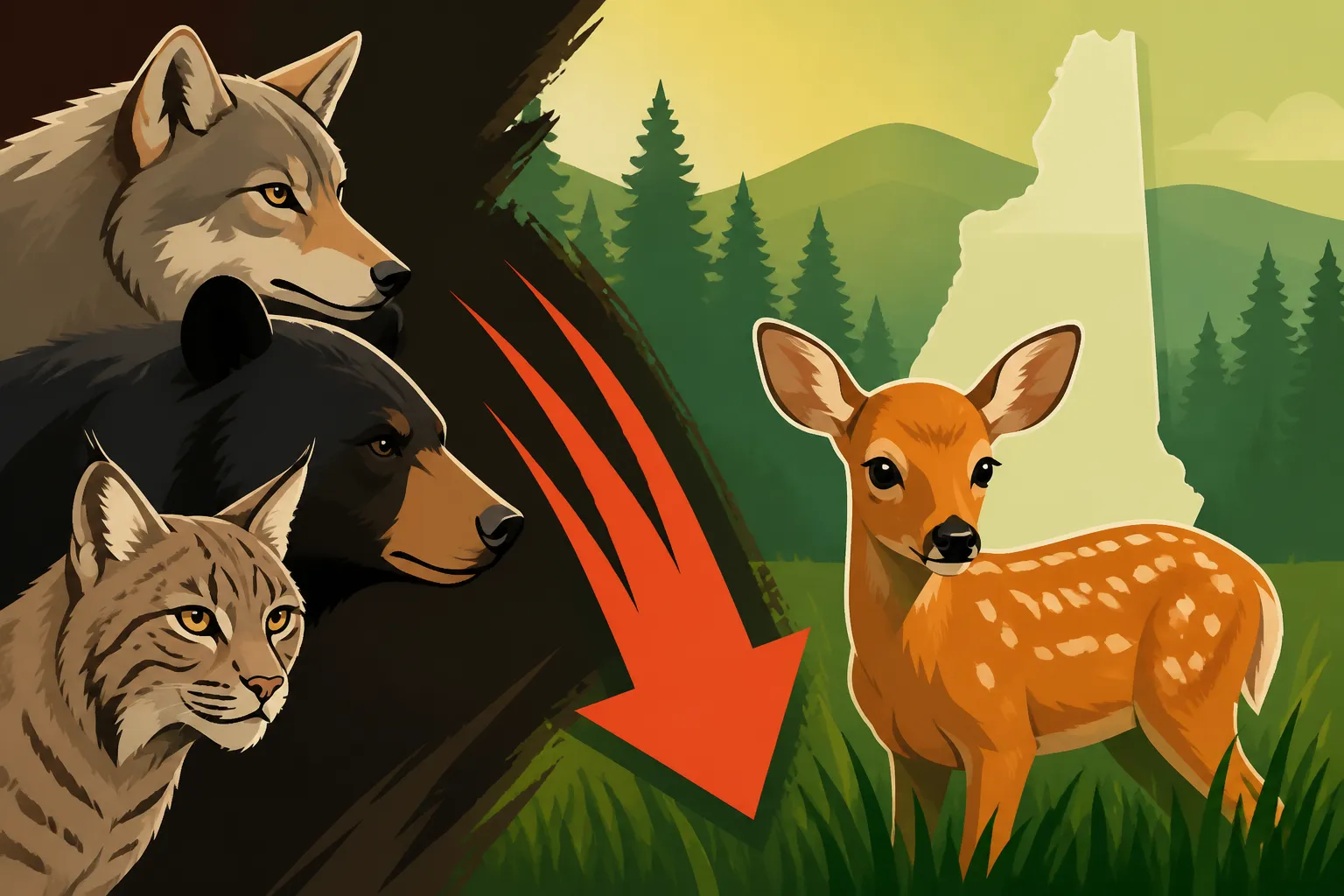
When you’re out in the New Hampshire woods, you’re never truly alone. Our forests are home to a variety of predators, each playing a role in the ecosystem's intricate web. While many species might occasionally prey on a vulnerable fawn, there are a few key players that consistently impact fawn recruitment rates. It’s easy to point fingers, but understanding who is doing the preying and how gives us a clearer picture of the challenges young deer face.
Coyotes: The Most Consistent Threat
Eastern coyotes are perhaps the most talked-about predator when it comes to deer in New Hampshire, and for good reason. They are highly adaptable, intelligent, and their populations are widespread across the state. They don't just opportunistically stumble upon fawns; they actively seek them out, especially during the fawning season in late spring and early summer. A coyote's keen sense of smell, coupled with their ability to navigate dense cover silently, makes them incredibly efficient at locating hidden fawns. We often see evidence of their presence, from tracks in the mud to scat laden with deer hair. A strong, healthy coyote population, as detailed in New Hampshire Coyote Range and Density, means consistent pressure on newborn fawns.
Coyotes often work alone or in small family groups, systematically searching areas where does are known to drop their fawns. Their hunting strategies, including sometimes even trailing a doe in the days leading up to birth, make them a significant factor in fawn mortality. While adult deer are generally too fast and strong for a single coyote, a newborn fawn offers little resistance. This sustained pressure from coyotes is a natural part of the ecosystem, but it's understandable why hunters often perceive it as a primary limiting factor for deer numbers.
Black Bears: Opportunistic Predators
While black bears are typically thought of as omnivores, enjoying berries, nuts, and grubs, they are also opportunistic predators, and a newborn fawn is an easy meal for a hungry bear. Unlike coyotes, who might specifically target fawns, bears are more likely to stumble upon one while foraging for other food. However, their size and strength mean that if they do find a fawn, its chances of survival are virtually nil. Bear activity peaks in the spring and early summer, coinciding perfectly with the fawning season, making those encounters more likely. New Hampshire Black Bear Denning Habits explains how bears emerge from dens hungry, and a protein-rich fawn can be a valuable food source, especially for sows with cubs who need to regain weight quickly.
We've all heard stories, or perhaps even seen the aftermath, of a bear-fawn encounter. It's a stark reminder that the woods are wild. While bears might not exert the same constant, intentional pressure as coyotes, their sheer presence and opportunistic nature contribute to overall fawn mortality. It's just another natural challenge that young deer in New Hampshire must overcome to survive.
Bobcats and Other Potential Predators
New Hampshire's bobcats are sleek, agile hunters, known for their stealth and keen senses. While they primarily target smaller prey like rabbits, squirrels, and birds, a young, vulnerable fawn is certainly not off their menu. Their ambush hunting style makes them highly effective in dense cover, where fawns often hide. A bobcat might not take down an adult deer, but a fawn is well within its capabilities. The New Hampshire Bobcat Population Trends shows that these elusive felines are a healthy part of our ecosystem, adding another layer of natural predation pressure on fawns, albeit usually to a lesser extent than coyotes.
Other animals, like fisher or even domestic dogs that roam unchecked, can also contribute to fawn mortality. While individual instances might be rarer, collectively, they add to the environmental challenges young deer face. It’s a constant battle for survival, and the sum of all these threats paints a picture of intense early life vulnerability for fawns.
How Predator Pressure Affects Fawn Survival
The impact of predators on fawn survival isn't a simple equation. It's a complex interplay of environmental factors, predator population dynamics, and the inherent resilience of the deer herd itself. Understanding this intricate relationship helps us appreciate the natural world and how our deer populations truly tick. It’s not just about one bad actor; it's about the whole picture.
Direct Mortality and Its Ecological Role
The most obvious impact of predators is direct mortality—fawns being killed and eaten. This is a brutal but natural part of any ecosystem. Predators help to "cull" the herd, often removing the weakest or sickest individuals. This natural selection can, in theory, lead to a stronger, healthier deer population in the long run by ensuring that only the fittest survive to reproduce. However, when predator numbers are high, or other stressors are present, this direct mortality can significantly reduce the number of fawns that make it to adulthood, which is known as a reduction in New Hampshire Fawn Survival Rates.
This ecological role helps regulate prey populations, preventing overpopulation that could lead to habitat degradation and widespread disease. For example, if deer numbers swell beyond what the land can sustain, the entire herd suffers. Predation, in this sense, is a natural control mechanism. It's a tough pill to swallow for hunters who want to see every fawn thrive, but it's how nature has always worked.
Indirect Effects: Stress and Dispersal
Predators don't just kill fawns; their mere presence can create significant stress for does and young deer. A doe constantly alert to danger might be less effective at foraging, potentially impacting her milk production or overall health. This indirect stress can make fawns more vulnerable to other threats, or simply weaken them. Moreover, sustained predator pressure can cause deer to alter their movements, avoiding prime fawning habitat if it's also a hotspot for coyotes or bears. This dispersal can push deer into less ideal areas, which might offer less cover or poorer forage, further impacting fawn survival.
Imagine a doe constantly having to move her fawn, or being unable to settle into a secure hiding spot because of constant scent trails or vocalizations from coyotes. This persistent low-level stress saps energy and makes the fawn's already perilous early life even harder. It’s a subtle but significant factor in overall recruitment.
The Density Dependence Factor
The impact of predators on fawn recruitment is also often density-dependent. This means that when deer populations are very high, predators might have a less noticeable impact on the percentage of fawns that survive because there are simply so many fawns available. However, as deer populations decline, or in areas where deer numbers are naturally lower, predator pressure can become a much more significant limiting factor. In these scenarios, each fawn lost to a predator represents a larger percentage of the overall recruitment, making the impact more pronounced.
For us, this means that in certain regions of New Hampshire, where deer densities might be lower, predator control could potentially have a more direct and noticeable positive effect on fawn numbers. It’s a nuanced point that often gets overlooked in the broader conversation about predators and deer.
Beyond Predators: Other Factors Influencing Fawn Recruitment
It's tempting to put all the blame on predators when fawn numbers seem low, but the reality in New Hampshire's complex ecosystem is that many factors work together to influence fawn recruitment. Predators are a piece of the puzzle, but they are by no means the only one. Understanding these other elements gives us a more complete and realistic picture of deer health.
Habitat Quality and Quantity
Perhaps the most critical factor influencing fawn recruitment, and indeed the entire deer herd, is habitat. Does need dense, secure cover to give birth and hide their fawns during those vulnerable first few weeks. If this fawning cover is sparse or fragmented, fawns are much more exposed to predators and other threats. Clear-cuts, regenerating forests, and thick brush provide excellent hiding spots. Conversely, large tracts of mature, open timber offer little sanctuary for tiny fawns, making them easy targets.
Beyond just cover, habitat also means food. A doe needs excellent nutrition to carry healthy fawns to term and produce enough milk. Areas rich in diverse forage—from young browse to acorns—will support healthier does, who in turn produce more robust fawns. Without sufficient food and cover, even without heavy predator pressure, fawn recruitment will struggle. When you're scouting, using tools like GoHunt can help you identify areas with ideal habitat for both does and fawns. Look for those early successional growth areas, the edges where different types of cover meet, and areas with good mast production.
Winter Severity and Its Aftermath
Winters in New Hampshire can be brutal, and their severity has a profound, cascading effect on deer populations, particularly on fawn recruitment. Deep snow, prolonged cold temperatures, and limited food sources take a heavy toll on deer, especially on does that are pregnant. A harsh winter means deer expend more energy simply staying warm and moving through snow, depleting their fat reserves. How Deep Snow Affects New Hampshire Deer Survival vividly illustrates this challenge.
When a doe enters the spring fawning season in poor condition due to a tough winter, her fawns are likely to be smaller, weaker, and less likely to survive. Her body might not be able to produce enough milk, or she might be too exhausted to adequately protect her offspring. Even if predators are not abundant, fawns born in these compromised conditions have a significantly lower chance of being recruited into the herd. The impact of a single severe winter can be felt in fawn recruitment numbers for several years.
Disease and Parasites
While New Hampshire has been incredibly fortunate to remain free of Chronic Wasting Disease (CWD) thanks to vigilant efforts like those detailed in New Hampshire's CWD Prevention Rules, other diseases and parasites can still impact deer health and, by extension, fawn recruitment. For example, severe infestations of winter ticks can weaken adult deer, especially young fawns, leading to anemia and exhaustion. A doe laden with ticks, or suffering from other illnesses, will be less able to care for her fawns, and the fawns themselves might be born with compromised immune systems.
These health challenges don't always result in immediate death but can weaken fawns, making them more susceptible to predation or environmental stressors. It's a silent threat that can chip away at recruitment rates, often working in conjunction with other factors to make survival even harder for the youngest members of the herd.
Strategies and Perspectives for Deer Management
Given the complex web of factors influencing fawn recruitment, effective deer management in New Hampshire requires a holistic approach. It’s not just about managing predators or increasing doe tags; it’s about understanding the entire ecosystem and how all its parts interact. For us as hunters, being informed allows us to be better stewards of the resource.
The Role of Hunter Harvest in Population Control
As hunters, we play a crucial role in managing the deer population. Selective harvesting, especially of antlerless deer, can help balance the New Hampshire Buck-to-Doe Ratio by Region and ensure that the herd doesn't outgrow its habitat. In areas where deer density is high, responsible antlerless harvest can actually lead to healthier does and, paradoxically, better fawn recruitment rates in the long run. By reducing competition for food, does can enter winter in better condition, resulting in stronger fawns that are more resilient to both environmental challenges and predator pressure.
It’s a balancing act. Too much pressure on does can reduce fawn numbers, but too little can lead to an overbrowsed habitat and a less healthy herd overall. State wildlife agencies continually analyze data, including fawn recruitment, to set harvest quotas that aim for a healthy, sustainable deer population across different WMUs. Regularly checking resources like a New Hampshire Annual Deer Harvest report or Reading a New Hampshire Harvest Report can help you understand the current state of the herd in your hunting areas.
Predator Management: A Complex Debate
The topic of predator management is often contentious, and it’s rarely simple. While some might advocate for widespread predator control to boost deer numbers, the reality is far more intricate. In many cases, predators fill a natural and necessary ecological niche. Furthermore, large-scale predator control can be incredibly challenging, expensive, and may have unforeseen impacts on other wildlife populations. New Hampshire Fish and Game manages predator populations through regulated hunting and trapping seasons, allowing for sustainable take while acknowledging their role in the ecosystem.
For individual hunters concerned about local fawn recruitment, understanding how to legally hunt or trap coyotes can be a way to locally mitigate some pressure. Methods like Coyote Calling New Hampshire Farm Country can be effective in specific areas. However, it's important to recognize that these efforts are often localized and may not have a broad, statewide impact on overall fawn recruitment.
Habitat Improvement as a Long-Term Solution
When it comes to boosting fawn recruitment, improving habitat is often the most effective long-term strategy. This involves creating and maintaining areas with dense fawning cover and abundant, nutritious food sources. This could mean timber stand improvements that promote early successional growth, planting diverse forage, or protecting critical New Hampshire Deer Wintering Yards Explained. These efforts benefit deer year-round, not just fawns, by providing better shelter and food for all age classes.
Engaging with local conservation groups, landowners, or even undertaking small-scale habitat projects on your own property can make a tangible difference. A well-managed piece of land, with good cover and food, provides fawns with the best possible start in life, helping them evade predators and withstand harsh conditions. Whether you're Hunting a Funnel Between Two Woodlots or exploring public land, recognizing and advocating for quality habitat is key.
In conclusion, while New Hampshire's predators certainly impact fawn recruitment, it's critical to remember they are just one piece of a much larger, dynamic puzzle. Habitat quality, winter severity, and disease all play equally, if not more, significant roles. By understanding this complexity, we can become more effective hunters and more informed conservationists, contributing to the health and sustainability of New Hampshire's incredible deer herd for generations to come.
Disclaimer
This article is for general informational purposes only and does not constitute professional advice. Laws, prices and regulations vary by location and change over time. Consult a qualified professional for guidance on your specific situation.