Best Rifle Caliber for New Hampshire Moose
For many hunters, drawing a New Hampshire moose tag is the ultimate dream, a once-in-a-lifetime opportunity that comes with immense excitement and, let's be honest, a fair bit of pressure. When that coveted permit finally lands in your hands, the gear questions start immediately, and perhaps none are debated more vigorously than the best rifle caliber for these magnificent North Country giants. Choosing the right tool for the job is paramount, not just for success, but for making a clean, ethical harvest, and this guide is here to walk you through everything you need to consider before you ever step foot in a New Hampshire moose bog.
Understanding the New Hampshire Moose Challenge
Before we even begin to talk about specific calibers, it's crucial to understand what makes hunting moose in New Hampshire a unique challenge. These aren't your average whitetails; they're massive animals, and the terrain they inhabit can be unforgiving.
The Sheer Size and Resilience of a Moose
Let's be blunt: a New Hampshire bull moose is an enormous creature. We're talking about animals that can weigh well over 800 pounds, sometimes pushing towards a thousand, with a dense bone structure and a thick hide. Their vitals, while large, are protected by heavy muscle and bone. This isn't a game animal that will just crumple from a marginal hit. Their sheer body mass means they can absorb a lot of energy and still travel a significant distance, especially when adrenaline is pumping.
This incredible resilience is why shot placement becomes even more critical. A well-placed shot with a capable cartridge can still lead to a quick, ethical harvest, but any deviation from the ideal can turn a hunt into a prolonged, difficult, and potentially unsuccessful tracking job through dense timber or wet bogs. It’s not about how many shots you can get off, but making that first, solid hit count.
Typical Hunting Scenarios and Terrain
New Hampshire moose hunting often takes place in rugged, dense environments, particularly in the North Country. Think thick softwood swamps, alder thickets, dense hardwood stands, and sprawling beaver flowages. Shots are rarely at extreme long ranges. More often, you'll be looking at shots under 150 yards, sometimes much closer, through brush or dense timber. This kind of environment means you need a caliber that can deliver sufficient energy with precision in tight quarters, and a bullet that can punch through any minor obstructions without deflecting wildly.
The terrain also dictates how far you might track a wounded animal. Dragging or quartering a thousand-pound animal out of a remote bog is a monumental task, one you definitely don't want to make harder by having to track it for miles through unforgiving country. This is why the ability to anchor an animal quickly and decisively is so highly valued in moose hunting circles, and why choosing the right caliber for these conditions is a topic of such importance.
Key Considerations for Moose Rifle Calibers
When you're staring at the rack of cartridges in a sporting goods store, it's easy to get overwhelmed. For moose, you need to think beyond just "big." Several factors come into play, each contributing to an ethical and successful hunt.
Energy and Bullet Construction
The most fundamental requirement for a moose caliber is sufficient kinetic energy and momentum to penetrate deeply and destroy vital organs. While some might argue that energy isn't everything, it’s certainly a major factor. You need a cartridge that can reliably deliver 1,500 to 2,000 foot-pounds of energy at the point of impact, ensuring that the bullet can drive through hide, muscle, and bone to reach the lungs and heart. Simply put, insufficient energy means insufficient penetration, which leads to wounded game.
Equally, if not more, important is bullet construction. You're not looking for a bullet designed for rapid expansion on thin-skinned deer. For moose, you want a controlled expansion bullet that retains a high percentage of its original weight, allowing for deep penetration. Look for bonded core bullets, solid copper designs, or partition-style bullets that are engineered to hold together. Frangible or rapidly expanding varmint bullets are absolutely out of the question for an animal the size of a moose. The bullet must maintain its integrity as it smashes through tough tissue and bone.
Recoil Management and Shot Placement
Let's be honest about recoil. Some hunters can handle magnum recoil with ease, while others flinch just thinking about it. The truth is, a rifle that kicks like a mule can lead to poor shooting habits and, ultimately, poor shot placement. A flinched shot, even with the most powerful caliber, is far less effective than a well-placed shot from a slightly less powerful but still adequate cartridge. This is a critical factor often overlooked in the pursuit of "more power."
The goal is to be comfortable enough with your rifle that you can deliver a precise shot under pressure. If a .338 Win Mag makes you anticipate the recoil to the point where you pull your shots, it's not the right caliber for you. A .30-06 Springfield that you can shoot accurately and consistently is a far superior choice. Practice is key here. Spend time at the range, get comfortable with your rifle, and choose a caliber you can shoot with confidence. Remember, the biggest moose are harvested by hunters who can put their bullet exactly where it needs to go, not necessarily by those with the biggest boom.
Accessibility and Cost of Ammunition
While less critical than ethical considerations, the practical aspects of ammunition availability and cost are worth thinking about. Common calibers tend to have a wider variety of bullet choices and are generally more readily available on sporting goods store shelves in places like Concord, Manchester, or even closer to the North Country. Specialty or wildcat cartridges, while sometimes offering impressive ballistics, can be difficult to find and expensive, especially when you need to practice extensively before your hunt.
If you’re planning a moose hunt, you’ll want to acquire your ammunition well in advance and practice with the exact load you intend to hunt with. Relying on finding a specific, rare box of ammo right before your hunt is a recipe for stress. Stick with calibers that are widely produced by major manufacturers, ensuring you can find suitable hunting loads when you need them.
Popular Caliber Choices for New Hampshire Moose
Alright, let's dive into some of the most commonly recommended and effective calibers for New Hampshire moose, looking at their strengths and weaknesses.
The .30-06 Springfield: The Old Reliable
Ah, the venerable .30-06 Springfield. It's often called the benchmark for big game hunting, and for good reason. It has been taking down moose, bear, and elk for over a century, proving its capability time and time again. With heavy, controlled-expansion bullets in the 180-grain to 200-grain range, the .30-06 delivers ample energy and penetration for moose at typical hunting distances.
The biggest advantage of the .30-06 is its balance. It offers sufficient power without excessive recoil, making it manageable for most hunters. Ammunition is ubiquitous and comes in a huge variety of loads, allowing you to fine-tune for your specific rifle and hunting conditions. Many New Hampshire hunters grew up with a .30-06 in their hands, and it continues to be a top choice. While it might not have the "magnum" designation, a well-placed 180-grain bullet from a .30-06 will put a moose down just as effectively as many larger calibers. Think of it as the ultimate workhorse for the New Hampshire woods. Best Rifle Caliber for New Hampshire Whitetails is often a .30-06 as well, highlighting its versatility.
The .300 Winchester Magnum: Stepping Up the Power
If you're looking for a bit more horsepower than the .30-06, the .300 Winchester Magnum is a popular choice for larger game. It shoots the same .308-inch diameter bullets but at significantly higher velocities, translating to more kinetic energy and a flatter trajectory at extended ranges. While those extended ranges aren't always a factor in New Hampshire's dense timber, the increased energy does provide a greater margin of error for penetration on moose.
The .300 Win Mag shines with 180-grain to 200-grain bullets, driving them with authority. The trade-off, of course, is increased recoil. For hunters who are comfortable with magnum recoil and can shoot it accurately, the .300 Win Mag offers a potent package. It's especially favored by those who might also hunt in more open country where longer shots are common. If you do opt for a .300 Win Mag, investing in a good muzzle brake or a rifle with a recoil-absorbing stock might be a wise move to maintain shooting comfort and accuracy. Best Bullet Weight for a New Hampshire Moose will be critical here, typically on the heavier side.
The .338 Winchester Magnum: The Dedicated Moose Dropper
For many, the .338 Winchester Magnum is the quintessential moose and large bear cartridge. It's a true magnum that launches heavier, larger-diameter (.338-inch) bullets, typically in the 200-grain to 250-grain range, with tremendous energy and momentum. This cartridge is designed for deep penetration and bone-crushing power, making it incredibly effective on big, tough animals.
The .338 Win Mag's larger bullet diameter and heavier construction mean it transfers a significant amount of energy to the animal, often resulting in quicker knockdowns. This is particularly appealing when you consider the effort of tracking a wounded moose through a Hunting a New Hampshire North Country Moose Bog. The primary drawback is significant recoil, which demands a shooter who is well-practiced and comfortable with heavy-hitting rifles. If you are recoil-sensitive, this might not be your best option, but if you can handle it, the .338 Win Mag provides exceptional performance for New Hampshire moose.
The .35 Whelen: A Classic Alternative
Often overlooked in the magnum craze, the .35 Whelen is a fantastic choice for moose and heavy timber hunting. It's essentially a .30-06 case necked up to accept a .358-inch diameter bullet, typically in the 200-grain to 250-grain range. What makes it special is its ability to launch heavy bullets at respectable velocities, delivering impressive stopping power at moderate ranges without the screaming recoil of some magnum cartridges.
The .35 Whelen offers excellent penetration with its heavier, larger-diameter bullets, making it a superb choice for moose in New Hampshire's dense woods. Its trajectory is a bit more arcing than some flat-shooting magnums, but for typical moose hunting ranges, this is rarely an issue. For hunters who want more power than a .30-06 but find magnum recoil too punishing, the .35 Whelen provides a very effective and comfortable alternative. It's a truly underrated caliber that performs exceptionally well on large game.
Other Capable Calibers
While the above are some of the most popular, other calibers can certainly do the job.
- 7mm Remington Magnum: A powerful cartridge that shoots flat and delivers good energy. With proper bullet construction (160-grain to 175-grain), it can be effective for moose, though some prefer the larger diameter bullets for truly heavy game.
- .308 Winchester: A highly accurate and popular deer cartridge. With 180-grain premium bullets, it can certainly take moose, especially at closer ranges, but many hunters feel it's on the lighter side for ethical moose hunting, preferring more kinetic energy for these massive animals.
- .375 H&H Magnum: This is truly in the "big gun" category, offering undeniable power for any game animal on the continent. While overkill for many, if you're comfortable with its substantial recoil, it offers maximum insurance. It's often used by hunters who pursue dangerous game and want a single, versatile rifle.
Here's a comparison of some of these calibers:
| Caliber | Bullet Diameter (in) | Common Bullet Weights (gr) | Typical Muzzle Energy (ft-lbs) | Recoil Level | Notes |
|---|---|---|---|---|---|
| .30-06 Springfield | .308 | 150-200 | 2,800-3,000 | Moderate | Balanced, versatile, widely available. |
| .300 Winchester Magnum | .308 | 165-220 | 3,500-4,000 | Moderate-High | More power, flatter trajectory, increased recoil. |
| .338 Winchester Magnum | .338 | 200-250 | 3,800-4,500 | High | Excellent penetration, heavy recoil, dedicated moose. |
| .35 Whelen | .358 | 200-250 | 2,800-3,200 | Moderate | Great power, larger diameter, manageable recoil. |
| .308 Winchester | .308 | 150-180 | 2,500-2,700 | Moderate | Accurate, but on the lighter side for moose. |
| 7mm Remington Magnum | .284 | 140-175 | 3,000-3,300 | Moderate | Flat shooting, good energy, needs premium bullets. |
Note: Muzzle energy figures are approximate and vary significantly based on specific load, barrel length, and bullet type.
Beyond the Caliber: Other Factors for Moose Hunting Success
While the caliber choice is a major decision, it's just one piece of the puzzle. A successful New Hampshire moose hunt involves many other considerations that contribute to an ethical shot and a quick recovery.
Rifle Fit and Familiarity
A great caliber in a rifle that doesn't fit you or that you're not familiar with is a recipe for disaster. Your rifle should feel like an extension of your body. The length of pull, the comb height, and the overall balance of the rifle are critical for quickly and accurately shouldering the rifle and acquiring the target. If you're buying a new rifle for a moose hunt, spend time with it. Get it fitted if necessary.
More importantly, become intimately familiar with it. This means hundreds of dry fires, dozens of trips to the range, and practicing shooting from various field positions – offhand, kneeling, leaning against a tree. You don't want the first time you're truly under pressure to be when a bull moose steps into a clearing. Confidence in your rifle comes from familiarity, and familiarity comes from practice. The more you practice, the more instinctive your shots will become, and the less likely you are to flinch or make a rushed, poorly aimed shot. This is where researching different rifle models and practicing extensively, perhaps even using a platform like GoHunt to scout hypothetical shooting lanes, can really pay off.
Optics and Sighting Systems
For moose hunting in New Hampshire, quality optics are non-negotiable. You'll likely be hunting in low light conditions – dawn, dusk, or under a heavy canopy. A scope with excellent light gathering capabilities and clear glass is crucial for target identification and precise shot placement. Look for scopes with objective lenses in the 40-56mm range and good quality coatings. Magnification doesn't need to be extreme; a 3-9×40 or 2-10×42 is often ideal for the typical ranges encountered. Too much magnification can actually be a hindrance in dense cover, making it harder to find the animal in your scope.
Reliable sighting systems also mean robust mounting. A rifle scope for moose hunting needs to withstand bumps and knocks that are common when navigating through dense woods. Ensure your scope is mounted securely with high-quality rings and bases. A loose scope can render even the best rifle and caliber useless. Consider a zero check before heading into the field, especially if your rifle has been transported rough terrain. Good Optics for New Hampshire's Timber Country are worth the investment.
Bullet Placement and Ethical Hunting
No matter the caliber, bullet placement is the single most important factor in ethically harvesting a moose. A shot to the vitals – the heart and lungs – is essential for a quick kill. This means understanding moose anatomy and being disciplined enough to wait for the right shot opportunity. A broadside shot is almost always preferred, aiming directly behind the shoulder. Quartering-away shots can also be effective if you know where the vitals are and can angle your shot appropriately to hit them.
Avoid "Texas heart shots" or shots aimed at the shoulder bone if you're not using a true bone-crushing caliber. The goal is to destroy the organs that sustain life, not simply to wound the animal. If a clean shot isn't available, have the patience to wait, or stalk closer, or simply pass on the shot. An ethical hunter knows their limitations and respects the animal enough to ensure a clean, quick kill. This is especially true given the difficulty of tracking and recovering a wounded moose in the New Hampshire wilderness. When preparing for your hunt, studying moose anatomy diagrams is time very well spent.
Planning for Success: Beyond the Shot
Your rifle and caliber choice are foundational, but the actual hunt involves much more. Preparing for the entire experience, from the moment you leave camp until you're back with meat in the freezer, is crucial.
Physical Preparation and Logistics
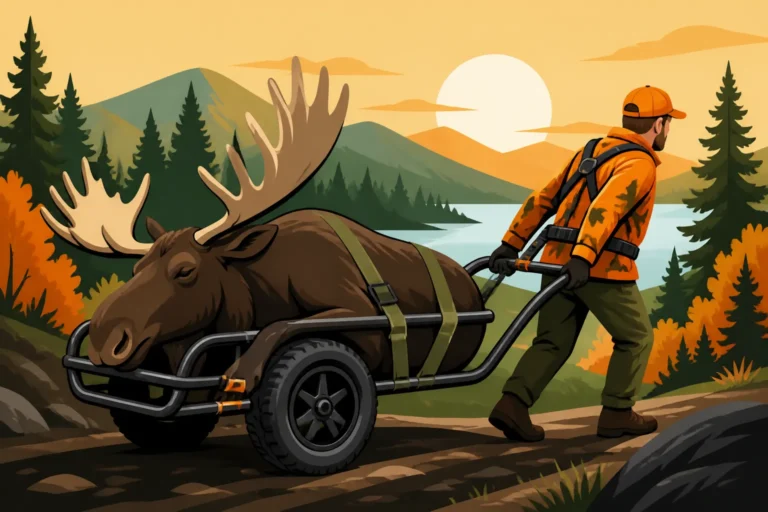
Moose hunting is physically demanding. You'll likely be covering challenging terrain, possibly miles from any road. If you're lucky enough to harvest a moose, the real work begins. Moving a field-dressed moose out of the woods, often through swamps and over rough ground, is an immense undertaking. It's not uncommon for it to require multiple people and days of work, even with the animal quartered. This is where physical fitness really pays off. Start conditioning well before your hunt, focusing on stamina, strength, and carrying heavy loads.
Logistically, think about how you'll recover the animal. Do you have a plan for quartering? Do you have enough help? Do you have game bags, ropes, and a pack frame or game cart capable of handling a massive load? Many hunters find themselves in remote areas when they harvest a moose, and cell service can be spotty. Being able to communicate or navigate effectively, perhaps with a satellite device, is critical. Companies like GoHunt provide valuable tools for pre-scouting terrain and potential access points, which can be invaluable for planning your recovery strategy. Packing Out a New Hampshire Moose is a physically grueling task, so be prepared.
Practice, Practice, Practice
I can't stress this enough. Even with the "best" caliber, if you can't shoot it accurately under pressure, it's useless. Spend time at the range, not just punching paper from a bench, but practicing real-world shooting scenarios. Practice shooting quickly and smoothly. Practice shooting from kneeling, sitting, and off-hand positions. Practice after a brisk walk to simulate an elevated heart rate. Practice with the exact ammunition you intend to hunt with.
Knowing your rifle and its capabilities, and more importantly, knowing your own capabilities with that rifle, is the most crucial factor for success. If you've been lucky enough to draw a New Hampshire Moose Permit Cost If Drawn, this is an investment you simply have to make. Don't let a once-in-a-lifetime opportunity be ruined by a lack of practice or overconfidence in a caliber you can't shoot well. It's better to be slightly under-gunned and make a perfect shot than to be over-gunned and make a poor one.
Conclusion: Making Your Choice with Confidence
Choosing the best rifle caliber for New Hampshire moose isn't about finding a single "magic bullet" that works for everyone. It's about combining sufficient power with ethical considerations, personal comfort, and practical logistics. The .30-06 Springfield, .300 Winchester Magnum, and .338 Winchester Magnum are all excellent and popular choices, each with its own advantages. The .35 Whelen offers a compelling blend of power and reduced recoil.
Ultimately, the "best" caliber is the one you can shoot most accurately and confidently, delivering a premium, controlled-expansion bullet precisely into the vitals of a magnificent New Hampshire moose. Do your research, understand the animal and the terrain, practice diligently, and you'll be well-prepared for your incredible North Country adventure. Good luck out there!
Disclaimer
This article is for general informational purposes only and does not constitute professional advice. Laws, prices and regulations vary by location and change over time. Consult a qualified professional for guidance on your specific situation.