Best Bullet Weight for a New Hampshire Moose
Heading out for a New Hampshire moose hunt is a truly incredible experience, a once-in-a-lifetime opportunity for many. But when that tag finally comes through, one of the biggest questions that hunters grapple with is what bullet weight is truly best to bring down one of these massive North Country giants cleanly and ethically. It's not just about hitting the animal; it's about ensuring the bullet has the right punch to do its job, especially when you're facing down an animal that can weigh over a thousand pounds. This guide will walk you through the nuances of selecting the optimal bullet weight for your New Hampshire moose hunt, helping you make an informed decision for success in the field.
Understanding Moose Anatomy and Bullet Performance
Moose are undeniably formidable creatures. They're not just big; they're incredibly dense, with thick hide, heavy bone structure, and a deep chest cavity that protects their vital organs. This isn't like deer hunting, where many common calibers with standard bullet weights will often suffice. Taking on a moose requires a different level of bullet performance, focusing heavily on penetration and structural integrity.
When you're aiming for a vital area on a moose, whether it's the lungs, heart, or a shoulder shot to break down the animal, your bullet needs to be able to push through significant resistance. We're talking about muscle, heavy bone, and often a lot of hide. A bullet that fragments too quickly or doesn't have enough mass can fail to reach those critical organs, leading to a wounded animal and a potentially difficult, if not impossible, recovery in the dense New Hampshire timber. Moose Hunting New Hampshire's North Country really highlights the challenges of this terrain, and a wounded moose is not something you want to track through it.
The Importance of Penetration for Moose
For a moose, penetration is king. You absolutely need a bullet that can drive deep through tough tissue and bone to reach the vitals. Imagine a big bull standing broadside, its shoulder blade as thick and solid as a dinner plate. A bullet too light or too frangible might simply flatten out or deflect off that bone, never making it to the lungs or heart. This isn't just about bullet weight in isolation, but how that weight contributes to the bullet's ability to retain its mass and energy as it travels through the animal.
Heavier bullets, generally speaking, tend to offer superior penetration compared to lighter bullets of the same caliber. They carry more momentum, allowing them to push through resistance more effectively. This is particularly crucial for those less-than-perfect shot angles that can sometimes present themselves in the field, or when a moose might be quartering away slightly, requiring the bullet to traverse more tissue. A good, heavy bullet will continue its trajectory, often creating a better wound channel all the way to the vitals, increasing your chances of a quick, humane kill.
Energy Transfer vs. Bullet Integrity
While delivering kinetic energy to the target is important, for moose, it often takes a backseat to bullet integrity and controlled expansion. Many modern hunting bullets are designed for rapid expansion and maximum energy dump, which works wonderfully on thin-skinned, lighter animals like whitetail deer. However, a moose requires a different approach. A bullet that expands too violently and too quickly can shed too much of its mass early in its travel, reducing its ability to penetrate deeply.
What you're really looking for is a bullet that holds together. This means controlled expansion – the bullet opens up to create a good wound channel, but it doesn't disintegrate. Bonded bullets, where the lead core is chemically bonded to the copper jacket, or monolithic bullets, which are made from a single piece of copper, are excellent choices for this very reason. They are designed to maintain a high percentage of their original weight even after significant expansion, ensuring they continue to drive forward. When considering "Best Bullet Weight for New Hampshire Moose," remember that the bullet's construction is intrinsically linked to its effective weight and ability to perform as needed.
Common Calibers and Their Ideal Bullet Weights for Moose
New Hampshire moose hunters often debate the "best" caliber, but the truth is, many popular cartridges can be effective if loaded with the right bullet weight and construction. It's less about the caliber's name and more about the bullet it delivers. However, some calibers naturally lend themselves better to the task of bringing down a thousand-pound animal.
When we talk about ideal bullet weights, we're looking for that sweet spot where a bullet has enough mass to penetrate deeply, but not so much that it becomes too slow, drops too quickly, or creates excessive recoil for the shooter. It's a balance, and understanding that balance within your chosen cartridge is crucial for ethical hunting.
Popular Choices for New Hampshire Moose
Many hunters heading into the North Country for a moose will opt for cartridges that have proven themselves on large game. Here are some common choices and the bullet weights that tend to perform well for moose:
- .30-06 Springfield: A classic for a reason. While many consider it a deer cartridge, with the right bullet, it's very capable for moose. Look for bullets in the 180-grain to 200-grain range. Anything lighter might struggle with penetration on tougher shots.
- .300 Winchester Magnum (and similar .30 cal magnums): These cartridges offer more velocity than the .30-06, which can translate to flatter trajectories and more energy at longer ranges. For moose, bullets from 180-grain up to 220-grain are excellent. The extra velocity means even a 180-grain bonded bullet can perform admirably, though 200-grain often provides an extra margin of confidence.
- 7mm Remington Magnum: A popular choice for its flat trajectory, the 7mm Rem Mag also steps up its game for moose with heavier bullets. Aim for 160-grain to 175-grain bullets. Again, focus on premium, controlled-expansion designs.
- .338 Winchester Magnum: Many consider the .338 Win Mag a true moose and bear cartridge, and for good reason. It delivers a lot of punch with bullets ranging from 200-grain to 250-grain. At these weights, you're getting significant penetration capabilities, making it a highly reliable choice. Best Rifle Caliber for New Hampshire Moose often comes down to personal preference, but the .338 Win Mag is a strong contender.
- .375 H&H Magnum: Stepping up to a true "big bore," the .375 H&H is overkill for most deer hunting but absolutely devastating on moose. Bullets in the 250-grain to 300-grain range offer incredible penetration and energy, ensuring a solid ethical kill, even on less-than-ideal shots.
Considering Bullet Construction with Weight
Bullet weight alone isn't the sole indicator of performance for moose. As discussed, construction is paramount. A lightweight, frangible bullet, even if it's considered "heavy for caliber" in a smaller cartridge, may not perform as well as a lighter, but tougher, premium bullet in a larger caliber.
Think about the difference between a standard cup-and-core bullet and a premium bonded or monolithic bullet. While a 180-grain cup-and-core .30-06 might work on a deer, it's generally not recommended for moose because it might shed its core or fragment too much. Conversely, a 180-grain Swift A-Frame, Nosler Partition, Barnes TSX, or Hornady GMX in a .30-06 will perform far superior on a moose due to its controlled expansion and weight retention properties. These types of bullets are designed to hold together and drive deep, maximizing the effectiveness of their weight. Packing for a Nine-Day Moose Hunt isn't just about clothing; it's about the right ammunition too.
Here's a quick comparison of some popular calibers and suggested bullet weights with consideration for construction:
| Caliber | Recommended Bullet Weight Range (Grains) | Preferred Bullet Construction Types | Notes |
|---|---|---|---|
| .30-06 Springfield | 180-200 | Bonded, Partition, Monolithic | Excellent with premium bullets; avoid lighter or rapidly expanding designs. |
| .300 Winchester Magnum | 180-220 | Bonded, Partition, Monolithic | Higher velocity means 180gr premium bullets are very effective; 200-220gr offer maximum confidence. |
| 7mm Remington Magnum | 160-175 | Bonded, Partition, Monolithic | Great long-range option with tough bullets; ensure adequate penetration with premium choices. |
| .338 Winchester Magnum | 200-250 | Bonded, Partition, Monolithic, Heavy Jacket | A true moose cartridge, designed for large game; provides significant knockdown power and penetration. |
| .375 H&H Magnum | 250-300 | Bonded, Monolithic, Heavy Jacket, Solid Core | Overkill for most, but unparalleled for penetration and stopping power; high recoil. |
Factors Influencing Your Bullet Weight Decision
Choosing the best bullet weight isn't a one-size-fits-all proposition. Several factors beyond just the animal itself should influence your decision. These include the typical shot distances you expect, the terrain you'll be hunting, and even your own shooting comfort and ability to manage recoil. New Hampshire offers diverse hunting environments, from dense, close-quarter timber to more open clear-cuts or bog edges, and your setup should reflect that.
For instance, hunting a tight spruce thicket in the North Country might mean closer shots, where maximum penetration is still key, but a flatter trajectory isn't as critical. Conversely, if you're glassing a large bog or clear-cut, a flatter shooting cartridge with a bullet that retains energy well at a distance might be more appealing. Glassing a Bog for a Bull Moose can lead to longer shots, emphasizing the need for a well-matched bullet.
Shot Distance and Terrain in New Hampshire
New Hampshire's varied hunting landscapes dictate different considerations for bullet weight.
In the dense forests, particularly those found in the White Mountains or the deeper North Country, shots on moose are often relatively close. Think 50 to 150 yards. In these scenarios, a slightly heavier, slower bullet might be perfectly acceptable, even desirable, because its primary job is deep penetration through heavy cover and bone at close range. The bullet doesn't have to fight as much wind or compensate for significant drop, and the increased mass helps it power through.
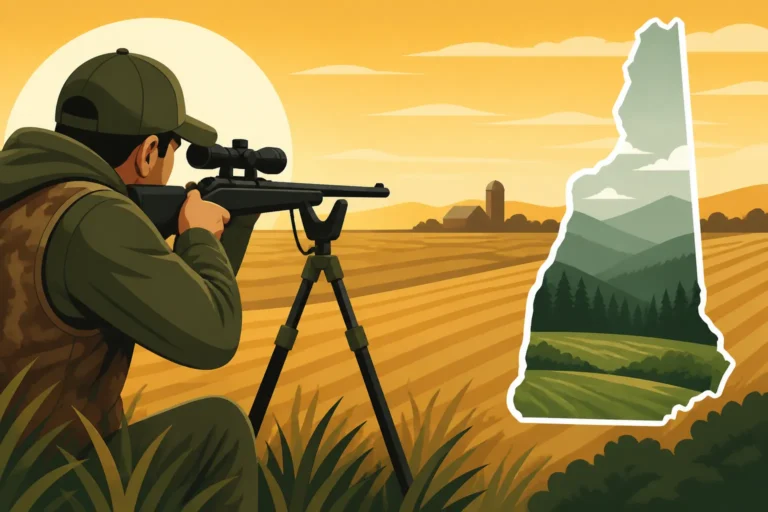
However, if your New Hampshire Moose Permit Lottery tag sends you to an area with more open terrain, such as expansive clear-cuts, old farm fields bordering timber, or along a wide river corridor, you might encounter shots stretching out to 200, 250, or even 300 yards. For these longer distances, bullet trajectory becomes more of a factor. While penetration is still paramount, a bullet that holds its velocity and energy more efficiently over distance will reduce guesswork on holdover and deliver more energy upon impact. Lighter bullets, even premium ones, often shed velocity faster than heavier bullets of the same construction, affecting their downrange performance. This is where a slightly heavier-for-caliber bullet, or a magnum cartridge with a heavy bullet, shines, offering that balance of trajectory and terminal performance at extended ranges.
Personal Preference and Recoil Management
Let's be real: a gun that hurts to shoot is one you won't shoot well. Moose rifles, especially those chambered in magnum calibers with heavy bullets, can generate substantial recoil. While it's important to choose an ethically sound cartridge and bullet, it's equally important to choose one you can shoot accurately and comfortably. A perfectly placed shot with a slightly less powerful cartridge is always superior to a flinched, poorly placed shot with a bigger gun.
If you find yourself flinching or anticipating recoil with a .338 Win Mag pushing 250-grain bullets, you might be better served by a .30-06 with a premium 180-grain or 200-grain bullet. Practice is key, and if you can't comfortably send a couple of boxes of ammunition downrange during practice, that rifle and load combination might not be the right fit for you on a high-stakes moose hunt. GoHunt, or other online resources for hunters, often emphasize that confidence in your rifle and load is a huge part of success. Knowing your limits and staying within them is a sign of a responsible hunter.
Testing and Ethical Considerations
Once you've narrowed down your choices for bullet weight and type, the work isn't over. A successful moose hunt hinges not just on selecting the right gear, but on mastering it. This means extensive practice with your chosen setup and a deep commitment to ethical hunting principles. After all, the goal is a clean, quick kill, not just punching a tag.
Range Practice and Field Preparation
There's no substitute for time at the range. Once you've selected your rifle and a few bullet weight options, purchase several boxes of each to test thoroughly. Don't just shoot from a bench; practice from various field positions: kneeling, standing, leaning against a tree. Mimic the situations you might encounter in the field. How does your rifle group at 50 yards, 100 yards, 200 yards, and beyond with your chosen load? Understanding your bullet's trajectory is paramount.
Pay attention to factors like wind drift and bullet drop at different ranges. This is especially critical if you anticipate shots across open bogs or long clear-cuts in New Hampshire. Knowing exactly where your bullet will impact at 200 yards versus 100 yards can make the difference between a clean kill and a missed opportunity. This thorough preparation will build confidence, which is invaluable when that magnificent bull moose finally steps into view. Hunting a Beaver Flowage Edge often means understanding these types of variable shot distances.
The Responsibility of a Clean Kill
The ultimate responsibility of any hunter is to make a clean, ethical kill. For an animal as large and resilient as a New Hampshire moose, this means doing everything in your power to ensure your bullet choice and marksmanship combine for a quick dispatch. A wounded moose can travel an incredibly long distance, making recovery nearly impossible in certain terrains. Getting a Moose Out on a Logging Road is hard enough when it's a clean kill; tracking a wounded one through dense cover is a nightmare scenario.
Choose a bullet weight and construction that you are absolutely confident will penetrate deeply and reliably through bone and tissue to reach the vitals. Practice until you can consistently place your shots accurately. Understand the anatomy of a moose and where the vital zones are located. Resist the urge to take a risky shot, even if it's late in the day or your hunt is drawing to a close. Patience and ethical judgment are far more important than any trophy. A successful moose hunt isn't just about bagging an animal; it's about the respect shown to the animal through a clean, humane harvest.
Disclaimer
This article is for general informational purposes only and does not constitute professional advice. Laws, prices and regulations vary by location and change over time. Consult a qualified professional for guidance on your specific situation.