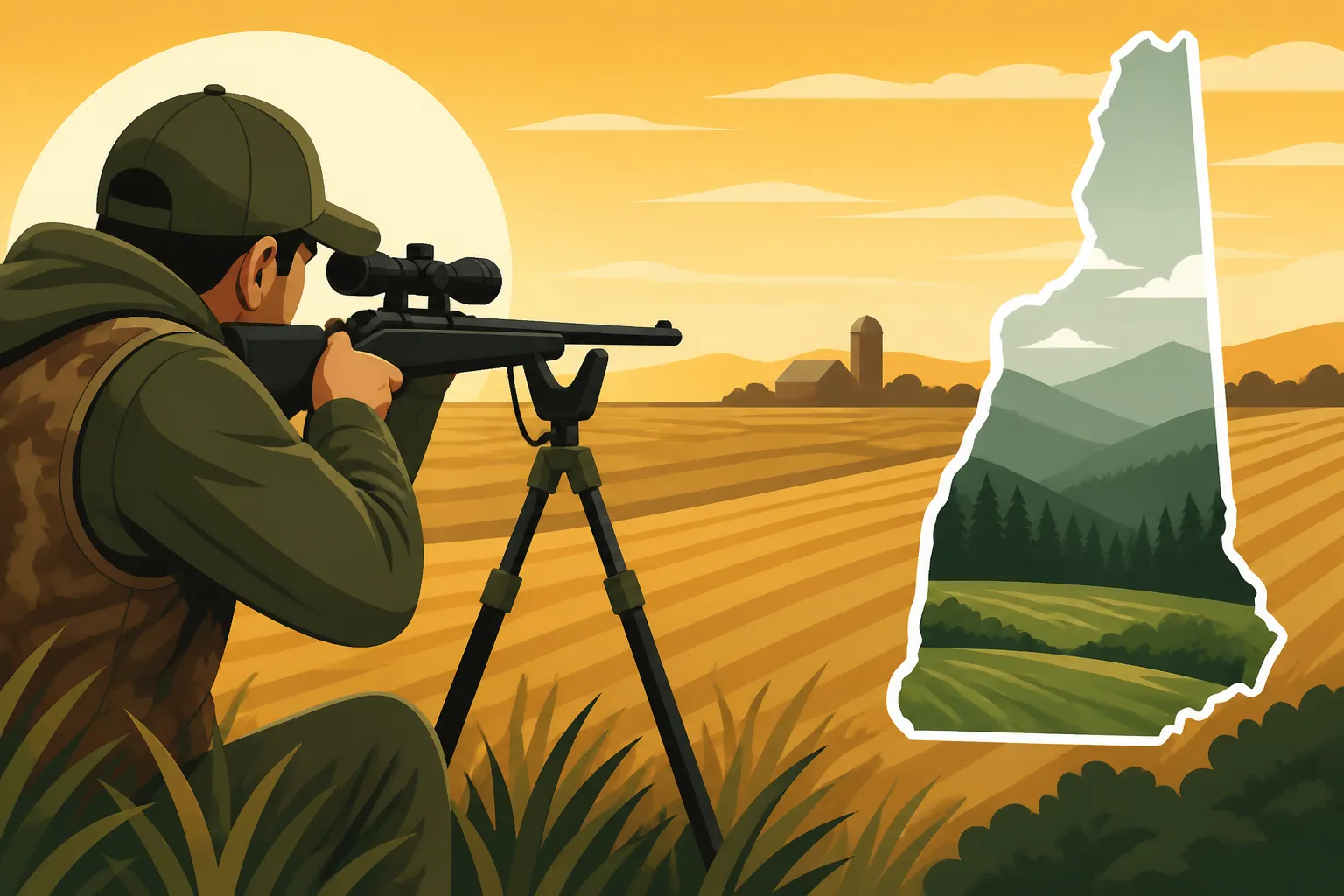
Best Shooting Sticks for Open Farmland
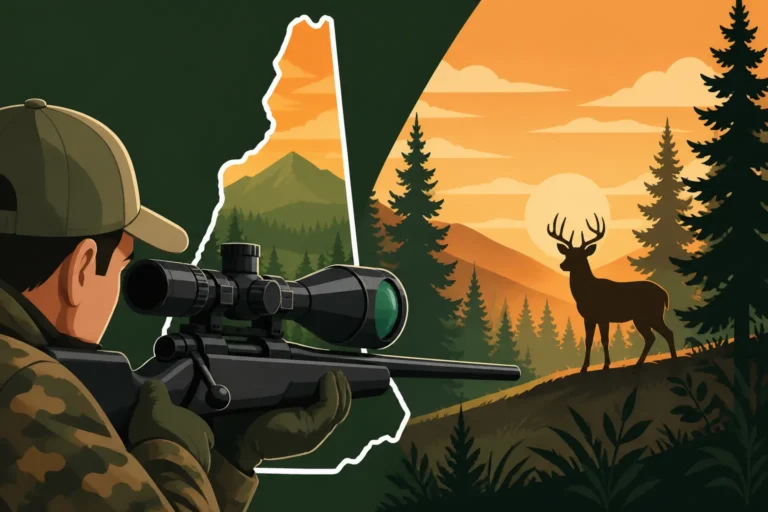
Hunting open farmland in New Hampshire presents a unique set of challenges compared to the thick timber of the North Country or the broken terrain of the White Mountains. When you're glassing across wide-open fields, whether it's cut corn, a lush green plot, or a vast hayfield, you quickly realize how exposed you are and how vital a stable shooting platform becomes for those longer shots. This guide is all about equipping you with the knowledge to choose and effectively use shooting sticks, ensuring you're rock-solid when that trophy buck or wary coyote steps into view far across the stubble.
Why Shooting Sticks are Essential for New Hampshire Farmland Hunting
Picture this: you've been sitting patiently on the edge of a vast agricultural field near towns like Claremont or Walpole, the kind of place where deer love to feed, especially in the late season. Suddenly, a mature buck steps out at 200, maybe even 300 yards. There's no convenient tree limb, no boulder, no sturdy fence post within reach to steady your shot. This is precisely where shooting sticks become an indispensable part of your kit, transforming an iffy, long-range shot into a confident, ethical opportunity.
The Challenge of Open Terrain
Hunting New Hampshire's open farmland, particularly in regions like the Connecticut River Valley or the Merrimack Valley, means dealing with expansive sightlines and often very little natural cover. Unlike hunting dense forest where shots might be measured in tens of yards, here you're regularly looking at shots well over 100 yards, sometimes pushing out to 300 or more. The sheer distance amplifies any wobble or tremor in your hold. Even a slight gust of wind, often a factor in exposed fields, can throw off an unsupported shot.
Without a solid rest, the human element becomes the biggest variable. Your heart rate, adrenaline, even just the strain of holding a heavy rifle steady, can lead to minute movements that translate into significant errors downrange. We've all been there, that moment of self-doubt creeping in as the crosshairs dance just a little too much. Farmland hunting mercilessly exposes these vulnerabilities, demanding a solution that provides consistent stability in environments where natural rests are scarce. It's not just about hitting the target, it's about making a clean, ethical kill, and that requires unwavering precision.
Improving Accuracy and Confidence
Shooting sticks fundamentally change the game by minimizing the human error factor. They provide a stable point of contact, reducing the natural sway and fatigue that comes with holding a rifle freehand. When you're set up on sticks, you can focus entirely on your breath, trigger control, and judging the shot, rather than battling your own physical limitations. This increased stability is not just about making a tighter group on paper; it's about the confidence it instills when a real opportunity presents itself.
Imagine scouting an area using tools like GoHunt, marking potential bedding areas and feed fields, and anticipating long shots. When you arrive on stand, knowing you have a dependable, rock-solid platform dramatically boosts your mental game. That buck you've been Glassing a Powerline Cut at Last Light or observing from afar now feels well within your capable range. Whether you're a seasoned marksman or still honing your skills, the added stability allows for more precise shot placement, minimizing the risk of a wounded animal and maximizing your success rate. For many, it's the difference between taking the shot and passing on it.
Versatility for Different Hunting Scenarios
One of the often-overlooked benefits of a good set of shooting sticks is their adaptability to various hunting positions. Farmland isn't always flat and open; you might find yourself needing to shoot over a rise, through a small ditch, or from behind a low fencerow. A well-designed set of sticks can adjust to these conditions seamlessly.
You might need to shoot standing up to clear a field of tall weeds or a low brush line, or to peer over the top of standing corn. Other times, kneeling behind a low stone wall or a subtle contour in the field provides the best concealment, requiring a shorter setup. For ultimate stability, especially in windy conditions or for very long shots, dropping down to a sitting or even prone position can be crucial, and some shooting sticks are engineered to facilitate these lower shooting heights. This positional versatility means you're prepared for whatever the New Hampshire farmland throws at you, unlike a fixed bipod that might only serve one position.
Types of Shooting Sticks and Their Best Use Cases on Farmland
When you start looking at shooting sticks, you'll quickly realize there's a spectrum of options, each designed with different trade-offs in mind. Understanding the strengths and weaknesses of monopods, bipods, and tripods will help you pick the best tool for your specific hunting style and the New Hampshire farmland you plan to hunt.
Monopods
Think of a monopod as a single, adjustable leg that extends from the ground to your rifle's forend. They are the lightest and most compact of the shooting stick family, often favored by hunters who are constantly on the move or doing a lot of still-hunting through field edges and woodlots. Their primary benefit is speed and ease of deployment. If you're quickly moving through an Entry Routes Through a Cut Cornfield and need to take a shot in a hurry, a monopod can be set up almost instantly.
However, their single point of contact means they offer the least amount of stability compared to bipods or tripods. While they significantly reduce vertical movement (the up-and-down wobble), they do little to prevent horizontal sway. For a New Hampshire farmland hunter, a monopod is best for situations where quick target acquisition is paramount, and the shot isn't excessively long. It's a great choice for providing that little extra bit of steadiness when you just need to knock out the "bounce" of a freehand hold, but it won't give you benchrest stability.
Bipods
Bipods, with their two points of contact with the ground, represent a significant step up in stability from monopods. They attach directly to your rifle, usually via a sling swivel stud or a Picatinny rail, and offer a much more secure platform. The most common types are designed for prone or sitting positions, deploying quickly to give you a very stable base. If you're planning on Sitting a Field Edge in Late Season or settling in for a long glassing session over a large field, a bipod attached to your rifle can be incredibly effective.
The trade-off is often versatility in height. While some bipods offer adjustable legs, they typically don't extend high enough for comfortable standing shots, especially when trying to shoot over crops or tall grasses. They excel in scenarios where you can get low, reducing your profile and maximizing stability for those critical long shots. For hunters who prioritize stability for shots typically taken from a stationary position or a low crouch, a sturdy bipod can be an excellent choice, offering more stability than a monopod without the bulk of a full tripod. When choosing, consider how quickly it deploys and if the leg locks are positive and reliable, especially in cold, damp New Hampshire weather.
Tripods
For the ultimate in stability, especially when you're facing those truly long shots across wide-open New Hampshire farmland, a shooting tripod is the undisputed champion. With three points of contact on the ground and often a wide footprint, a good tripod virtually eliminates movement, allowing for incredible precision. Many high-quality tripods feature adjustable legs that can accommodate shooting from prone, sitting, kneeling, or standing positions, making them incredibly versatile.
This is where advanced planning, perhaps with a GoHunt mapping system, really pays off. If you've identified a specific field where you anticipate a 300+ yard shot, setting up a tripod will give you the best chance of success. They are heavier and take a bit longer to deploy than monopods or bipods, making them less ideal for fast-paced, run-and-gun hunting. However, for glassing a distant Hunting a Green Field Planted for Deer or waiting patiently for a coyote to commit to a call across a winter-white expanse, the unparalleled stability of a tripod can't be beaten. They're also fantastic for mounting binoculars or a spotting scope for extended observation, allowing you to really pick apart distant cover.
Here’s a quick overview of the different types:
| Feature | Monopod | Bipod | Tripod |
|---|---|---|---|
| Stability | Good (vertical only) | Excellent (two-axis) | Superior (three-axis) |
| Deployment | Very Fast | Fast | Moderate (requires more setup) |
| Weight/Bulk | Low | Low to Moderate (attaches to rifle) | Moderate to High |
| Versatility | Best for quick standing/kneeling shots | Best for prone/sitting/kneeling | Best for all positions, especially standing |
| Best Use Case | Rapid target acquisition, light carry | Stationary hunting, moderate distances | Long-range precision, glassing, ultimate stability |
Key Features to Look for in Farmland Shooting Sticks
When you're out there on the edges of New Hampshire's fields, sometimes the ground is uneven, sometimes you're trying to see over a low fence, and sometimes you need to get your shot off now. The specific features of your shooting sticks can make all the difference in these real-world scenarios.
Height Adjustment and Versatility
This is probably the most critical feature for New Hampshire farmland hunting. You need sticks that can easily adjust to various shooting heights. Imagine trying to shoot over a row of standing corn in a Hunting a Standing Corn Field for Deer scenario – your sticks need to extend high enough for a comfortable standing shot. Conversely, if you're hunkered down behind a small rise or a pile of logging debris, you'll want to quickly shorten them for a stable kneeling or sitting position. Look for models that offer a wide range of height adjustment, ideally allowing for anything from a low sitting position to a full standing height.
The locking mechanisms for these adjustments are also vital. They should be robust, easy to operate even with gloved hands, and hold securely without slipping. Cam locks, twist locks, or lever locks are common, and you'll want to test them for ease of use and positive engagement. A stick that slowly slips down as you're lining up a shot is worse than no stick at all.
Material and Weight
Shooting sticks typically come in aluminum or carbon fiber. Aluminum options are generally more affordable and quite durable, but they tend to be heavier. Carbon fiber, on the other hand, is significantly lighter and often stronger for its weight, but it comes with a higher price tag. Consider how much walking you'll be doing. If you're covering a lot of ground, perhaps still-hunting a fencerow for late-season deer or navigating the broken terrain of a large private tract, lighter carbon fiber sticks might be worth the investment to reduce fatigue.
However, don't just focus on weight. Consider the overall balance and feel. A slightly heavier set of aluminum sticks might provide a bit more dampening for recoil if the design is solid. The material also affects how they handle temperature extremes; metal can get really cold to the touch in the depths of a New Hampshire November.
Stability and Locking Mechanisms
Beyond just the number of legs, the overall stability of the sticks is paramount. This comes down to the quality of construction, the diameter of the leg sections, and the design of the head where your rifle rests. A wider footprint on tripods generally means more stability. For bipods, consider how it attaches to your rifle; a direct mount is usually more stable than a universal clamp.
The feet of your shooting sticks are also important. Rubber feet provide good grip on hard, flat surfaces, while spiked feet can bite into soft ground, mud, or even ice for a more secure hold. Some models offer interchangeable feet, which is a fantastic feature for New Hampshire's varied terrain, from frozen fields to muddy track roads. When it comes to the locking mechanisms for leg sections, ensure they lock quickly and hold tight. Nothing is more frustrating than a leg collapsing mid-shot.
Quick Deployment and Portability
Farmland hunting often involves quick decisions. A deer might pop out of cover unexpectedly, or a flock of geese might land at the far end of the field. You need your shooting sticks to deploy rapidly and quietly. Many modern designs focus on quick-release mechanisms or a bungee system that allows legs to snap into place with minimal effort and noise.
Think about how you'll carry them. Some sticks fold down compactly and can be lashed to a backpack, while others are designed to be carried in hand for immediate access. If you're using a Best Backpack Frame for a Quartered Moose for a different hunt, the compact size might not be as critical, but for mobile deer hunting, ease of carry and quick access are key. Consider a model that includes a carrying case or strap to make transportation easier and keep the components protected from mud and debris as you move between different hunting locations.
Practical Tips for Using Shooting Sticks in New Hampshire Farmland
Having the best shooting sticks money can buy won't do you much good if you don't know how to use them effectively when the moment of truth arrives. Just like with any other piece of gear, practice and thoughtful integration into your hunting routine are key.
Practice Makes Perfect
This isn't just a cliché; it's a fundamental truth in hunting. Don't wait until opening day to deploy your new shooting sticks for the first time. Take them to the range or even just your backyard. Practice setting them up quickly and quietly from various positions: standing, kneeling, and sitting. Go through the motions of acquiring a target, adjusting your height, getting comfortable, and dry firing. The goal is to make the deployment and setup second nature, so you're not fumbling when a deer steps out.
One drill you can try is simulating a real hunting scenario. Set up a target at various distances, walk a short distance, then quickly set up your sticks and aim. Time yourself. How long does it take you to get stable? How smoothly can you transition from carrying your rifle to being ready to shoot? This kind of repetition builds muscle memory and confidence, ensuring that when you're under pressure in a chilly New Hampshire field, your actions are fluid and effective. Consider incorporating your rangefinder, perhaps a Best Rangefinder Binocular Combo for Open Country, into this practice, acquiring the distance, then setting up for the shot.
Integrating with Your Hunting Style
Your shooting sticks should complement, not hinder, your hunting style. If you're primarily still-hunting through diverse terrain, moving from a small woodlot to a field edge, you'll want a lightweight, quick-deploying monopod or bipod that can be carried discreetly. You might carry it in one hand or attach it to your pack in a way that allows for rapid access.
If you plan to Using a Ground Blind on Public Land or Brushing In a Blind on a Field Edge for an all-day sit over a green field, a more robust tripod setup that offers maximum stability for extended periods might be ideal. Pre-set your sticks in your blind to the optimal height before the sun even rises. Think about how you'll carry them silently without clanking against other gear. Some hunters use small elastic bands or Velcro straps to keep the legs tightly together during transport, minimizing noise. Planning your Entry Routes Through a Cut Cornfield can also include scouting for ideal spots to set up your sticks without disturbing game.
Positional Versatility
Mastering different shooting positions with your sticks can vastly expand your opportunities.
- Standing: Often necessary in tall crops, over snow drifts, or when you need to see over low brush. Ensure your sticks adjust to a comfortable standing height and practice holding steady. Your body acts as the third point of contact, so good stance is still crucial.
- Kneeling: A fantastic compromise between concealment and stability. If you're behind a small hill or a low stone wall, kneeling allows for a stable shot with a lower profile. Many bipods excel in this position.
- Sitting: Can offer excellent stability, especially for longer waits. Some tripods can be adjusted very low, allowing you to shoot comfortably from a small folding stool. This is particularly useful for glassing and then shooting across an expansive Hunting a Green Field Planted for Deer.
- Prone: For ultimate stability, especially for very long shots on a flat field. While not all shooting sticks are ideal for prone, those that are, particularly certain bipods, will provide the steadiest platform.
Always be aware of your backdrop and what's beyond your target. New Hampshire's farmlands are often interspersed with residences or public roads. No matter how stable your shooting platform, shot placement and safety remain paramount. A tool like a good rangefinder and practice with your sticks allows you to extend your effective range, but always know your limits and prioritize ethical shooting.
Disclaimer
This article is for general informational purposes only and does not constitute professional advice. Laws, prices and regulations vary by location and change over time. Consult a qualified professional for guidance on your specific situation.