Trail Camera Rules on New Hampshire Public Land
It’s a tale as old as time for New Hampshire hunters: you’ve found that perfect pinch point, that hidden travel corridor, or that rub line that screams "big buck," and your first thought is, "I need to get a trail camera on this!" But then the nagging question pops up – what are the rules for public land? It’s a common frustration, the fear of doing something wrong or, worse, having your expensive gear disappear. This guide is here to untangle the specifics of trail camera use on New Hampshire public land, helping you scout smarter and stay on the right side of the law.
The Temptation of Trail Cameras on Public Land
We all know the draw. Trail cameras are incredible tools that can revolutionize how you scout. They show you exactly what's moving, when it's moving, and sometimes even the direction it's headed. On private land, it's pretty straightforward – if you own it or have permission, you're usually good to go within state guidelines. But public land, with its open access and shared resources, presents a different set of considerations. That feeling of wanting to get an edge, to understand those elusive New Hampshire whitetails or bears without constant boots on the ground, is powerful.
The Appeal of Remote Scouting
Imagine knowing that a mature buck is consistently moving through a specific saddle in the White Mountains every Tuesday morning between 6 and 8 AM, all while you're at home enjoying your coffee. That's the dream, isn't it? Trail cameras offer that kind of intelligence, letting you gather data without introducing human scent or pressure to a hot spot. This remote scouting capability is especially valuable when you're targeting areas that are a long hike in, where frequent visits would be impractical or even detrimental to your hunting success. It’s about being efficient and strategic.
The Concerns About Public Land Use
However, that very appeal also creates a dilemma. When you place a camera on public land, you're essentially claiming a small piece of that shared resource. This can lead to ethical questions, like what happens if someone else finds your camera, or if you're perceived as monopolizing a spot. There's also the very real concern about theft or vandalism. Many hunters have stories of cameras disappearing, batteries being removed, or even the cameras being shot. It's a risk we take, but understanding the rules can at least alleviate the legal worries.
New Hampshire's Official Stance on Trail Cameras
When it comes to New Hampshire, the rules regarding trail cameras on public land are surprisingly straightforward, largely because there isn't a specific, dedicated statewide regulation that prohibits or severely restricts them at a blanket level. This often causes confusion because many hunters expect a long list of do's and don'ts, similar to other states or specific federal lands. However, "no specific prohibition" doesn't mean "anything goes." It means you need to operate within general public land ethics and be aware of broader regulations.
General Use and Expectations
New Hampshire Fish and Game does not have a blanket prohibition on the use of trail cameras on public lands like Wildlife Management Areas (WMAs) or State Forests. The general understanding is that if you can access the land, and it's not explicitly posted against such activity, you can place a trail camera. This allows hunters the freedom to scout effectively. However, this freedom comes with a significant responsibility to be a good steward of the land and respectful of other users. Remember, public land is for everyone, not just hunters.
You'll find that many New Hampshire State Parks or specific town properties might have their own localized ordinances or rules that could restrict camera placement, especially if it's considered defacing property or interfering with recreational trails. Therefore, it's always critical to know whose land you are on. Using mapping tools like onX Layers for New Hampshire Land Status can be incredibly helpful in verifying land ownership and identifying specific public land types. This step is non-negotiable before you ever set foot in the woods with a camera.
Understanding the "Permanent Structure" Clause
The closest thing to a general guideline that might impact trail cameras falls under rules related to leaving "permanent structures" or "fixtures" on public land. Generally, you cannot build permanent blinds, stands, or structures on state-owned land. A trail camera, by its very nature, is not considered a permanent structure. It's designed to be temporary, installed and removed with minimal impact. This is a crucial distinction. As long as your camera isn't bolted into a tree in a way that damages it, or encased in concrete, you're generally fine from this perspective. The key is to leave no trace.
This interpretation is echoed in common practice and by Fish and Game officials. The intent of a trail camera is data collection, not creating a semi-permanent installation. However, hunters should be mindful of how they attach their cameras. Using non-damaging straps rather than nails or screws is not only better for the trees but also aligns with the spirit of leaving no trace. A quick check of the official New Hampshire hunting digest annually will confirm any updates or specific restrictions that might have been added.
Ethical Considerations and Best Practices
While New Hampshire's official rules are fairly hands-off regarding trail cameras on public land, being a responsible hunter means going beyond the letter of the law. Ethical considerations are paramount, especially when you're sharing the woods with hikers, birdwatchers, and other hunters. A little common sense and respect can go a long way in ensuring trail cameras remain a tool for all, rather than a point of contention.
Respecting Other Users and Property
When you hang a camera, remember that others will likely pass by. Choose locations that are discreet and out of the way of primary hiking trails or heavily trafficked areas. No one wants to walk past a camera conspicuously strapped to a tree right on the main path. Camouflage the camera as best you can, and avoid leaving any trash or tell-tale signs of your presence. This isn't just about hiding it from potential thieves; it's about minimizing your footprint and showing respect for the shared space.
Think about how you'd feel if you were hiking and constantly seeing cameras pointed at you. While legal, it can feel intrusive. So, position your cameras towards game trails, scrapes, or feeding areas, rather than pointing them directly at a popular scenic overlook or a picnic spot. If you're on federal land, such as the White Mountain National Forest, always check their specific regulations, as they can differ from state lands. Hunting New Hampshire's White Mountain National Forest often involves navigating unique rules and terrain.
Marking Your Cameras (or Not)
Some hunters choose to mark their cameras with their name and contact information, hoping it might deter theft or allow for its return if found. Others explicitly avoid this, believing it draws attention to the camera and makes it a target. There's no single right answer here, and it often comes down to personal preference and your assessment of the specific area. If you do mark it, make it small and inconspicuous.
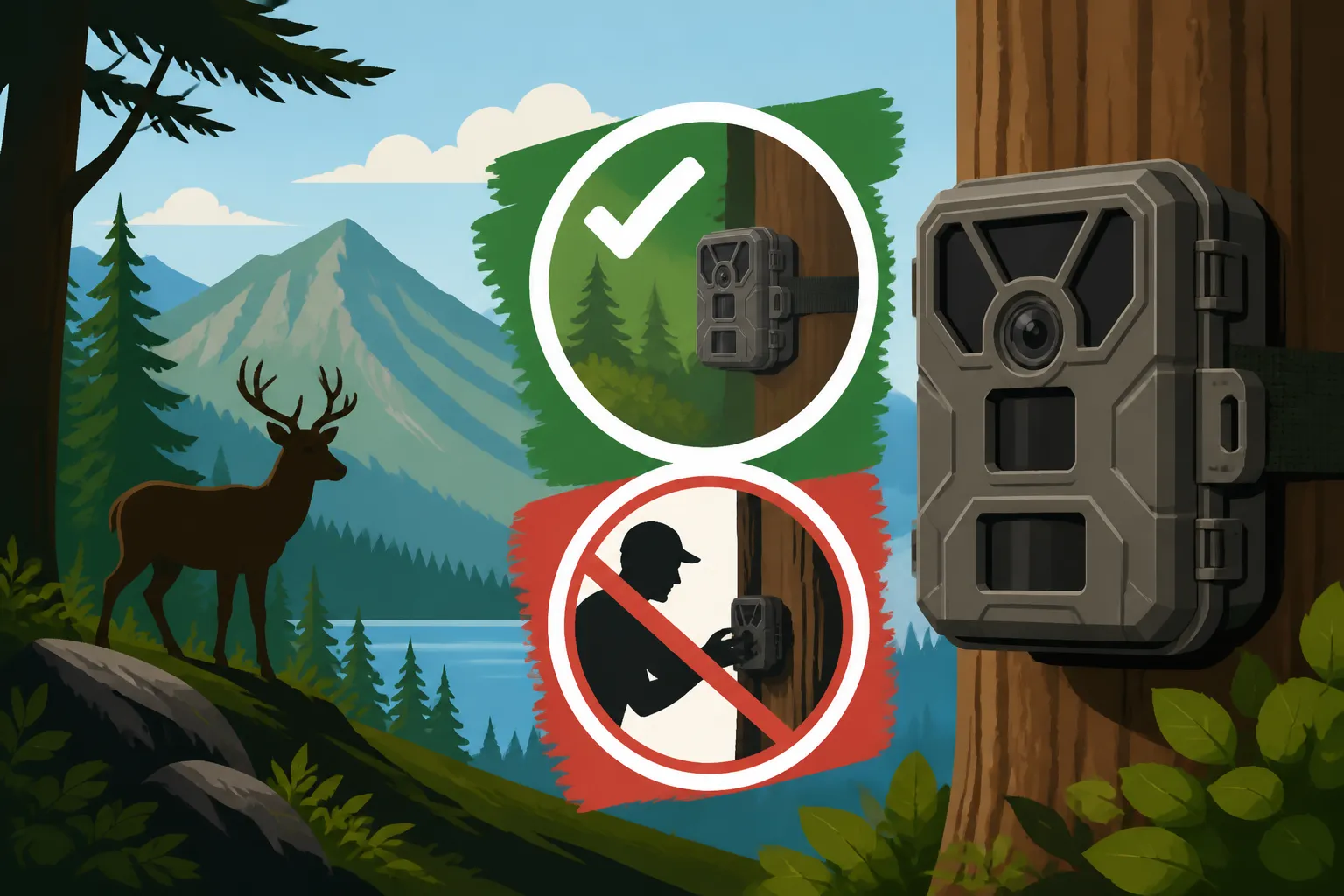
Trail Camera Do's and Don'ts on NH Public Land
| DO | DON'T |
|---|---|
| Use non-damaging straps or bungee cords. | Use nails, screws, or anything that permanently damages trees. |
| Place cameras discreetly, off main trails. | Hang cameras conspicuously in high-traffic areas or pointing at popular recreational spots. |
| Check local ordinances for specific properties. | Assume all public land has identical rules; always verify for State Parks, Town Forests, or Federal Lands. |
| Retrieve your cameras promptly after use. | Leave cameras out indefinitely, especially after hunting season closes. |
| Consider using security measures like lock boxes. | Confront other hunters or users over camera placement; report issues to Fish and Game or law enforcement if necessary. |
| Be aware of your unit's New Hampshire WMU-Based Deer Season Structure dates. | Bait with cameras unless it's explicitly legal for the species and time of year (e.g., bear baiting has specific rules and permits). Trail cameras are generally not considered bait, but check regulations for clarity. |
From an ethical standpoint, if you find a camera that clearly has owner information, a polite thing to do would be to contact them. However, if a camera is unmarked, it's best to leave it undisturbed. Remember the golden rule: treat others' property as you would want yours treated.
Theft and Tampering
Unfortunately, theft is a very real concern when using trail cameras on public land. Even though it's illegal to steal or tamper with someone else's property, it happens. While legal recourse is available, proving ownership and catching the perpetrator can be incredibly difficult in the vastness of New Hampshire's public lands. Consider using security measures like cable locks or metal security boxes, which can deter casual theft but won't stop a determined thief with tools.
GPS trackers can also be embedded in some higher-end cameras, or even added as small, separate devices, offering a chance at recovery if the camera is stolen. If your camera is stolen or damaged, you should report it to the local police department and New Hampshire Fish and Game. While they may not always recover it, an official report is crucial. Using mapping apps like onX Hunt or GoHunt to precisely mark your camera locations can be helpful if you need to direct law enforcement or if you simply forget where you placed one. Having photographic evidence of the camera in its spot, and even the serial number, can aid in reporting.
Maximizing Your Trail Camera Success on New Hampshire Public Land
So, with the rules and ethics in mind, how do you make the most of your trail cameras on New Hampshire's public land? It’s about strategy, placement, and understanding the nuances of the terrain and game. Trail cameras are just one piece of the puzzle, but a very effective one when used wisely.
Strategic Placement for Optimal Results
The success of your trail camera efforts hinges almost entirely on placement. Don't just slap a camera on the first tree you see. Think like the animal you're targeting. Where do they travel? Where do they eat? Where do they feel safe? Focus on funnels, pinch points, creek crossings, natural barriers, and areas with fresh sign like rubs or scrapes. Hunting a Funnel Between Two Woodlots is a classic example of a high-percentage camera spot.
Consider the angle and height. A camera pointed slightly downwards from a higher position can get a better overall view and avoid the "flash blindness" effect common with ground-level shots. Also, think about the sun's position throughout the day to avoid overexposed images. If you're scouting for White-Tailed Deer Across New Hampshire, remember that their movement patterns can vary significantly between the North Country and the more suburban WMUs. Tailor your camera placement to the specific behavior of deer in that region.
The Role of Mapping and Scouting Apps
Before you even head out with your camera, spend time with a good mapping app. Tools like onX Hunt or GoHunt are indispensable for identifying public land boundaries, topographical features, and potential access points. They allow you to virtually scout, pinpointing promising areas that you can then physically investigate. This reduces wasted time and ensures you're placing cameras on legal ground. Scouting With the New Hampshire Fish and Game App can also provide valuable information specific to regulations and land management.
Once you're in the field, these apps help you mark your camera locations, making it easy to return to them later, especially in thick New Hampshire timber or vast WMAs. They also help you plan your entry and exit routes to minimize disturbance. Remember, the goal is to gather information without alerting the animals to your presence. These mapping tools are truly a game-changer for efficient public land hunting.
Understanding the Season and Species
Your camera strategy should change with the seasons and the species you're targeting. In early fall, food sources might be your primary focus for deer. As the Hunting the Rut in Early-to-Mid November approaches, scrapes, rub lines, and travel corridors between bedding and feeding areas become hot spots. For bear, baiting has specific rules, but cameras can monitor activity around a bait site if legal and permitted. Baiting New Hampshire Bears Legally by WMU has strict guidelines, so always consult the digest.
For species like turkeys, cameras can confirm roosting patterns or feeding habits. If you're focusing on Spring Turkey Hunting in New Hampshire, placing cameras near known strutting zones or field edges can be incredibly informative. The data you collect is only as good as its relevance to the current conditions and the behavior of your target animal. Regularly checking and adapting your camera strategy will lead to better insights and, ultimately, more successful hunts.
Disclaimer
This article is for general informational purposes only and does not constitute professional advice. Laws, prices and regulations vary by location and change over time. Consult a qualified professional for guidance on your specific situation.