Hunting a State Forest Logging Road
You've probably found yourself driving or walking through a New Hampshire State Forest, noticed one of those gravel logging roads winding off into the timber, and wondered if it's even legal to hunt there. It's a common frustration for hunters trying to navigate access and regulations, especially when a promising looking area is right there but feels just out of reach. This guide will walk you through everything you need to know about hunting those logging roads within New Hampshire's State Forests, from understanding access to developing effective strategies.
Understanding State Forests and Their Access
New Hampshire is blessed with a significant amount of public land, and its State Forests are a crucial part of that. Unlike national forests or specific wildlife management areas, State Forests often serve a multi-use purpose, which can sometimes make understanding hunting regulations a bit more nuanced. These lands are typically managed by the New Hampshire Department of Natural and Cultural Resources (DNCR), often in cooperation with Fish and Game. The goal is usually sustainable timber harvesting, wildlife habitat, recreation, and sometimes even watershed protection.
Distinguishing State Forests from Other Public Lands
It's easy to lump all public lands together, but there are important distinctions to make, especially when it comes to hunting. White Mountain National Forest, for example, operates under federal regulations and generally allows hunting across vast tracts, with some specific wilderness area restrictions. Wildlife Management Areas (WMAs) are primarily managed by NH Fish and Game for wildlife habitat and public hunting, often with very specific rules or even lottery hunts. State Forests, on the other hand, fall into a middle ground. They are state-owned, and while hunting is usually permitted, there might be specific rules about vehicle access, camping, or even where you can place a stand. You can often find general information about New Hampshire State Forest Hunting Rules by checking the DNCR website or the annual New Hampshire Fish and Game digest.
When you're looking at a map, it's crucial to identify if you're truly on a State Forest, rather than adjacent private land, a town forest, or even a state park where hunting rules can differ significantly. Tools like onX Hunt are incredibly valuable here, as they layer property ownership over topographical maps, showing you exactly where those State Forest boundaries lie. This can save you a lot of headache and potential legal trouble if you accidentally step onto posted private property.
Vehicle Access and Parking Rules
One of the biggest questions surrounding hunting logging roads in State Forests is vehicle access. Many of these roads are built and maintained for timber operations, not necessarily for public vehicular travel. While some logging roads might be open to licensed vehicles for a portion, many are gated or restricted to foot traffic, ATVs, or snowmobiles only, depending on the season and specific forest regulations.
It's rare to find a State Forest logging road that allows hunters to drive deep into the woods to their chosen spot. Often, you'll find a small parking area at the entrance to a gated road, or sometimes designated pull-offs along an open road before it becomes gated. Always look for signage. A "No Vehicular Access Beyond This Point" sign means exactly that, and ignoring it can lead to fines, vehicle towing, or even more serious legal issues. Game wardens regularly patrol these areas, especially during hunting season, and they know the local regulations inside and out. Respecting these rules not only keeps you out of trouble but also helps maintain good relations between hunters and land managers, ensuring continued access for everyone. Be prepared to hike a good distance from your vehicle; these logging roads are often your pathway into the hunting ground, not the hunting ground itself.
Scouting and Strategy for Logging Road Hunting
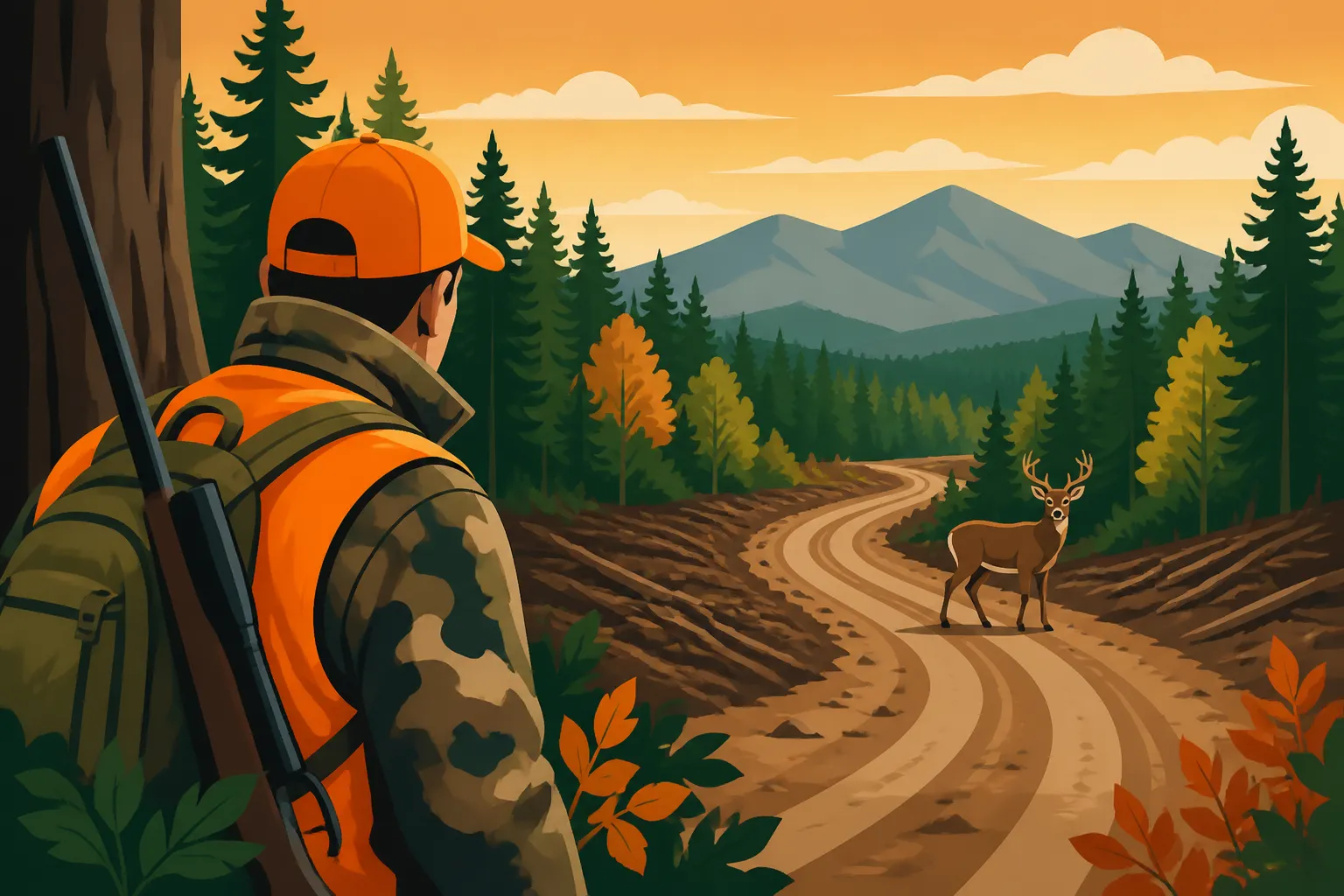
Logging roads, while initially just access points, can actually be excellent hunting spots themselves. Deer, moose, and even bears use these cleared paths as travel corridors, feeding areas, and even bedding spots in certain situations. The key is to shift your mindset from seeing them solely as a means to an end, to viewing them as an integral part of your hunting strategy.
Reading the Road for Sign
Logging roads are like highways for wildlife, and they leave plenty of clues. When you're scouting, pay close attention to the road surface itself. In soft dirt or mud, you'll easily spot tracks. Look for deer tracks, especially those of larger bucks. Not just fresh tracks, but also older ones that show a consistent travel pattern. Are they walking down the middle of the road, or are they sticking to the edges where cover provides security? Sometimes, you’ll see obvious scrape lines where bucks have worked overhanging branches, or rubs on saplings along the road's edge.
Beyond tracks, look for droppings. Fresh deer pellets or bear scat are clear indicators of recent activity. Also, keep an eye out for browse. Are young saplings along the road showing signs of deer nipping? Are there acorns or other mast crops that have fallen onto the road, attracting squirrels and deer alike? The edges of logging roads, where the forest meets the open path, are often prime locations for deer to browse on new growth stimulated by the additional sunlight. Don't just walk the road; scan the woods directly adjacent for these subtle signs. Sometimes, a well-used game trail will cross the road, indicating a primary travel route between different parts of the woods. These crossings are golden opportunities. You might also want to look for Scrape Lines Along a Logging Road.
Setting Up and Ambush Tactics
Once you've identified areas of consistent activity, your next step is to strategize your setup. Because logging roads are linear and relatively open, they can make for predictable travel corridors, which is great for ambushing game. However, they also expose you.
Consider the prevailing wind direction for your chosen stand location. You'll want the wind in your face or quartering away from where you expect the game to approach. Tree stands are often excellent choices along logging roads, offering a good vantage point over the road and into the adjacent timber. Look for a sturdy tree at least 15-20 yards off the road, or at a bend, that provides good cover and allows you to see both ways. If treestands aren't an option or you prefer hunting from the ground, Using a Ground Blind on Public Land can be highly effective. Set it back a bit from the road in thick cover, making sure it breaks up your silhouette against the forest background.
Remember, game animals often use logging roads under the cover of darkness or during low-light conditions. Early mornings and late evenings are typically your best bets. If the road is very straight and open, deer might feel exposed walking directly on it during daylight hours, preferring to skirt the edges or use trails parallel to the road within the thicker woods. Positioning yourself accordingly, perhaps between the road and a denser bedding area, can pay off. Another tactic is still-hunting slowly along the edges of the road, pausing frequently to glass ahead and into the timber. Pay attention to how Wind and Thermals in Steep Granite Terrain might affect animal movement, especially in New Hampshire's hilly State Forests.
Utilizing Topography and Cuts
Logging roads don't just exist in flat, easy terrain. Many New Hampshire State Forests are quite rugged, and the roads will follow contours, ascend ridges, and cut through valleys. This topography creates natural funnels and pinch points that are invaluable to hunters. A logging road winding up a ridge might offer a natural travel route for deer moving between a low-lying feeding area and a high-elevation bedding site. Look for saddles or benches along the road where deer might pause or cross.
Timber cuts are another major draw. When an area has been recently logged, the resulting new growth provides excellent browse and cover. A logging road that borders a fresh clear-cut or a patch of young regeneration will often be a hotspot for deer activity. These areas can be incredibly dense, offering security cover that deer feel safe in. Setting up on the edge of the road where it meets the new growth can be a very effective strategy. Consider how Timber Cuts and Where Deer Move After might influence where deer bed and feed, and then use the logging roads to position yourself accordingly. This is where scouting maps from GoHunt or onX Hunt, with their satellite imagery and topographic layers, truly shine. You can identify these cuts and plan your approach before you even set foot in the woods.
Gear and Safety Considerations
Hunting remote logging roads in New Hampshire's State Forests requires a bit more preparation than a quick hunt behind the house. You'll often be miles from your vehicle, possibly without cell service, and navigating varied terrain. The right gear and a strong focus on safety are paramount.
Essential Gear for Logging Road Hunts
Your gear needs to be robust and functional. Good quality hiking boots, preferably waterproof, are non-negotiable. You'll be walking on uneven gravel, mud, and possibly wet leaves or snow. Best Boots for White Mountain Granite Trails will serve you well, as many State Forests share similar rocky terrain characteristics. Layering clothing is also key, as temperatures can fluctuate wildly in New Hampshire, especially during the fall. A quiet, durable outer layer that can withstand brush and thorns is important.
A reliable backpack to carry your essentials is a must. This should include water, snacks, a first-aid kit, a headlamp (even if you plan to be out before dark, things happen!), a compass and physical map (in addition to your GPS app), and rain gear. Because you might be in areas with limited cell service, a satellite communicator can be a lifesaver for emergencies. For scouting, a good pair of binoculars is essential for spotting distant sign or game. If you plan to hang a stand, all your treestand safety equipment, including a full-body harness, should be on your list.
For processing game, a sharp knife, game bags, and perhaps a small saw are vital. Remember, you might have a long drag ahead, so consider a game cart if the road is relatively flat and clear, or be prepared to quarter your animal and pack it out on a frame pack.
Navigation and Communication
Navigating New Hampshire's State Forests, especially off the main roads and deep into logging areas, can be tricky. Even logging roads can spiderweb in confusing patterns. A GPS device or a robust mapping app like onX Hunt or GoHunt is critical. These apps allow you to mark your vehicle, stand locations, and game sightings, as well as show property boundaries. Download offline maps before you go, as cell service can be spotty or non-existent in many State Forest regions. Having a physical map and compass as a backup is always a smart move – batteries die, and technology can fail. Understanding how to use them is a skill every hunter should possess. You can learn more about GPS and Mapping Apps for New Hampshire Public Land to choose the best option for your needs.
Communication is equally important. Inform someone of your hunting plan: where you're going, your expected return time, and who to call if you don't check in. This "leave a plan" strategy is crucial for your safety. A fully charged cell phone (even if service is poor, it can still call 911 in an emergency if any tower is nearby) and a whistle can also be helpful.
Safety Practices on Public Land
Hunting on public land, particularly State Forests, means you're sharing the outdoors with others: hikers, mountain bikers, horseback riders, and other hunters. Always practice the highest standards of safety.
Blaze Orange: New Hampshire requires blaze orange during certain hunting seasons. Know the regulations for the specific season you're hunting. Even if not legally required, wearing blaze orange or blaze pink is a wise choice when moving through State Forests, especially on logging roads where visibility can be long. This makes you visible to other hunters and recreationists.
Firearms Safety: Always assume another hunter is in the woods. Identify your target and what is beyond it. Be mindful of houses, trails, or other infrastructure that might be near the State Forest boundaries. Know your safe shooting lanes and restrict your shots to areas where you have a clear, safe backdrop.
Tree Stand Safety: If using a treestand, always use a full-body harness and maintain three points of contact when ascending or descending. Inspect your stand and straps before each use. Accidents happen quickly, and help can be a long way off.
Weather Awareness: New Hampshire weather can change rapidly. A sunny morning can turn into a cold, driving rain or even snow by afternoon. Check the forecast before you go and be prepared for sudden shifts. Hypothermia is a real danger, even in moderate temperatures, if you get wet and the wind picks up. Knowing how to layer for a Wet White Mountain Day is critical for your comfort and safety.
Ethical Hunting on State Forest Roads
When you venture into New Hampshire's State Forests to hunt logging roads, you're not just pursuing game; you're also representing the hunting community. Ethical behavior ensures continued access and maintains a positive image for all hunters.
Respecting the Land and Its Resources
State Forests are managed for multiple purposes, and part of that management involves protecting the natural resources within them. This means adhering to specific rules about leaving no trace. Pack out everything you pack in, including spent shell casings, food wrappers, and anything else you brought with you. Never litter. This helps keep these beautiful areas pristine for future generations and prevents issues that could lead to stricter regulations or closures.
Also, be mindful of any signage regarding sensitive areas, replanting efforts, or seasonal closures. Sometimes, a section of a State Forest might be temporarily closed for timber operations, or a particular logging road might be undergoing maintenance. Respect these closures. Do not drive or walk past barricades or "Road Closed" signs, even if it seems like a shortcut. Such actions can damage roads, create safety hazards for workers, and lead to penalties.
Interacting with Other Users
You will almost certainly encounter other outdoor enthusiasts on State Forest logging roads, especially on weekends. Hikers, mountain bikers, dog walkers, and bird watchers all have a right to enjoy these public lands. A friendly nod or a polite greeting goes a long way. Make eye contact, be visible with blaze orange, and share the space respectfully. If you have dogs for hunting, ensure they are under control and following all leash laws if applicable.
If you're hunting near a popular trail or recreation area, consider adjusting your setup to be further from these high-traffic spots. While hunting is generally permitted, exercising good judgment and minimizing potential conflicts with non-hunters helps everyone have a better experience. Remember, their positive or negative interactions with hunters can shape public opinion, which in turn can influence future access to these lands.
Game Recovery and Responsibility
Successfully harvesting an animal is just the beginning of your responsibility. In New Hampshire's State Forests, particularly in remote areas with logging roads, game recovery can be a serious challenge. A wounded animal might run into incredibly thick cover, requiring diligent tracking. Always carry a good blood-trailing light if you might be tracking into the evening, and know when to back out and return in the morning if the trail goes cold or darkness falls. Blood Trailing After Dark in New Hampshire requires preparation and patience.
Once you recover your animal, the hard work of getting it out begins. Be prepared for a long drag, especially if vehicle access is limited. Having a plan for field dressing and transporting your game is crucial. Make sure you register your deer or moose according to New Hampshire Fish and Game regulations. This might mean using the online reporting system or going to an in-person check station, depending on the species and time of year. Knowing Registering a New Hampshire Deer Online can save you a trip to a physical check station, but always double-check the current regulations.
Hunting a State Forest logging road in New Hampshire offers a fantastic opportunity to explore vast tracts of public land and pursue game in diverse habitats. With careful planning, adherence to regulations, and a commitment to ethical conduct, these roads can lead to some of your most memorable hunting experiences.
Disclaimer
This article is for general informational purposes only and does not constitute professional advice. Laws, prices and regulations vary by location and change over time. Consult a qualified professional for guidance on your specific situation.