Public Ground Near Littleton
For anyone who lives in or around Littleton, New Hampshire, the struggle to find accessible, productive hunting land without stepping on someone's toes is a real one. It's not always clear where public land starts and private property begins, and navigating the vastness of the northern landscape can feel daunting. This guide is here to untangle those complexities, offering a deep dive into the public hunting opportunities right at your doorstep and how to make the most of them.
Understanding the Landscape Around Littleton
Littleton, nestled in the heart of northern New Hampshire, is a gateway to some truly incredible wild country. When you're thinking about hunting here, you're really thinking about a diverse landscape that provides a home for a wide array of game species. It's not just one type of terrain; it's a rich tapestry of mountains, valleys, and river systems that demand a varied approach from hunters.
A Gateway to the White Mountains
Living in Littleton, you're right on the cusp of the majestic White Mountain National Forest. This isn't just a pretty view; it’s a vast, rugged expanse that offers some of the most challenging yet rewarding hunting in the state. To your east, you've got the immediate rise of the mountains, with steep slopes, deep ravines, and high-elevation basins. To your west, the land tends to flatten out a bit more as you approach the Connecticut River Valley, offering different types of habitat entirely. This means that within a relatively short drive, you can transition from still-hunting thick conifer stands on a mountainside to scouting open hardwoods along a river bottom. The sheer scale of the landscape here means deer, bear, and even the occasional moose have plenty of room to roam, often far from human intrusion.
Habitat Diversity and Game Potential
The varied topography around Littleton directly translates into a fantastic diversity of habitat, which in turn supports a robust array of game. You'll find mature mixed hardwoods — oak, maple, beech – that are critical for mast crops, especially acorns, which are a huge draw for deer and bear in the fall. Interspersed with these hardwoods are dense pockets of softwood, like spruce, fir, and hemlock, which provide crucial thermal cover during cold snaps and bedding areas for deer.
Beyond the deep woods, there are often old logging cuts, sometimes replanted, sometimes left to regenerate naturally. These areas, with their thick, young growth, are browse magnets and offer excellent security cover for deer, making them prime spots for hunting. Then, as you move towards the lower elevations and river systems, you'll encounter wetlands, beaver flowages, and riparian zones. These areas are vital for waterfowl, but also act as travel corridors and food sources for deer and bear. Knowing how to read these different habitat types is paramount to success here. A beaver flowage, for example, might be an overlooked gem for late-season deer browsing on woody stems or even a place to intercept a bear heading to or from a den site. Hunting a Beaver Flowage Edge can be incredibly productive if you understand how to approach it.
Key Public Hunting Lands Near Littleton
When you're based in Littleton and looking to chase game, you're fortunate to have access to some truly impressive public lands. These aren't just small tracts; they can be vast and require a good bit of planning and effort, but the rewards are often worth it.
The Expansive White Mountain National Forest
This is undoubtedly the crown jewel of public hunting land in the region. Stretching across over 800,000 acres, a significant portion of which is within easy striking distance of Littleton, the White Mountain National Forest (WMNF) offers unparalleled opportunities for the adventurous hunter. You can spend a lifetime exploring its nooks and crannies. The terrain varies from relatively gentle slopes near the edges to incredibly steep, rocky peaks and ridges that demand physical fitness and careful navigation. Hunting New Hampshire's White Mountain National Forest is a true experience.
Access points are numerous, often via well-maintained forest roads (some gated seasonally, so always check) and an extensive network of hiking trails. For the serious hunter, these trails often lead to remote backcountry areas that see far less pressure. Imagine still-hunting a timbered ridge in the early morning fog, or scouting for fresh sign along a high-elevation stream. The sheer size means you can find solitude, but it also means game can be widely dispersed. Don't expect to see deer around every corner; you'll need to work for them. However, for those willing to put in the effort, you might find yourself in untouched areas that hold mature bucks, or even a bear that hasn't seen a human in weeks. The WMNF provides habitat for deer, bear, moose (though moose permits are specific and usually further north, you might encounter one), grouse, and snowshoe hare.
State Forests and Wildlife Management Areas (WMAs)
While the WMNF gets a lot of the attention, don't overlook New Hampshire's state forests and Wildlife Management Areas. These parcels, while typically smaller, are often managed specifically for wildlife habitat and public recreation, including hunting.
For example, a short drive from Littleton, you might find sections of state forest land. These areas tend to be more accessible, often with better-marked boundaries and established parking. They might not offer the same remote wilderness feel as the deep WMNF, but they can be incredibly productive, especially for deer and turkey, which often thrive in areas with a mix of mature timber and younger clearings.
Wildlife Management Areas (WMAs) are designed with wildlife first in mind, often featuring deliberate habitat improvements like food plots, forest thinning, or wetland restoration. While there might not be a large WMA immediately adjacent to Littleton, it's always worth checking the New Hampshire Fish and Game Department's website for any smaller, local WMAs or conservation easements that might offer hunting access. These can be goldmines for migratory birds, or act as crucial refuges and breeding grounds for local deer and turkey populations. Each WMA has its own set of rules, so always check the specific regulations before heading out.
Rivers and Floodplains for Waterfowl and More
The Connecticut River, which forms New Hampshire’s western border, is a vital artery of wildlife habitat, and portions of its floodplain are publicly accessible. While perhaps not the first place you think of for deer hunting in the Littleton area, these river bottoms can hold excellent populations of whitetails, especially during the colder months when they seek thermal cover and browse in the lower elevations.
More obviously, the Connecticut River and its associated wetlands are fantastic for waterfowl hunting. Public access points, often managed by the state or federal government, allow you to launch a boat or set up a shore blind for ducks and geese. You might also find good turkey populations along the river's edge, as they often roost in the tall timber and feed in the open fields of the floodplain. These areas can sometimes see less hunting pressure for deer and turkey compared to the mountains, simply because hunters are often focused on higher ground. Setting Up on a Connecticut River Field Edge can be an effective strategy for deer that are moving between bedding in the woods and feeding in agricultural fields.
Here's a quick comparison of the types of public land you might encounter near Littleton:
| Public Land Type | Key Characteristics | Primary Game Species | Accessibility Notes |
|---|---|---|---|
| White Mountain National Forest | Vast, rugged, high-elevation, thick timber, remote | Deer, Bear, Moose (less common), Grouse, Hare | Many trailheads, forest roads (some gated), often requires significant hiking |
| New Hampshire State Forests | Smaller, more managed timber, varied terrain | Deer, Turkey, Bear, Small Game | Typically good road access, established trails, often less remote than WMNF |
| Wildlife Management Areas (WMAs) | Managed specifically for wildlife, diverse habitats | Deer, Turkey, Waterfowl, Bear, Small Game | Varies widely; some have good access, others are walk-in only |
| Connecticut River Floodplain | Low elevation, wetlands, riverine habitat | Waterfowl, Deer, Turkey | Boat access often key; limited shoreline access, some state lands |
Navigating and Maximizing Your Hunt on Public Land
Hunting public land, especially in a place as vast and wild as the area around Littleton, requires a different mindset and skillset than hunting private parcels. You're competing with other hunters, navigating complex terrain, and often dealing with game that's acutely aware of human presence.
Essential Mapping and Scouting Tools
In today's hunting world, digital mapping tools are an absolute game-changer, and they're particularly indispensable on New Hampshire public land. Forget relying solely on old paper maps (though a backup is always wise!). Platforms like onX Hunt are incredibly valuable. They allow you to instantly identify public versus private land boundaries, which is crucial for staying legal and avoiding trespass. With onX Hunt, you can see detailed topographical maps, satellite imagery, and even layers showing timber cuts, water sources, and access roads. You can mark waypoints for potential stand sites, rubs, scrapes, or even vehicle parking. Similarly, tools like GoHunt provide resources for planning your hunts, often with detailed information about specific units and species.
Before you even step foot in the woods, spend hours poring over these maps. Look for features that funnel deer movement, such as saddles between ridges, narrow strips of timber connecting larger woodlots, or points where a logging road intersects a creek. Reading Aerial Photos for North Country Deer can reveal hidden benches, dense bedding areas, or subtle changes in elevation that might concentrate game. Remember, finding the game is half the battle, and these tools give you a serious leg up. When you get out there, confirm what you see on the map with actual boots-on-the-ground scouting. Look for fresh sign: tracks, droppings, rubs, and scrapes. Scouting New Hampshire Public Land Before Season is absolutely critical for success.
Access Points and Travel Strategies
Public land often has designated access points, like parking areas along state routes or forest roads. However, the best hunting often lies far from these easily accessible spots. Deer and other game become accustomed to human activity near roads and trails, often moving deeper into the woods or becoming nocturnal in those areas.
Your strategy for public land should often involve walking further than most others are willing to. Identify gated logging roads or old, overgrown skidder trails on your onX Hunt map that lead into less-pressured areas. Sometimes, a seemingly insignificant path can lead you to prime habitat that hasn't been disturbed. How Far to Walk From a Forest Road can directly correlate to your success rate. Parking legally and then hiking a mile or two in can make all the difference, putting you into areas where deer feel safer and are more likely to move during daylight hours. Pay attention to wind direction, especially in the undulating terrain around Littleton. Wind and thermals can be tricky in steep country, rising in the morning and falling in the evening, so plan your approach and exit accordingly.
Reading the Land for Sign and Opportunity
Once you're in the woods, it's all about reading the landscape. This means more than just looking for tracks. You need to understand why animals are using certain areas. Look for natural funnels, like a narrow strip of timber between two open fields, or a saddle that connects two ridges. Hunting a Funnel Between Two Woodlots is a classic strategy.
Rubs and scrapes are like neon signs for active buck activity, especially during the rut. Pay attention to the size and freshness of rubs – larger, fresher rubs indicate bigger, more recent buck activity. Look for scrape lines along logging roads or field edges. These are communication hubs for deer. In the fall, focus on food sources. If it's an oak year, find the oaks dropping acorns. If not, look for beech nuts or areas with good browse like regenerating clear-cuts. Bedding areas are crucial too – often dense softwood thickets on a leeward slope or the top of a knoll that offers good visibility. Understanding these elements and how deer utilize them across varied terrain, from river bottoms to high country, will elevate your hunting prowess. Hunting a Ridge-Top Saddle for Rutting Bucks can put you in a prime position during peak deer movement.
Species and Seasons for Littleton-Area Public Ground
The diverse terrain and extensive public lands around Littleton mean you have a shot at several different game animals throughout the various New Hampshire hunting seasons. Understanding what you can hunt and when is key to planning your year.
Deer Hunting Opportunities
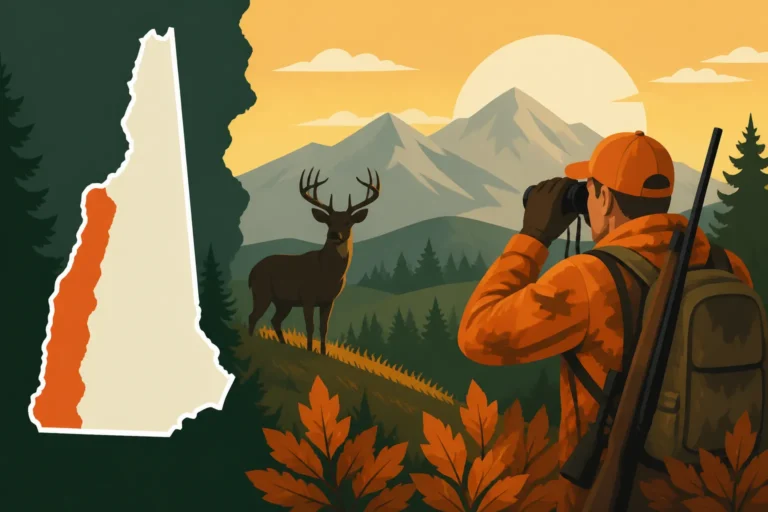
Whitetail deer are, for many, the primary target. The deer herd around Littleton, particularly in the northern reaches, tends to be hardier and often smaller-bodied than their southern New Hampshire cousins, but they are incredibly tough and clever animals. They are perfectly adapted to the rugged terrain of Hunting the North Country. You'll primarily be hunting within WMU B, C, or F, depending on your exact location, each with slightly different characteristics.
New Hampshire offers a generous archery season, followed by a muzzleloader-only season, and then the general firearms season. The archery season provides a great opportunity to hunt relatively unpressured deer before the woods fill up. Muzzleloader season is a fantastic challenge, and the general firearms season, though shorter than some other states, can be incredibly productive, especially during the peak of the rut, which often occurs in early-to-mid November. Always double-check the New Hampshire's WMU-Based Deer Season Structure for the most current dates and regulations for your specific hunting area, as dates and rules can sometimes vary by Wildlife Management Unit. For those looking to get into hunting, or bring a new hunter along, don't forget the importance of New Hampshire Hunter Education Requirements for all new hunters.
Bear, Moose, and Turkey
Beyond deer, the public lands near Littleton offer prospects for other exciting big game. Black bears are quite numerous in New Hampshire, and the mountainous, timbered country around Littleton provides excellent bear habitat. Bear season typically begins earlier than deer season and offers opportunities for baiting (with specific regulations), still-hunting, or hunting with hounds. Remember to check the New Hampshire Bear Season Dates by WMU as these can vary significantly based on your chosen method and location.
Moose hunting is a once-in-a-lifetime opportunity in New Hampshire, managed through a highly competitive lottery system. While moose are primarily found in the denser forests further north in Coos County, they do roam throughout the broader North Country, and you might encounter one in the WMNF around Littleton. If you are lucky enough to draw a tag, the vast public lands here would be your playground.
Wild turkeys have made a remarkable comeback in New Hampshire, and you'll find healthy populations around Littleton. Both spring and fall turkey seasons are offered, each with its own unique set of tactics. Spring hunting is all about calling a gobbler off the roost, while fall hunting often involves breaking up a flock and calling birds back to you. The New Hampshire Turkey Season Rules will outline permit requirements, bag limits, and specific season dates.
Small Game and Waterfowl
Don't overlook the abundance of small game and waterfowl. The mixed forests are home to ruffed grouse and snowshoe hare, providing thrilling hunting opportunities, especially for those who enjoy walking and flushing game. Squirrels are also plentiful and offer a great way to hone your woodsmanship skills.
For waterfowl enthusiasts, the Connecticut River and its associated wetlands are the main attraction. While you might need a boat or specialized gear like waders and decoys, jump-shooting creeks or setting up blinds along the river can yield ducks and geese throughout the season. Checking the New Hampshire Waterfowl Season and Zones will provide details on split seasons, bag limits, and specific zone boundaries.
Whether you're after the challenge of a mountain whitetail, the excitement of a spring gobbler, or the solitude of a grouse hunt, the public lands around Littleton offer a wealth of opportunities for the dedicated hunter. Always do your homework, scout effectively, and respect the land and its resources.
Disclaimer
This article is for general informational purposes only and does not constitute professional advice. Laws, prices and regulations vary by location and change over time. Consult a qualified professional for guidance on your specific situation.