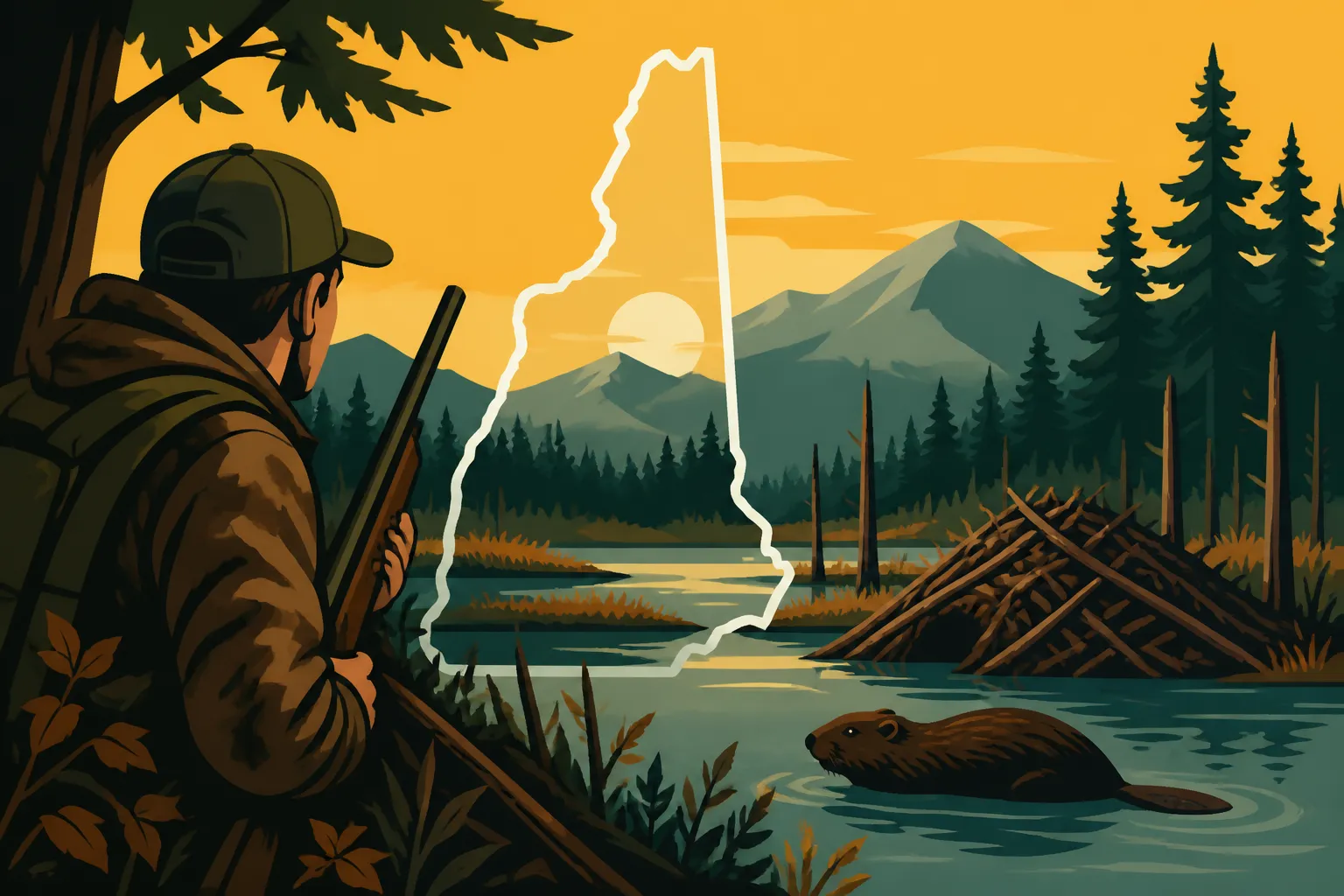
Hunting a Beaver Flowage on Public Land
Hunting a beaver flowage on public land in New Hampshire can be a truly rewarding, albeit challenging, experience. Many hunters feel overwhelmed by the sheer thought of slogging through marshy terrain, unsure of where to even begin looking for game. This guide will walk you through everything you need to know to effectively scout, access, and hunt these unique and often overlooked habitats, helping you unlock their potential for deer, moose, waterfowl, and other small game.
Understanding New Hampshire Beaver Flowages
Beaver flowages, those wetlands created by the industrious work of beavers, are an integral part of New Hampshire's wild landscape. They range from small, secluded pockets to expansive, flooded areas that can dramatically alter the topography of a region. These dynamic ecosystems, constantly being reshaped by the beavers themselves, create an incredible amount of edge habitat and diverse vegetation that pulls in a wide array of wildlife, making them prime hunting grounds if you know how to approach them.
Often, you'll find these watery havens tucked away on public land, far from the well-trodden paths. This remoteness can be both a blessing and a curse. It means less human pressure on the game, but it also means tougher access and more challenging conditions for the hunter. The key to unlocking their potential lies in understanding why animals are drawn to them and how these habitats function throughout the hunting seasons.
Why Beaver Flowages Attract Game
Beaver flowages are ecological magnets, drawing in game species due to the rich bounty of resources they offer. Think about it: a flowage represents a constant source of fresh water, which is fundamental for all wildlife. But it's more than just a drinking hole. The flooded timber and dead standing trees create a unique microclimate that fosters specific types of vegetation, such as emergent aquatic plants, sedges, and young hardwoods that sprout up along the edges. These plants are often highly palatable and nutritious, acting as a natural food plot in an otherwise mature forest.
Deer, in particular, are drawn to the browse available around the edges of a flowage. Young aspen, willow, and maple shoots that grow in response to the disturbance caused by the beavers are highly favored. Moose, too, will seek out these areas, especially for the aquatic vegetation and succulent woody browse that thrives in and around the water. Furthermore, the thick, tangled cover that often surrounds these wetlands provides excellent bedding areas and escape routes, making animals feel secure while still having easy access to food and water. This combination of food, water, and cover is a powerful draw for big game.
Beyond big game, flowages are also critical for waterfowl. Ducks and geese utilize the open water for resting and feeding, dabbling for insects, seeds, and vegetation in the shallow areas. The flooded timber provides perfect roosting spots and protection, while the muddy edges are often teeming with invertebrates, a vital food source. Small game like muskrats and even furbearers like mink and otter are direct inhabitants, making these areas incredibly diverse and active throughout the year. The sheer variety of life supported by a beaver flowage is astonishing and offers multiple hunting opportunities.
Identifying Productive Flowage Habitat
Not all beaver flowages are created equal, and knowing how to identify the most productive ones can save you a lot of wasted effort. Look for flowages that show signs of recent and active beaver work. Freshly gnawed trees, newly built dams, and active lodges are all indicators that the area is being maintained and will likely be more dynamic and productive for game. Older, abandoned flowages might still hold some attraction, but their food sources and cover might be less robust as the ecosystem begins to shift back towards a more terrestrial environment.
Pay close attention to the vegetation surrounding the water. Are there diverse edge habitats? Is there a mix of hardwoods and softwoods? Are there signs of preferred browse species like aspen, willow, or young maples? The presence of these types of forage will indicate a healthier and more attractive food source for deer and moose. A flowage with a good mix of open water, partially flooded timber, and dense upland cover nearby will generally be more appealing to a wider range of game.
Finally, consider the size and location. Larger flowages often offer more diverse habitats, but smaller, secluded pockets deep in the woods can be absolute gems, acting as hidden oases where deer and moose feel unpressured. Look for flowages that connect to other good habitat features, like old logging roads, dense bedding thickets, or natural travel corridors such as ridges or saddles. These connections can indicate prime movement patterns and funnel points, making your hunting efforts far more effective. Hunting a Beaver Flowage Edge can provide more specific insights on where to set up.
Scouting and Accessing Public Land Flowages
Scouting is paramount when it comes to hunting beaver flowages, especially on public land where the terrain can be unpredictable and access routes often non-existent. You can't just drive up to most of these spots; they demand a significant investment of time and effort in pre-season preparation. This process involves a combination of digital reconnaissance and boots-on-the-ground exploration, both of which are critical for success. Don't underestimate the physical demands, as getting into and out of these areas can be quite the workout, often involving bushwhacking and navigating wet, uneven ground.
The more you know about a flowage before you even step foot in it, the better. Understanding the lay of the land, potential access points, and historical game movement can give you a significant advantage. This preparation isn't just about finding game; it's also about safety, as getting lost or injured in a remote, boggy area can quickly turn a hunting trip into a serious situation. Taking the time to scout thoroughly builds confidence and a mental map of the area, which is invaluable.
Using Mapping Tools for Reconnaissance
Before you even think about putting on your boots, dive into some digital reconnaissance. Modern mapping apps are an absolute game-changer for identifying potential flowages on public land. Tools like onX Hunt and GoHunt provide invaluable satellite imagery, topographic maps, and public/private land ownership overlays that allow you to pinpoint beaver activity from the comfort of your home. Look for tell-tale signs: areas of standing water with dead timber, distinct breaks in tree lines where dams are likely, and winding streams that suddenly widen into ponds.
Start by zooming in on areas of public land that you're interested in, paying particular attention to the contours of the land. Beaver activity often occurs in flatter areas or along natural drainages where water can be easily dammed. Use the topographic layer to identify subtle elevation changes and potential high ground around the flowage, which could serve as better travel routes for deer or ideal stand locations. The public land boundaries are crucial here, ensuring you're always operating within legal hunting areas. onX Layers for New Hampshire Land Status can help you understand how to utilize these features effectively.
Another excellent feature of these apps is the ability to mark waypoints for potential access points, future stand sites, and game sign you might discover during your physical scout. Even without cell service deep in the woods, these apps typically allow for offline map downloads, which is essential for navigation in remote New Hampshire terrain. Using the Fish and Game App Without Cell Service is another great resource for making sure you're prepared. Cross-reference your digital findings with historical information if you have it, or look for features that might indicate a long-standing flowage versus a new one.
Navigating Challenging Terrain
Once you've done your digital homework, it's time for boots on the ground. Be prepared for tough going. Beaver flowages are inherently wet and often surrounded by dense, tangled vegetation. Your approach needs to be strategic. Try to find the driest, highest ground possible to minimize disturbance and keep yourself comfortable. Old logging roads or faint game trails along the edges can sometimes offer easier passage, but more often than not, you'll be bushwhacking. This is where your mapping app comes in handy, constantly checking your position against marked waypoints and public land boundaries.
Wear appropriate gear—waterproof boots are an absolute must, and even chest waders might be necessary for certain access points or to retrieve game. Best Boots for North Country Bog Hunting can guide your choices. Be mindful of hidden channels, deep mud, and submerged logs or roots that can trip you up. A sturdy walking stick or trekking poles can provide much-needed stability. During your scout, look for natural funnels where game might be crossing the flowage or moving along its edges. These could be narrow land bridges, pinch points between water and thick cover, or areas with less dense vegetation that offer easier passage for animals.
When scouting for actual game sign, focus on the flowage edges and any higher ground that penetrates the wetland. Look for deer and moose tracks in the mud, rub lines on saplings, and droppings. Identify areas of heavy browse. If you plan to hunt waterfowl, note any open water areas or flooded timber where ducks and geese might be resting or feeding. Remember, the goal of scouting isn't just to find a spot, but to understand the animal's routine within that specific environment. Try to determine how they're using the flowage for food, water, and cover, and where they feel safe.
Hunting Strategies for New Hampshire Flowages
Hunting beaver flowages demands a patient and adaptable approach, different from hunting open hardwoods or clear-cuts. The environment itself is a dynamic, complex puzzle, and understanding how game uses its various elements is key. You're not just looking for a deer or a moose; you're looking for signs of their daily routines, their preferred bedding, feeding, and travel areas within this unique wetland ecosystem. This requires keen observation skills, stealth, and often, a willingness to get a little wet and muddy.
The thick cover, combined with the often-swampy conditions, means that long-range shots are rare. Instead, you'll be focusing on close-quarters encounters, which places a premium on scent control, quiet movement, and precise shot placement. Whether you're targeting big game or planning a waterfowl hunt, the flowage offers distinct opportunities and challenges that you must be prepared to meet.
Setting Up for Deer and Moose
For deer and moose, flowages are primarily attractive for their browse and water, but also as security cover. When setting up, consider where the animals are likely to enter or exit the flowage. Look for trails leading from nearby bedding areas on higher ground down to the water's edge, or along narrow strips of land that run through the flowage. These pinch points are prime locations for a treestand or ground blind. For Moose in New Hampshire's North Country, these areas can be crucial, as they often utilize the aquatic vegetation.
Wind direction is absolutely critical around a flowage. The damp air can carry scent for long distances, and swirling thermals often occur, especially in the mornings and evenings. Plan your approach and setup to keep the wind in your favor, anticipating how it might shift. Sometimes, a stand on the upland edge overlooking the flowage can be effective, allowing you to glass a larger area and catch animals moving through or feeding. Other times, a ground blind brushed in tightly on a narrow crossing point might be your best bet, especially if deer or moose are using a specific trail consistently.
Don't overlook the thick islands of cover within a flowage. These can be prime bedding areas, and still-hunting slowly and quietly through these pockets can sometimes yield close encounters. Be patient, move incrementally, and constantly scan for movement. Often, the dense cover means you'll see only a part of an animal, so be ready for quick, ethical shots. If you do get a deer down, recovering a deer from a beaver flowage can be tough, so have a plan for extraction. Recovering a Deer From a Beaver Flowage offers important advice on this.
Waterfowl and Other Small Game Opportunities
Beaver flowages are also fantastic spots for waterfowl, particularly for wood ducks, mallards, and sometimes black ducks, especially during migration. The flooded timber and shallow, vegetated water offer excellent feeding and resting habitat. When targeting waterfowl, scout for flight paths and preferred feeding areas. Setting up decoys in an open pocket within the flooded timber, or along a narrow channel where ducks are observed flying, can be highly effective. Early morning hunts are usually best, catching birds as they come off the roost or make their first feeding passes.
For waterfowl, concealment is key. Utilize natural cover like cattails, brush, or downed timber to set up a blind, or use a layout blind if conditions allow. Decoying Ducks on New Hampshire's Connecticut River can give you ideas, though the scale might be different. Consider using calls sparingly, especially for pressured birds. Sometimes, simply being well-hidden in a productive spot is all it takes. Remember to adhere to New Hampshire's waterfowl hunting regulations, including bag limits and shooting hours.
Beyond waterfowl, beaver flowages can offer opportunities for other small game like snowshoe hare along the edges or even muskrats and mink for trappers. The diverse ecosystem supports a variety of species, making it a multi-faceted hunting area. While often overlooked for big game, a flowage provides ample opportunity for the dedicated small game hunter too. Just remember to check the specific regulations for each species you intend to pursue in that particular WMU. New Hampshire Waterfowl Season and Zones can provide information about specific dates and regulations.
Essential Gear for Flowage Hunting
Tackling a beaver flowage in New Hampshire requires specialized gear that can stand up to the wet, rugged, and often unforgiving conditions. This isn't your typical walk in the park hunt; it’s an adventure that demands durability, waterproofing, and practicality. The right equipment isn't just about comfort; it's about safety and increasing your chances of success. Skimping on crucial items can lead to a miserable, and potentially dangerous, experience.
Think about the environment: deep mud, standing water, thick brush, and potentially cold temperatures. Every piece of gear you bring needs to perform reliably under these stresses. From what you wear on your feet to the tools you use for navigation and calling, selecting the right items can make all the difference between a frustrating bust and a memorable hunt.
Footwear and Waterproofing
Without a doubt, your footwear is the single most critical piece of gear for hunting a beaver flowage. You simply must have waterproof boots, and often, plain old waterproof hiking boots won't cut it. Rubber boots, preferably knee-high or even hip waders, are frequently the best choice. Look for boots with good traction on muddy and slippery surfaces, and consider insulated options for colder late-season hunts. There’s nothing worse than cold, wet feet deep in the backcountry.
Beyond your boots, consider full rain gear that can withstand pushing through wet brush and sitting in damp conditions. A good waterproof jacket and pants are essential, not just for rain, but for protection against dew-soaked vegetation. Even on a clear day, you’re likely to encounter standing water and wet terrain. Layers that wick moisture away from your skin are also vital, helping you stay warm and dry from the inside out. Cotton is your enemy in these conditions; opt for synthetics or wool. Layering for New Hampshire's Cold Hunting Season offers excellent advice on staying warm and dry.
A good waterproof pack is also highly recommended to keep your essentials dry, such as extra layers, food, first-aid kit, and any electronics. Even if your pack isn't fully waterproof, using dry bags or waterproof stuff sacks inside your pack can protect your gear from accidental submersion or constant dampness. Don't forget waterproof gloves for handling game or retrieving decoys in cold water, as dexterity can quickly diminish with wet, cold hands.
Optics and Calls
While flowages often mean close-quarters hunting, quality optics are still very important for scanning dense cover and identifying game. A good pair of binoculars, in the 8x to 10x magnification range, will help you pick apart the tangled edges of the flowage and spot subtle movements. Look for binoculars that are rugged, waterproof, and fog-proof, as they will be exposed to damp conditions. For waterfowl hunting, binoculars can help you identify species at a distance before they commit to your spread.
For calling, the type of call depends on your target species. For deer, a grunt tube and a rattling bag or antlers can be effective for drawing in bucks, especially during the rut. The dense cover often means you need to get their attention, and the sound can travel well over water. For moose, a cow call can be incredibly effective, especially if you're hunting during the early part of their season. Calling a Bull Moose in Late October can provide specific advice.
Waterfowl hunters will, of course, need appropriate duck and goose calls. Learning to use these effectively is a skill in itself. Carry a variety of calls for different species you might encounter. For small game like turkeys, calls can also be useful for locating birds along the flowage edges. Regardless of the call, practice before you go out and understand how different sounds carry in the damp, heavy air of a flowage environment.
When hunting a beaver flowage, always consider the specific animals you're pursuing and tailor your gear accordingly. This might mean different calls, different types of ammunition, or even different camo patterns. Always be prepared for the unexpected and prioritize safety, especially when navigating unfamiliar, challenging terrain.
Here's a quick overview of how different parts of a beaver flowage attract various game:
| Flowage Feature | Primary Game Attracted | Why They're Attracted | Best Hunting Method |
|---|---|---|---|
| Upland Edge / Transition Zone | White-tailed Deer, Moose, Wild Turkey, Snowshoe Hare | Browse, bedding cover, travel corridors, easy access to water. | Treestand/Ground Blind on trails, Still-hunting. |
| Flooded Timber / Shallows | Waterfowl (Ducks, Geese), Moose, Muskrat | Aquatic vegetation, insects, flooded browse, resting areas. | Decoy spreads for waterfowl, Still-hunting for moose. |
| Open Water Pockets | Waterfowl, Otter, Mink | Resting, open feeding, travel for aquatic furbearers. | Decoy spreads, Jump-shooting. |
| Dams / Beaver Lodges | Moose, Deer, Furbearers | Crossing points, security, dens, concentrated browse. | Treestand near crossing, Ambush points. |
| Dense Thickets (Islands) | White-tailed Deer, Moose, Bear (occasionally) | Security cover, bedding areas, escape routes. | Still-hunting slowly, Driving (with proper planning and safety). |
Remember, observation is your best tool. The more time you spend scouting and understanding how game uses a particular flowage, the more successful you'll be. These unique habitats offer an incredible challenge and an even greater reward for the intrepid New Hampshire hunter.
Disclaimer
This article is for general informational purposes only and does not constitute professional advice. Laws, prices and regulations vary by location and change over time. Consult a qualified professional for guidance on your specific situation.