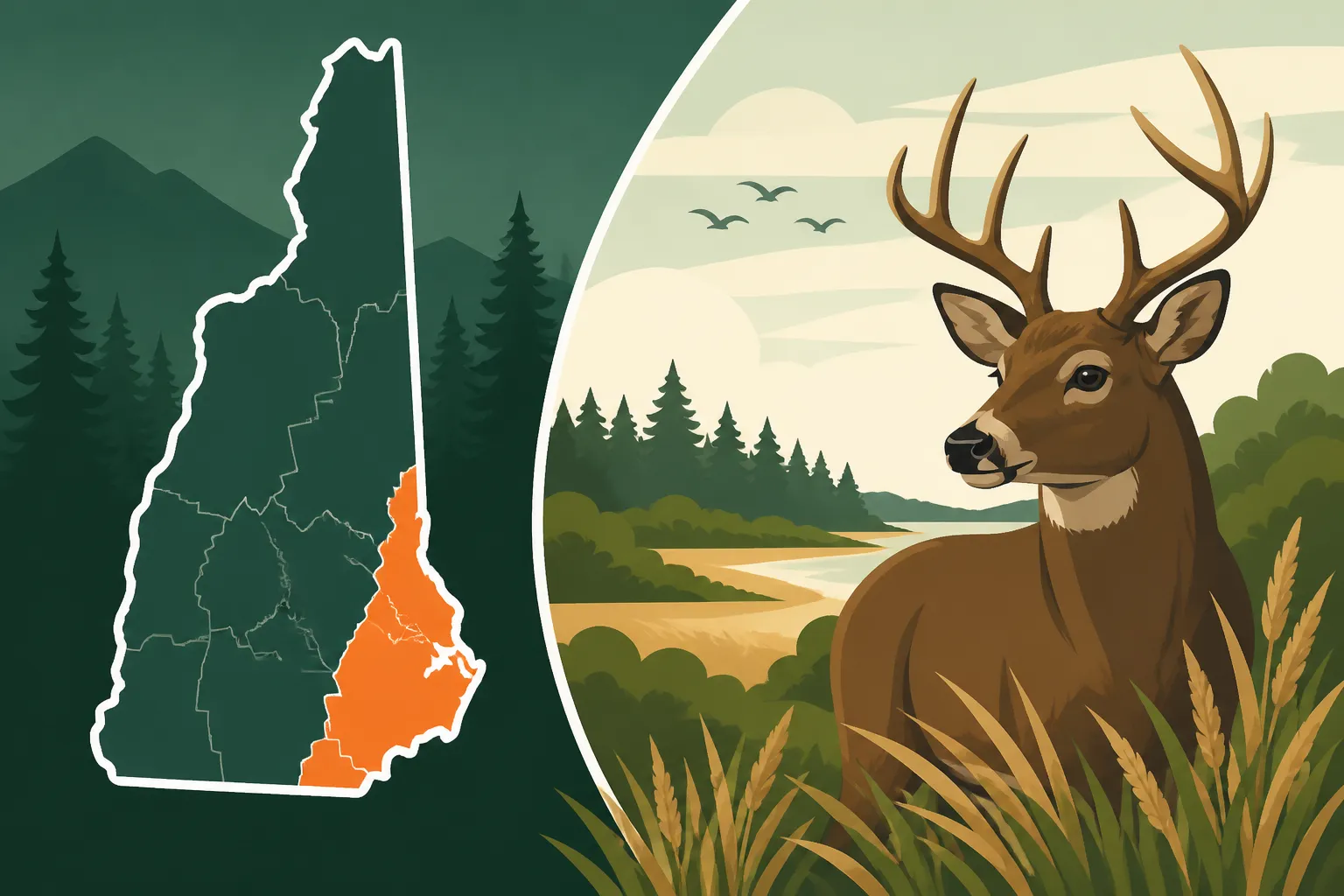
The Coastal Plain Sits Inside WMU J2
Hunting in New Hampshire often conjures images of vast northern forests, towering granite peaks, or sprawling river valleys, but the unique challenges and rewarding opportunities of the state's coastal plain are frequently overlooked. This article will dive deep into Wildlife Management Unit (WMU) J2, demystifying the coastal plain hunting experience, outlining its specific characteristics, and providing actionable strategies for anyone looking to pursue game in this distinct corner of the Granite State.
Understanding WMU J2: Its Boundaries and Characteristics
WMU J2 is a fascinating area, often a surprise to hunters who expect only dense woods when they think of New Hampshire. Instead, it encompasses much of the state's true coastal plain, stretching from the sandy beaches and salt marshes right into the bustling communities and fragmented woodlands of southeastern New Hampshire. This isn't your typical North Country wilderness; it's a dynamic landscape where suburban sprawl meets ancient tidal creeks and small, productive woodlots.
Geographical Layout and Habitat Types
Imagine driving east from Exeter, heading towards Portsmouth or the beaches of Rye and Hampton. You'll notice a distinct shift in the landscape: the rolling hills give way to flatter terrain, often characterized by wetlands, tidal rivers, and a mosaic of small agricultural fields interspersed with mature hardwoods and dense softwood thickets. WMU J2 covers this region, including towns like Hampton, North Hampton, Rye, Portsmouth, New Castle, Newington, and parts of Stratham, Greenland, and Seabrook. It's a relatively small WMU geographically, but its diverse habitat supports a surprising variety of game. You’ll find everything from vast salt marshes important for waterfowl to isolated patches of oak and pine, providing crucial cover and food for deer and turkeys. This blend creates a unique hunting environment that demands a different approach than the sprawling tracts of northern New Hampshire.
One of the defining features of the coastal plain in J2 is the prevalence of water. Estuaries, tidal rivers like the Hampton River and Winnicut River, and numerous smaller streams crisscross the landscape. These waterways are vital, not just for waterfowl, but also as travel corridors for deer and other wildlife. The presence of dense phragmites and other marsh vegetation offers incredible cover, making game animals particularly elusive. Hunters often find themselves navigating a mix of private parcels and small public access points, demanding a keen understanding of property boundaries and local regulations. The Coastal Plain Sits Inside WMU J2 means that much of your effort here will involve navigating these specific geographical features.
Population Density and Its Impact on Hunting
Unlike more rural WMUs, J2 is one of the more densely populated areas of New Hampshire. This population density brings both challenges and unique opportunities for hunters. On one hand, you're dealing with smaller tracts of land, more private property, and increased public scrutiny. This necessitates an extra layer of respect for landowners, strict adherence to setback rules, and a heightened awareness of non-hunters using adjacent lands. It's not uncommon to find excellent hunting parcels tucked away behind housing developments or industrial parks, making scouting crucial.
On the other hand, suburban and exurban areas often provide excellent habitat edges, with plentiful food sources from residential landscaping and small agricultural plots. Deer, turkeys, and other game animals become accustomed to human presence, often exhibiting different patterns than their deep-woods counterparts. This means they might be more active during daylight hours in less conventional spots, or utilize cover that urban dwellers overlook. Hunting success in J2 often hinges on securing private land access or meticulously researching smaller, overlooked public parcels. It’s a game of patience, stealth, and diplomacy. Understanding New Hampshire Firearms Discharge Setback Rules is absolutely paramount in this densely populated area to ensure safety and compliance.
Hunting Opportunities in New Hampshire's Coastal Plain WMU J2
Despite its developed nature, WMU J2 offers fantastic hunting for several species. The key is knowing what to target and how to adapt your strategies to the local conditions.
Whitetail Deer Hunting
Deer hunting in WMU J2 can be incredibly rewarding, though it often requires a different mindset than hunting the expansive timberlands. While deer in the North Country might be smaller due to harsher winters and leaner forage, the deer in J2 often benefit from abundant food sources—both natural browse and those provided by human development. This can lead to healthy, robust deer populations, including some impressive bucks. However, these deer are typically pressured and highly nocturnal on publicly accessible land.
Success here often comes from identifying small, overlooked pockets of cover, thick transition zones between development and wilder areas, and travel corridors along waterways. Knocking on doors for Asking a New Hampshire Landowner for Permission can be a game-changer, as even a small, isolated woodlot can hold deer that rarely see hunting pressure. Consider using ground blinds in areas where treestand placement might be challenging or limited. These allow for quick, adaptable setups in dense cover. The hunting here extends into December, offering opportunities for Hunting the December Archery Close where cooler weather and increased deer movement can lead to success.
| Game Species | Primary Habitat in WMU J2 | Key Hunting Strategy | Best Seasons |
|---|---|---|---|
| White-Tailed Deer | Woodlots, marsh edges, suburban fringes | Secure private land, hunt transition zones, use ground blinds | Archery, Muzzleloader, Firearms |
| Wild Turkey | Mixed hardwoods/softwoods, field edges, residential areas | Locate roosts, call aggressively in spring, break up flocks in fall | Spring, Fall |
| Waterfowl | Salt marshes, tidal rivers, coastal ponds | Decoy spreads, jump-shooting, layout blinds on fields | Early & Late Fall |
| Small Game | Brushy areas, thickets, woodlots, field edges | Still-hunting, dog hunting for hare, spot-and-stalk for squirrels | Fall, Winter |
Wild Turkey Opportunities
The coastal plain of WMU J2 is home to a thriving wild turkey population. These birds are adaptable and have learned to coexist with human development, making them a common sight in suburban backyards and agricultural fields. For spring turkey hunting, this means focusing on the edges of fields, small woodlots, and areas with suitable roost trees. Gobbling activity can be strong, but these birds are often pressured and can become "henned up" quickly. Patience and strategic calling are essential. In the spring, you might find success by Calling a May Gobbler Off the Roost as soon as legal shooting light breaks, catching them before they descend and spread out with their hens.
Fall turkey hunting in J2 offers a different kind of challenge, but can be incredibly rewarding. Turkeys will often be found in larger flocks, feeding on acorns or waste grain in agricultural fields. Scouting is paramount to locate these flocks. Once found, the classic "run-and-gun" tactic of busting a flock and then calling the scattered birds back together can be highly effective. The fragmented nature of the landscape here means you might have to adapt quickly, moving from one small woodlot to another. Remember, New Hampshire allows a New Hampshire's Two-Bird Spring Limit for those who successfully pursue the wily gobbler.
Waterfowl Hunting
With its extensive network of salt marshes, tidal creeks, and proximity to the Atlantic Ocean, WMU J2 is a prime location for waterfowl hunting. Mallards, black ducks, teal, and various sea ducks utilize these coastal habitats, especially during migration. Hunters can find success by setting up decoy spreads in strategic locations along tidal creeks or in flooded marshes, anticipating the morning and evening flights. Jump-shooting smaller coastal ponds and estuaries can also be productive, though it requires a good understanding of the tide charts and the birds' preferred feeding areas.
Access can be a challenge here, often requiring a boat or kayak to reach prime spots. Pay close attention to tidal swings, as rising and falling water can dramatically change bird movement and access to your hunting location. This region falls within the New Hampshire's Northern and Inland Zones Explained waterfowl regulations, so be sure to check the specific dates and bag limits for the coastal zone. Utilizing mapping apps like onX Hunt can be invaluable for identifying navigable water, public access points, and optimal tide-dependent scouting spots.
Navigating WMU J2: Tools and Tactics for Success
Hunting in a populated WMU like J2 requires more than just knowing where the animals are; it demands careful planning, diligent scouting, and a strategic approach to access and safety.
Gaining Private Land Access
In WMU J2, private land is king. Many of the best hunting opportunities exist on smaller, privately owned parcels. This means that Knocking on Doors in New Hampshire Farm Country (or residential areas) is often your most effective strategy. When approaching landowners, always be polite, respectful, and prepared. Bring a map of their property (you can often generate these using an app like onX Hunt or GoHunt) to show them exactly where you intend to hunt. Offer to share game, help with chores, or assist in managing their property.
It's crucial to understand New Hampshire Posted Land Rules. Always get explicit permission, and while not legally required in all cases, written permission is highly recommended. It protects both you and the landowner. Be clear about what you'll be hunting, when, and what methods you'll use. Emphasize safety and your commitment to responsible hunting practices, especially given the proximity to homes. Building a positive relationship with a landowner can secure you exclusive access to prime hunting ground for years to come.
Utilizing Mapping Technology
Modern mapping applications are absolutely indispensable when hunting WMU J2. With fragmented landscapes, numerous property lines, and a mix of public and private parcels, knowing exactly where you are is critical. Services like onX Hunt and GoHunt provide detailed satellite imagery, property boundaries, landowner names, and public land overlays directly on your phone or GPS device.
These tools allow you to:
- Identify potential hunting spots: Look for thick cover, pinch points, and food sources, even on small parcels.
- Locate public access: Discover small state forests, town forests, or conservation easements that might otherwise go unnoticed. Hunting a Town Forest Parcel or Hunting a Land Trust Easement Property can be very productive.
- Confirm property lines: Avoid accidental trespass, which is crucial in a densely settled area. You can identify exactly where a property line runs through a woodlot.
- Scout remotely: Analyze terrain, potential access routes, and cover before ever stepping foot in the woods. This is especially useful when trying to identify new private land prospects.
- Navigate in the field: Use the GPS functionality to stay oriented, mark sign, and track your movements. Even if you're Using the Fish and Game App Without Cell Service, many of these apps allow you to download maps for offline use.
Before heading out, spend time with your mapping app. Look for small unposted woodlots, connect the dots between larger public areas, and analyze how deer might move between suburban feeders and deep cover. This digital scouting can save you countless hours of unproductive walking.
Strategic Scouting and Stand Placement
Scouting in WMU J2 often means covering a lot of ground in small chunks. Look for sign along field edges, near water, and in thick cover. Because deer might be more nocturnal, focus on identifying primary travel routes between bedding areas and food sources. These often occur in brushy fence lines, thick creek bottoms, or narrow strips of cover that connect larger woodlots.
When it comes to stand placement, consider the increased pressure. Deer here are often used to human activity, but they are also incredibly wary of anything out of place. Ground blinds, especially those brushed in thoroughly, can be very effective for quick, adaptable setups. If using a treestand, choose a location with excellent natural cover that breaks up your silhouette, and make sure your entry and exit routes are stealthy. Overlooking a small, brushy fencerow or a creek bottom can sometimes yield better results than trying to hunt a wide-open field, as these areas provide crucial security cover for deer moving during daylight. Be mindful of scent control, as human odor carries easily in these more developed areas.
Beyond the Hunt: Conservation and Responsible Practices in WMU J2
Hunting in a populated region like New Hampshire's coastal plain WMU J2 isn't just about pursuing game; it's also about being a responsible ambassador for hunting and contributing to conservation efforts. Your actions reflect on all hunters, so upholding the highest ethical standards is crucial.
Respecting Landowners and Non-Hunters
Given the mix of residential, commercial, and natural areas in WMU J2, respecting those around you is paramount. When hunting on private land, always leave the property in better condition than you found it. Close gates, don't litter, and avoid disturbing any residential areas. If you encounter non-hunters while afield, be courteous and polite. Many people in these areas may not be familiar with hunting or may hold misconceptions. A friendly greeting and a brief explanation of what you're doing (if appropriate and safe) can go a long way in building understanding and acceptance.
Always be aware of local ordinances regarding hunting and firearms discharge, as these can be more restrictive in populated areas than state regulations. Safety is the top priority; knowing your target and what is beyond it is non-negotiable, especially where houses and roads are prevalent. This region is very different from Hunting White Mountain National Forest Timber where human encounters are far less frequent. Maintaining a good public image helps ensure hunting access remains viable for future generations in these urban-adjacent zones.
CWD Prevention and Local Regulations
New Hampshire has been fortunate to remain free of Chronic Wasting Disease (CWD), a fatal neurological disease that affects deer and other cervids. However, vigilance is key, especially in a WMU like J2 which is relatively close to other states. New Hampshire's CWD Prevention Rules are designed to protect the state's deer herd, and hunters play a vital role in adhering to them. These rules often include restrictions on importing certain parts of deer carcasses from states where CWD has been detected and encourage hunters to report any deer exhibiting unusual behavior.
Be familiar with specific regulations that might apply to WMU J2 or the surrounding coastal communities. This could include town-specific ordinances regarding hunting hours, weapon restrictions, or even Sunday hunting rules. Always check the current New Hampshire Fish and Game digest or website before heading afield to ensure you are fully compliant. This ensures a safe and legal hunt, and helps preserve the health of the deer herd that makes hunting in J2 so special.
Disclaimer
This article is for general informational purposes only and does not constitute professional advice. Laws, prices and regulations vary by location and change over time. Consult a qualified professional for guidance on your specific situation.