Hunting the Piscataquog River Valley
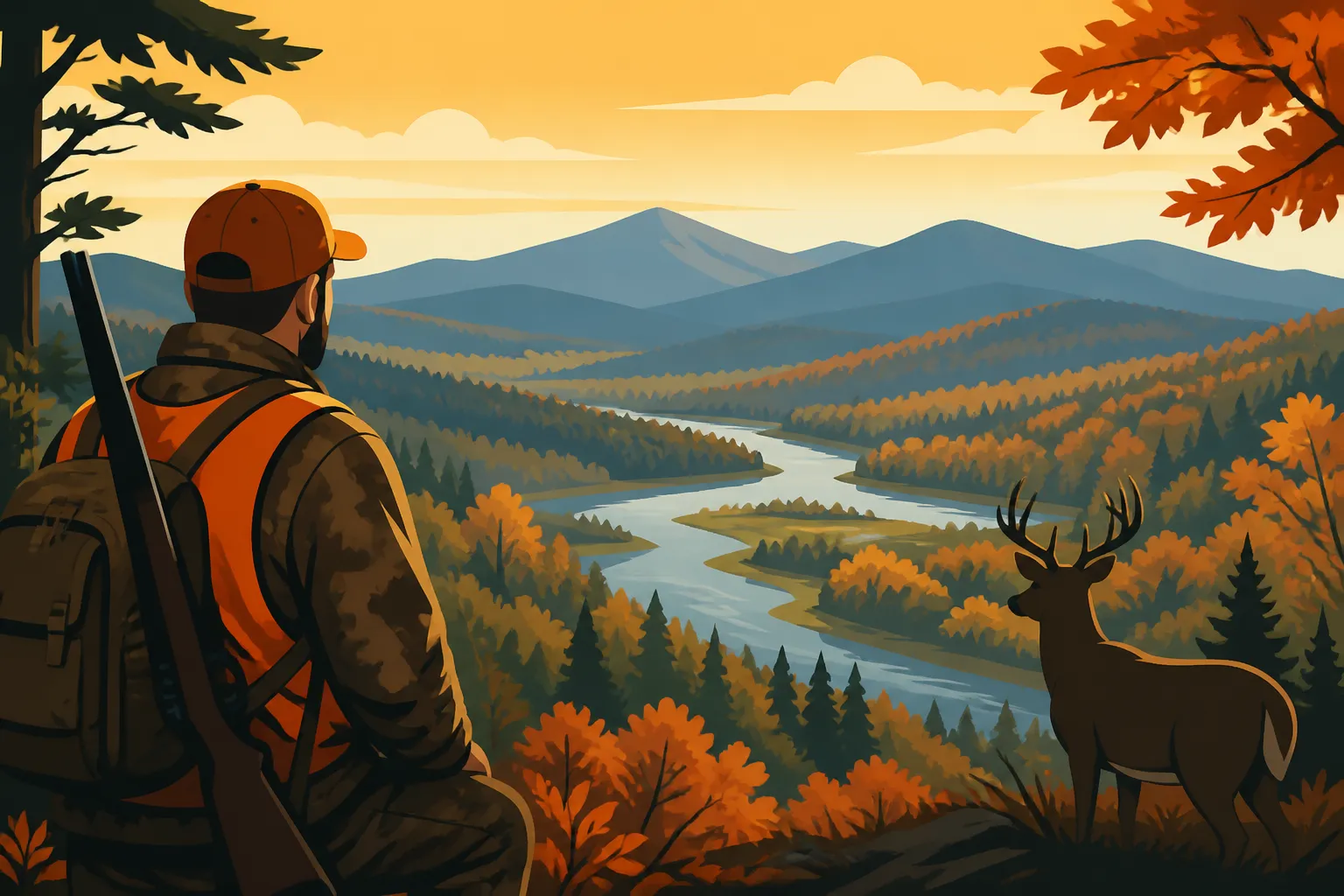
The Piscataquog River Valley, winding its way through south-central New Hampshire, might not be the first place that comes to mind when you picture "big woods" hunting, but don't let its proximity to more populated areas fool you. This region presents a unique set of challenges and incredibly rewarding opportunities for hunters willing to understand its specific character. If you've felt the frustration of trying to find unpressured ground close to home, or if you're curious about how to effectively hunt a riverine landscape that blends suburban edges with surprisingly wild pockets, this guide is for you. We're going to dive deep into what makes hunting the Piscataquog River Valley a truly distinctive New Hampshire experience, from understanding its varied habitat to mastering the tactics that put game in the freezer.
Understanding the Piscataquog River Valley's Unique Habitat
The Piscataquog River Valley isn't a monolithic landscape; it's a tapestry woven from small towns, suburban developments, open farmlands, and dense pockets of timber, all dissected by the river itself and its numerous tributaries. This creates a fascinating mosaic of habitat that dictates how wildlife moves and where you'll find it. Unlike the vast, unbroken forests of the North Country, the valley offers a mix of cover types that constantly shift, demanding a hunter's adaptability and keen observation.
The River Corridor and Its Floodplains
The very heart of the Piscataquog Valley is, of course, the river itself. The main stem of the Piscataquog, along with its feeder creeks and brooks, carves a path that often includes rich, fertile floodplains. These low-lying areas are goldmines for wildlife. You'll find stands of silver maple, ash, and other water-loving hardwoods, creating a dense canopy that provides both cover and mast crops. The undergrowth here can be incredibly thick, a perfect sanctuary for deer seeking refuge from pressure or harsh weather. These bottomlands also hold a surprising amount of small game, and can be excellent for waterfowl when conditions are right.
Hunting these river corridors requires a different approach than still-hunting a ridgeline. The ground can be soft, wet, and muddy, especially after rain, making stealth challenging. However, this moisture also means persistent food sources and abundant cover. Deer will often travel along these river edges, using the dense vegetation as a screen. Look for subtle trails threading through the alders and dogwoods, especially where they intersect with higher ground or field edges. Knowing Reading New Hampshire Mud for Fresh Deer Movement can be absolutely critical here. Be prepared for thickets that are nearly impenetrable, forcing deer into predictable funnels along slight rises or pinch points created by the river's bends.
Farmland Edges and Woodlot Interfaces
As you move away from the immediate riverbanks, the valley often opens up into agricultural fields, particularly in areas where the topography flattens out. These farmlands, with their corn, hay, or even standing stubble, are undeniable food magnets for deer, turkey, and various small game. The deer will transition between the security of the woodlots and the sustenance of the fields, making the interface between these two habitat types prime hunting ground.
The challenge with farmland hunting in New Hampshire, especially in a developed region like the Piscataquog Valley, often comes down to access and understanding specific land use. Many fields are privately owned, and building relationships with landowners for Knocking on Doors in New Hampshire Farm Country is often the key. Once you have permission, focus on the edges – where the woods meet the field. Deer will often stage in the timber just inside the field edge before dark, venturing out to feed under the cover of dusk. Conversely, they'll move back into the woods at first light. Look for pinch points, old fencerows, or small draws that provide natural travel corridors. Even a narrow strip of brush along a field can act as a significant travel route.
Upland Hardwoods and Suburban Transition Zones
Beyond the floodplains and farmlands, the Piscataquog Valley features rolling uplands dominated by mature hardwoods – oaks, maples, and birches – interspersed with mixed softwood stands. These areas offer different hunting dynamics. Oak ridges, for instance, are critical during mast years, drawing deer in to feed on acorns. The higher ground also provides better visibility and can be great for still-hunting or setting up stands overlooking known travel routes.
What makes the Piscataquog Valley particularly distinct are the suburban transition zones. You might be hunting a seemingly wild woodlot only to find it borders a housing development. This doesn't mean it's not huntable; in fact, these areas can hold surprising numbers of deer due to reduced hunting pressure and abundant forage from ornamental plantings. However, it does mean heightened awareness of safety zones and local ordinances. Using a mapping app like onX Hunt becomes absolutely indispensable here. You can clearly see property boundaries, public land parcels, and even landowner names, which is crucial for staying legal and respectful. It helps you identify those small, often overlooked pockets of huntable land that others drive past.
Deer Hunting Strategies Specific to the Valley
Hunting the Piscataquog River Valley demands a nuanced approach. It’s not just about finding deer; it’s about understanding how deer use this fragmented landscape, where human activity is a constant backdrop. Forget simply walking through the big woods; here, you're a detective piecing together movement patterns across a patchwork quilt of habitat.
Locating Public and Private Access
The biggest hurdle for many hunters in the Piscataquog Valley is finding access. While there isn't a vast expanse of national forest here, there are certainly public opportunities. New Hampshire Fish and Game manages several Wildlife Management Areas (WMAs) throughout the state, and some are located within or near the Piscataquog region. Town forests and conservation lands also offer hunting access in many communities, though rules can vary significantly from town to town. These smaller parcels often require more research, but they can pay huge dividends, as they frequently see less pressure than larger, well-known public lands.
Beyond public lands, Hunting Small Private Tracts in New Hampshire is often key to consistent success. Many landowners are open to granting permission, especially if you approach them respectfully and offer to help manage deer populations. These smaller, private parcels frequently abut suburban areas where hunting pressure is lighter, creating de facto sanctuaries for deer. Always carry your license and proof of hunter education, dress appropriately, and be articulate about your intentions. Utilizing mapping tools like onX Hunt can help you identify these smaller parcels, show property boundaries, and even find landowner information, making the initial contact much easier and more professional. Don't forget to check your WMU boundaries; the Piscataquog River Valley generally falls within the southern WMUs like Hunting the WMU I1 Merrimack Valley.
Adapting to Fragmented Cover and Pressure
Deer in the Piscataquog Valley are often more wary and nocturnal than their North Country cousins due to constant human presence and fluctuating hunting pressure. This means your tactics need to be highly adaptable. Instead of wide-ranging patrols, focus on identifying specific travel corridors and bedding areas within the fragmented cover. Deer here will use every available piece of dense brush, thicket, or wetland as a sanctuary.
Think about how deer move between isolated woodlots, across narrow strips of timber, or through brushy fencerows separating fields. These "funnels" are prime ambush points. Hunting a Funnel Between Two Woodlots is a classic tactic that shines in this type of landscape. Setting up a ground blind along such a funnel can be incredibly effective, allowing you to conceal yourself in areas with limited vertical cover. Be mindful of wind direction and thermal currents, especially in areas where hills and valleys create shifting air patterns. Deer will almost always use the wind to their advantage, so understanding how it flows through your specific hunting spot is paramount.
Hunting Key Food and Water Sources
Even in a developed area, deer still need food and water, and the Piscataquog Valley provides both in abundance. During the early archery season, natural mast crops like acorns and apples are huge draws. Keep an eye out for old, abandoned apple orchards – deer absolutely love them. Later in the season, after the leaves have fallen and natural forage becomes scarcer, agricultural fields like corn stubble or winter rye plots become irresistible.
Water is less of a limiting factor with the river and numerous brooks, but deer will still utilize specific crossings or watering holes, especially during dry spells or warm weather. Combine these food and water sources with security cover, and you've found a high-odds spot. For example, a thick cedar swamp adjacent to an oak ridge or a cornfield will inevitably draw deer. Pay attention to fresh sign – tracks, droppings, rubs, and scrapes – to confirm current deer activity. Tools like GoHunt or other online resources can sometimes offer broader harvest data and trends, which, while not hyper-local, might give you an idea of overall deer density in your general WMU. However, nothing beats boots on the ground for finding specific, fresh sign in your chosen spot.
Here's a quick comparison of general hunting characteristics in the Piscataquog Valley versus the deep woods of New Hampshire's North Country:
| Feature | Piscataquog River Valley (Southern NH) | North Country (Northern NH) |
|---|---|---|
| Habitat Type | Fragmented, mixed agriculture, suburban edge, riverine | Vast, unbroken forests, spruce-fir bogs, mountainous |
| Deer Density | Can be high in pockets, but overall spread out | Lower overall density, but often larger deer |
| Hunting Pressure | Variable, often localized; pockets of high/low pressure | Generally lower, but concentrated in accessible areas |
| Primary Challenge | Access, navigating human presence, wary deer | Wilderness navigation, covering vast ground, cold |
| Effective Tactics | Stand hunting funnels, private land access, stealth, short drives | Still-hunting, tracking, deep wilderness scouting, calling |
| Technology Use | Essential for boundary lines, private/public land ID (e.g., onX Hunt) | Helpful for navigation, remote scouting |
| Game Awareness | Deer often more nocturnal and jumpy | Deer can be less wary, but harder to locate |
Hunting Other Game Species in the Valley
While deer often steal the spotlight, the rich and varied habitat of the Piscataquog River Valley supports a diverse array of other game species, offering exciting opportunities for hunters who enjoy a broader pursuit. From the loud gobble of a spring tom to the fast flush of a grouse, there's always something to chase in this vibrant ecosystem.
Wild Turkey Opportunities
The Piscataquog Valley is excellent turkey country. The mix of mature hardwoods for roosting, open fields for feeding, and dense creek bottoms for nesting creates ideal conditions for robust turkey populations. Both spring and fall seasons can be incredibly productive here. In the spring, listening for gobblers off the roost along the river bottoms or on a ridge overlooking fields is a time-honored tradition. They’ll often pitch down into fields to strut, making field-edge setups or strategically placed ground blinds effective.
During the fall, the tactics shift. Turkeys will often be in larger family groups, feeding on acorns in the hardwoods or gleaning leftover grains from harvested fields. The classic "bust and scatter" method can work well here: locate a flock, break them up, and then call them back in. Stealth and patience are key, as fall birds can be notoriously quiet and wary. Always be mindful of your surroundings; in areas where deer hunting is also popular, ensure you're practicing safe hunting habits and identifying your target clearly.
Small Game and Furbearers
For those who appreciate the fast-paced action of small game hunting, the Piscataquog Valley offers plenty. Squirrels thrive in the valley's abundant oak and hickory stands, providing early season fun and excellent table fare. Rabbits and snowshoe hare can be found in the thicker brush, old clear-cuts, and regenerating timber along the river bottom. Hunting these species with a good beagle can be an incredibly rewarding experience.
The network of streams and the river itself also supports furbearers like beaver and muskrat, which can be pursued by trappers during regulated seasons. Additionally, the valley is home to a healthy population of coyotes, which can be called in, particularly during the colder months when they are more active. Their presence offers a challenging and exciting hunting opportunity for those looking to manage predator populations or simply enjoy the thrill of the chase. Remember to check local regulations for specific seasons and methods for all small game and furbearers, as they can vary.
Waterfowl Hunting Prospects
While the Piscataquog River isn't as expansive as the Connecticut River, it still offers promising waterfowl hunting opportunities, particularly for resident Canada geese and various dabbling ducks like mallards and wood ducks. The slower sections of the river, oxbows, and adjacent beaver flowages provide excellent habitat. Scouting before the season is crucial to identify where birds are loafing and feeding.
Setting up a spread of decoys in a quiet bend of the river or along the edge of a flooded field can be very effective. Jump-shooting smaller brooks and ponds can also yield results, though it often requires more walking and stealth. Hunters should be prepared for varying water levels and potentially muddy conditions, so Best Waders for New Hampshire Waterfowl Hunting will be an essential piece of gear. The presence of agricultural fields nearby can also create pass-shooting opportunities for geese flying between roosting and feeding areas. Always be aware of local ordinances regarding discharge of firearms and safety zones, especially in more developed areas of the valley.
Navigating Access and Regulations in the Piscataquog Region
Hunting in a region like the Piscataquog River Valley, where wild areas often butt up against human development, means being extra diligent about understanding and adhering to regulations. Your success, and the future of hunting opportunities, hinges on responsible conduct and respect for both wildlife and landowners.
Understanding Local Ordinances and Safety Zones
New Hampshire state hunting laws are consistent across the state, but local towns can enact their own ordinances regarding firearm discharge, hunting near dwellings, or public land access. Before you head out, especially on municipal property or near residential areas, it's absolutely vital to check with the town clerk or local police department for any specific restrictions. A few minutes of research can save you a lot of grief.
The concept of safety zones is also paramount. New Hampshire has specific setback requirements for discharging firearms or bows near occupied dwellings. Knowing these distances and how to identify them on the ground is non-negotiable. Again, this is where a robust mapping application like onX Hunt shines. You can often see property lines, building footprints, and measure distances directly on your phone, ensuring you stay compliant with the law and respectful of other residents. There's nothing that jeopardizes hunter access more quickly than a perceived safety violation.
Respecting Private Property and Posting Rules
The majority of land in the Piscataquog Valley, like much of southern New Hampshire, is privately owned. While many landowners are receptive to hunters, particularly for deer management, permission is always required. What New Hampshire Trespass Law Requires states that written permission is generally advisable, although verbal permission can suffice. However, having it in writing removes any ambiguity. Always ask for permission well in advance, clarify exactly where you can hunt, and confirm parking arrangements.
Even if you have permission, be aware of "posted" land. Posted signs typically mean no trespassing, even for hunting, unless you have explicit permission from the landowner. Never assume. If you're granted access to a property, respect it as if it were your own. Close gates, don't litter, avoid driving on wet fields, and leave the property better than you found it. This helps build positive relationships between hunters and landowners, which is crucial for maintaining future hunting opportunities. If you accidentally retrieve game from private land where you don't have permission, New Hampshire law generally allows for retrieval after contacting the landowner, but it's always best to avoid that situation by knowing your boundaries upfront.
Essential Gear for Valley Hunting
Your gear choices for the Piscataquog Valley should reflect its unique conditions. Layers are always key in New Hampshire, as weather can change rapidly from chilly mornings to mild afternoons, or from sunshine to pouring rain. Layering for New Hampshire's Cold Hunting Season is essential, even for archery season. You'll want durable, waterproof boots that can handle wet, muddy river bottoms as well as rocky uplands. Lightweight but effective binoculars will help you pick apart dense cover and spot movement along field edges.
Because of the fragmented nature of the land and the potential for long drags through varied terrain, a comfortable pack is important. A quality knife for field dressing, game bags for quartering larger animals if needed, and a reliable headlamp are also must-haves. And as reiterated throughout, a GPS device or a robust mapping app like onX Hunt is not just a convenience; it's a critical safety and ethical tool for navigating property lines, finding public access, and ensuring you always know exactly where you stand. Being prepared means you can focus on the hunt, rather than worrying about navigation or compliance.
Disclaimer
This article is for general informational purposes only and does not constitute professional advice. Laws, prices and regulations vary by location and change over time. Consult a qualified professional for guidance on your specific situation.