Broadheads and Arrows for New Hampshire Archery
Navigating the myriad options for broadheads and arrows can feel like trying to find a needle in a haystack, especially when you're preparing for New Hampshire's diverse archery season. It's a common frustration to stand in the aisle, overwhelmed by choices, wondering which combination will give you the best performance and ethical harvest. This guide will cut through the confusion, helping you understand the critical factors for selecting and tuning broadheads and arrows specifically for hunting whitetails and other legal game in the Granite State, ensuring your setup is deadly accurate and reliable.
Understanding New Hampshire's Archery Season
New Hampshire offers an incredibly generous archery season, stretching from early fall right into December in most areas. This long window means you'll encounter a wide range of conditions, from crisp, warm September mornings to bitter cold, potentially snowy December afternoons. Your arrow and broadhead setup needs to be versatile enough to perform reliably across this spectrum, ensuring clean, ethical kills whether the deer is in velvet or sporting a thick winter coat. Understanding the specific regulations and the unique demands of each part of the season is your first step toward selecting the right gear.
Season Length and Timing
The beauty of Bowhunting New Hampshire's Long Archery Season is its duration, providing ample opportunity to get into the woods. Generally, the archery season kicks off in mid-September and runs through mid-December, though specific dates can vary slightly by Wildlife Management Unit (WMU) and year. For instance, WMU A, way up north, might have slightly different closing dates than the southern WMUs. This lengthy season gives you the chance to hunt pre-rut, during the peak rut in early November, and even into the late season when deer are focused heavily on food sources. The varied conditions you'll face – from leaves on, to leaves off, to snow on the ground – all play a role in how you might approach your setup.
It's not just about the length, but when you hunt within that window. Early season hunts might involve warmer temperatures, requiring arrows that perform well without being affected by extreme heat or humidity if stored improperly. Late season, however, brings cold, which can affect arrow flight subtly if components expand or contract, or if fletching glues lose adhesion. Knowing your New Hampshire Archery Season Dates is paramount, not just for legal reasons, but for anticipating the conditions you'll face and selecting appropriate gear that will withstand them. This often means considering durability and cold-weather performance when making your choices.
Legal Archery Equipment Requirements
New Hampshire has clear regulations regarding what constitutes legal archery equipment for hunting. These aren't suggestions; they are laws designed to ensure humane harvesting of game. Generally, your bow must have a minimum draw weight, and there are specific requirements for arrow length and broadhead design. For instance, broadheads must be of a certain minimum width, and they must have at least two cutting edges. Expanding or mechanical broadheads are legal, but they must also meet minimum width requirements when expanded.
It's critical to check the current New Hampshire Fish and Game digest for the exact specifications, as these can be updated. What's legal for deer might differ slightly from what's legal for bear, though for whitetails, the general rules apply across the board. Using equipment that doesn't meet these legal requirements can result in fines and loss of hunting privileges, which nobody wants. Beyond legality, selecting equipment that exceeds these minimums often translates to better performance and more ethical kills, something every responsible hunter strives for.
Specific Regulations for Public and Private Land
While broadhead and arrow regulations are generally consistent statewide for archery hunting, the rules for where and how you can hunt can differ significantly between public and private land. On public lands, such as portions of the White Mountain National Forest or state Wildlife Management Areas, there might be specific rules about tree stand placement, baiting, or even how far from a road you must be to discharge an arrow. These rules don't directly affect your arrow or broadhead choice but do influence your hunting style and therefore the type of shots you might be presented with.
When hunting private land, while the state's equipment laws still apply, you're also bound by the landowner's specific permissions and requests. They might have rules about how close you can hunt to buildings, or specific areas they want you to focus on or avoid. This means your shot opportunities could be different from public land. For example, on a smaller private parcel, you might anticipate shorter shots in denser cover, which could influence your arrow's FOC (Front of Center) for improved penetration, or a more compact fixed-blade broadhead. Always have clear communication with landowners and understand all applicable state and local laws.
The Anatomy of an Arrow and Broadhead
Before you can even begin to think about what kind of arrow and broadhead you need, it helps to understand the components that make them up. Each part plays a crucial role in the arrow's flight, stability, and ultimately, its ability to cleanly dispatch an animal. It's a system, and every piece needs to work in harmony for optimal performance.
Arrow Components: Shaft, Fletching, Nock, Insert
An arrow is far more than just a stick with a sharp point. It's an engineered projectile, and each component serves a specific purpose. The shaft is the main body of the arrow, providing the length and structural integrity. Shafts come in various materials like carbon, aluminum, or even a blend of both. They are measured by their spine (flexibility), weight per inch (GPI), and straightness. A perfectly straight and consistently spined shaft is vital for accurate flight.
At the rear, you have the nock, which snaps onto the bowstring, transferring the energy from the string to the arrow. Nocks are often plastic and are designed to release cleanly from the string. Just in front of the nock, you'll find the fletching (feathers or plastic vanes). These stabilize the arrow in flight, much like the tail on a dart, correcting any wobble and guiding it to the target. The size, shape, and helical (twist) of the fletching can significantly impact flight characteristics, especially with broadheads.
Finally, at the business end, there's the insert (or outsert for some shafts) and the broadhead itself. The insert is typically an aluminum or brass component glued into the front of the arrow shaft, providing a threaded receptacle for the broadhead. The weight of this insert plays a role in the arrow's overall weight and FOC, which we'll discuss shortly. Understanding how these pieces interact is foundational to selecting a cohesive and effective hunting arrow.
Broadhead Types: Fixed Blade, Mechanical, Hybrid
When it comes to the "point of impact," broadheads are where the magic happens, or fails to. There are three primary types, each with its own design philosophy and performance characteristics:
-
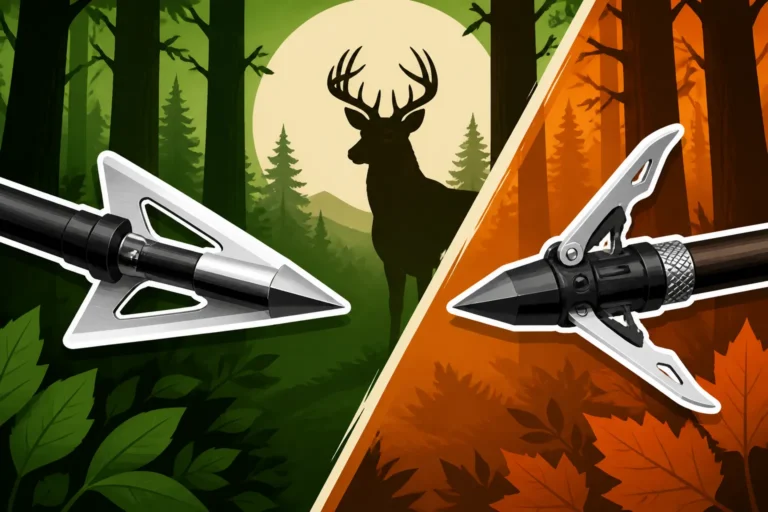
Fixed Blade Broadheads: These are the traditional choice, featuring two, three, or even four non-moving blades that are fixed to the ferrule. They are known for their ruggedness, reliability, and excellent penetration due to the energy being transferred directly to the cutting edge without any moving parts. Because the blades are always exposed, they offer a consistent cutting diameter. However, their fixed blades can sometimes catch air, making them more sensitive to tuning issues if your bow isn't perfectly set up or if the arrow spine isn't matched correctly. They can be more challenging to get to fly exactly like field points.
-
Mechanical Broadheads: Often called "expandable" broadheads, these feature blades that remain folded or tucked during flight and deploy upon impact, creating a larger cutting diameter than their fixed-blade counterparts. The main advantage is their field-point-like flight characteristics due to their compact profile in the air, which often makes tuning easier. This can be a huge confidence booster for hunters. The downside is that their deployment mechanism can sometimes fail, or they might not achieve the same penetration as fixed blades, especially on angled shots or heavy bone, though modern designs have significantly improved in this area.
-
Hybrid Broadheads: These are a newer category designed to offer the best of both worlds. They typically feature a smaller, fixed-blade cutting surface at the tip, coupled with two or more mechanical blades that deploy upon impact. This design aims to combine the robust penetration and reliability of a fixed blade (for initial entry and bone crushing) with the wider cutting diameter of a mechanical broadhead for maximizing blood trails. They often fly very well due to the smaller exposed fixed blades, making them a compelling option for many hunters. Each type has its devout followers, and your choice will often come down to your personal preferences, bow setup, and confidence.
Spine, GPI, and FOC Explained
These three terms are critical to understanding arrow performance and are often overlooked by new archers, leading to frustrating accuracy issues.
-
Spine: This refers to the stiffness of the arrow shaft. When an arrow is shot, it flexes around the bow (this is known as the archer's paradox). The spine rating indicates how much the arrow bends. A lower spine number (e.g., 300) means a stiffer shaft, while a higher number (e.g., 400) means a more flexible shaft. Matching your arrow's spine to your bow's draw weight and length is absolutely crucial for accuracy. An arrow that is too stiff or too weak will not fly true, especially with a broadhead on the front. Bow manufacturers and arrow companies provide charts to help you determine the correct spine.
-
GPI (Grains Per Inch): This is the weight of the arrow shaft itself, measured in grains for every inch of length. A higher GPI means a heavier shaft. Heavier arrows generally carry more momentum, which translates to better penetration, especially on larger game or when hitting bone. However, heavier arrows also fly slower and have a more pronounced trajectory drop over distance. Lighter arrows fly flatter and faster, which can be advantageous for judging yardage, but they might sacrifice some penetration energy. Finding the right balance between speed and momentum is a personal choice based on your hunting style and target animal.
-
FOC (Front of Center): This is the percentage of the arrow's total weight that is located in the front half of the arrow. It's a measure of how "nose-heavy" the arrow is. A higher FOC (typically 10-15% for hunting arrows) helps an arrow stabilize more quickly in flight, resist wind drift, and improve broadhead steering, leading to better accuracy and penetration. You can adjust FOC by using heavier inserts, broadheads, or even adding weight tubes to the front of the shaft. However, too much FOC can make an arrow "porpoise" or dive. It's a delicate balance, but understanding and optimizing your FOC can significantly improve your setup's downrange performance.
Choosing the Right Arrow for New Hampshire Hunting
Selecting the right arrow goes beyond just grabbing a dozen off the shelf. It’s about creating a harmonious system with your bow and broadhead that is perfectly suited for the demands of hunting deer in New Hampshire. The conditions you'll encounter – from dense hardwoods to open clearcuts – necessitate a thoughtful approach to arrow selection.
Matching Arrow Spine to Your Bow
This is arguably the most critical step in arrow selection. If your arrow's spine doesn't match your bow's draw weight and length, accuracy will suffer, especially when shooting broadheads. An arrow that is too flexible (underspined) will whip excessively upon release, causing erratic flight and often impacting left for a right-handed shooter. Conversely, an arrow that is too stiff (overspined) won't flex enough, impacting right. Both scenarios are detrimental to consistent accuracy.
To properly match the spine, you'll need to know your bow's peak draw weight, your actual draw length, and the cut length of your arrows. Arrow manufacturers provide detailed charts that cross-reference these factors to recommend the appropriate spine rating (e.g., 300, 340, 400). Don't guess here; consult these charts and consider getting professional assistance from an archery pro shop. Many factors, like cam design (aggressive vs. smooth), point weight, and even string accessories, can influence the dynamic spine of an arrow. Getting this right is foundational to achieving Tuning a Bow for Broadhead Flight.
For New Hampshire hunting, where shots might be through small lanes in thick cover, or at varying distances, having a perfectly spined arrow translates directly to confidence in your shot. You need to know that when you pick a spot, your arrow is going to go there. An improperly spined arrow will amplify any shooter errors and make precise shot placement extremely difficult, which is simply unacceptable for ethical hunting.
Arrow Material Considerations: Carbon vs. Aluminum
The material of your arrow shaft significantly impacts its durability, weight, and consistency. The two main players in hunting arrows are carbon and aluminum, with some hybrid options blending both.
-
Carbon Arrows: These are by far the most popular choice for modern bowhunters. Carbon shafts are known for their exceptional strength-to-weight ratio, allowing for lighter arrows that are still incredibly stiff and durable. They tend to recover from paradox quicker in flight, leading to faster stabilization. Carbon arrows are also less prone to bending permanently; they either break clean or retain their straightness. This durability is fantastic for hunting in New Hampshire, where arrows might occasionally glance off a small branch or hit hard ground. However, carbon can be more expensive, and if damaged (e.g., micro-fractures), they can fail catastrophically and dangerously, so careful inspection is crucial.
-
Aluminum Arrows: While less common for modern compound hunting, aluminum arrows still have their place. They are generally heavier than carbon for a given spine, offering potentially greater momentum and better penetration for those prioritizing it over speed. Aluminum shafts are also typically more affordable. Their main drawback is their tendency to bend permanently upon impact with a hard object. An arrow that looks straight but has a slight bend will fly erratically, so meticulous inspection after every shot is necessary. For hunters using traditional bows or those seeking maximum momentum and not overly concerned with speed, aluminum can be a viable, cost-effective option.
Many hunters will lean towards carbon for its blend of durability, performance, and weight, which makes it an excellent all-around choice for a range of New Hampshire hunting scenarios.
Arrow Weight and Momentum for Deer
When hunting whitetails in New Hampshire, you're not just looking for speed; you're looking for sufficient momentum to drive your broadhead through hide, muscle, and potentially bone. A common debate revolves around light, fast arrows versus heavier, slower arrows. While a faster arrow has a flatter trajectory and can be more forgiving if you misjudge yardage slightly, a heavier arrow carries more kinetic energy and momentum, which is crucial for penetration.
For deer, an arrow weight between 400 and 500 grains is a popular and effective range for most compound bows. An arrow in this range, launched from a bow with a decent draw weight, will generate ample kinetic energy and momentum for complete pass-throughs, which are essential for maximizing blood trails and ensuring quick recoveries. Factors like your chosen broadhead's weight, the insert/outsert weight, and the shaft's GPI all contribute to the overall arrow weight. Don't be afraid to add a bit of weight to the front end of your arrow (increasing FOC) as this can significantly boost penetration and improve flight characteristics.
Consider the typical shots you'll take in New Hampshire's diverse terrain. In dense woods, shots might be close, but deer can be quartering or behind brush, requiring maximum penetration. In more open areas, you might have slightly longer shots where a flatter trajectory is desired. Ultimately, finding the right balance for Best Arrow Weight for New Hampshire Deer for your specific bow, draw length, and hunting conditions will enhance your chances of success. It's often better to err slightly on the side of momentum for an ethical harvest.
Selecting Broadheads for New Hampshire Whitetails
The broadhead is the business end of your arrow, and its performance is paramount to a quick, clean kill. With the array of options available, choosing the right one can feel daunting. However, understanding the characteristics of each type and how they perform in real-world scenarios in New Hampshire's woods will simplify your decision.
Fixed Blade Broadheads: Pros and Cons
Fixed blade broadheads have been a staple of bowhunting for generations, and for good reason. Their simple, robust design means there are no moving parts to fail. They offer consistent cutting diameters, ensuring a reliable wound channel. When tuned correctly, fixed blades can be incredibly accurate and offer exceptional penetration, especially through bone, as all the energy is concentrated directly into the cutting edges. This makes them a favorite for many hunters who prioritize reliability and maximum penetration, especially when hunting larger animals or in situations where bone impacts are likely.
However, fixed blade broadheads aren't without their drawbacks. Due to their exposed blades, they can be more susceptible to wind drift and can exaggerate tuning issues in an improperly tuned bow. Getting them to fly exactly like your field points often requires meticulous broadhead tuning, which can be a time-consuming process. Additionally, their cutting diameter is fixed, meaning while they penetrate well, the wound channel might not be as wide as some mechanical options. When considering fixed blade broadheads for Best Broadhead for a New Hampshire Whitetail, think about your bow's tuning state and your willingness to put in the effort to ensure perfect flight. Many hunters swear by their reliability in thick New Hampshire hardwoods where hitting a sapling might happen.
Mechanical Broadheads: Understanding Their Design
Mechanical broadheads revolutionized bowhunting by offering field-point accuracy combined with devastating cutting diameters upon impact. Their blades are tucked away during flight, presenting a streamlined profile that largely eliminates wind planing and tuning issues often associated with fixed blades. This can be a huge advantage for hunters who want to simplify their setup and ensure consistent accuracy without extensive broadhead tuning. When these broadheads deploy, they create a significantly wider cutting diameter, leading to larger wound channels and often, more profuse blood trails, which is invaluable when Blood Trailing After Dark in New Hampshire.
However, the complexity of their design introduces potential failure points. Blades might not deploy correctly if they hit a glancing blow or heavy bone at an extreme angle. Some older designs might have a tendency to "rob" kinetic energy during deployment, slightly reducing penetration, although modern mechanicals have largely mitigated this concern. It's also crucial to choose a mechanical broadhead known for robust construction and reliable deployment. For hunters valuing accuracy and large wound channels, especially for broadside shots on whitetails, mechanical broadheads are an excellent choice. Make sure you check their legal expanded width according to New Hampshire regulations.
Hybrid Broadheads: Best of Both Worlds
Hybrid broadheads represent an innovative solution aimed at combining the best attributes of both fixed and mechanical designs. These broadheads typically feature a small, fixed cutting blade at the tip, along with larger mechanical blades that deploy on impact. The fixed tip provides immediate cutting and assists with penetration, particularly through hide and initial bone contact, ensuring that crucial initial wound channel. The deploying mechanical blades then expand to create a larger cutting diameter, maximizing hemorrhaging and blood trail visibility.
This design often allows for better flight characteristics than traditional fixed blades because the main exposed blades are smaller, reducing wind resistance and planing. At the same time, the fixed tip offers a layer of reliability that some hunters find reassuring compared to purely mechanical designs. For the New Hampshire hunter looking for a versatile broadhead that offers both reliable penetration and a generous wound channel, hybrids are a compelling option. They strike a balance, often flying true like field points while still delivering robust terminal performance. When thinking about Fixed Versus Mechanical Broadheads in Thick Cover, a hybrid often presents a strong middle-ground argument.
Tuning Your Archery Setup for Performance
Having the right arrow and broadhead is only half the battle. If your bow isn't properly tuned to shoot them, even the most expensive gear will perform poorly. Tuning is the process of making sure your arrow flies perfectly straight and true out of your bow, ensuring maximum accuracy and kinetic energy delivery to the target. It's an investment of time that pays dividends in confidence and ethical harvesting.
Paper Tuning and Bare Shaft Tuning
Paper tuning and bare shaft tuning are two fundamental methods for achieving optimal arrow flight. Both aim to eliminate any inconsistencies that cause the arrow to wobble or fishtail shortly after leaving the bow.
-
Paper Tuning: This involves shooting an arrow through a piece of paper suspended a few feet in front of the bow. The tear in the paper reveals how the arrow is exiting the bow. A perfect tear will show a small hole where the broadhead passed through, surrounded by three equally spaced fletching holes. Any other tear (e.g., nock high, nock low, nock left, nock right) indicates a tuning issue that needs to be addressed by adjusting the arrow rest, nocking point, or cam timing. It's a visual, quick way to identify major issues in your setup.
-
Bare Shaft Tuning: This is a more advanced and precise method. It involves shooting an arrow without fletching at a target at a short distance (e.g., 10-20 yards), alongside a fletched arrow. If the bare shaft impacts in the same spot as the fletched shaft, your bow is extremely well-tuned. Any deviation shows a tuning issue, similar to paper tuning, but often reveals more subtle problems. For New Hampshire hunters, especially those taking shots through tight windows, flawless arrow flight is essential. These tuning methods ensure your arrow leaves the bow cleanly, minimizing flight deviations that can be magnified over distance or by wind.
Broadhead Tuning for Perfect Flight
Even after your field points fly perfectly, broadheads can sometimes tell a different story. Broadhead tuning is the process of getting your broadheads to impact in the exact same spot as your field points. This is where many hunters get frustrated, as broadheads, especially fixed blades, can react differently to air currents than small field points.
The key to successful broadhead tuning often lies in micro-adjustments to your arrow rest or, in some cases, slight twists to your fletching or even minor adjustments to the broadhead itself if it's not perfectly aligned. It might also reveal a deeper issue with your arrow's spine or overall bow tune. The goal is to eliminate any broadhead "planing" – where the broadhead's cutting surfaces catch air and steer the arrow off course. This is particularly important for accuracy at varying ranges, as a broadhead that impacts differently than a field point at 20 yards will be significantly off at 40 or 50.
Many experienced hunters will recommend shooting a broadhead frequently during practice to build confidence and verify tune. For hunting New Hampshire's elusive whitetails, knowing that your broadhead will hit exactly where you aim is invaluable. This is an area where investing time with a good pro shop can save you a lot of heartache in the field.
Arrow Fletching and Helical Options
The fletching on your arrow plays a significant role in its stability and accuracy, especially with broadheads. Fletching comes in various sizes, materials (plastic vanes or natural feathers), and configurations.
-
Vane Size: Larger vanes provide more steering and stabilization but can also create more drag, slowing the arrow slightly. Smaller vanes offer less drag and flatter trajectory but require a more precisely tuned bow. For broadhead stability, especially with fixed blades, slightly larger vanes (e.g., 2-inch or 3-inch) are often preferred.
-
Offset vs. Helical: Fletching can be applied straight (no offset), with an offset (a slight angle to the shaft), or with a helical (a more pronounced twist around the shaft). A helical fletch, which imparts a spin on the arrow, is generally considered superior for broadhead flight stabilization. This spin acts like a rifle bullet, helping the arrow maintain its orientation and resist external forces like wind. While offset and helical fletching create a bit more drag than straight fletching, the added stability for broadheads is well worth the slight loss in speed. For New Hampshire hunting, where conditions can vary from still mornings to gusty afternoons, the extra stability provided by a helical fletch can make a real difference in your downrange accuracy.
Choosing the right fletching and ensuring it's applied correctly are often overlooked but crucial steps in optimizing your arrow and broadhead setup for the field.
Field Care and Maintenance for Arrows and Broadheads
Your hunting arrows and broadheads are precision instruments. Just like your bow, they require ongoing care and maintenance to perform at their peak. Neglecting them can lead to unexpected failures, poor accuracy, and potentially, an unethical shot in the field. This is especially true when hunting in New Hampshire where conditions can be tough on gear.
Inspecting Arrows for Damage
After every shot, and especially before heading out for a hunt, thoroughly inspect each of your arrows for any signs of damage. This is a critical safety and performance check.
- Shaft Integrity: Carbon arrows, while durable, can develop micro-fractures, especially after hitting a hard object. Flex the shaft firmly, listening for any creaking or cracking sounds, and run a cloth or cotton ball along the entire length; any fibers catching could indicate a splinter or crack. Never shoot a damaged carbon arrow, as it can shatter dangerously upon release. Aluminum arrows should be rolled on a flat surface to check for any bends. Even a slight bend can cause significant accuracy issues.
- Fletching Condition: Check that all fletchings are firmly attached and not bent, torn, or missing. Damaged fletching will cause erratic arrow flight. If a vane is damaged, it's best to replace it or re-fletch the arrow.
- Nock and Insert: Ensure the nock isn't cracked or damaged and that it snaps onto your string securely but not too tightly. Check that your insert (or outsert) is still firmly glued into the shaft and isn't loose or wobbling. A loose insert can dramatically affect arrow flight and broadhead alignment.
Maintaining your arrows in pristine condition ensures they will perform exactly as you expect when that critical moment arrives in the New Hampshire woods.
Sharpening Fixed Blade Broadheads
The sharpness of your broadhead is directly tied to its effectiveness and ethical performance. A dull broadhead will push tissue instead of cutting it, resulting in poor penetration and a less-than-ideal wound channel. For fixed blade broadheads, maintaining razor sharpness is an ongoing task.
Many fixed blade broadheads come factory sharp, but after practice shots (even into foam targets) or just rattling around in your quiver, they can lose their edge. Invest in a good broadhead sharpener designed for multi-angle blades. Practice sharpening until you can achieve a truly hair-popping edge. Some hunters prefer to sharpen their broadheads right before a hunt or even the night before, ensuring maximum cutting potential. A simple test is to lightly touch the blade to your thumbnail; if it bites in and wants to stick, it's sharp. If it slides, it's dull.
Remember, a broadhead's job is to cut, causing rapid blood loss. This cannot happen effectively with a dull blade. Taking the time to properly sharpen your fixed blade broadheads is a sign of respect for the animal you're pursuing and a commitment to an ethical harvest. This small but crucial step is often overlooked by new hunters.
Maintaining Mechanical Broadheads in the Field
While mechanical broadheads don't require sharpening in the same way fixed blades do, they have their own maintenance needs, particularly for those used during practice or carried for extended periods.
- Blade Replacement: Many mechanical broadheads come with replaceable blades. After a practice session where blades have deployed into a target, or certainly after harvesting an animal, it's highly recommended to replace the blades. Even if they appear sharp, impact can dull them or bend them subtly, impacting performance. Keep spare blades on hand.
- Mechanism Check: Regularly inspect the deployment mechanism. Ensure any O-rings, springs, or retention clips are in good condition and functioning properly. For instance, some mechanicals use O-rings to hold the blades closed; these can wear out or become brittle in cold weather.
- Lubrication: Some mechanical broadheads benefit from a tiny drop of light oil on their pivot points or spring mechanisms to ensure smooth and reliable deployment, especially if they've been exposed to moisture or extreme cold in the New Hampshire climate. Consult the manufacturer's recommendations for proper care.
Even if you rely on the "field point accuracy" of mechanicals, a quick check of your broadheads before heading into the stand is a wise habit. You want to be sure that when it's time for that crucial shot, your mechanical broadhead will deploy exactly as designed.
Safety Considerations for Archery Hunting
Beyond the legalities and equipment choices, safety must always be at the forefront of any hunting endeavor. Archery hunting, while generally considered safer than firearms hunting in terms of immediate discharge risk, still carries significant responsibilities, particularly regarding shot placement and ethical recovery. For New Hampshire hunters navigating varied terrain, these considerations are paramount.
Practicing Ethical Shot Placement
The most crucial safety consideration in archery hunting is ensuring an ethical, humane kill. This starts with relentless practice and a deep understanding of deer anatomy. Your goal is always a shot that targets the vital organs – the heart and lungs – for a quick, humane harvest. This typically means a broadside or slightly quartering-away shot.
Practicing regularly, not just at a fixed distance but at varying ranges and from different positions (e.g., from a tree stand, kneeling, or simulating shooting around brush), builds the muscle memory and confidence needed for precise shot placement. Know your effective range and stick to it. Never take a shot you're not 100% confident in, especially if the angle is poor, the deer is moving erratically, or your line of sight is obstructed. For those Hunting New Hampshire's Archery Season Into December, cold weather can stiffen muscles and affect judgment, making practice even more vital. Remember, an ethical shot means knowing your limitations and respecting the animal.
Safe Handling and Storage of Equipment
Your bow and arrows, particularly broadheads, are dangerous tools and must be handled with utmost care.
- Broadhead Safety: Always keep broadheads covered in a quiver when not actively hunting or practicing. Many quivers are designed to protect you from sharp blades and to protect the blades from damage. Never walk with an uncovered broadhead in your hand. When attaching or detaching broadheads, do so carefully, away from your body, and ensure the arrow is pointed in a safe direction.
- Bow Handling: Treat your bow with the same respect you would a firearm. Never dry-fire a compound bow, as this can cause catastrophic damage to the limbs and cams, potentially leading to serious injury. Always be aware of where your arrow is pointed, even when nocked.
- Storage: Store your bow and arrows in a safe, secure location, preferably in a case or designated area, away from children and unauthorized access. Proper storage also protects your equipment from environmental damage (e.g., extreme temperature fluctuations, moisture) that can affect its performance. For instance, fletching can warp if left exposed in a hot car, and broadheads can rust.
Following these simple safety protocols protects you, others, and ensures your gear remains in top condition for hunting season.
Blood Trailing and Recovery Gear
Even with a perfectly placed shot, deer don't always drop in their tracks. Effective blood trailing is often the final, critical step in an ethical harvest. Having the right recovery gear can make all the difference, especially when hunting in New Hampshire's dense cover or after dark.
- Tracking Lights: A good headlamp or flashlight is essential, particularly if you're tracking in low light or after sunset. Consider a specialized blood-trailing light, which uses certain light spectrums to make blood stand out more against foliage.
- GPS/Mapping App: A reliable GPS device or a mapping app like GoHunt on your phone (with downloaded offline maps!) is invaluable for marking the last known location of the deer, the blood trail, and the point of recovery. This prevents getting disoriented, especially in unfamiliar terrain or when Reading a White Mountain Deer Yard.
- Gloves and Markers: Disposable gloves are a good idea for hygiene when handling game. Biodegradable flagging tape or glow sticks can be used to mark the blood trail intermittently, helping you stay on course.
- Knife and Game Bags: A sharp field dressing knife and quality game bags are crucial for properly processing your animal once recovered, especially if you have a long pack out.
Planning for recovery before the shot is a vital part of responsible hunting. Having the right gear and a clear plan helps ensure you can successfully locate and retrieve your game, completing the hunt ethically.
Maximizing Your Setup for Success
Beyond the technical details of arrows and broadheads, maximizing your success in New Hampshire archery boils down to consistent practice, understanding hunting conditions, and adapting your strategy. It’s about building confidence in your entire system.
Practice Regimen and Shot Drills
Your equipment is only as good as the person using it. Consistent practice is the cornerstone of successful archery hunting. It's not just about shooting at a target; it's about making every shot count when it matters most.
- Varying Distances: Don't just shoot at 20 yards. Practice at all distances you might reasonably take a shot, from 10 to 50 yards (or your personal ethical limit). This helps you learn your pin gaps and trajectory.
- Realistic Scenarios: Practice from your treestand or ground blind. Shoot while kneeling, sitting, or after a brisk walk to simulate heart rate changes. Simulate shooting at different angles, including uphill and downhill. Use a 3D deer target to practice vital zone placement.
- Broadhead Practice: Regularly shoot your broadheads, not just field points, to confirm they are flying true and to build confidence in your hunting setup. This ensures there are no surprises when you’re out in the woods. While broadheads can be expensive, even a few shots each week can make a huge difference.
A rigorous and varied practice regimen will build muscle memory, strengthen your mental game, and instill unwavering confidence in your ability to make an ethical shot when the moment arises in the New Hampshire wilderness.
Understanding Shot Angles and Distances
New Hampshire's varied topography and dense cover mean you'll rarely get a perfect, textbook broadside shot in an open field. Deer might be quartering away, slightly quartering towards, or in dense timber, offering only a small window. Understanding how to adapt your aim point for different angles is crucial for hitting the vitals.
- Broadside: Aim directly behind the shoulder, one-third of the way up the body.
- Quartering Away: Aim further back, towards the opposite shoulder, ensuring the arrow exits through the vitals. This is often an ideal shot angle for maximum penetration.
- Quartering Towards: Generally, avoid this shot. If taken, the aim is to penetrate the chest from the front, but the risk of hitting non-vital shoulder bone or gutting the animal is much higher. Many ethical hunters will pass on this shot entirely.
Always use a rangefinder to confirm distances. Misjudging yardage, even by a few yards, can result in a missed shot or, worse, a wounded animal. New Hampshire's rolling hills and dense woods can make judging distance tricky, so reliable rangefinding is indispensable. Understanding these angles and Hunting a Ridge-Top Saddle for Rutting Bucks will dramatically improve your chances of a clean, ethical harvest.
Adapting to New Hampshire's Terrain
New Hampshire hunting isn't a flatland stroll. From the rugged peaks of the White Mountains to the swampy lowlands of the Connecticut River Valley, the terrain presents unique challenges that influence your gear choices and shooting strategy. Your arrow and broadhead setup needs to perform reliably regardless of where you are.
For instance, hunting in thick, brushy areas requires an arrow that penetrates well, potentially through light cover or heavy hide, and a broadhead that performs consistently even if it glances off a small twig. Heavy FOC arrows and robust fixed blades often shine here. If you're hunting in open areas or clear-cuts, where longer shots are possible, a flatter-shooting arrow with good broadhead flight stability becomes more critical.
Consider also the climate. The early season can be warm and humid, while late season brings freezing temperatures, rain, and snow. Ensure your fletching glue, broadhead components, and arrow shafts are all capable of performing in these varied conditions. Using a platform like GoHunt can help you analyze terrain features and identify potential shot scenarios before you even step foot in the woods, allowing you to tailor your gear and practice to the specific challenges you'll face. Being prepared for New Hampshire's diverse and often demanding environment is a key component of success.
| Broadhead Type | Key Advantage | Key Disadvantage | Best Use Case | New Hampshire Suitability |
|---|---|---|---|---|
| Fixed Blade | Maximum penetration, reliable | Can be harder to tune for accuracy | Heavy bone, large game, dense cover | Excellent for thick woods, robust |
| Mechanical | Field point accuracy, large cut | Potential deployment failure | Open country, precise shot placement, shorter ranges | Good for open fields, faster flight |
| Hybrid | Combines fixed reliability with expanded cut | More complex than fixed blade | Versatile, combines benefits, good flight | Strong all-around choice for diverse terrain |
Disclaimer
This article is for general informational purposes only and does not constitute professional advice. Laws, prices and regulations vary by location and change over time. Consult a qualified professional for guidance on your specific situation.