Duck Decoy Spreads for New Hampshire’s Connecticut River
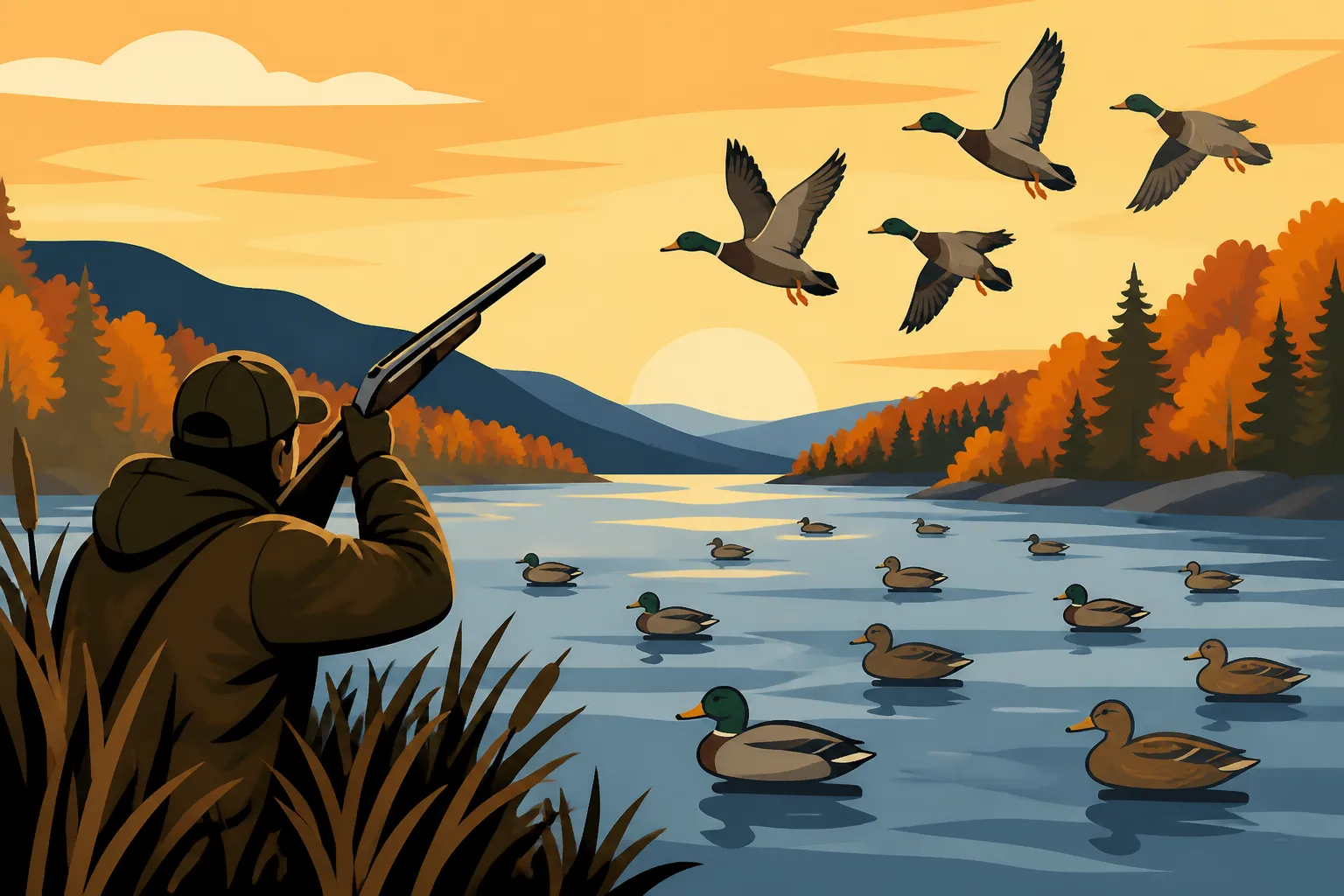
Hunting ducks on the Connecticut River presents a unique blend of challenge and reward. This isn't your average farm pond or quiet marsh; the sprawling, ever-changing waters of the Connecticut demand a thoughtful, adaptable approach to your decoy spread. If you've ever felt like your decoys were just floating aimlessly or that ducks were consistently shying away, this guide is for you. We'll dive deep into how to set up effective decoy spreads that fool even the wariest of birds on New Hampshire's mighty Connecticut.
The Unique Dynamics of Decoying on the Connecticut River
Anyone who’s spent time on the Connecticut River knows it’s a living, breathing entity. It’s far more complex than a static body of water, and understanding its dynamics is the first step to truly effective duck decoying. You can’t just toss out a dozen blocks and expect magic; you need to think like the river itself, and more importantly, like the ducks that call it home.
Navigating the Currents and Water Levels
The most obvious and often frustrating aspect of hunting the Connecticut River is its current. It can range from a gentle drift in wider, slower sections to a surprisingly strong pull around bends, bridges, or narrows. This current isn't just a force to fight against when setting anchors; it's a tool you can use to make your spread look incredibly lifelike. Ducks naturally orient themselves into the current when resting or feeding, letting the water bring food to them or provide an easier takeoff.
Beyond the current, water levels can fluctuate dramatically, especially after heavy rains or snowmelt in the spring, which can affect things even into the early hunting seasons. What was a perfect sandbar or shallow flat one day might be a deep, rushing channel the next. This means your scouting needs to be continuous, and your decoy spread strategy must be flexible. A fixed spread that works wonders at low water could be completely ineffective or even impossible to set up when the river is running high. Think about how the water moves, where natural eddies form, and where ducks might seek refuge from the main flow. This often shifts day by day, sometimes even hour by hour.
Diverse Habitats: From Main Channel to Backwaters
The Connecticut River isn't just one big river; it's a complex ecosystem with countless variations along its length. You have the broad, open main channel, often deep and fast, which might be attractive to divers or ducks simply flying through. But then you have myriad oxbows, quiet backwaters, flooded timber pockets, beaver flowages, and small tributaries that feed into the main stem. Each of these habitats attracts different species of ducks and requires a tailored approach to your decoy spread.
For example, mallards, wood ducks, and black ducks often favor the shallower, more protected areas — the flooded timber, the edges of beaver ponds, or slow-moving oxbows. These spots usually call for more natural, compact spreads that mimic small family groups. Divers like goldeneyes or mergansers, on the other hand, might be found in the more open, deeper sections of the main channel or larger pools. Their spreads will typically be larger, more spread out, and designed to be seen from a distance. Knowing which species you're targeting and what kind of water they prefer is crucial. This diversity is what makes the Connecticut so exciting, but also why a one-size-fits-all decoy approach just won't cut it. You might even find yourself hunting different species with completely different setups within a mile or two of each other.
Dealing with Public Pressure and Boat Traffic
Let's be realistic: the Connecticut River is a public resource, and you're not going to be the only one out there. You'll encounter other hunters, boaters, kayakers, fishermen, and sometimes even commercial traffic. Ducks on heavily hunted rivers like the Connecticut become incredibly wise to patterns and anything that looks unnatural. They've seen it all, and they've learned to avoid obvious setups.
This means your decoy spread needs to be as subtle and realistic as possible. Over-decoying can be just as bad as under-decoying on pressured birds. Sometimes, less is more. You also need to consider how your spread will interact with boat traffic. You don't want decoys getting tangled in propellors or creating a hazard. Setting up in quieter, less accessible pockets can help, but even then, you need to expect some disturbance. Adaptability is key; if birds are flaring from your main channel spread due to constant boaters, maybe it's time to pull up and move to a secluded backwater. This is where good scouting, perhaps even using a mapping tool like GoHunt to identify less accessible zones, can really pay off in finding those quieter hideaways where ducks feel more comfortable. Hunting New Hampshire's White Mountain National Forest might offer quieter land-based hunting, but on the river, you have to be ready for company.
Choosing the Right Decoys for the Connecticut's Ducks
The right decoys can make or break your hunt on the Connecticut. It's not just about having any decoys, but about having the right decoys for the specific conditions and species you're pursuing.
Species-Specific Decoys and Their Importance
On the Connecticut River, you'll encounter a mix of dabblers (like mallards, black ducks, wood ducks, and wigeon) and divers (such as goldeneyes, buffleheads, and various mergansers). Each species has its own visual cues and preferences. Using species-specific decoys is incredibly important for realism. A mallard flock isn't going to readily commit to a spread full of goldeneye decoys, and vice-versa. While a mixed bag is often the goal, a core of realistic decoys for the dominant species you expect to encounter will be your primary draw.
For dabblers in the quiet backwaters or slower sections, focus on mallards, black ducks, and wood ducks. These birds often feed in shallower water and their decoys should reflect that. If you're targeting the main channel for divers, a spread of goldeneyes or buffleheads will be more effective. Don't be afraid to mix in a few different species that naturally associate with each other, but avoid creating a "zoo" effect with every duck known to man. A small, realistic spread of 6-12 high-quality, species-specific decoys often outperforms a huge spread of generic blocks. New Hampshire Duck and Goose Bag Limits often involve several species, so having options is good.
Enhancing Realism with Motion and Confidence Decoys
Ducks are constantly moving, even when resting. A static spread of decoys, especially on moving water, can look unnatural to wary birds. This is where motion decoys come into play. Simple jerk strings can create ripples and head movements that mimic feeding birds, instantly bringing your spread to life. Battery-operated spinning wing decoys, often called "mojo" decoys, can be incredibly effective, especially on calm days or in low light, by providing a visual flash that catches distant birds' attention. However, on heavily pressured rivers, sometimes less motion is more, as ducks can get wise to unnatural "spinners." Use them strategically.
Beyond motion, consider adding confidence decoys. These aren't necessarily ducks, but other waterfowl or birds that ducks naturally associate with safety and good feeding. A few full-bodied Canada goose decoys, even if you're not targeting geese, can make your spread seem more inviting and safe. Mallards and Geese on the Connecticut River often feed together. Coots or even a great blue heron decoy placed on a sandbar can add to the illusion that your area is a calm, undisturbed feeding spot. Just make sure whatever confidence decoys you use are realistic and appropriate for the habitat. A heron decoy in deep, fast water doesn't make much sense.
Durability and Maintenance in River Environments
The Connecticut River is tough on gear. Strong currents can put stress on anchors and lines, rocks and snags can damage keels and paint, and fluctuating water levels can leave decoys exposed to the elements or hidden underwater. Investing in durable decoys is a wise choice. Look for decoys made from tough plastics that can withstand bumps and scrapes. Paint schemes that are baked on or deeply embedded will last longer than thin coatings.
Regular maintenance is also crucial. Check your decoy lines and anchors after every hunt for fraying or damage. Repaint chipped areas to keep your decoys looking realistic – dull, faded, or chipped decoys are a dead giveaway to wary birds. Store your decoys properly to prevent sun damage and crushing. A little care goes a long way in ensuring your investment lasts for many seasons on the challenging Connecticut. Keeping spare parts, like extra weights or clips, in your decoy bag can save a hunt if something breaks on the water.
Master Duck Decoy Spreads for River Success
Now that we've talked about the river and the decoys, let's get into the art of arranging them. There are classic spreads, but the real key is knowing how and when to adapt them for the Connecticut.
Tried-and-True Spreads for Moving Water
Several classic decoy spreads have proven effective for river hunting, mainly because they take advantage of the current. The goal is to create a realistic, inviting landing zone that looks natural from a duck's perspective.
-
The "J-Hook" or "Fishhook" Spread: This is a fantastic option for rivers. You set your decoys in a long line or arc, with the main body of the "hook" extending upstream into the current, and the "bend" or "tail" sweeping downcurrent. The open part of the "J" creates a natural, current-free landing zone for ducks to approach from upstream and settle into. Often, you'll place a few "feeders" at the top of the hook, with the bulk of your blocks downcurrent, mimicking ducks that have already landed and are working their way down. This spread offers a clear approach and landing strip.
-
The "U-Shape" or "Funnel" Spread: Similar to the J-hook, this spread creates an open water landing zone, usually in the middle or slightly downcurrent from your blind. The decoys form a "U" or "V" shape with the open end facing upstream, inviting ducks to land within the "U" and drift towards you. This spread is excellent for guiding birds directly into your shooting lane. You can use heavier anchors on the upstream decoys to keep them from pulling into the open pocket you're trying to create.
-
Small Group or "Family" Spreads: Sometimes, particularly on pressured sections of the river or in smaller backwaters, a large spread can be intimidating. Breaking your decoys into several small, natural-looking clusters – a pair here, three or four dabblers there – can be very effective. This mimics small groups of birds feeding or resting together, which is often what ducks on the Connecticut see. Place these clusters strategically around current breaks or small eddies where ducks would naturally congregate. Remember, ducks are often looking for safety and food in small, unpressured groups.
Here's a quick comparison of some common spreads:
| Spread Type | Best for | Ideal Conditions | Pros | Cons |
|---|---|---|---|---|
| J-Hook / Fishhook | Rivers, guiding approach, dabblers | Moderate current, open river edges | Creates clear landing zone, looks natural | Requires specific current direction |
| U-Shape / Funnel | Rivers, guiding approach, dabblers/divers | Moderate to strong current, wider areas | Directs birds into shooting lane, versatile | Can be pulled out of shape by strong current |
| Small Group / Family | Pressured birds, backwaters, quiet eddies | Low current, tight spaces | Very realistic, less intimidating | Less visibility from a distance |
| Open Water Diver String | Main channel, divers, large water bodies | Strong current, deep water | Highly visible, mimics raft of divers | Requires many decoys, can be hard to manage |
Adapting Spreads to Specific River Features
The beauty of hunting the Connecticut is its varied landscape, and your decoy spreads need to reflect that. Don't be afraid to break from the "textbook" spreads and adapt to what the river is giving you.
-
Current Breaks and Eddies: These are prime locations for ducks to rest and feed out of the main current. Look for fallen trees, large rocks, points of land, or even subtle changes in depth that create swirling, slower water. Set your decoys right on the edge of these current breaks, with a few positioned just inside the calmer water, mimicking birds enjoying the easy ride. The main flow of the river will help create realistic motion without needing extra devices.
-
Shallow Flats and Sandbars: When water levels are right, exposed or barely submerged sandbars and shallow flats become magnets for dabblers. Here, you can spread your decoys out more, mimicking a flock feeding in safety. Add a few confidence decoys, like a few full-body goose floaters, on the sandbar itself. These areas are fantastic for "loafing" spreads where birds are simply resting. A Hunting a Beaver Flowage Edge also creates these kinds of still-water opportunities.
-
Timber and Brushy Edges: In backwaters or flooded sections, ducks will often hug the timber line or brushy edges for cover. Place your decoys very close to this cover, often right up against the branches. This makes your spread look like birds seeking shelter or feeding in protected spots. Wood duck decoys are particularly effective here, and you might even consider adding a few mounted on poles to give the illusion of ducks sitting on logs or stumps. Always consider the line of flight birds will take when approaching such a spot – they'll often come in low, following the cover.
Integrating Geese and Divers for a Mixed Bag
Sometimes, ducks and geese will readily intermingle on the Connecticut River, especially in larger fields adjacent to the river or wider sections of the main channel. Don't underestimate the power of a few goose decoys to add confidence to your duck spread. They make the area look safer and more appealing. A small "honker block" of 3-5 full-bodied goose decoys near your duck spread can be a game-changer. These might be field decoys placed on a nearby bank if you're hunting from the water, or floating goose decoys mixed into the periphery of your duck spread.
If you're in a section of the river known for divers, don't hesitate to add a separate string or block of diver decoys. These birds often prefer deeper, more open water and will not readily commit to a shallow dabbler spread. By having a distinct group of diver decoys, perhaps a string of goldeneyes or buffleheads anchored in the main current, you appeal to those fast-flying birds while still attracting dabblers to your main spread. Think of it as creating multiple attractive zones. Just remember to use species-appropriate decoys; New Hampshire Waterfowl Season and Zones allow for a wide variety of birds.
Strategic Placement and Setup for Maximum Attraction
Beyond the shape of your spread, where you put it and how you position yourself are equally vital. It's about creating an irresistible scene while remaining utterly invisible.
Anchoring Systems and Keeping Decoys in Place
The Connecticut River's current is relentless, and a poorly anchored decoy spread will quickly become a scattered mess downriver. You need robust anchoring systems. For individual decoys, heavier weights are often necessary, especially in the main channel or faster flows. Mushroom anchors in the 4-6 oz range are often preferred over lighter ones, or even 8-10 oz weights for larger decoys or strong currents.
Beyond individual anchors, consider a "gang rig" or "Texas rig" for easier deployment and retrieval. A gang rig involves tying several decoys to a single main line, with smaller droppers off the main line. You then use a large, heavy anchor at each end of the main line. This works particularly well for diver spreads in open water. Texas rigs use a heavy lead weight slid onto a monofilament line, crimped at one end to the decoy keel and at the other to a large loop or snap swivel. This allows decoys to slide freely on the line, preventing tangles and making deployment and retrieval much faster.
When setting up, always start your anchor upstream and let the current do the work of deploying the decoy line. When retrieving, pull the upstream anchor first, then work your way down the line. This minimizes getting tangled and fighting the current unnecessarily. Make sure all your lines are long enough to reach the bottom and allow the decoys to ride naturally, but not so long they tangle. A good rule of thumb is twice the depth of the water, plus some extra for slack.
Concealment and Approaching Your Spread Undetected
The best decoy spread in the world won't matter if the ducks see you first. Concealment on the Connecticut River is paramount. Ducks are constantly looking for danger from above, and anything that stands out – a shiny face, a bright jacket, or an exposed boat – will send them flaring.
-
Blind Placement: If hunting from a bank, find natural cover like dense brush, tall grass, or fallen trees. Enhance it with local vegetation. If hunting from a boat, invest in a quality boat blind that blends seamlessly with the surroundings. Brush it in heavily, making sure no gaps allow light to shine through. Position your blind downwind of your spread, if possible, allowing ducks to land into the wind and present an easier shot as they turn into your decoys. Also, try to keep the sun at your back so ducks are looking into it as they approach.
-
Approach Routes: Think about how you'll get to your blind and decoys without spooking birds. This might mean an early morning walk through the woods, or a quiet paddle in your boat long before shooting light. Avoid walking or boating through the area you intend to hunt immediately before setting up. Be aware of your silhouette against the sky, especially on river banks or open stretches. Even a mapping app like GoHunt might show terrain features that can help plan a discreet approach. Scouting New Hampshire Public Land Before Season is crucial for identifying these routes.
Scouting and Reading the River Before You Hunt
You can't just show up and expect to be successful. The Connecticut River changes daily, and successful hunters are constantly scouting. Spend time observing without a gun. Use binoculars to watch where ducks are feeding, resting, and flying.
-
Observe Duck Behavior: Are they using the main channel or tucked into a backwater? Are they diving or dabbling? What time of day are they most active? How are they reacting to other boat traffic or other hunters? This observation will tell you what kind of decoys and what kind of spread will be most effective. Pay attention to how they approach and land – this dictates your landing zone placement.
-
Read the Water: Look for those current breaks, eddies, and shallow spots. Notice where debris collects – that's where ducks might be resting. Observe the flow of the current and how it might carry your decoys. Check water levels from day to day; a small drop or rise can completely change a hotspot. Early season, look for natural food sources along the banks or submerged vegetation. Later in the season, Late-Season Food Sources for New Hampshire Whitetails are important, and for waterfowl, it could be anything from flooded agricultural fields to naturally occurring wild rice.
By being a diligent student of the river, you'll gain an invaluable edge. Every successful hunt on the Connecticut is a direct result of time spent scouting and understanding the nuances of that particular stretch of water.
Essential Gear and River Safety for Decoy Setups
Hunting the Connecticut River isn't just about decoys; it's about being prepared for the environment and prioritizing safety. The river can be beautiful, but it can also be unforgiving.
Waders, Boats, and Decoy Bags for River Hunts
-
Waders: Good quality waders are non-negotiable for river hunting. You'll be wading to set and retrieve decoys, push through shallow spots, and perhaps even retrieve downed birds. Chest waders are almost always preferred over hip waders, as water depths can be unpredictable. Look for durable, puncture-resistant material and insulated options for late-season hunts when the water gets truly frigid. Neoprene or breathable waders with layering underneath are solid choices. Make sure your boots have good traction for slippery river bottoms. Waders for New Hampshire Waterfowl Hunting are an investment you won't regret.
-
Boats: Depending on the section of the Connecticut you're hunting, a boat might be essential. A stable jon boat, canoe, or kayak can provide access to otherwise unreachable spots, allow you to haul a significant number of decoys, and serve as a mobile blind. Ensure your boat is appropriate for the current and conditions you expect. Always have a paddle, anchor, and safety gear on board. For hauling gear and decoys, a flat-bottomed boat is often best.
-
Decoy Bags: River hunting means carrying more weight and gear. Heavy-duty decoy bags are a must. They protect your decoys from damage, keep them organized, and make transport easier. Mesh bags allow water to drain, preventing mildew and making cleanup simpler. Consider bags with shoulder straps or backpack-style straps if you need to hike to your launch point.
Safety Considerations: Current, Cold Water, and Visibility
River hunting, especially on a large river like the Connecticut, carries inherent risks that demand respect and preparation.
-
Current Awareness: Never underestimate the current. Always know your capabilities and the river's conditions. If the current is too strong, or water levels are dangerously high, it's better to stay home. Always wear a PFD (personal flotation device) if you're in a boat or wading in deep, swift water. If you fall in, a PFD can be a lifesaver.
-
Cold Water Immersion: Even on a mild fall day, the Connecticut River's water can be dangerously cold. Accidental immersion can lead to hypothermia rapidly. Dress in layers, including a waterproof outer layer, and avoid cotton, which loses its insulating properties when wet. Carry spare, dry clothing in a waterproof bag. Let someone know where you're going and when you expect to return. Layering for New Hampshire's Cold Hunting Season applies just as much to waterfowl hunting as it does to deer hunting.
-
Visibility: In addition to wearing blaze orange when hunting on land during certain seasons, if you're boating on the river, ensure your vessel has proper navigation lights before dawn and after dusk. Be aware of other boaters and make yourself visible. If you're wading, remember that boats might not see you, especially in low light. Some hunters even wear a small reflective vest over their camo when moving or setting up, removing it once settled in their blind.
The Importance of a Reliable Retrieve System
When you drop a duck over the water, especially in current, having a way to retrieve it quickly and safely is vital.
-
Retrieval Devices: A long retrieving pole with a hook or grapple can be invaluable for pulling in downed birds that drift out of reach or get caught in snags. A trained retrieving dog is, of course, the ultimate retrieve system. If you don't have a dog, consider bringing a small, dedicated retrieval boat (like a kayak or canoe) if your main boat is too cumbersome.
-
Dog Safety: If you hunt with a dog, ensure they are wearing a dog vest for visibility and warmth, especially in cold water. Make sure they are well-trained to stay in the blind until commanded to retrieve, and that they understand commands in challenging river conditions. Your dog is a hunting partner, and their safety is paramount.
By taking these gear and safety considerations seriously, you can enjoy many successful and safe hunts on the beautiful and challenging Connecticut River.
Disclaimer
This article is for general informational purposes only and does not constitute professional advice. Laws, prices and regulations vary by location and change over time. Consult a qualified professional for guidance on your specific situation.