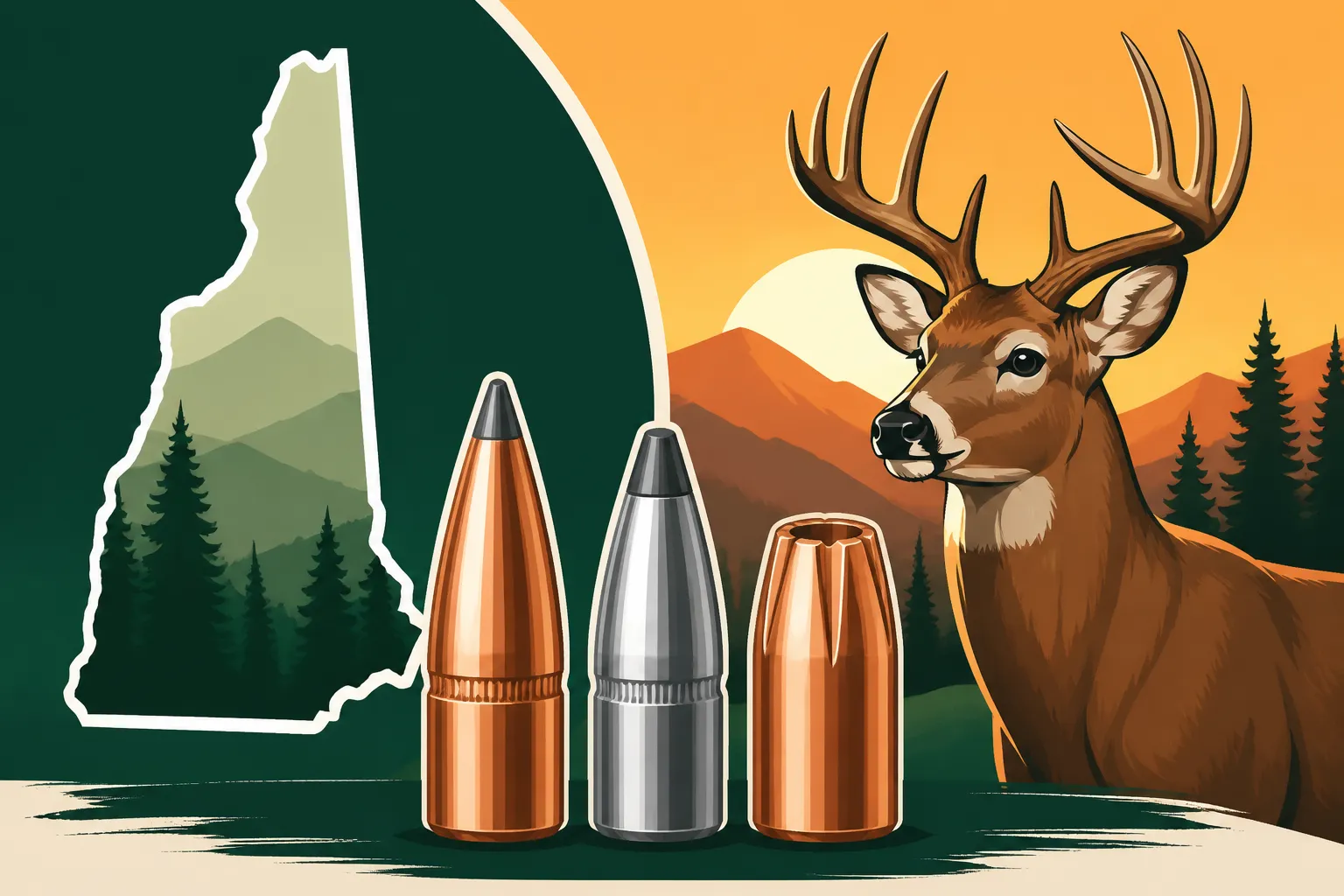
Best Bullet Weight for New Hampshire Whitetails
Choosing the right bullet weight for your New Hampshire whitetail hunt can feel like an endless rabbit hole of opinions and ballistics charts. You want to make sure you're using something effective, something that will put that buck down cleanly and quickly, but sometimes the sheer volume of information out there just adds to the confusion. It's not just about bigger is better, or lighter is faster; it's about finding the sweet spot for your rifle, your hunting style, and the very specific conditions you'll face in the Granite State. This guide will help you cut through the noise and understand how to select the best bullet weight for New Hampshire whitetails, ensuring you're ready for whatever the woods throw at you.
Understanding New Hampshire's Deer Hunting Landscape and Ballistics
Hunting in New Hampshire isn't like hunting in some wide-open western states. Our terrain here is a mix of dense hardwoods, thick softwoods, rolling hills, rocky ledges, and open fields, all of which play a huge role in how a bullet performs and what shot opportunities you're likely to get. Understanding this landscape is the first step in making an informed decision about bullet weight.
The Terrain and Shot Distances You'll Encounter
Think about where you hunt in New Hampshire. Are you still-hunting through the thick timber of the White Mountain National Forest, hoping for a close-range encounter? Or are you sitting on the edge of an old apple orchard in the Lakes Region, potentially needing to reach out across a longer distance? The reality for most of us is a mix of both. In the dense woods, shots are often under 75 yards, sometimes as close as 20 or 30. Deer can appear and disappear like ghosts. However, if you find yourself on a powerline cut, an open field, or a ridge overlooking a logging road, that shot might stretch out to 150, 200, or even 250 yards.
This variability means your bullet needs to perform reliably at a range of distances. It needs to have enough energy to ethically harvest a deer at the longer end of your comfort zone, but also be robust enough not to prematurely fragment on a close-range shot, especially if you hit bone. Over-penetration isn't generally a concern on whitetails, but under-penetration or insufficient energy transfer certainly is. The goal is consistent, controlled expansion and deep penetration to reach vital organs, regardless of the distance or the size of the deer. This is where researching bullet characteristics can really pay off; a tool like GoHunt's ballistic calculator can help you visualize how different loads perform at various ranges you might experience.
The Importance of Bullet Construction Over Pure Weight
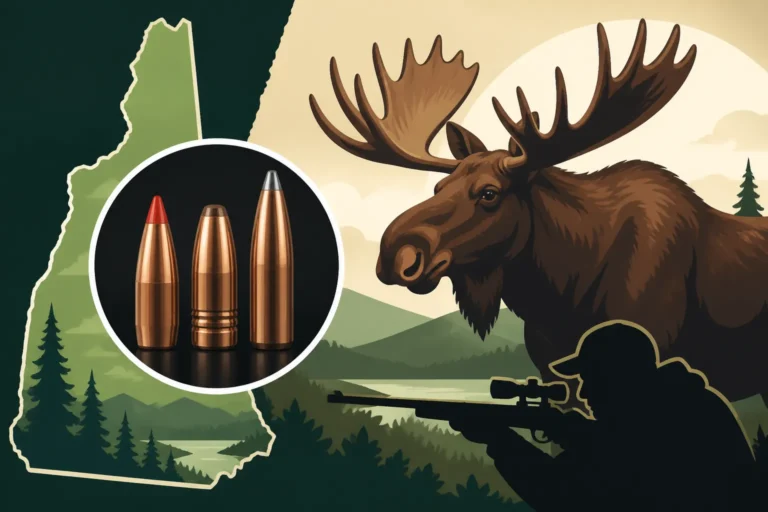
While bullet weight is a critical factor, it's often the bullet's construction that dictates its true performance on game. A heavier bullet isn't automatically better if it's designed poorly for hunting, and a lighter bullet can be incredibly effective if its construction is optimized for controlled expansion and deep penetration. We're talking about the difference between a traditional cup-and-core bullet and a modern bonded or monolithic bullet.
Traditional cup-and-core bullets, where a lead core is swaged into a copper jacket, are generally more affordable and have been successfully taking deer for decades. However, their performance can be inconsistent. On high-velocity, close-range impacts, they can sometimes fragment excessively, causing a lot of meat damage and potentially reducing penetration. On longer shots, they might not expand as reliably. Modern bonded bullets, like the Federal Fusion or Nosler AccuBond, have their lead core chemically bonded to the copper jacket. This bonding prevents separation and allows for much more controlled expansion, retaining more weight and driving deeper. Monolithic bullets, such as Barnes TSX or Hornady GMX, are made entirely of copper or another alloy. These bullets typically retain nearly 100% of their weight, expand into sharp petals, and offer exceptional penetration, often passing through a deer entirely. For the varied conditions of New Hampshire and the need for reliable performance, especially when tracking a deer in fresh snow, a well-constructed bonded or monolithic bullet often provides a significant advantage, even if it's on the lighter side for a given caliber.
Common Bullet Weights and Their Performance on New Hampshire Whitetails
New Hampshire whitetails aren't typically massive animals like those found in the Midwest, but a mature Granite State buck can still be a formidable creature, especially if you're Hunting the Rut in Early-to-Mid November when they've packed on some pounds. The average dressed weight for a buck might be around 130-160 pounds, with larger ones pushing 200 pounds or more. Knowing this helps us evaluate how different bullet weights will perform.
Lighter Bullet Weights (Under 150 Grains)
For many popular calibers, bullets under 150 grains are considered "light." Think 130-grain .270 Winchester, 120-140 grain 6.5 Creedmoor, or even 150-grain .30-06 Springfield. These lighter bullets typically offer higher muzzle velocities and flatter trajectories, which can be appealing for hunters who anticipate longer shots across fields or clear-cuts. The reduced recoil is also a significant benefit, allowing for more comfortable practice and potentially greater accuracy in the field, especially for newer hunters or those who are recoil-sensitive.
However, there's a trade-off. While their speed creates impressive hydrostatic shock, especially on broadside lung shots, lighter bullets can sometimes be more prone to fragmentation, particularly if they hit heavy bone like a shoulder at close range. This might lead to less penetration, especially with traditional cup-and-core designs. If you're using a lighter bullet, opting for a premium bonded or monolithic construction is highly advisable to ensure adequate penetration and weight retention. For example, a 130-grain Barnes TTSX in a .270 Winchester will often out-penetrate a 150-grain standard cup-and-core bullet. These lighter, high-performance bullets can be excellent choices if your rifle prefers them and you're confident in your shot placement. They can perform very well on White-Tailed Deer Across New Hampshire, offering a good balance of speed and energy transfer with the right construction.
Mid-Range Bullet Weights (150-180 Grains)
This is often the sweet spot for many New Hampshire deer hunters, especially for popular calibers like the .30-06 Springfield, .308 Winchester, and even the classic .30-30 Winchester. Bullet weights in the 150-180 grain range generally provide an excellent balance of velocity, energy retention, and penetration. For example, a 165-grain .30-06 or a 165-180 grain .308 Winchester is a go-to for countless hunters across the country, and for good reason.
These bullets typically retain enough energy for ethical kills at common hunting distances up to 250-300 yards, while still offering sufficient velocity for reliable expansion. They tend to handle bone impacts better than lighter, less robustly constructed bullets, providing a good margin of error if your shot isn't perfectly placed. Recoil is manageable for most shooters, allowing for quick follow-up shots if needed. If you're carrying a .30-30 in the thick brush, a 170-grain flat-nose soft point has proven its worth for generations. For more modern bolt-action rifles, the 165-180 grain range, especially with a bonded or monolithic bullet, offers a versatile and dependable option for nearly any New Hampshire deer hunting scenario. Whether you're hunting in the thick timber or sitting a field edge, these weights deliver consistent performance.
Heavier Bullet Weights (Over 180 Grains)
When you start talking about bullets over 180 grains for deer, you're usually looking at calibers like the .30-06 Springfield (180-200 grain), .308 Winchester (180 grain), or even larger rounds like the .338 Federal or .45-70 Government. These heavier bullets excel at one thing: maximizing penetration. They carry more momentum, which allows them to drive through heavy muscle, bone, and even brush with less deflection (though the "brush busting" claim is often exaggerated and unreliable).
The primary advantage of these heavier bullets is for very large-bodied deer, or when you specifically anticipate needing to punch through a lot of material to reach the vitals. They retain velocity and energy well at closer ranges, and while their trajectory is more arced, within typical New Hampshire hunting distances, this isn't usually a significant issue. The trade-off is often increased recoil, which can make accurate shooting more challenging for some hunters. If your rifle is chambered in a magnum caliber, or you're specifically targeting those exceptionally large, late-season bucks, a heavier, well-constructed bullet can provide tremendous confidence. For example, a 180-grain Partition in a .30-06 is a devastatingly effective deer killer. Just remember, bullet construction remains key; a heavy, poorly constructed bullet can still fail. Consider using a ballistic application, such as the one offered by GoHunt, to compare the drop and energy of these heavier bullets against mid-range options for your specific rifle setup.
Matching Bullet Weight to Your Caliber and Hunting Style
Choosing the best bullet weight isn't a one-size-fits-all proposition. It's a highly personal decision that needs to take into account your specific rifle, the caliber it shoots, and how you actually hunt. You wouldn't use the same approach for Hunting New Hampshire's November Firearms Deer Season in the big woods as you would for a long-range shot across open ground.
Caliber Considerations and Twist Rate
Every rifle caliber has an optimal range of bullet weights it can stabilize effectively. This is primarily determined by the rifle's barrel twist rate – how many inches of barrel it takes for the rifling to complete one full rotation. A "fast" twist rate (e.g., 1:8 inches) is designed to stabilize longer, heavier bullets, while a "slower" twist rate (e.g., 1:12 inches) is better suited for shorter, lighter bullets. Trying to shoot a bullet that's too heavy for your twist rate can result in poor accuracy, key-holing, and reduced effectiveness.
Here’s a general overview for common New Hampshire deer calibers:
| Caliber | Typical Twist Rate | Common Bullet Weight Range for Deer (Grains) | Notes on Performance |
|---|---|---|---|
| .243 Winchester | 1:9 – 1:10 | 80-100 | Lighter recoiling, great for smaller deer |
| 6.5 Creedmoor | 1:8 | 120-143 | Excellent long-range, good energy retention |
| .270 Winchester | 1:10 | 130-150 | Flat trajectory, popular all-around |
| .30-30 Winchester | 1:10 – 1:12 | 150-170 | Classic brush gun, effective at closer ranges |
| .308 Winchester | 1:10 – 1:12 | 150-180 | Versatile, efficient, moderate recoil |
| .30-06 Springfield | 1:10 | 150-180 (some use 200) | Extremely versatile, powerful, widely used |
| .350 Legend | 1:16 | 150-180 | Straight-wall legal, great for thick cover |
| .45-70 Government | 1:20 | 300-405 | Heavy hitter, shorter range, straight-wall |
Always check your specific rifle's manual or the manufacturer's website for its exact twist rate. You'll often find that even within a caliber, there are specific bullet weights that your individual rifle "likes" more than others, meaning it shoots them with greater accuracy. This is why testing various loads is so crucial. A great resource for ballistic data and understanding how different bullet weights perform in specific calibers is often found on manufacturer websites or via online tools like GoHunt’s ballistics tables, which provide detailed information on energy and trajectory.
Personal Preferences and Ethical Harvesting
Beyond the technical specs, your personal comfort and hunting ethics are paramount. The "best" bullet weight is ultimately the one you can shoot most accurately and consistently, ensuring a clean, humane kill. Recoil management is a big part of this. A heavy magnum round pushing a massive bullet might look impressive on paper, but if the recoil causes you to flinch or impacts your ability to place a shot precisely, it's not the right choice. A well-placed shot with a moderately powerful round is always superior to a poorly placed shot with a heavy-hitting magnum.
Practice is key. Spend time at the range with different bullet weights, even if they're within the same caliber, to see what your rifle, and you, prefer. Your confidence in your rifle and ammunition is a huge factor in the field. When that moment of truth arrives, whether you're Hunting a Funnel Between Two Woodlots or trying to get a bead on a deer in a Reading a White Mountain Deer Yard, you need to trust your equipment implicitly. Ultimately, the goal is always ethical harvesting, and that comes down to putting the bullet exactly where it needs to go.
Field Testing and Fine-Tuning Your New Hampshire Whitetail Load
Once you've done your research and narrowed down some potential bullet weights and types, the real work begins: heading to the range. There's simply no substitute for hands-on testing to find the perfect load for your rifle and your hunting style.
Range Practice and Grouping
Take several different boxes of ammunition with varying bullet weights and constructions for your chosen caliber to the range. Don't just buy one box; buy a few. Start by sighting in with a common, mid-range bullet weight for your caliber, then move on to others. Shoot groups of three or five shots at a given distance, typically 100 yards, to see how consistently your rifle performs with each load. Pay attention to the size of your groups. A rifle that consistently produces 1-inch groups with one bullet weight might only shoot 3-inch groups with another, even if both are technically "deer loads."
You'll quickly discover that every rifle has its own personality. Some rifles are incredibly accurate with a wide variety of loads, while others are very finicky and prefer one specific bullet weight or manufacturer. Don't be discouraged if your first few choices aren't tack drivers. Keep experimenting. Once you find a bullet weight and brand that consistently groups well, stretch it out to 200 yards or even 300 yards if you anticipate those longer shots. Understanding your rifle's capabilities at these extended ranges is crucial. It's not just about hitting paper; it's about building confidence in your setup for when you're Hunting a Granite Ridge Saddle and need to make a precise shot.
Ballistic Calculators and Real-World Application
Once you've identified a few accurate loads, this is where ballistic calculators truly shine. Tools like those found on the GoHunt platform or similar apps can take your specific bullet (manufacturer, weight, type), muzzle velocity (which you can get from ammunition boxes or chronographed at the range), and other factors like barrel length, zero distance, and local atmospheric conditions, and then predict its trajectory.
You can input different bullet weights and see how much they drop at 100, 200, or 300 yards, and more importantly, how much energy they retain at those distances. This isn't just theoretical; it's vital for understanding if a particular bullet weight has enough kinetic energy to perform effectively on a deer at the maximum range you might shoot. For instance, a lighter bullet might have a flatter trajectory initially, but a heavier bullet might retain more energy at 250 yards, making it a more ethical choice for those longer shots. Using a ballistic calculator helps you understand your maximum ethical range with a given load. Knowing that your 150-grain bonded bullet still carries plenty of energy at 250 yards will give you immense confidence when you're out there, waiting for that buck. This blend of range practice and digital analysis is the best way to fine-tune your New Hampshire whitetail load, preparing you for successful hunts and allowing you to focus on the hunt itself, rather than worrying if your bullet is up to the task.
Disclaimer
This article is for general informational purposes only and does not constitute professional advice. Laws, prices and regulations vary by location and change over time. Consult a qualified professional for guidance on your specific situation.