Best Knife for Skinning a Bear
When you're out in the wilds of New Hampshire, especially after a successful bear hunt, the last thing you want to struggle with is a dull, ill-suited knife. Skinning a bear is a big job, often done in less-than-ideal conditions, and having the right tool can mean the difference between a clean, efficient process and a frustrating, potentially unsafe ordeal. This guide will help you understand what makes a knife truly effective for skinning a bear, ensuring you're prepared for proper hide care in the field.
Why a Dedicated Skinning Knife Matters for Bear
Let's be honest, you can skin a bear with almost any sharp knife in a pinch. But anyone who's ever tried it with a general-purpose blade will tell you it's a monumental pain. Bear hides are thick, tough, and often carry a significant layer of fat, making them a very different challenge than deer or even moose. Investing in a proper skinning knife isn't about luxury; it's about making a demanding task manageable and ensuring the quality of your hard-earned hide.
The Unique Challenges of Bear Hides
Bear hides present a unique combination of thickness, density, and often a generous layer of fat that adheres stubbornly to the hide itself. Unlike the relatively thin skin of a whitetail deer, a bear's hide, particularly on the back and neck, can be incredibly robust. Imagine trying to cut through a thick, rubbery mat that's also attached to a greasy substrate, and you'll get a sense of the resistance you're up against. In the crisp New Hampshire air, where bears can range from smaller juveniles to mature, massive bruins, these challenges only intensify. A knife not designed to handle this kind of work will quickly bind, dull, or worse, cause you to struggle, increasing the chance of an accidental slip. The fur itself, especially on a prime fall bear, is dense and can easily gum up a blade if the geometry isn't right.
Safety and Efficiency in the Field
Bear hunting often puts you in rugged, remote New Hampshire terrain. Whether you’ve been Hunting New Hampshire's Bait and Hound Season or still-hunting through deep timber, the conditions for field dressing and skinning are rarely pristine. You might be working in the woods, on an uneven hillside, or even after dark with a headlamp. Cold hands, wet conditions, and adrenaline can all compromise your dexterity and judgment. A dedicated skinning knife is designed to minimize these risks. Its ergonomic handle provides a secure, non-slip grip, even when slick with blood or fat. A properly designed blade allows for controlled, precise cuts, reducing the effort needed and, consequently, the fatigue that can lead to mistakes. When you're trying to get a heavy hide cooled and prepped for transport – especially if you're Packing Meat Out of a North Country Bog – efficiency is paramount for both hide preservation and your own well-being. The less time you spend wrestling with a subpar knife, the safer and more effective your process will be.
Key Features of a Great Bear Skinning Knife
When you're picking out a knife specifically for skinning bear, it's not about the flashiest blade or the most tactical look. It's about functionality and durability under tough conditions. You need something that feels like an extension of your hand, holds an edge through thick and thin, and can stand up to the rigors of a New Hampshire backcountry harvest.
Blade Shape and Profile
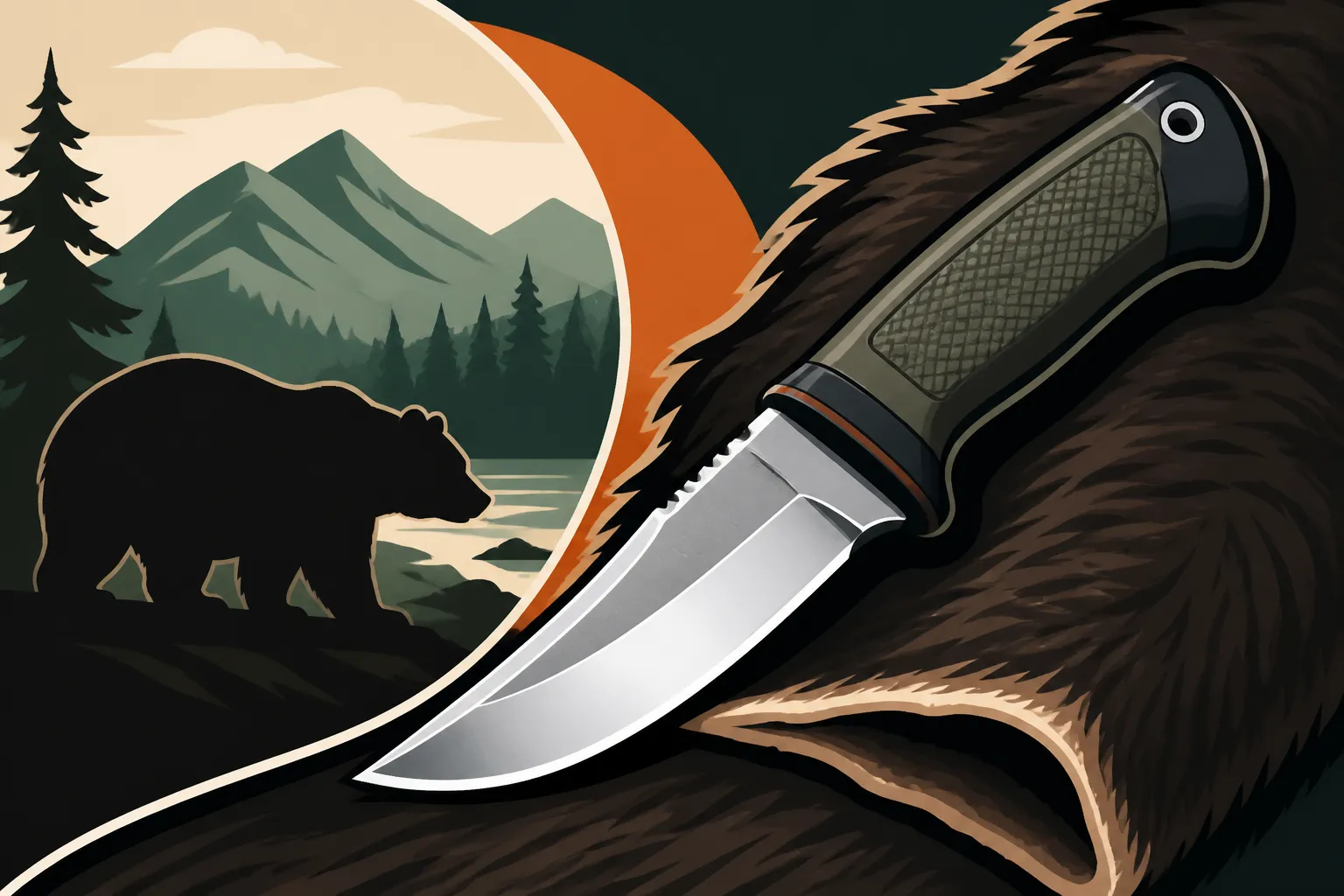
The ideal blade for bear skinning usually features a significant belly (the curved portion of the cutting edge) and a shape designed for separating hide from flesh without unnecessary punctures. A drop point or upswept skinner profile tends to be the most popular choices.
- Drop Point: Offers a strong, controllable tip that's slightly lowered from the spine, providing good versatility for initial cuts and general field tasks, but still with enough belly for long skinning strokes.
- Upswept Skinner: Often has a more pronounced curve along the cutting edge, sometimes with a blunted or very slightly recurved tip. This design excels at making long, sweeping cuts without digging into the hide or meat, minimizing the risk of accidental punctures which can devalue a hide meant for taxidermy.
A blade length typically between 4 to 6 inches hits a sweet spot, offering enough reach for larger areas of the bear while remaining maneuverable for finer work around the head and paws. Too short, and you're making too many cuts; too long, and precision suffers. The tip should ideally be strong enough for initial probing cuts but not overly sharp or needle-like, which can easily slip through a hide. You want to separate, not perforate.
Steel Type and Edge Retention
This is where the rubber meets the road. Bear hides are notorious for dulling blades quickly due to their toughness and the greasy fat layer. You need a steel that offers excellent edge retention, meaning it stays sharp for a long time, and good corrosion resistance, as you'll likely be working in wet, cold, or bloody conditions.
- High Carbon Steels: Offer incredible edge retention and can be sharpened to a razor edge. However, they are more prone to rust and require diligent cleaning and oiling, which can be a hassle in the field.
- Stainless Steels: Generally easier to maintain in wet conditions, but some older or lower-end stainless steels might not hold an edge as long. Modern, high-performance stainless alloys (like S30V, CPM-S35VN, or even good quality AUS-8 or 440C with proper heat treatment) can offer a fantastic balance of edge retention and corrosion resistance. They're a favorite among many hunters for their ease of care.
Consider how easy the steel is to sharpen in the field. Even the best steel will eventually need a touch-up, and fumbling with a difficult-to-sharpen blade when you're racing against the clock is not ideal. A good balance of these properties means you're not constantly pausing to sharpen, and you won't worry about rust setting in if you can't meticulously clean it immediately.
Handle Ergonomics and Grip
A knife for skinning bear isn't a museum piece; it's a tool that will get messy. The handle design is critical for safety and comfort during an extended, arduous task.
- Non-Slip Materials: Look for handles made from materials like G10, Micarta, Kraton, or rubberized polymers. These materials offer superior grip even when wet, cold, or covered in blood and fat. Avoid highly polished wood or smooth bone handles that look great but become treacherous when slick.
- Ergonomic Shape: The handle should fit comfortably in your hand, providing a secure grip without hot spots or awkward angles. Finger grooves, a generous guard, and a subtly textured surface can all contribute to better control and reduced hand fatigue. Remember, you'll be exerting a lot of pressure and making repetitive motions. A handle that allows for a firm, confident grip minimizes the chance of a slip that could ruin a hide or, far worse, cause a serious injury. Many hunters, especially when processing larger game like a bear or even a moose, appreciate a handle that can be choked up on for precision work or held further back for leverage.
Field Techniques for Skinning a New Hampshire Bear
You’ve harvested your bear, perhaps after a long season of chasing them through the White Mountains or checking your bait sites. Now, the real work begins, and having good field technique, coupled with that superior skinning knife, is essential for preserving the hide and meat. It’s not just about getting the hide off, it’s about getting it off cleanly and efficiently to ensure quality, especially if you’re planning a rug or taxidermy mount.
Preparation and Initial Cuts
Before you even touch your knife, assess the situation. Is the bear lying on an even surface? Do you have enough light? Think about where you'll be making your cuts to maximize efficiency and minimize mess. Many hunters choose to lay the bear on its back for the main body cuts.
Your initial cuts are crucial. Start with the main ventral incision, running from the chin or lower jaw, down the center of the chest and belly, to the vent. Be shallow here, just piercing the skin, then use the blade's belly to gently separate the hide from the muscle, lifting as you go to avoid cutting into the body cavity. This helps prevent internal fluids from contaminating the hide. For the legs, make cuts from the footpads up the inside of each leg, meeting the main ventral incision. Carefully cut around the paws and pads, taking your time to ensure all claws are retained if desired for taxidermy. Around the head, it's particularly important to be precise. You'll make an incision around the neck just behind the ears, ensuring enough hide for proper mounting. Be mindful of any scent glands, especially in the groin and armpit areas, and avoid nicking them. The goal is clean, straight lines that make stitching easier for the taxidermist.
The Skinning Process – Pushing vs. Pulling
Once the initial cuts are made, the real skinning begins. This is where your knife's blade profile and your technique truly shine.
-
The "Push" Method: For areas where the hide is tightly adhered to muscle or has a thick layer of fat, the "push" method is effective. Hold your knife almost parallel to the hide, using gentle pressure to push the blade along the membrane between the hide and the muscle. This isn't about cutting meat; it's about separating the connective tissue. The wide belly of a good skinning knife helps you get under this layer and leverage it apart. This method gives you maximum control and reduces the risk of cutting holes in the hide or leaving too much fat on it.
-
The "Pull" Method: In larger, looser areas, especially along the flanks and belly, you can often use a "pull" method. This involves grasping the hide firmly with one hand and pulling it taut, while using your knife in the other hand to make long, sweeping cuts to separate it from the carcass. The tension on the hide helps expose the connective tissue and prevents the knife from digging into the meat. It's a faster method for bigger sections but requires a steady hand and a sharp blade.
As you work, continually lift and pull the hide away from the carcass. This puts tension on the connective tissue, making it easier for your knife to sever it. Take special care around thin areas like the ears, eyes, and lips on the head, where a slip can be catastrophic for a mount. Remember to use the belly of the blade, keeping the tip pointed slightly upwards, away from the hide, to prevent accidental holes. Even in the dim light of an evening hunt, utilizing a reliable resource like GoHunt can help you visualize proper field dressing techniques if you've done your research beforehand.
Hide Care and Transport in New Hampshire
Once the bear is skinned, your job isn't over. Proper hide care begins immediately in the field, especially in New Hampshire's variable climate.
- Cooling: Get the hide cooled down as quickly as possible. Lay it out flat, fur side down, on clean snow, grass, or branches to allow air circulation. Never roll up a warm hide, as this traps heat and can lead to hair slippage, where the fur separates from the skin.
- Salting (if possible): If you can, get coarse salt onto the flesh side of the hide within a few hours. This draws out moisture and helps prevent bacterial growth. You'll need a significant amount – several pounds for a large bear. Rub it in thoroughly. If you're deep in the backcountry, this might mean packing salt in, which is a consideration for Packing for a Nine-Day Moose Hunt, and similar for a bear hunt.
- Transport: When it's time to move, roll the hide up, flesh-side in, to protect the fur. Place it in a breathable bag (like a canvas game bag or even an old pillowcase) if available, but avoid airtight plastic bags, which can trap heat and moisture. If the weather is warm, get it to a freezer or taxidermist as soon as humanly possible. If it's cold, you have a bit more time, but prompt care is always best. Understanding New Hampshire Bear Season Opening Day and Checking Your WMU's Bear Season Dates in advance can help you plan for these crucial post-harvest steps, ensuring your hide and meat are handled properly according to state guidelines and your personal preference for trophies or consumption.
Additional Considerations and Brands
Choosing the best knife for skinning a bear involves more than just the blade itself. Think about how you'll carry it, keep it sharp, and how other hunters make their choices. Researching options on platforms like GoHunt can give you a wide perspective on what works for others in similar conditions.
Fixed Blade vs. Folder and Sheath Options
When it comes to bear skinning, the debate often boils down to fixed blade versus folding knives.
- Fixed Blade Knives: These are overwhelmingly preferred for bear skinning, and for good reason. They are inherently stronger, more durable, and easier to clean than folders. There are no moving parts to get jammed with blood, fat, or dirt. They offer a more robust feel and handle the torque and pressure involved in separating a tough hide better than any folder. The full tang construction (where the blade steel extends the full length and width of the handle) provides superior strength.
- Folding Knives: While convenient for everyday carry, most folders aren't ideal for large game skinning. The pivot point can become a collection point for grime, making cleaning difficult and potentially compromising the lockup mechanism. They typically aren't as strong as fixed blades, and their shorter, less ergonomic handles can contribute to hand fatigue and reduce control.
Regardless of the knife type, a reliable sheath is non-negotiable for a fixed blade. It should protect the blade, keep it secure during transport, and allow for quick, easy access. Kydex, leather, and heavy-duty nylon are common materials. Look for a sheath that offers multiple carry options (belt, pack attachment) and is durable enough for the rigors of the New Hampshire woods. You want to know your knife is safe and won't be lost while you're Hunting the North Country or traversing uneven terrain.
Knife Maintenance and Sharpening
Even the best knife will eventually need some care. Proper maintenance ensures your knife is always ready for action and extends its lifespan.
- Cleaning: Immediately after use, clean your knife thoroughly. Hot, soapy water works wonders for removing blood and fat. Pay special attention to the juncture between the blade and handle on fixed blades, and all crevices on folders. Dry it completely to prevent rust, especially if you're using a high-carbon steel.
- Sharpening: Carry a small field sharpener with you. A ceramic rod, diamond plate, or even a fine sharpening steel can bring an edge back to life in minutes. Practice sharpening at home so you're proficient when it counts. For more intensive sharpening at home, consider a guided sharpening system to maintain a consistent edge angle. Regular touch-ups are far easier than trying to restore a completely dull blade. A sharp knife is a safe knife, and having the means to keep it that way, even after you've skinned a bear in the backcountry, is essential. This is just as critical as having the Best Knife for Field Dressing a Whitetail for smaller game.
Leveraging Tools like GoHunt for Gear Decisions
In today's connected world, you don't have to guess when it comes to gear. Resources like GoHunt are invaluable for researching and comparing hunting knives, along with a host of other gear like Optics for New Hampshire's Timber Country or specific equipment for Muzzleloader Deer Hunting in New Hampshire. These platforms often feature:
- User Reviews: Real-world experiences from other hunters who have put knives through their paces. This provides practical insights into performance, durability, and ergonomics.
- Expert Analyses: Detailed breakdowns of blade steels, handle materials, and design considerations from experienced outdoorsmen.
- Comparison Tools: Easily compare different models side-by-side, helping you weigh the pros and cons of various options without having to scour dozens of different manufacturer websites.
Using GoHunt to check out knives for bear skinning, for instance, can provide a comprehensive picture of available options. You can read discussions about which blade profiles excel for thick hides, or which steel holds up best after processing a New Hampshire Bear Population Estimate worth of game. It's a fantastic way to educate yourself and make an informed decision before investing in a knife that you’ll rely on when the moment of truth arrives.
Remember, a good bear skinning knife is an investment in efficiency, safety, and the quality of your harvest. Do your homework, consider the specific challenges of New Hampshire bear hunting, and choose wisely.
| Feature | Importance | Why It Matters for Bear Skinning |
|---|---|---|
| Blade Shape | High | Upswept or drop point with good belly for long, separating cuts; avoids punctures in thick hide. |
| Steel Type | High | Excellent edge retention to cut through tough hide and fat without constant resharpening; corrosion resistance for wet conditions. |
| Handle Grip | High | Non-slip, ergonomic materials (G10, rubberized) ensure secure control even when wet, cold, or bloody; reduces fatigue. |
| Blade Length | Medium | 4-6 inches offers balance of reach for large areas and precision for finer work around joints and head. |
| Fixed Blade | High | Superior strength, easier to clean, and more durable than folding knives for demanding tasks. |
| Weight | Medium | A balanced, manageable weight reduces hand fatigue during extended use. |
Disclaimer
This article is for general informational purposes only and does not constitute professional advice. Laws, prices and regulations vary by location and change over time. Consult a qualified professional for guidance on your specific situation.