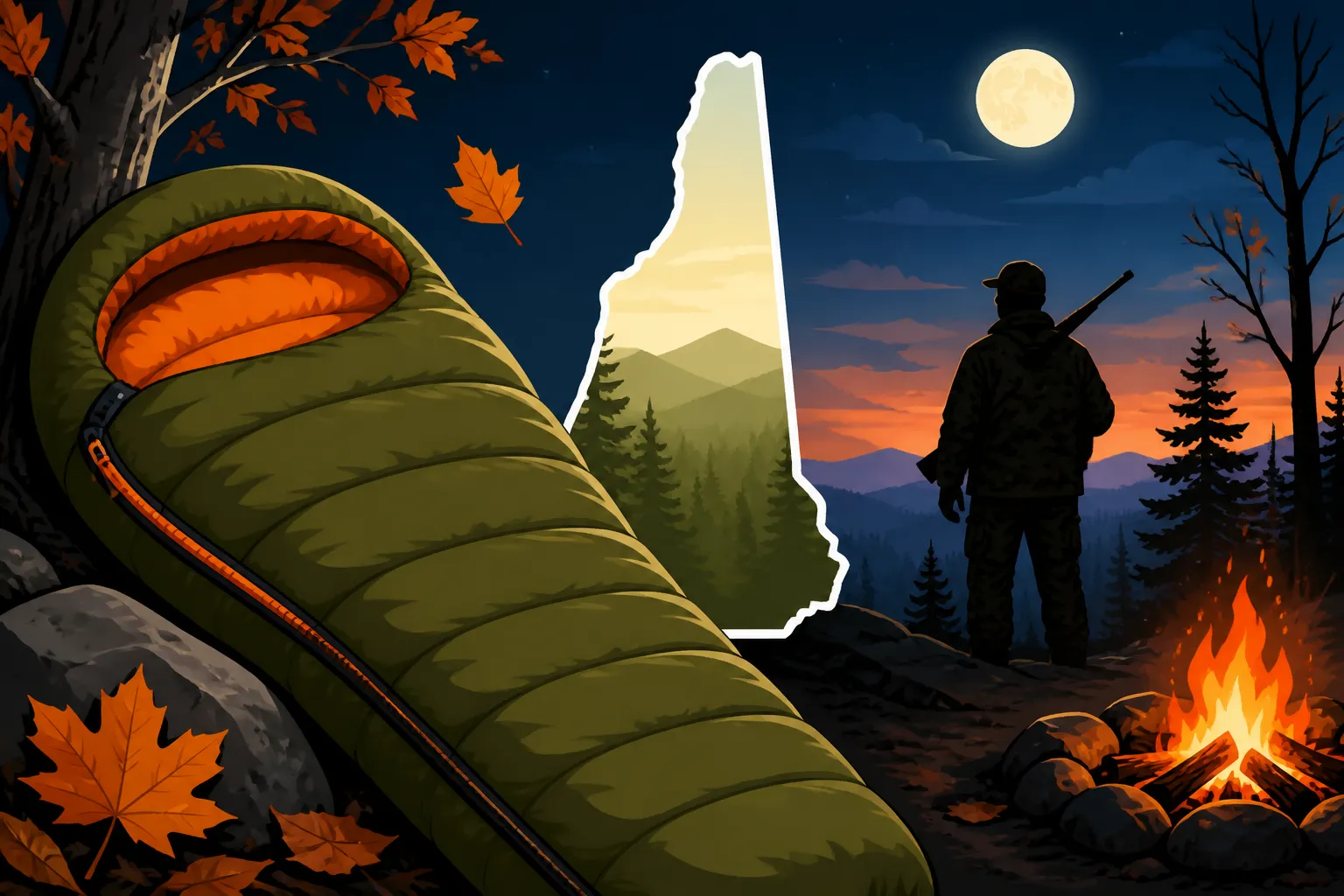
Best Sleeping Bag Rating for Late-Fall Nights
There’s nothing quite like the crisp air of a New Hampshire late-fall night, but for us hunters, that beauty often comes with a chilling reality: bone-deep cold. You’ve had those nights, right? Where you’re shivering in your sleeping bag, counting down the hours until dawn, wondering why you ever thought that "all-season" bag would cut it. This guide is all about helping you conquer those frosty hours, making sure your sleeping bag is the cozy haven it’s meant to be, so you wake up refreshed and ready for the hunt, not frozen solid.
The Crucial Role of Your Sleeping Bag in New Hampshire's Late Fall
When you're out hunting in New Hampshire, especially as November turns into December, the temperatures can drop fast and hard. Your sleeping bag isn't just a piece of gear; it's your primary defense against hypothermia and a miserable night that saps your energy for the next day's hunt. Trying to skimp on your sleep system in these conditions is a surefire way to end up packing out early, or worse, putting yourself at risk. You deserve a good night's rest after a long day of still-hunting white-tailed deer or tracking a bear.
Understanding Sleeping Bag Temperature Ratings
Sleeping bag manufacturers slap all sorts of numbers on their bags, and it can be confusing. You see a bag rated for 20°F and think, "Great, New Hampshire rarely gets below zero in late fall, so I'm set!" But that's where the nuance comes in. Most temperature ratings actually refer to a "lower limit" – the lowest temperature at which an average man can sleep comfortably for eight hours without waking up too cold. This isn't a "comfort" rating for everyone, especially if you tend to sleep cold or if you're a woman, as women generally sleep colder than men.
Consider a scenario: you're planning a deer hunt in the Monadnock Region in mid-November. The daytime temperatures might hover in the low 40s, but as soon as the sun dips below the horizon, it can plummet into the 20s. If your 20°F bag is rated at its lower limit, you might find yourself in for a long, uncomfortable night. You'll be bundled up in all your layers, cinching the hood tight, and still feeling that chill creep in. It’s a common frustration, and one we’ve all faced, thinking we’ve got enough bag for the conditions. When you're investing in crucial gear, it's wise to lean towards a bag with a comfort rating that aligns with the absolute coldest temperatures you expect to encounter, rather than just the average or limit. Checking detailed gear reviews, perhaps even on platforms like GoHunt, can sometimes give you a better real-world feel for how a bag performs.
The EN/ISO Rating System Explained
To bring some order to the chaos of ratings, many reputable manufacturers adhere to the EN (European Norm) or more recently, the ISO (International Organization for Standardization) testing standards. These standards provide a more objective and comparable way to assess a bag's warmth. When you see an EN/ISO rating, you'll usually notice a few different temperature points:
- Comfort Temperature: This is the lowest temperature at which an average woman can expect to sleep comfortably in a relaxed position. This is often the most realistic and conservative number for most hunters to consider, especially if you tend to sleep cold.
- Limit Temperature: This is the lowest temperature at which an average man can sleep for eight hours in a curled-up position without feeling excessively cold. This is usually the rating most commonly advertised on the bag.
- Extreme Temperature: This is a survival rating, indicating the minimum temperature at which a woman can survive for six hours without risk of death from hypothermia, though severe frostbite and discomfort are highly likely. This is not a comfort rating and should never be used for planning a comfortable night's sleep.
So, when you're looking at a bag that proudly declares "20°F," dig a little deeper to see if it specifies "comfort" or "limit" under the EN/ISO system. For instance, a bag with a 20°F limit rating might only have a 30°F comfort rating. That 10-degree difference can be the thin line between a night of restless shivers and a night of restorative sleep while you're camped out trying to get on some whitetails in Hunting New Hampshire's November Firearms Deer Season. Understanding these distinctions can prevent a lot of cold-weather misery and ensure you're truly prepared for whatever New Hampshire throws at you.
Factors That Really Influence Your Sleep System Needs
Choosing the right sleeping bag rating isn't a one-size-fits-all decision, especially in New Hampshire. There are so many variables beyond just the number on the bag that dictate how warm you'll actually be. It’s not just about the bag; it’s about the whole system and your personal relationship with cold.
New Hampshire's Unpredictable Late-Fall Weather
Anyone who has hunted New Hampshire for more than a season knows that the weather here is a fickle beast, especially in late fall. You can wake up to clear, crisp skies, only for a sudden cold front to roll in by afternoon, bringing biting winds and even a dusting of snow. A bag that felt perfectly adequate for 30°F on a still night can feel completely insufficient when the wind chill drops the effective temperature into the teens or single digits. The humidity in our region, even when freezing, can also make the cold feel more penetrating.
Imagine you're tucked into a remote spot in the White Mountain National Forest, perhaps targeting a late-season deer. You checked the forecast before heading out, and it looked mild enough, maybe low 20s at night. But then, a sudden squall blows through, dropping an inch of wet snow and bringing a sustained 15-20 mph wind. That "20-degree bag" is now being pushed to its absolute limit, and you’re feeling every bit of that wind-driven cold. This is why it’s always better to err on the side of caution with your sleeping bag rating. Checking the detailed weather forecasts available through platforms like GoHunt can give you a clearer picture of temperature and wind chill, which is crucial for making an informed decision about your sleep system before you head out.
Shelter Type and Its Impact on Warmth
The kind of shelter you're using makes a huge difference in how your sleeping bag performs. A four-season tent with a full rainfly and good ventilation provides a much warmer microclimate than a minimalist bivy sack or a simple tarp lean-to. Even the difference between a high-quality three-season tent and a cheaper one can be significant in terms of blocking wind and retaining heat. If you're Hunting New Hampshire's White Mountain National Forest and relying on a lightweight backpacking tent for a multi-day trip, your sleeping bag needs to work harder than if you were hunkered down in a truck camper.
Think about a hunter setting up a spike camp deep in the North Country. If they're using a quality mountaineering tent, designed to shed wind and snow, the ambient temperature inside the tent might be 5-10 degrees warmer than the outside air. That's a significant buffer for your sleeping bag. However, if they opted for a simple tarp or a cheap nylon tent, that internal temperature gain would be minimal, and their sleeping bag would need to be substantially warmer to compensate. Internal link: Best Tent for a Multi-Day Public Land Hunt. Understanding the thermal performance of your shelter is just as vital as the bag itself when planning your sleep system for New Hampshire's late-fall conditions.
Your Own Internal Thermostat and Metabolism
This is perhaps the most overlooked factor, yet it’s one of the most critical: how you personally handle the cold. We all know someone who sleeps in shorts and a T-shirt even when it's freezing outside, and someone else who needs three blankets in July. Our individual metabolisms, body fat percentages, age, and even how much we ate and drank before bed all play a role in how warm we feel inside a sleeping bag.
For example, a younger, more active hunter with a higher metabolism might find a 15°F comfort-rated bag perfectly fine for a 20°F night. On the flip side, an older hunter, someone with a lower body fat percentage, or simply someone who "runs cold" might shiver all night in the same bag. Hydration and caloric intake also matter; a well-fed and hydrated body has more fuel to generate heat. A simple trick many of us use is to eat a high-fat snack just before bed or drink a warm beverage. For women, physiological differences often mean a need for a warmer bag than a male counterpart at the same temperature. Don't be a hero; be realistic about your own body's needs. If you've shivered through nights before, bump up your sleeping bag's warmth rating. It's an investment in comfort and safety.
Specific Recommendations for New Hampshire's Late-Fall Conditions
So, with all those variables in mind, let's talk about some practical sleeping bag ratings for New Hampshire's late fall. This isn't a hard and fast rule, but rather a guide based on typical conditions and a healthy dose of experience.
Minimum Ratings for Mild Late-Fall Nights (30°F to 40°F)
Let's face it, "mild" in New Hampshire late fall is still chilly. You might encounter these temperatures in early November, particularly in lower elevations or during an unseasonably warm spell. Even then, night temperatures can quickly dip below freezing. For these conditions, you're generally looking for a sleeping bag with a comfort rating of 20°F to 30°F. This range gives you a little buffer for unexpected drops or if you just happen to feel a bit colder than usual.
Consider a scenario where you're hunting the river bottoms of the Connecticut River Valley in early November. Daytime might be 45°F, but as soon as that sun goes down, the cold air settles into the valley. A 25°F comfort-rated bag, combined with a good sleeping pad and some warm base layers, should keep you comfortable. However, always remember the "comfort" versus "limit" distinction discussed earlier. If the bag is only limit rated to 20°F, its comfort rating might be closer to 30°F, meaning you'll want to take extra precautions. It’s easy to get complacent on those "milder" nights, but the ground will still be cold, and a lack of proper insulation from below can make even a decent bag feel inadequate.
Standard Ratings for Typical Late-Fall Freezing Nights (15°F to 30°F)
This is the sweet spot for the bulk of New Hampshire's late-fall hunting, especially as you move into mid-November and early December. This includes our very popular Hunting New Hampshire's November Firearms Deer Season, as well as the later parts of the archery season, like Hunting the December Archery Close, and the entire Hunting New Hampshire's Muzzleloader-Only Ten Days. Expect night temperatures to regularly dip into the 20s and teens, often with a wind chill that makes it feel even colder.
For these conditions, you absolutely want a sleeping bag with a comfort rating of 0°F to 15°F. This might seem like overkill if you're thinking only of a 20°F night, but that extra warmth gives you the flexibility to adapt to colder-than-expected conditions, or if you're not feeling 100%. Imagine being out for the muzzleloader season, camped near a logging road in Grafton County. The forecast calls for 18°F, but by 2 AM, it's 12°F with a light breeze. That 0°F to 15°F comfort-rated bag will be your best friend, allowing you to actually get some sleep instead of shivering until your alarm goes off. It also provides the luxury of shedding a layer or two if it's warmer, which is a much better problem to have than being unable to add enough warmth when it's too cold.
Extreme Cold Ratings for Deep Freezes (0°F and Below)
While not an everyday occurrence for all late-fall hunting, New Hampshire can absolutely hit 0°F or even colder, especially as you get into late December or hunt at higher elevations and in the North Country. If your plans include late-season deer in the high country, or perhaps a truly adventurous Packing for a Nine-Day Moose Hunt (which can happen in late October and bump into some serious cold), you need to be prepared for the bitter cold.
For these deep freeze conditions, you should be looking for a sleeping bag with a comfort rating of -10°F to 0°F, or even colder. These are often expedition-grade bags, designed for serious cold. You'll likely be dealing with persistent sub-zero temperatures, and your entire sleep system – including your shelter, pad, and clothing – needs to be top-notch.
When you're out there, glassing a bog for a bull moose at first light, you don't want to be thinking about how you barely survived the night. This level of bag is also essential for anyone who knows they sleep very cold, regardless of the forecast, or for those pushing into exposed areas. The peace of mind alone is worth the investment. Remember, staying warm isn't just about comfort; it's about maintaining core body temperature and being physically and mentally sharp for the demands of the hunt.
Here’s a quick overview to help you visualize these recommendations:
| Temperature Range (Fahrenheit) | Recommended Sleeping Bag Rating (Fahrenheit) | Typical New Hampshire Late-Fall Scenario | Additional Considerations |
|---|---|---|---|
| 30°F to 40°F (Mild Freezing) | 20°F to 30°F Comfort Limit | Early November, lower elevations, valley camping | High R-value sleeping pad, warm base layers |
| 15°F to 30°F (Typical Freezing) | 0°F to 15°F Comfort Limit | Mid-November through early December, general hunting | Excellent sleeping pad (R5+), heavy base layers, warm hat |
| 0°F to 15°F (Deep Freeze) | -10°F to 0°F Comfort Limit | Late December, higher elevations, North Country | Multiple sleeping pads, robust layers, hot water bottle |
| Below 0°F (Extreme Cold) | -20°F or Colder Comfort Limit | Rare severe cold snaps, high mountain camps | Expedition-grade everything, emergency shelters |
Beyond the Bag: Completing Your Warm Sleep System
It’s tempting to think the sleeping bag is the be-all and end-all of warmth, but it's just one crucial component of your overall sleep system. Ignoring other elements can render even the warmest sleeping bag ineffective, especially in the cold, damp conditions we often face in New Hampshire. A truly warm night's sleep is a symphony of interconnected gear and smart habits.
The Unsung Hero: Your Sleeping Pad
This is where so many hunters make a critical mistake. They invest in a fantastic, warm sleeping bag but completely overlook the sleeping pad, thinking any old foam mat will do. Big mistake! The ground is a notorious thief of body heat, conducting it away from you relentlessly. Even the thickest, warmest sleeping bag will compress under your body weight, drastically reducing its insulation value where it's most needed – against the cold earth.
That's where a high R-value sleeping pad comes in. The R-value measures a pad's thermal resistance, or its ability to resist heat flow. For New Hampshire's late-fall nights, you should be looking for a sleeping pad with an R-value of at least 4.0, and ideally 5.0 or higher for colder conditions. A scenario that highlights this: imagine you have a 15°F comfort-rated sleeping bag. If you put it on a flimsy R-value 1.0 pad, you might feel like you're sleeping in a 30°F bag. But if you pair that same bag with an R-value 5.0 pad, it suddenly feels like a 5°F bag because you're losing far less heat to the ground. This often-overlooked piece of gear can make or break your night, allowing your expensive sleeping bag to actually do its job.
Smart Layering Inside Your Sleeping Bag
You've got your awesome sleeping bag and a top-notch pad, but don't forget the power of intelligent layering inside your bag. The goal isn't to put on every piece of clothing you own; that can actually be counterproductive if it’s too restrictive and prevents the bag’s insulation from lofting properly, or if you sweat. Instead, think about having clean, dry, moisture-wicking layers.
Start with a good set of Layering for New Hampshire's Cold Hunting Season base layers made from merino wool or synthetic materials. Add a warm mid-layer if needed, but often, the base layers and a good pair of wool socks are sufficient inside a properly rated bag. Crucially, always wear a warm hat! A significant amount of heat escapes from your head, and a simple wool or fleece beanie can make a huge difference in your overall warmth. Make sure your layers aren't too tight, which can restrict blood flow and actually make you colder. The key is to get into your sleeping bag as clean and dry as possible, letting your bag and layers trap your body heat effectively.
Camp Habits and Hydration for Warmth
Beyond the gear, your habits in camp can dramatically impact how warm you stay. A warm meal before bed gives your body fuel to generate heat throughout the night. Drinking plenty of fluids, especially warm drinks, helps your body regulate temperature. Many veteran hunters swear by a simple trick: fill a Nalgene bottle with hot water, screw the lid on tight, and tuck it into your sleeping bag (just be absolutely sure it doesn't leak!). This creates a mini-radiator that can keep you toasty for hours. You can even use a portable stove, like one mentioned in Best Camp Stove for a Backcountry Hunt, to heat that water.
Avoid going to bed cold. If you're shivering before you even get in your bag, it will take your body a long time and a lot of energy to warm up. Do a few jumping jacks or walk around a bit to get your blood flowing, but don't sweat. And if you wake up needing to use the restroom, go! Your body expends energy to keep a full bladder warm, so emptying it can actually help conserve energy and keep you warmer. These small, thoughtful habits, when combined with your excellent gear, create a holistic system that ensures you stay warm, rested, and ready for whatever the next day of hunting in New Hampshire brings. Even checking resources like GoHunt can offer additional tips and strategies for optimizing cold weather camp routines, helping you stay out longer and hunt harder.
Disclaimer
This article is for general informational purposes only and does not constitute professional advice. Laws, prices and regulations vary by location and change over time. Consult a qualified professional for guidance on your specific situation.