Best Thermos for a Cold Morning Hunt
Oh, the crisp, dark quiet of a New Hampshire morning hunt. There's nothing quite like it, is there? The stars are still blazing overhead, the air bites at your exposed skin, and the world is just starting to wake up. You've got your gear dialed, your stand is hung, or your blind is brushed in, and you're ready for the day. But let's be honest, there's a moment, usually about an hour or two in, when that deep chill starts to set in, burrowing right into your bones. That's precisely when a steaming hot cup of coffee, tea, or even some hearty soup, can feel like a genuine lifeline, transforming a miserable sit into a truly enjoyable experience. This guide is all about helping you cut through the marketing jargon and find the absolute best thermos to keep your spirits high and your body warm on those unforgiving New Hampshire hunting mornings.
Why a Quality Thermos is Non-Negotiable on a New Hampshire Hunt
You might think a thermos is just a thermos, right? Something you grab last minute at the grocery store. But out here, in the real world of New Hampshire hunting, that couldn't be further from the truth. A flimsy, poorly insulated vessel is nothing more than dead weight in your pack. When the mercury plunges and you're miles from the truck, wishing for a touch of warmth, a good thermos isn't a luxury; it's a critical piece of gear that directly impacts your comfort, focus, and ultimately, your success.
Battling the Granite State Chill
New Hampshire winters, and even our late fall seasons, are no joke. Those pre-dawn hours, especially when you're perched on a rock face or sitting quietly in a treestand, can feel brutally cold. We're talking about temperatures that dip well below freezing, often accompanied by a stiff wind that cuts right through even the best Layering for New Hampshire's Cold Hunting Season. Add in the elevation of the White Mountains or the damp chill of a river bottom along the Connecticut, and you've got a recipe for rapid heat loss.
It’s not just about comfort, though that’s a huge part of it. When your body is fighting to stay warm, your mental game suffers. You start fidgeting, your concentration wavers, and you’re less likely to sit still and patient for that deer or turkey. Imagine trying to make a precise shot with shivering hands or having to cut your hunt short because you’re just too cold to bear it. A reliable thermos, filled with something warm, can literally extend your time in the field, helping you stay focused and ready when that opportunity finally presents itself. It’s a small detail that makes a monumental difference in enduring the elements.
Sustained Warmth for Long Sits
Hunting in New Hampshire often means committing to a long sit. Whether you're targeting a big buck during Hunting the Rut in Early-to-Mid November or patiently waiting for a spring gobbler, you could be out there for four, six, even eight hours before midday brings some relief. A cheap thermos might keep your beverage warm for an hour or two, but after that, you're left with lukewarm disappointment. That’s just adding insult to injury when you’ve been out there since before first light.
A truly effective hunting thermos needs to hold its heat for the entire duration of your hunt, and then some. Think about those long waits in a ground blind or the slow, quiet hours Still-Hunting White Mountain National Forest Timber. You need that pick-me-up exactly when your morale might be starting to flag, not when your coffee has gone cold. The expectation should be that your thermos keeps contents piping hot for at least 8-12 hours, ensuring that even on the longest vigil, you’ve got warmth and energy on tap. This isn't just about sipping a drink; it’s about having a sustained source of comfort that keeps you in the game longer, increasing your chances of success.
Key Features to Look for in a Hunting Thermos
Alright, so we've established that a good thermos is essential. But what exactly makes one "good" for hunting in New Hampshire? It's not about flashy colors or trendy designs; it's about robust performance, durability, and practical features that stand up to the rigors of the backcountry.
Insulation Technology: Vacuum-Sealed and Beyond
The absolute cornerstone of any high-performing thermos is its insulation. You're looking for double-wall vacuum insulation. This isn't just a fancy term; it's the science behind keeping liquids hot for hours on end. Essentially, there are two walls of stainless steel with a vacuum created between them. This vacuum acts as an incredibly efficient barrier, preventing heat transfer through conduction or convection. No air means no medium for heat to escape or enter.
Most quality thermoses today use 18/8 food-grade stainless steel for both the inner and outer walls. This material is not only excellent for insulation but also highly resistant to corrosion, odors, and flavors, ensuring your coffee tastes like coffee, not last week's chicken soup. Cheaper options often use thinner steel or less effective vacuum seals, leading to rapid temperature loss. You might save a few dollars upfront, but you’ll pay for it in cold beverages and frustration later. When browsing sites like GoHunt, pay close attention to the detailed product descriptions and reviews focusing on actual heat retention times, not just marketing claims.
Durability and Construction for the Backcountry
New Hampshire hunting isn't a gentle stroll in the park. You're traversing uneven terrain, climbing over blowdowns, navigating rocky ascents, and sometimes, taking a tumble. Your gear needs to be able to take a beating and keep performing. A thermos made of thin plastic or fragile glass simply won't survive a season, let alone a lifetime.
Look for a thermos with a robust stainless steel exterior that can withstand drops, bumps, and general abuse. Some come with protective coatings or rubberized bases that add an extra layer of shock absorption. Handles, if present, should be sturdy and securely attached, not flimsy plastic that feels like it’s about to snap off. A wide base is also a plus, making it less prone to tipping over when you set it down on an uneven surface in your blind or on the forest floor. You don't want your precious hot coffee spilling all over your gear just because you shifted slightly to Reading a White Mountain Deer Yard. The construction needs to be as tough as the environment you're hunting in.
Practical Design Elements for Hunters
Beyond insulation and durability, the subtle design choices can significantly impact a thermos's usefulness in the field. Think about how you’ll actually use it when your hands are cold, you’re wearing gloves, and silence is paramount.
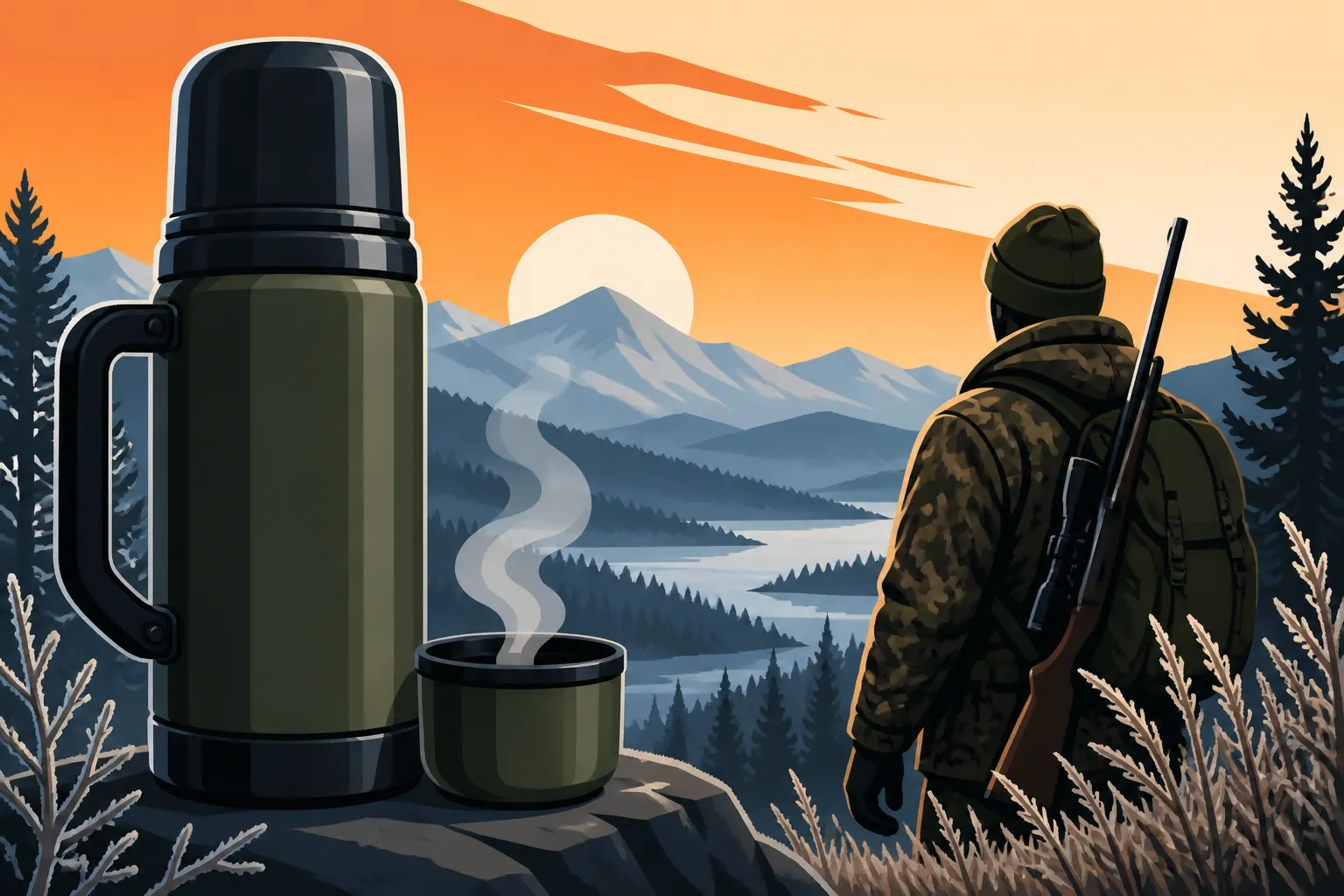
First, consider the lid. Many excellent hunting thermoses feature a lid that doubles as a cup. This is incredibly practical, as it means one less item to pack and track down. A good lid also needs a secure, leak-proof seal to prevent spills, but it should also be easy to open and close, ideally with one hand, or with gloved hands, and quietly. Twist-and-pour stoppers are common, allowing you to pour without fully removing the stopper, minimizing heat loss. For capacity, consider your hunt duration: a 16-24 oz (roughly 0.5-0.7 liters) thermos is often perfect for a solo morning sit, while a 32-40 oz (1-1.2 liters) might be better for an all-day hunt or if you’re sharing with a buddy. Don't forget cleaning: a thermos with a wide mouth is much easier to clean thoroughly, preventing lingering odors or mold buildup, which is crucial for hygiene and taste.
Choosing the Right Thermos for Your New Hampshire Hunting Style
Just like there's no single "best" hunting rifle, there isn't one perfect thermos for every New Hampshire hunter. Your ideal choice will depend heavily on your specific hunting methods, the duration of your outings, and how much gear you’re willing to carry. Let's break down some common scenarios.
The Treestand Hunter's Companion
If you spend your mornings high up in a treestand, patiently waiting for a passing deer or listening for the first gobble of a turkey, your thermos needs to be compact, lightweight, and utterly silent. You're trying to Hanging a Stand on a Granite Ridge without making a sound, and the last thing you want is a clanking metal bottle that scares off game. A 16 to 20-ounce capacity is usually plenty for a morning sit, offering enough hot beverage without adding excessive bulk or weight to your pack.
Look for models with a sleek, non-reflective finish, perhaps in an olive drab, brown, or black color. A textured grip or a slightly rubberized exterior can prevent slips when your hands are cold or gloved. The lid and stopper mechanisms are critical here; they should operate smoothly and quietly. Some hunters even wrap their thermoses in tape or a soft sleeve to further dampen any metallic sounds. When you're searching for gear on GoHunt, filter for compact, lightweight options, and read reviews for mentions of noise levels during use. The goal is easy, one-handed access to warmth without disturbing the stillness of the woods.
Ground Blind and Still-Hunting Needs
For those who prefer the concealment of a ground blind or the active pursuit of Still-Hunting White Mountain National Forest Timber, your thermos needs might shift slightly. In a ground blind, you often have a bit more space, allowing for a slightly larger capacity—say, 24 to 32 ounces—if you want more than a couple of cups of coffee or maybe some hot soup to last you through a longer sit. The need for stealth is still paramount, particularly with the stopper and lid, but the overall size might be less restrictive than in a treestand.
Still-hunting is a different beast entirely. You’re moving slowly, deliberately, covering ground. Here, weight and packability are key. You’ll want something rugged enough to handle being jostled around in your pack but not so heavy it becomes a burden. A 20 to 24-ounce thermos strikes a good balance for still-hunting, providing a refreshing break when you pause to glass or regroup, without weighing you down too much. Look for an integrated handle on some larger models, which can be useful when moving, but ensure it doesn't snag on brush. GoHunt offers excellent comparative reviews of various thermos sizes, often with user feedback on their performance in different hunting scenarios, which can be incredibly helpful for making an informed decision.
Multi-Day Backcountry Considerations
If your New Hampshire hunting adventures take you deep into the wilderness for multi-day trips, perhaps on a Packing for a Nine-Day Moose Hunt or an extended backcountry deer hunt, your thermos needs to be an absolute workhorse. Here, maximum heat retention and extreme durability are your top priorities. Weight, while always a consideration, might take a backseat to reliability and capacity when you're facing truly remote conditions.
For these longer trips, a 32 to 40-ounce thermos is often preferred, ensuring you have enough hot liquid to warm up multiple times throughout the day or even to share. Look for brands renowned for their expedition-grade gear. These thermoses are typically built with thicker stainless steel, superior vacuum seals, and robust, often oversized, caps and handles designed for extreme use. You’ll also want to consider features like an extra-wide mouth for easy filling (especially if you're adding ice for cold drinks in warmer seasons, though we're focused on cold hunts here!) and cleaning in a camp setting. Researching these higher-end, larger capacity options on platforms like GoHunt can reveal products specifically designed for extended outdoor expeditions, offering the peace of mind that your hot beverage will still be hot when you need it most, miles from civilization.
Here's a quick comparison of thermos features across different New Hampshire hunting styles:
| Feature | Treestand Hunter | Ground Blind/Still-Hunter | Multi-Day Backcountry |
|---|---|---|---|
| Capacity (approx.) | 16-20 oz (0.5-0.6 L) | 24-32 oz (0.7-1.0 L) | 32-40 oz (1.0-1.2 L) |
| Weight Priority | High (lightweight) | Moderate (balanced) | Moderate (durability first) |
| Durability | Good (avoid drops) | Very Good (handle bumps) | Excellent (expedition-grade) |
| Noise Level | Extremely Low (silent ops) | Low (quiet pour/seal) | Moderate (less critical) |
| Insulation Req. | High (4-6+ hours) | Very High (6-10+ hours) | Extreme (12-24+ hours) |
| Exterior Finish | Non-reflective, muted | Non-reflective, muted | Rugged, practical |
| Lid/Cup Function | Preferred, quiet | Preferred, easy access | Preferred, sturdy |
| Handle | Optional, integrated clip | Optional, integrated for carry | Preferred, robust |
| Cleaning Ease | Good | Good | Excellent (wide mouth) |
Maintenance and Tips for Maximizing Thermos Performance
Even the best thermos in the world won't perform optimally if you don't treat it right. A little preparation and care go a long way in ensuring your hot beverages stay hot, hunt after hunt, season after season.
Pre-Warming for Peak Retention
This is a game-changer that many people overlook! Before you fill your thermos with your desired hot beverage, you need to "pre-warm" it. Think of it like preheating an oven. Pour some boiling water into your thermos, fill it right up, then seal it tightly and let it sit for at least 5-10 minutes. The longer, the better, especially on truly frigid days.
This simple step brings the inner walls of the thermos up to temperature. If you just pour your hot coffee into a cold thermos, a significant amount of the coffee's heat energy will be used to warm up the cold stainless steel, immediately dropping the temperature of your drink. After the pre-warming period, dump out the hot water, and immediately fill your thermos with your piping hot coffee, tea, or soup. Seal it quickly and tightly, and you'll be amazed at how much longer your beverage stays at a scorching temperature. This simple trick alone can add hours to your thermos's effective heat retention, making your Cold-Weather Sitting Strategy in the North Country much more bearable.
Cleaning and Care for Longevity
Proper cleaning isn't just about hygiene; it’s about maintaining the integrity of the thermos’s materials and seals. After each use, especially if you've had coffee or soup in it, thoroughly wash the interior with warm, soapy water. Use a bottle brush to reach all the way to the bottom and ensure there are no lingering residues. Pay special attention to the lid and stopper mechanism, as these can trap old liquids and develop odors or even mold. Disassemble any removable parts of the stopper for a complete clean.
Rinse thoroughly and allow the thermos to air dry completely, ideally upside down, before storing it. Never put your thermos in the dishwasher unless the manufacturer explicitly states it's dishwasher safe (many are not, and the harsh detergents and high heat can degrade the vacuum seal or exterior finish). Avoid using abrasive cleaners or bleach, as these can damage the stainless steel or rubber seals. Regular, gentle cleaning ensures your thermos remains odor-free, prevents taste transfer, and helps extend its lifespan for countless future hunts. After all, you want this piece of gear to last as long as your Best Boots for North Country Bog Hunting.
What to Fill Your Thermos With
While coffee is the classic choice for a cold morning hunt, don't limit yourself! A thermos is an incredibly versatile tool for staying warm and energized. Hot tea is another excellent option, offering a gentler caffeine boost and a variety of soothing flavors. Herbal teas can be perfect for later in the day when you want to avoid caffeine before settling in for the night.
But why stop at drinks? A wide-mouth thermos is perfect for hearty, hot soup. A rich broth, a creamy tomato soup, or even a thick chili can provide much-needed calories and warmth on a truly frigid day, offering a comforting and substantial meal in the field. Hot cocoa is a fantastic morale booster, especially if you're feeling the chill or just need a sweet pick-me-up. Remember, hunting takes energy, and sometimes a warm, caloric liquid or soup is exactly what your body needs to push through. Experiment with different options to find what works best for you, ensuring your thermos is always stocked with something that will bring comfort and sustenance to your New Hampshire hunts.
Disclaimer
This article is for general informational purposes only and does not constitute professional advice. Laws, prices and regulations vary by location and change over time. Consult a qualified professional for guidance on your specific situation.