Where New Hampshire Bucks Bed in Thick Cover
Finding a mature whitetail buck in New Hampshire can feel like trying to find a ghost, especially when they vanish into the densest cover imaginable. Many hunters get frustrated walking through seemingly ideal woods only to realize the deer are consistently a step ahead. This guide will help you understand why New Hampshire bucks gravitate towards thick cover, what specific types of cover they prefer, and how you can effectively locate and hunt these elusive giants in their sanctuaries.
Understanding the "Why" Behind Thick Cover Bedding
Mature bucks aren't just looking for a place to lie down; they're looking for a fortress. Their survival depends on their ability to remain undetected, and thick cover provides the ultimate blend of security, concealment, and often, a strategic advantage against predators, including human hunters. It’s not just about hiding; it’s about controlling the environment around them.
Security and Protection from Predators
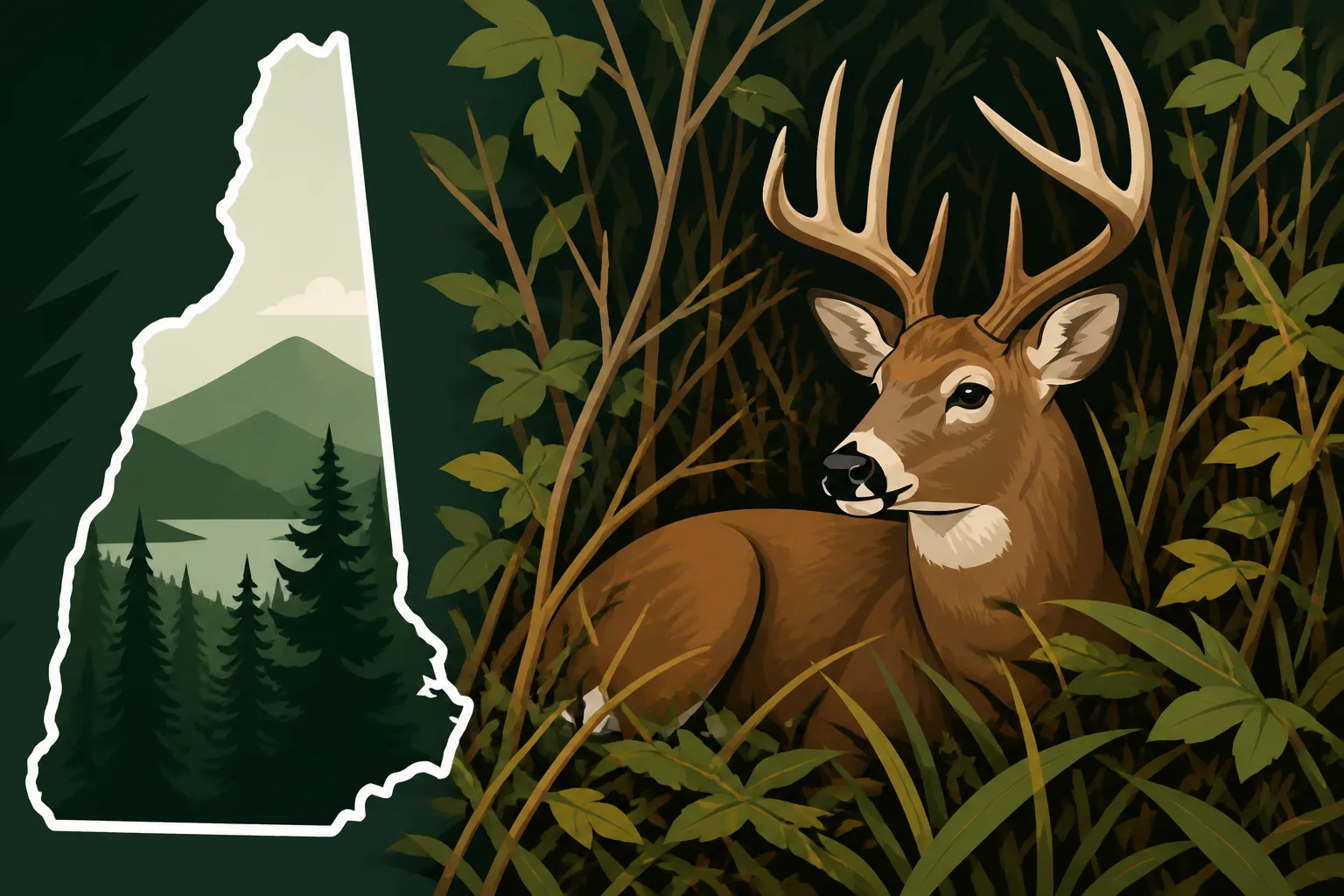
A buck's primary instinct is self-preservation. When a mature buck chooses a bedding location, security is paramount. They will always favor areas where they can see, smell, or hear approaching danger long before it becomes a threat. Thick cover, with its tangled branches and dense undergrowth, disrupts sightlines for predators like coyotes and hunters alike, forcing them to move slower and noisier. This gives the buck crucial extra seconds to detect the intrusion and slip away unnoticed.
Think about a gnarly blowdown in an old growth stand or a super thick regeneration plot after a timber harvest. A buck bedded inside that mess knows that anything coming his way is going to have to fight its way through, making noise and announcing its presence. He’ll often bed with his back to the thickest part, facing downwind, allowing him to use his eyes, ears, and nose to cover all angles. This isn't just a random choice; it's a calculated defensive position. When you're Hunting New Hampshire's Archery Season Into December, you'll quickly realize how important this security is to older bucks, especially as hunting pressure increases.
Thermal Regulation and Weather Shielding
Beyond security, thick cover offers practical benefits for a buck's comfort and survival through New Hampshire's often unpredictable weather. During harsh winter months, dense conifer stands, particularly cedar swamps and hemlock thickets, provide crucial thermal cover. The thick canopy traps warmer air and blocks chilling winds, reducing the energy a deer has to expend just to stay warm. Snowfall is also intercepted by the branches, leaving less snow on the ground for deer to wade through, making movement easier and conserving vital calories.
Conversely, during the hot days of early season or even a warm spell in October, these same dense areas can offer shade and cooler microclimates, helping deer avoid overheating. Imagine a scorching late September afternoon. A buck will seek out the deepest, shadiest part of a thicket, maybe even a north-facing slope with heavy softwoods, to escape the sun's direct rays. The ability to regulate body temperature without expending excessive energy is a key factor in a buck's choice of bedding, allowing them to conserve their energy for feeding and rutting activities. This is especially true when you're Hunting After a Poor Acorn Year, and deer need every calorie they can get.
Identifying Key Thick Cover Types for Bucks
New Hampshire's diverse landscape offers a variety of thick cover that bucks will utilize, depending on the region, time of year, and hunting pressure. From the White Mountains to the southern farmlands, understanding these specific types of habitat is crucial for honing your scouting and hunting strategies.
Regenerating Clearcuts and Logging Slash
One of the absolute best places to find bucks bedded in thick cover is in regenerating clearcuts or areas of heavy logging slash. These areas, though often a pain to walk through, are goldmines for deer. After a timber harvest, sunlight reaches the forest floor, spurring an explosion of new growth – briars, saplings, ferns, and browse. This dense understory provides both food and impenetrable cover. Bucks will often bed right in the middle of these areas, particularly on slightly elevated humps or ridges within the clearcut, giving them a slight advantage in detecting movement.
The tangle of fallen trees and branches from logging operations creates natural fortresses. These "slash piles" are not just obstacles for you; they are ultimate hiding spots for deer. A buck can lie down inside a pile of discarded limbs, completely concealed, yet still be able to peek out and observe his surroundings. These areas are particularly effective in areas with higher hunting pressure because many hunters shy away from the effort it takes to penetrate them. A good resource for understanding these areas is to consider how Finding Ground Others Walk Past often leads to success.
Cedar Swamps and Dense Softwood Thickets
Throughout New Hampshire, especially in the more northern and central regions, cedar swamps and dense softwood thickets (hemlock, spruce, fir) are prime bedding habitat. These evergreen stands offer year-round cover and vital thermal regulation, as mentioned earlier. The dense canopy and thick understory create a world separate from the surrounding hardwoods, often holding deer even when other areas are devoid of activity.
Bucks in these swamps will often bed on higher ground within the bog, such as small islands, humps, or the edges where the swamp transitions to dryer land. These slightly elevated spots provide a vantage point, allowing them to survey the swamp's interior while remaining obscured by the surrounding evergreens. Look for areas where the cedars or hemlocks are so thick you can barely see into them – that's often where a mature buck feels safest. When you're trying to figure out Where New Hampshire Bucks Bed in Thick Cover, these swampy areas are often overlooked by less dedicated hunters, making them even more attractive to reclusive deer.
Mountain Laurel and Steep, Rocky Terrain
In the more mountainous and hilly regions, like parts of the White Mountains and Monadnock regions, mountain laurel thickets and steep, rocky terrain provide excellent bedding opportunities. Mountain laurel, with its dense, interwoven branches, creates an almost impenetrable ground cover that offers fantastic concealment. Bucks will tunnel into these thickets, creating well-used trails and bedding depressions.
Coupled with steep, rocky terrain, these areas become even more secure. Bucks often prefer bedding on benches or small saddles halfway up a steep slope, especially on north-facing aspects which can be cooler. They'll position themselves to have a clear view downhill, letting the rising thermals carry their scent upwards, and relying on the steep incline to make approach difficult from above. This strategy allows them to detect danger approaching from below via sight and sound, and from above via scent. Utilizing tools like the GoHunt app to scout topography and elevation changes can highlight these prime bedding spots on your map. For more insights on navigating these challenging areas, consider reading up on Still-Hunting White Mountain National Forest Timber.
Scouting and Locating Buck Bedding Areas
Finding these thick cover bedding areas is often the most challenging part of hunting mature bucks. It requires a combination of detailed pre-season analysis, on-the-ground detective work, and modern technology. Don't expect to just stumble upon them; you need to be strategic.
Using Maps and Aerial Imagery for Pre-Season Scouting
Your scouting starts long before you ever step foot in the woods. Modern mapping applications are invaluable for identifying potential bedding areas from the comfort of your home. Look for large blocks of dark green on satellite imagery, indicating dense evergreen cover, or areas with recent timber activity which will show up as lighter, disturbed sections that regenerate quickly. Identify steep terrain, particularly benches and saddles on hillsides. Pay attention to water sources – swamps, beaver flowages, and creek bottoms often have dense, low-lying cover.
The GoHunt app, for example, allows you to overlay different map layers, including public land boundaries, topography, and even timber cut data if available. This can help you identify areas where a thick clearcut meets a cedar swamp on a north-facing slope – a buck's dream bed. Mark these potential spots on your map and create a game plan for a physical scouting trip. Don't forget to study how wind currents might interact with the terrain, as understanding Wind and Thermals in Steep Granite Terrain is crucial for both locating and hunting these spots effectively.
On-the-Ground Sign Reading and Subtle Clues
Once you've identified potential bedding areas on your maps, it's time for some boots-on-the-ground reconnaissance, preferably outside of hunting season to minimize disturbance. When you enter these thick areas, move slowly and deliberately. Look for distinct buck sign: large rubs on saplings and small trees, particularly along the edges or within the cover itself, indicating a buck marking his territory. Scrape lines, especially those with larger hoof prints, can also be a clue, though bucks will often create these near bedding areas, not necessarily in them.
The most direct evidence of a bedding area is finding actual beds. These will be depressions in the leaves or snow, often with disturbed vegetation around them. Mature buck beds are typically larger and more secluded than doe or younger buck beds. Look for multiple entry and exit trails leading into and out of the thick cover. These trails are often subtle and require a keen eye, but they will show a pattern of consistent use. Pay attention to droppings and tracks. Fresh, large tracks entering a thicket without exiting on the same side might mean a buck has ducked in for the day. Learning to accurately Read New Hampshire Mud for Fresh Deer Movement can give you a significant advantage.
Leveraging Technology Like GoHunt for Data-Driven Decisions
While traditional scouting is invaluable, modern technology can significantly boost your efforts. Beyond just maps, the GoHunt app can help you track historical weather patterns, lunar cycles, and even potential pressure points from other hunters if you're hunting public land. This data can inform your decision-making on when and how to approach a bedding area. For instance, if you see consistent west winds predicted, you can plan your approach to stay downwind of a bedding area you identified on your map, rather than just guessing.
Trail cameras, used responsibly and legally on public or private land, can confirm bed usage and provide intel on buck movement patterns around the edges of thick cover. While you generally wouldn't place a camera in a bedding area to avoid disturbing it, placing one on a well-used trail leading into or out of thick cover can reveal when bucks are using that sanctuary. Always remember to check Trail Camera Rules on New Hampshire Public Land before deploying them. By integrating these technological insights with your traditional scouting, you can build a comprehensive understanding of where those elusive New Hampshire bucks are bedding.
Hunting Strategies for Pressured Bedding Zones
Once you've located a prime thick-cover bedding area, the real challenge begins: how to hunt it effectively without alerting the buck or pushing him out of the area entirely. Hunting these sanctuaries requires a highly disciplined and strategic approach.
Stealthy Access and Exit Routes
This is paramount. A buck in a thick cover bedding area is already on high alert. Your approach needs to be as quiet and undetected as possible. Plan your route carefully, using natural terrain features like ditches, creek beds, or ridge lines to mask your movement and scent. Avoid busting through open areas or walking directly into the wind of the bedding spot. Often, this means taking a longer, more circuitous route.
If possible, identify a natural barrier that you can use for your approach – perhaps a beaver flowage or a dense, impenetrable briar patch that you can skirt along. Consider how you will exit as well. A noisy exit can spoil the spot for future hunts. Many hunters make the mistake of having a great setup, but then blow out deer on the way out. For evening hunts, plan to extract yourself long after dark, giving deer time to filter out of the bedding area and into feeding zones. This attention to detail is critical, especially when you're considering Cold-Weather Sitting Strategy in the North Country where every rustle can be heard.
Playing the Wind and Thermals
The wind is your best friend or your worst enemy when hunting thick cover bedding areas. Always, always, always approach and set up downwind of where you expect the buck to be. But in New Hampshire's hilly and mountainous terrain, it's not always a simple matter of checking a weather app. Thermals, which are air currents influenced by temperature changes, play a huge role, especially at dawn and dusk. In the morning, cold air sinks, carrying your scent downhill. In the evening, warm air rises, carrying your scent uphill.
You need to understand how the wind and thermals will combine at your specific location throughout your hunt. Use a wind checker frequently to monitor even subtle shifts. If you're on a hillside, you might need to set up slightly off to the side of the prevailing wind to account for rising or falling thermals. The goal is to have the wind or thermal carry your scent away from the bedding area, while also giving you a chance to catch a buck's scent as it might swirl. For in-depth knowledge on this, referring to a guide on Wind and Thermals in Steep Granite Terrain can make a real difference.
Setting Up for a Quick, Ethical Shot
Thick cover often means limited shooting lanes. Before you even set foot in your stand or ground blind, visualize where a buck might appear and identify potential shooting windows. Clear a few small lanes with pruning shears if necessary, but don't overdo it and disturb the area too much. You want just enough space for an ethical shot, not wide-open lanes that scream "hunter here!"
In these tight quarters, shots will likely be close and fast. Practice shooting in similar confined situations, perhaps with branches partially obscuring your target, to simulate the real scenario. Whether you're using a rifle, a bow, or a crossbow, ensure you're proficient at hitting your mark quickly and accurately. Your goal is to make a clean, ethical kill and avoid a long, difficult blood trail through the very thick cover you're hunting. Being prepared for a close encounter and knowing your gear, whether you're using a traditional bow or Setting Up a Crossbow in New Hampshire's Approved Units, is absolutely essential for success and responsible hunting.
Here's a quick comparison of common thick cover types and their characteristics:
| Cover Type | Typical Location | Primary Benefit for Bucks | Hunting Challenge | Best Time to Hunt |
|---|---|---|---|---|
| Regenerating Clearcuts | All WMUs, post-logging | Food & Impenetrable Cover | Very noisy to penetrate | Early to Mid-Season |
| Cedar Swamps | North/Central NH, lowlands | Thermal Cover, Seclusion | Difficult access, wet | Late Season, Cold |
| Dense Softwood Thickets | All WMUs, often ridges | Year-round concealment | Limited visibility | All Season |
| Mountain Laurel Thickets | Hilly/Mountainous regions | Extreme Concealment | Extremely dense, noisy | Rut, Mid-Day |
| Steep, Rocky Terrain | Mountainous regions | Elevation Advantage | Difficult footing, swirling winds | Early Season, Rut |
| Beaver Flowage Edges | All WMUs, river bottoms | Water barrier, dense growth | Wet, muddy approach | Early/Late Season |
Disclaimer
Always consult the most current New Hampshire Fish and Game Department regulations before heading afield. Hunting laws and seasons can change, and it is your responsibility to ensure you are compliant with all local and state regulations.