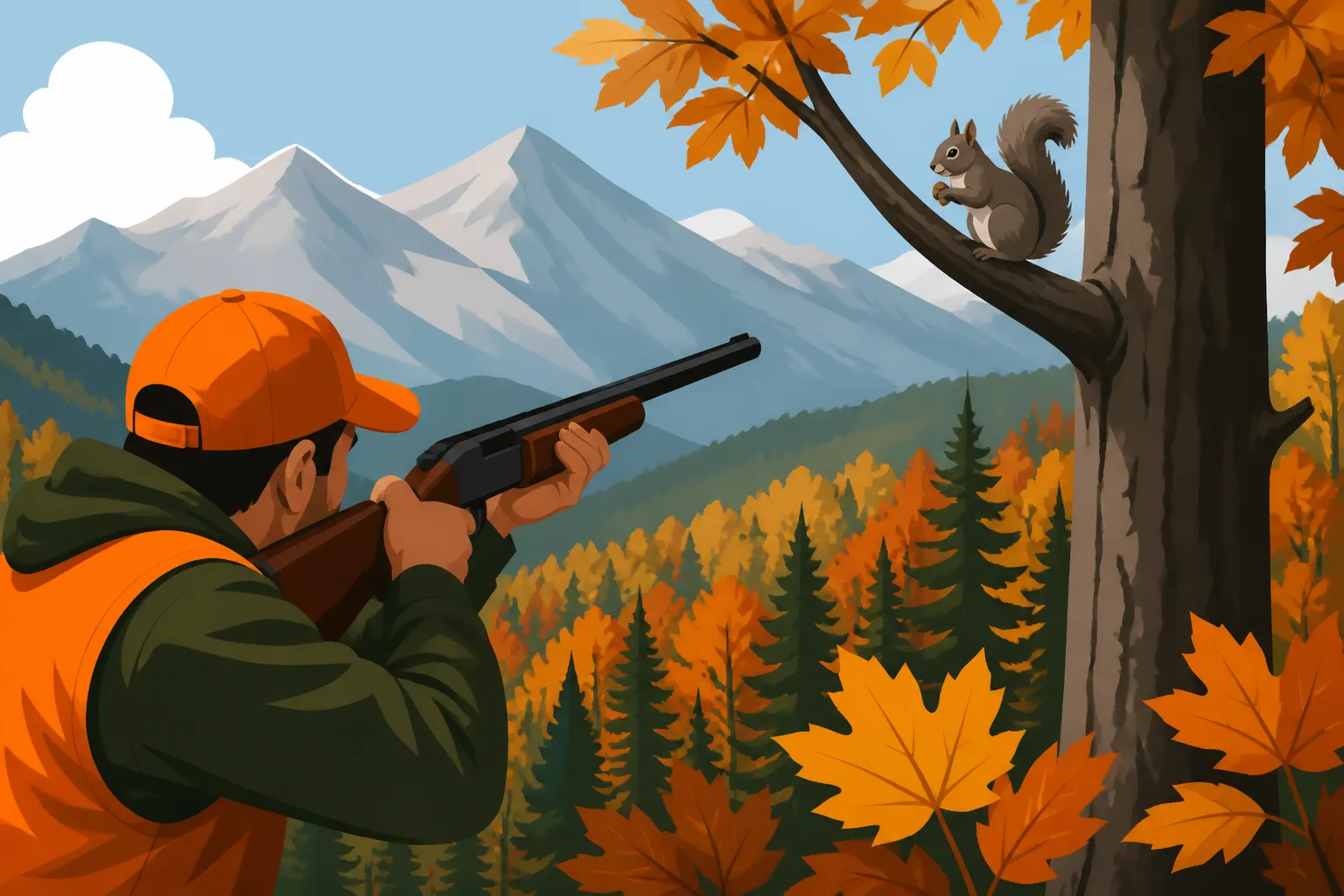
Squirrel Hunting White Mountain Hardwoods
Hunting gray squirrels in the sprawling hardwood forests of New Hampshire's White Mountains can be a truly humbling experience, mixing challenging terrain with the thrill of pursuing one of our most overlooked game animals. If you've ever felt frustrated trying to spot those camouflaged critters amongst the towering oaks and maples, or struggled with steep ascents and descents, you're certainly not alone. This guide is here to walk you through everything you need to know, from understanding squirrel behavior in this unique environment to the specific gear and tactics that will put more bushy-tails in your vest.
Understanding the White Mountain Hardwood Ecosystem for Squirrels
The White Mountain region, while famous for its high peaks and softwood stands, also boasts vast tracts of mature hardwoods that are prime habitat for gray squirrels. These areas are not just pretty scenery; they're bustling ecosystems where squirrels find everything they need to thrive, making them fantastic hunting grounds if you know where to look.
Preferred Habitats and Tree Species
When you're looking for squirrels in the White Mountains, your eyes should be peeled for specific tree species. The absolute kings of squirrel food in New Hampshire are the mighty oak and beech trees. Red oaks, white oaks, and American beeches drop incredibly valuable mast (nuts) that squirrels simply can't resist. You'll often find these mature stands clinging to hillsides, nestled in coves, or forming broad canopies in less steep valley floors. Maple and birch trees also offer some food sources, especially in lean mast years, but it's the nut-bearing trees that truly draw the crowds. Squirrels will often create "dreys" – those big, messy nests of leaves and twigs – high up in these trees, providing a clear visual cue of their presence. Look for these nurseries, especially near the top of older, larger trees with sturdy limbs.
Transition zones are also goldmines. Think about where a dense conifer stand meets an open hardwood ridge. These edges offer both food from the hardwoods and excellent escape cover in the pines or spruces. Squirrels will use these borders like highways, moving between feeding and bedding areas. The steeper, rockier sections of these hardwood zones often have less ground clutter, which can sometimes make spotting squirrels easier, but the climbing can be a real workout.
Essential Food Sources and Mast Crops
The lifeblood of a healthy White Mountain squirrel population is the annual mast crop. Acorns from oak trees and beechnuts from beech trees are absolutely critical. Squirrels will spend hours, even days, gorging themselves and caching these nutrient-rich nuts for winter. A good mast year means robust squirrel numbers and active feeding behavior; a poor year means squirrels might be more dispersed, traveling further for food, and perhaps even competing more intensely.
Knowing what the mast crop looks like each fall can be a huge advantage. If the oaks are dropping heavy, focus your efforts there. If it's a banner year for beechnuts, zero in on those areas. You can often tell how good a mast year is by simply walking through the woods and looking at the ground. Piles of broken acorn shells or scattered beechnut husks are tell-tale signs of a busy squirrel dining room. Sometimes, after a lean mast year, squirrels might turn to other food sources like buds, inner bark, or even mushrooms, but the nuts are always preferred.
Water Sources and Travel Corridors
Even in the mountains, water is a crucial element. Squirrels need to drink, and while they can get some moisture from their food, readily available water sources can concentrate activity. Look for small springs, seepages, or the banks of mountain streams and brooks, especially in drier periods. Squirrels will often move along these water corridors, offering predictable travel routes.
Beyond water, squirrels are creatures of habit and efficiency. In the undulating terrain of the White Mountains, they utilize natural travel corridors extensively. Ridgelines, old logging roads, and even subtle benches or ravines serve as highways between feeding areas, den trees, and water. A keen hunter using a mapping tool like GoHunt can easily identify these features from topo maps and aerial imagery, allowing them to anticipate squirrel movement. Understanding the way wind and thermals move in steep granite terrain can also help you position yourself quietly.
Essential Gear and Preparation for Mountain Squirrel Hunting
Hunting in the White Mountains is physically demanding and requires gear that can stand up to the elements and the terrain. Being prepared isn't just about comfort; it's about safety and effectiveness.
Firearms and Ammunition Choices
For squirrel hunting, precision is key. A .22LR rifle is hands down the most popular and effective choice. Whether it's a bolt-action for ultimate accuracy or a semi-automatic for quicker follow-up shots, the .22LR offers minimal recoil, quiet operation, and ample power for gray squirrels. When selecting ammunition, try a few different brands and bullet weights to see what your rifle prefers. Standard velocity or sub-sonic rounds are often preferred for their quieter report and consistent accuracy, especially if you're trying to not spook every other squirrel in the woods. For those looking to really test their marksmanship, some hunters opt for a .17 HMR, which offers a flatter trajectory over longer distances, though it's often considered overkill for squirrels.
Shotguns can also be effective, particularly for running squirrels or those in thick cover where a precise rifle shot is difficult. A .410, 20-gauge, or even a 12-gauge with light loads (like #6 or #7.5 shot) can be used. The challenge with a shotgun in mountainous terrain is carrying the extra weight and the increased noise compared to a .22, which might scare game further away. If you're hunting in areas where shots might be quick and close, a nimble .410 might be a good choice, but for the open hardwoods of the White Mountains, a .22LR rifle typically excels.
Optics, Footwear, and Clothing for the Terrain
Optics are non-negotiable for squirrel hunting in the hardwoods. A good pair of binoculars (8×32 or 10×42 are excellent choices) will allow you to scan tree trunks, branches, and leaf litter for subtle movements or the tell-tale twitch of a bushy tail without moving your head too much. Even when still-hunting, constant scanning with binoculars will reveal many more squirrels than just using your naked eye.
Footwear is paramount. You'll be climbing, descending, and navigating uneven, rocky, and often slippery ground. Invest in high-quality, waterproof hiking boots with excellent ankle support and a stiff sole. Something like a pair of insulated Crispi or Kenetrek boots, while an investment, will save your feet and prevent potential injuries. For more on selecting appropriate footwear, check out our guide on Best Boots for White Mountain Granite Trails.
Clothing should be layered, comfortable, and quiet. New Hampshire weather, especially in the White Mountains, can change rapidly. Start with a moisture-wicking base layer, add an insulating mid-layer (fleece or lightweight puffy), and top it off with a quiet, waterproof/windproof outer shell in a good hardwood camouflage pattern. Early season hunts might just require a light jacket, but as fall progresses into winter, you'll want to pack more insulation. A guide like Layering for New Hampshire's Cold Hunting Season can offer more detailed advice on dressing for success in varied conditions. Don't forget a warm hat and gloves, even if you think you won't need them.
Navigation and Safety in Mountainous Woods
Getting lost in the White Mountains is no joke, even on a day hunt for squirrels. Always carry reliable navigation tools. A dedicated GPS unit or a smartphone with a robust offline mapping app (like GoHunt, which allows you to download detailed topo maps and satellite imagery for areas without cell service) is essential. GoHunt is excellent for marking your truck, tracking your path, and identifying public land boundaries. Don't forget a physical map and compass as a backup – batteries die, and electronics fail. For more tips on utilizing digital tools, see our article on Scouting With the New Hampshire Fish and Game App.
Safety means more than just not getting lost. Always inform someone of your hunting plans, including your route and expected return time. Carry a small first-aid kit, a headlamp (even if you plan to be out before dark, things can change), a whistle, and plenty of water and snacks. The exertion of climbing can lead to dehydration faster than you think. Understanding New Hampshire Hunter Education Requirements is also crucial for safe and ethical hunting practices in the Granite State.
Proven Tactics for Hunting White Mountain Hardwood Squirrels
Once you've got your gear dialed in, it's time to talk strategy. Squirrels in the White Mountains present a unique challenge, but with the right approach, you can consistently find success.
Still-Hunting and Spot-and-Stalk Strategies
Still-hunting is arguably the most effective method for squirrels in the White Mountain hardwoods. This involves moving incredibly slowly, taking only a few steps, then pausing for several minutes to scan the trees and forest floor with your binoculars. Squirrels are masters of camouflage, and their natural instinct is to freeze when they sense danger. It's often during these pauses that you'll spot a squirrel that was previously hidden, either by a tree trunk or by its own stillness.
As you move, pay attention to the ground. Listen for the rustle of leaves, the bark of a squirrel, or the tell-tale tap-tap-tap of a squirrel cutting a nut high in a tree. Use the terrain to your advantage: move along contours, use hillsides as cover, and always be mindful of the wind direction to keep your scent from drifting to your quarry. When you spot a squirrel, evaluate the shot carefully. Are there branches in the way? Is it too high? Is it moving? If the squirrel is on the ground, a slow, deliberate spot-and-stalk can bring you within range. If it's in a tree, try to maneuver for a clear shot while using the tree itself as a shield if needed. For general scouting tips that apply to all game, including small game, our guide on Finding Sign in White Mountain Timber is a great resource.
Calling and Decoying Techniques
While not as common as for turkeys or deer, calling can absolutely play a role in squirrel hunting, especially for locating wary animals. Squirrel bark calls, which mimic their excited chatter, can sometimes elicit a response from other squirrels, giving away their position. A simple mouth call or even just mimicking their barks with your voice can work.
Distress calls, on the other hand, can sometimes pique a squirrel's curiosity, causing them to hold still or even come closer to investigate. These calls mimic an injured squirrel or other small critter. Experiment with different calls and see how the squirrels in your hunting area react. Decoying, however, is rarely used for squirrel hunting; their visual attention is usually drawn to movement and predators, not static representations of their kind. Focus your efforts on sound and stealth rather than visual aids.
Interpreting Squirrel Sign and Behavior
Learning to "read" the woods for squirrel sign will significantly increase your success. The most obvious sign is chewed nuts on the forest floor, especially under oak or beech trees. Look for fresh cuttings, indicating recent activity. Squirrels are messy eaters, and they'll leave behind a trail of evidence.
Leaf nests, or dreys, are another clear indicator. These bulky nests, typically high in the crotches of deciduous trees, signify a squirrel's home turf. While not every drey is actively occupied, a cluster of them usually means a thriving local population. Listen intently for their characteristic chatter and barking – squirrels are vocal, especially when alarmed or communicating about food sources. A quick tail flick or a subtle rustle in the leaves are also major giveaways.
Their behavior is also telling. In early morning or late afternoon, squirrels are often most active, feeding on the ground or in the lower canopy. During midday, especially on sunny days, they might retreat to higher branches for sunning or napping. After a period of inactivity, like during or immediately after heavy rain, squirrels often become highly active, eager to feed. As discussed in How Early Season Squirrels Give Themselves Away, spotting these clues quickly is vital, especially when foliage is still thick.
Hunting After a Cold Front or Rain
Weather plays a significant role in squirrel activity. A common pattern hunters observe is that squirrels become incredibly active after a cold front moves through or following a period of rain. When the weather breaks and the sun comes out, squirrels often emerge from their dens or sheltered spots, ravenously hungry and ready to feed. This is an excellent time to be in the woods. The crisp, cool air can also make hearing their movements easier, and the ground might be damp, making your own footsteps quieter.
Conversely, during heavy rain, high winds, or extreme cold, squirrels will often hunker down and be less visible. Planning your hunts around these weather patterns can dramatically improve your chances of encountering active squirrels, making your time in the White Mountain hardwoods much more productive.
Maximizing Your White Mountain Squirrel Harvest
Beyond the immediate hunt, there are broader considerations to ensure a successful and ethical squirrel season in the White Mountains.
Early Season vs. Late Season Approaches
The White Mountain squirrel season offers distinct challenges and opportunities depending on when you hunt.
Early Season (September/October):
- Challenges: Dense foliage makes spotting squirrels incredibly difficult. Mosquitoes and other biting insects can still be an issue. Temperatures can fluctuate wildly.
- Opportunities: Squirrels are often less wary, and young-of-the-year squirrels are plentiful. Mast crops are just starting to drop, leading to concentrated feeding activity.
- Tactics: Focus on listening intently. Move extra slowly and rely heavily on your binoculars to pick out movement in the leaves. Consider shorter hunts during peak activity times (early morning, late afternoon).
Late Season (November/December and beyond):
- Challenges: Colder temperatures, potential for snow and ice, reduced daylight hours. Squirrels might be warier after hunting pressure.
- Opportunities: Deciduous trees have dropped their leaves, dramatically improving visibility. Snow on the ground can help locate tracks and make squirrels stand out.
- Tactics: Still-hunting becomes even more effective due to increased visibility. Look for tracks in fresh snow. Focus on areas with remaining mast, often under persistent oak stands or where cached nuts are being dug up. Layering your clothing, as outlined in Layering for New Hampshire's Cold Hunting Season, is critical for staying comfortable and still.
| Feature/Tactic | Early Season (Sept-Oct) | Late Season (Nov-Dec+) |
|---|---|---|
| Visibility | Low (dense foliage) | High (leaf-off, potential snow) |
| Squirrel Behavior | Often less wary, young squirrels plentiful, concentrated feeding | Warier, focus on cached food, active after cold fronts |
| Preferred Areas | Fresh mast drops, transition zones | Persistent oak stands, sunny slopes for warmth, cached food sites |
| Key Tactic | Listen intently, slow still-hunting, glassing every branch | Spot-and-stalk, track in snow, long-range glassing |
| Gear Focus | Bug spray, lighter layers, focus on scent control | Warm layers, insulated boots, snowshoes (if needed) |
| Challenges | Spotting through leaves, insects | Cold, snow, ice, more wary game |
Field Dressing and Game Care in the Backcountry
Once you've harvested a squirrel, proper field dressing and game care are important for preserving the meat. While it's tempting to just toss them in a game bag, especially in colder weather, quick field dressing improves meat quality.
The simplest method is to quickly gut the squirrel on site. Make a small incision along the belly, remove the entrails, and let the cavity cool. This prevents bacterial growth and removes internal heat. If you're going to be out for several hours, or if the weather is warm, consider skinning the squirrel in the field as well. There are several efficient techniques for skinning squirrels, often involving making an incision across the back, stepping on the tail, and pulling the skin off like a jacket.
Once field dressed, place the squirrels in a breathable game bag or mesh sack, allowing air circulation. Avoid plastic bags, which can trap heat and moisture. When you get home, refrigerate them quickly. You can then fully skin, clean, and butcher them. Squirrel meat is delicious and versatile, perfect for stews, roasts, or even fried.
Legal Considerations and Regulations
Before heading out into the White Mountains, it is absolutely crucial to be familiar with the current New Hampshire Fish and Game regulations. These rules are updated annually, so never assume previous seasons' rules still apply. Pay close attention to:
- Season Dates: Squirrel hunting seasons typically run for an extended period through the fall and winter, but exact dates vary.
- Bag Limits: New Hampshire usually has a generous daily bag limit for gray squirrels, but it's important to know the specific number.
- Legal Hours: Hunting is generally allowed from one-half hour before sunrise to one-half hour after sunset.
- Weapon Restrictions: Ensure your chosen firearm (e.g., .22LR rifle, shotgun) is legal for small game in New Hampshire.
- Public Land Rules: Be aware of any specific regulations for hunting within the White Mountain National Forest or specific Wildlife Management Areas. For example, some areas might have restrictions on vehicle access or camping. For general small game regulations, refer to the New Hampshire Small Game and Predator Hunting in New Hampshire guide.
Always carry your valid New Hampshire hunting license and any required permits. Ignorance of the law is not an excuse. A quick check of the New Hampshire Fish and Game website or a copy of the current digest will keep you compliant and ensure a legal, enjoyable hunt.
Disclaimer
Please remember that hunting regulations, seasons, and public land access rules can change. Always consult the most current New Hampshire Fish and Game Department regulations before planning any hunting trip. Safety should always be your top priority in the field.