Night Hunting Rules for New Hampshire Coyotes
It’s easy to feel a bit lost in the wilderness when it comes to understanding all the nuances of hunting regulations, especially something as specific as night hunting. Many folks in New Hampshire, especially those new to predator control or expanding their hunting horizons, often wonder, "Can I even hunt coyotes after dark, and if so, what are the actual rules?" The truth is, New Hampshire's regulations around night hunting for coyotes are quite specific, and it's absolutely crucial to get them right to stay legal and safe. This guide is here to untangle those complexities, providing a clear roadmap for anyone looking to pursue coyotes under the moonlit skies of the Granite State.
Understanding New Hampshire's Legal Framework for Night Hunting Coyotes
Night hunting often carries a mystique, but in New Hampshire, it’s a legal and effective method for coyote management, provided you adhere to a very clear set of rules. Unlike deer or bear, coyotes present a unique challenge and require different management strategies, which is why the state allows for extended hunting hours under specific conditions. It’s not a free-for-all, however; there are strict guidelines designed to ensure safety, minimize conflicts with other wildlife or property owners, and maintain ethical hunting practices. Understanding these foundational laws is your first step into successful and responsible night hunting.
General Regulations for Coyote Hunting
Before we dive into the specifics of hunting coyotes after dark, it’s important to remember the baseline rules that apply to all coyote hunting, day or night. New Hampshire classifies coyotes as unprotected furbearers, meaning there’s no closed season and generally no bag limit. This offers incredible flexibility, but it also means hunters must be extra vigilant about safety and public perception. You’ll still need a valid New Hampshire hunting license, which is your fundamental permit to hunt any game species in the state. Always carry it with you, along with a separate small game or trapping license if you plan on engaging in other predator control methods like Trapping New Hampshire Furbearers.
It's also worth noting that while coyotes can be hunted year-round, certain areas or specific town ordinances might have additional restrictions, particularly concerning discharge of firearms or hunting near populated areas. Always check local bylaws in the area you intend to hunt. This due diligence can save you a lot of grief and ensure you're not inadvertently trespassing or disturbing residents. Ignorance of the law is never an excuse, and New Hampshire Fish and Game wardens are diligent in enforcing all regulations, day and night.
For those getting started, or even seasoned hunters looking for a refresher, considering a hunter education course is always a good idea, even if you’ve already fulfilled the New Hampshire Hunter Education Requirements. These courses often cover basic wildlife identification, ethical hunting practices, and firearm safety, all of which are paramount when pursuing cunning predators like coyotes.
Specifics of Night Hunting Hours and Permits
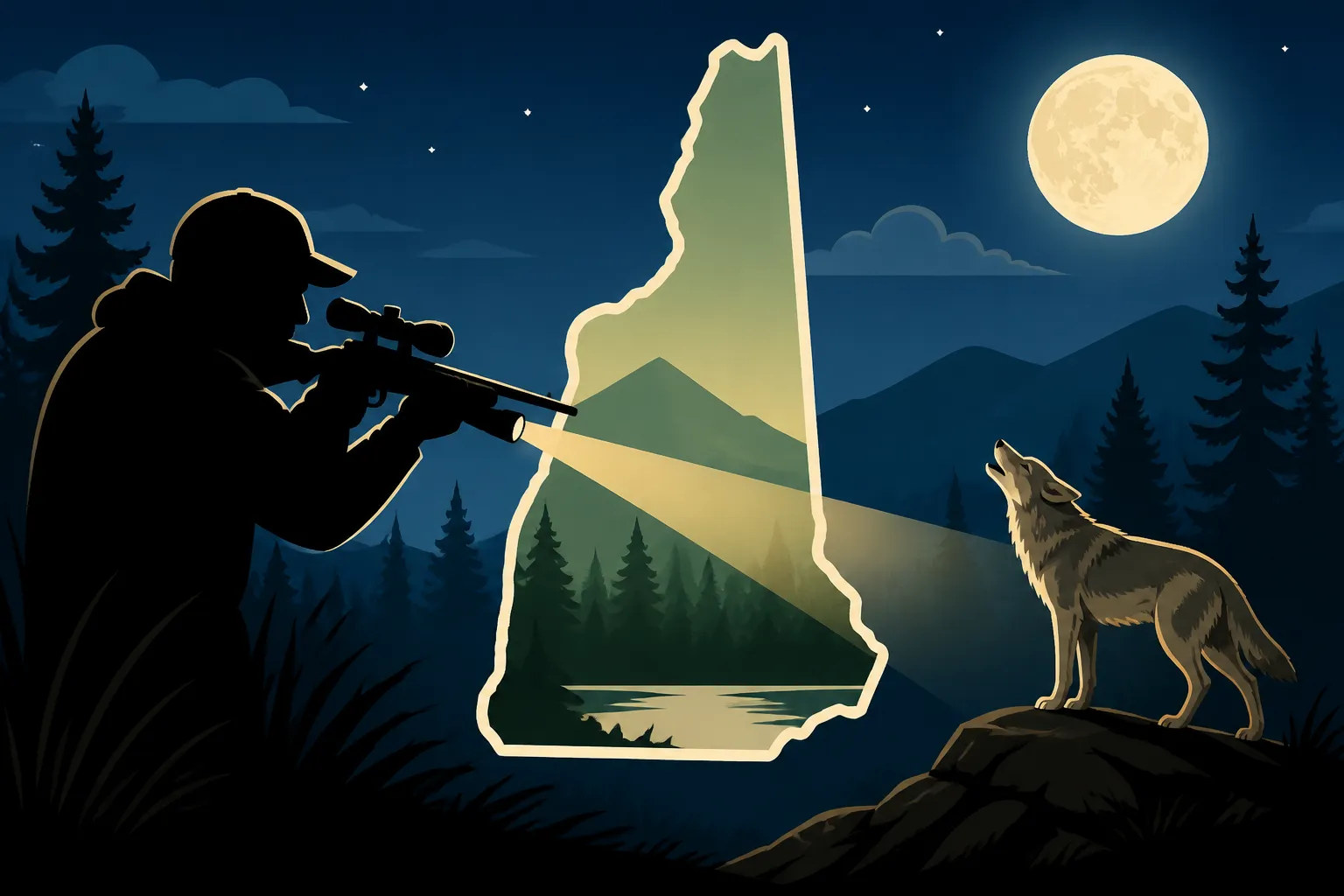
Now, let's get to the heart of night hunting. In New Hampshire, it is not legal to hunt most game species at night. However, coyotes are a special exception. You are permitted to hunt coyotes at night, but critically, only with the aid of an artificial light and specific permit. This isn't something you can just decide to do spontaneously; there's a process involved that ensures the state is aware of who is hunting when and where, primarily for public safety and to monitor activity.
To legally hunt coyotes at night with an artificial light, you must obtain a special permit from the New Hampshire Fish and Game Department. This permit is typically inexpensive, but it’s non-negotiable. The application process usually involves providing your hunting license details and specifying the general area you intend to hunt. The permit helps Fish and Game keep tabs on night hunting activity and can sometimes include specific conditions or restrictions for your safety and that of others. Without this permit, hunting coyotes at night, even if you feel like you’re doing everything else right, is illegal.
The "artificial light" aspect is also key. This permit specifically allows you to use lights to spot and shoot coyotes, a practice that is otherwise strictly prohibited for most hunting in New Hampshire. The goal here is to give hunters an edge against a nocturnal predator that is incredibly adept at using the cover of darkness. Without that light, spotting a coyote in the pitch black would be nearly impossible for most, making night hunting largely ineffective. Always remember that the permit is for the use of artificial light, not for hunting at night without it.
Weaponry and Equipment Restrictions at Night
When it comes to the tools of the trade for night hunting coyotes, New Hampshire has specific regulations that dictate what you can and cannot use. This is where it gets a little different from your typical daytime deer hunt. For night hunting coyotes, the primary legal firearm options are shotguns or rimfire rifles. Centerfire rifles, while popular for daytime predator hunting, are generally restricted for night use. This regulation is largely a safety measure, as centerfire rounds can travel significant distances, posing a greater risk in low-light conditions.
Shotguns loaded with shot not larger than number 2 buckshot are common, offering a good pattern for moving targets at closer ranges often encountered at night. Rimfire rifles, typically .22 caliber, are also permissible and are often favored for their lower report and reduced range, making them a safer option in more populated areas. While you might consider using a more powerful caliber for Coyote Calling New Hampshire Farm Country during the day, remember these restrictions apply specifically to night hunting with artificial lights.
Additionally, while you can use an artificial light, there are rules about how that light can be integrated with your weapon. Attaching a light directly to the firearm is often legal, but ensure it meets any luminosity or power restrictions outlined in your permit or the hunting digest. Thermal imaging scopes or night vision devices that enhance ambient light are also typically permitted, but those that project an infrared beam (active IR illumination) might have additional regulations or be prohibited depending on the specific device and the interpretation of "artificial light" for your permit. Always consult the most current New Hampshire Fish and Game Digest or contact them directly if you're unsure about specific equipment. Staying informed is vital, and a quick call can prevent a costly mistake.
Navigating Equipment and Techniques for Night Hunts
Night hunting coyotes is a thrilling pursuit, but it demands more than just a keen eye. It requires specialized equipment and a thoughtful approach to both technique and ethics. The darkness adds layers of complexity, from identifying your target to ensuring every shot is safe and responsible. This isn't just about bagging a coyote; it's about doing so with precision, respect for the animal, and consideration for the surrounding environment.
Essential Gear for Safe and Effective Night Calling
Your gear list for a night coyote hunt will look a bit different from your typical daytime setup. Beyond your chosen shotgun or rimfire rifle, a powerful, reliable artificial light is paramount. This could be a handheld spotlight, a head-mounted lamp, or even a weapon-mounted light. Many hunters prefer lights with adjustable beams and filters (red or green filters are popular, as some believe coyotes are less spooked by these colors). Brands like GoHunt often review various lighting solutions, highlighting models that offer both impressive throw and battery life, which are critical when you're out in the dark for hours. Look for lights that cast a bright, focused beam to pick up eye shine from a distance, but also have a wider flood setting for scanning closer terrain.
Beyond the light, a quality electronic caller is almost indispensable for night hunting. Coyotes respond well to distress calls (rabbit, fawn, or bird) and sometimes to howls. Programming your caller with a variety of sounds allows you to adapt to different situations. A comfortable and insulated seat or pad is also essential, as you'll likely be sitting still for extended periods in potentially cold, damp New Hampshire nights. Don't forget a Best Headlamp for a Pre-Dawn Granite Climb (or in this case, a pre-dusk setup) for navigating to and from your spot safely without disturbing the area with your main spotlight.
Finally, safety gear is non-negotiable. Always have a fully charged cell phone (though service can be spotty in remote areas), a first-aid kit, and an understanding of your surroundings. A good pair of warm, waterproof boots is also a must, as New Hampshire nights can be surprisingly chilly, even in the "warmer" months. Having a reliable mapping app like GoHunt on your phone or a dedicated GPS unit can be a lifesaver for navigation, especially when disoriented by darkness.
Ethical Considerations and Best Practices
Ethical hunting should always be at the forefront, and night hunting coyotes is no exception. Because you’re operating in darkness with the aid of artificial light, shot placement and target identification become even more critical. You must be absolutely certain of your target and what lies beyond it before taking a shot. This means waiting for a clear, unobstructed shot, preferably when the coyote is standing still. Never take a running shot at night unless you are 100% confident in your abilities and the safety of the shot.
Another ethical consideration is minimizing disturbance to other wildlife and property owners. Avoid shining your light directly into homes or on livestock. Keep your calling volume appropriate for the area you're hunting; an overly loud call can carry for miles and irritate residents. When setting up, consider wind direction carefully, just as you would during a daytime hunt. Coyotes have an incredible sense of smell, and hunting after dark doesn't negate their ability to scent you. For effective Predator Calling New Hampshire's White Mountain Backcountry, often a patient, low-key approach is best.
Many experienced night hunters choose to work in pairs. One person can operate the light, scanning for eye shine, while the other focuses on the firearm. This division of labor enhances safety and efficiency, as a second set of eyes can often spot things the primary shooter might miss. It also adds an extra layer of accountability and a quick resource in case of an emergency.
Calling Strategies for New Hampshire Coyotes After Dark
Coyotes are incredibly intelligent and adaptable, making them challenging quarry. Night hunting strategies often leverage their natural nocturnal tendencies and their opportunistic predatory instincts. Start your calling sequence quietly, gradually increasing volume. Many hunters begin with a soft, pleading rabbit distress call, allowing 5-10 minutes of silence before increasing volume or changing to a different sound. GoHunt’s forums are often a great place to pick up tips from other experienced night hunters regarding successful calling sequences.
Varying your calls is key. If a distress call isn't working, try a challenge howl or a lone howl to pique their curiosity or tap into their territorial instincts. Patience is a virtue in coyote hunting, especially at night. Coyotes might circle downwind, taking their time to approach, so remain vigilant and scan constantly. Use your light to quickly identify any incoming animals, looking for the tell-tale eye shine.
When a coyote approaches, be ready to make a quick, accurate shot. Often, the light will freeze them momentarily, giving you a small window. If they hang up out of range, a subtle lip squeak or another short distress sound can sometimes bring them in those last few crucial yards. Remember to keep the light on the animal once you've identified it and are preparing to shoot, as this helps with target acquisition and confirms you're aiming at a coyote, not another animal. Successful night calling in New Hampshire hinges on combining effective sound sequences with disciplined light management and unwavering patience.
Safety, Land Access, and Reporting
Responsible hunting is always a blend of skill, safety, and adherence to the law. When you add the element of darkness to coyote hunting, these factors become even more critical. Ensuring you have legal access to the land, prioritizing safety for yourself and others, and properly reporting your harvest are not just recommendations; they are fundamental requirements for enjoying the sport and preserving its future in New Hampshire.
Prioritizing Safety During Night Hunting
Hunting at night inherently comes with increased risks. Visibility is severely limited, even with artificial lights, which means identifying your target and what lies beyond it requires extreme caution. Always be absolutely sure of your target and what’s in front of and behind it. Never take a shot towards a skyline, or if you can't clearly distinguish the animal from its background. Remember that in New Hampshire, New Hampshire Public Land Hunting Hours are typically restricted to daytime for most species, further emphasizing the unique responsibility of night coyote hunters.
Beyond target identification, navigation in the dark is another major safety concern. Familiarize yourself thoroughly with the terrain in daylight before attempting to hunt it at night. Mark potential hazards, property lines, and your entry/exit routes. Carrying a reliable GPS device or a mapping app like onX Hunt (often mentioned in GoHunt discussions for its robust map layers) is crucial. Let someone know where you're going and when you expect to return. Hunting with a partner, as mentioned, significantly enhances safety by providing an extra set of eyes and an immediate resource in an emergency.
Also, be mindful of your firearm handling in the dark. Always know where your muzzle is pointed. Load and unload your firearm carefully. It’s easy to get disoriented, so maintaining strict firearm safety rules is more important than ever. Hearing protection is also a good idea, as sounds can be amplified in the quiet of the night, and repeated exposure to gunshots can damage your hearing.
Obtaining Permission for Private Land Access
While there is some public land available for hunting in New Hampshire, much of the prime coyote habitat is on private property. This means securing landowner permission is absolutely essential for night hunting, or any hunting for that matter. In New Hampshire, it is illegal to hunt on private land without permission, whether posted or not. For night hunting, this permission often carries even more weight because of the potential for disturbance and the increased safety concerns. You absolutely need to be able to demonstrate that you have permission to be there.
When approaching landowners, be polite, respectful, and clearly explain your intentions. Detail your safety precautions, the type of equipment you’ll be using, and assure them you will leave the property as you found it. Offering to help with other predator control, or even just being a good neighbor, can go a long way. Some landowners may be very receptive, especially if coyotes are a problem for their livestock or pets. For many, simply knowing who is on their land and what they are doing is enough to grant permission. Remember, Do You Need Written Permission in New Hampshire? The answer is yes, absolutely, for night hunting. Always get written permission, specifying the dates, times, and activities allowed. This protects both you and the landowner.
Building a good relationship with landowners is a long-term investment. If you demonstrate responsibility and respect, you’re much more likely to be welcomed back. You can find more comprehensive guidance on Getting Private Land Permission in New Hampshire in our dedicated guide, but the core principle for night hunting remains: clear, explicit, and preferably written permission is non-negotiable.
Reporting and Compliance
While New Hampshire does not typically require individual reporting for coyote harvests, complying with all other regulations is paramount. The special permit for night hunting with artificial light is a form of compliance, and you must adhere to any specific conditions listed on that permit. Keep track of your harvest, even if not required for state reporting, as this data can be valuable for your own understanding of coyote activity in your hunting areas.
Staying updated on regulations is also a form of compliance. Hunting laws can change, and it’s your responsibility to know the current rules. The New Hampshire Fish and Game website and their annual hunting digest are your best resources. Don't rely solely on what you "heard" from another hunter. Always double-check. For example, knowing the latest New Hampshire Coyote Hunting Season Rules ensures you're always operating within the legal framework, even though for coyotes, the season is technically year-round.
Ultimately, night hunting for coyotes in New Hampshire is a privilege, not a right. Responsible hunters who prioritize safety, secure proper land access, and adhere to all legal and ethical guidelines help ensure this unique hunting opportunity remains available for years to come. By doing your homework, equipping yourself properly, and practicing diligent safety, you can enjoy the challenge and satisfaction of a successful night hunt under the stars.
Disclaimer
Please remember that hunting regulations can change. It is the individual hunter's responsibility to review and understand the most current New Hampshire Fish and Game Department regulations before engaging in any hunting activity. This guide is for informational purposes only and should not be considered a substitute for the official hunting digest or direct communication with the New Hampshire Fish and Game Department.