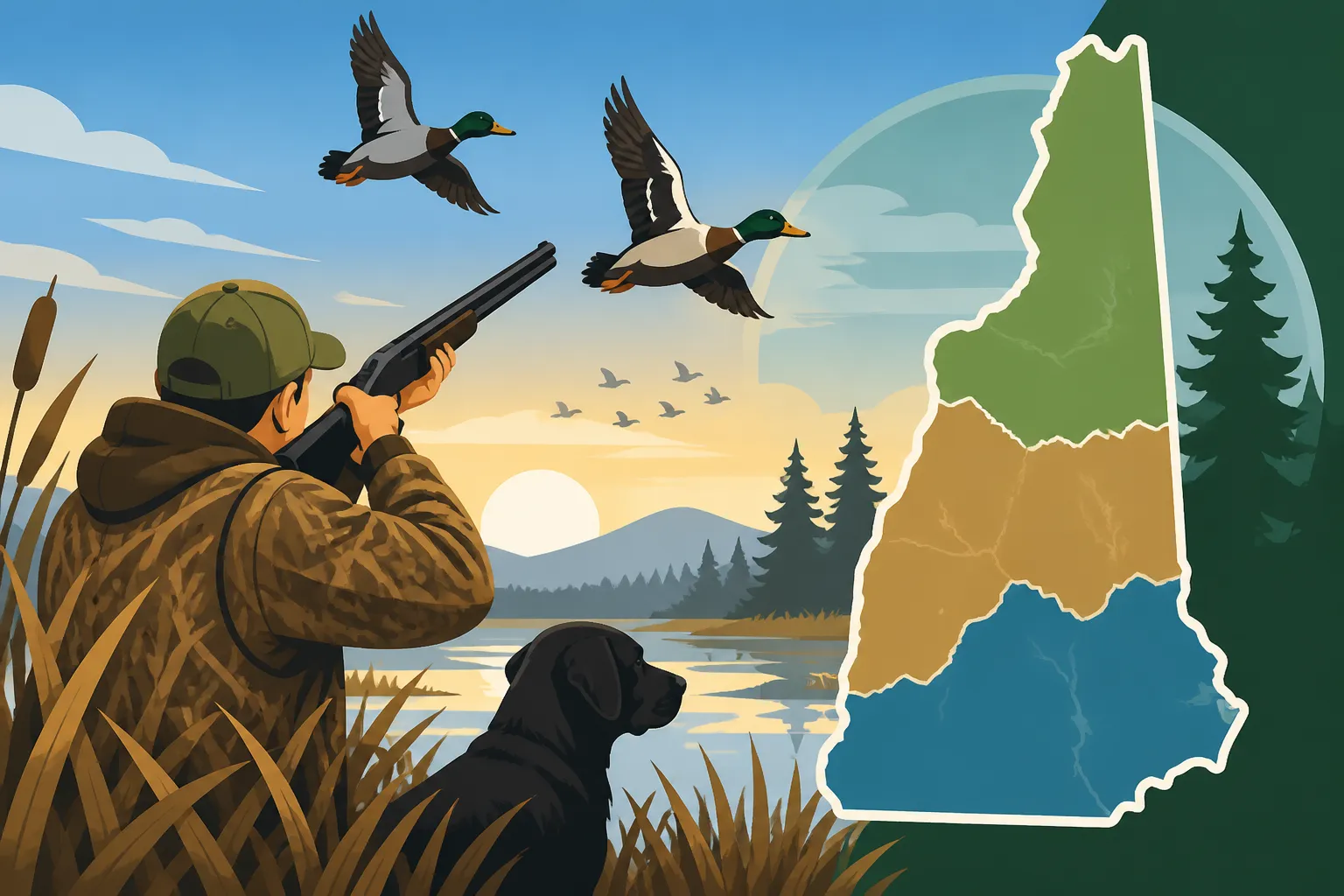
New Hampshire Waterfowl Season and Zones
For many devoted waterfowl hunters in New Hampshire, navigating the ever-shifting landscape of season dates, geographical zones, and species-specific bag limits can feel like an Olympic-level puzzle. It's truly frustrating when you've put in the legwork to scout a perfect marsh or flooded timber hole, only to second-guess whether you're even legally allowed to hunt it on a particular day. This comprehensive guide is designed to cut through that confusion, offering a clear, detailed breakdown of New Hampshire's waterfowl season and zones, empowering you to hit the water with confidence.
Understanding the Complexity of Waterfowl Seasons
The world of waterfowl hunting is unique among most other game species due to its migratory nature. Ducks and geese don't respect state lines; they follow ancient routes, dictated by weather, food sources, and breeding grounds, often traveling thousands of miles along what are known as flyways. This natural phenomenon, combined with a need for robust conservation, is what makes the regulations feel so intricate and, at times, downright perplexing.
Why Zones and Splits Exist
The primary reason for the complexity, including different zones and split seasons, stems from both biology and management. The U.S. Fish and Wildlife Service (USFWS) sets broad frameworks based on population assessments for different species across the four major North American flyways – New Hampshire, of course, falls within the Atlantic Flyway. These frameworks dictate things like the maximum number of days a season can be open, the overall bag limits, and shooting hours. However, each state then gets to tailor these frameworks to fit its local conditions and specific migratory patterns.
For New Hampshire, this means acknowledging that the birds moving through the northern inland rivers and lakes often arrive and depart at different times than those utilizing the coastal estuaries and marshes. A split season, where the hunting period is broken into two or more segments, allows wildlife managers to maximize hunting opportunities while also protecting vulnerable populations during peak migration or when local conditions might make birds overly susceptible to harvest. For instance, an early October opening might target local birds or early migrants like wood ducks and teal, while a later November and December segment focuses on the bulk of the mallards, black ducks, and divers that push down from the north as winter sets in. Without these zones and splits, managing a healthy, sustainable waterfowl population across such varied habitats and migration timelines would be impossible.
The Federal and State Role in Regulations
It's a delicate dance between federal oversight and state-level implementation that shapes the regulations every year. The USFWS, advised by organizations like the Atlantic Flyway Council, conducts extensive surveys to estimate waterfowl populations, assess habitat health, and track harvest data. Based on these biological findings, they establish annual guidelines for hunting seasons, including frameworks for season lengths and overall bag limits. States like New Hampshire then operate within these federal guidelines, customizing the specific opening and closing dates, daily bag limits for individual species, and defining geographical zones.
New Hampshire Fish and Game (NHFG) biologists and wardens are the ones on the ground, monitoring local bird populations, observing migration trends, and gathering input from hunters. They use this local data, combined with the federal frameworks, to set the actual dates you see in the annual hunting digest. This two-tiered system ensures that regulations are scientifically sound on a national level while remaining responsive to local conditions and concerns. It's why hunters must always consult both federal requirements, like the Federal Duck Stamp and the Harvest Information Program (HIP) certification, and the specific rules published by NHFG. Missing either piece of the puzzle could lead to an unfortunate and avoidable violation, underscoring the importance of thoroughly understanding the current year's digest before you ever step foot in a marsh.
New Hampshire's Waterfowl Zones: Inland vs. Coastal
To effectively manage waterfowl and provide diverse hunting opportunities, New Hampshire is divided into two distinct waterfowl hunting zones: the Inland Zone and the Coastal Zone. These zones recognize the ecological differences across the state and the varying migration patterns and species compositions found within them.
Defining the Inland Zone Boundaries
The Inland Zone encompasses the vast majority of New Hampshire's landmass, stretching from the Vermont border eastward to the designated Coastal Zone line. Generally, this includes all areas west of a line drawn along Interstate 95 (I-95) from the Massachusetts border north to the Maine border, with a few specific exceptions near the Seacoast. More precisely, the boundary line is often described as all areas west of I-95 from the Massachusetts border north to its junction with Route 16 in Portsmouth, then west of Route 16 to the Maine border.
Within this expansive zone, you'll find a wide array of habitats perfect for puddle ducks and Canada geese. This includes the mighty Connecticut River Valley, with its oxbows and agricultural fields, as well as the numerous smaller rivers like the Merrimack, Contoocook, and Pemigewasset. Beyond the rivers, the Inland Zone boasts countless beaver flowages, small ponds, lakes such as Lake Winnipesaukee and Lake Sunapee, and vast tracts of wooded swamps. Hunters in this zone will primarily target species like mallards, wood ducks, black ducks, green-winged teal, and a significant population of resident Canada geese. Understanding these boundaries is crucial for planning your hunt, as the season dates for the Inland Zone often differ from those closer to the coast. Tools like the GoHunt app can be incredibly helpful here, with satellite imagery and public land layers that can help you visualize the specific zone lines in relation to your chosen hunting spot.
Defining the Coastal Zone Boundaries
The Coastal Zone, as its name implies, covers New Hampshire's relatively short but incredibly dynamic coastline and its immediately adjacent inland areas. This zone is generally defined as all areas east of the line established for the Inland Zone, which includes the waters of the Atlantic Ocean and all tidal waters and marshes up to the first upstream road crossing or dam. This encompasses vital habitats like the Great Bay Estuary, Hampton-Seabrook Estuary, and the lower sections of coastal rivers such as the Piscataqua, Cocheco, and Bellamy.
Hunting in the Coastal Zone offers a different experience altogether. Here, you'll find a greater abundance of diver ducks like buffleheads, goldeneyes, and scoters, as well as eiders and oldsquaws (now called long-tailed ducks). Black ducks are also a significant target in these brackish and saltwater environments. The season dates and species concentrations in the Coastal Zone are specifically tailored to the unique migratory patterns and wintering habits of these more salt-tolerant species. For instance, while inland birds might flee with the first hard freeze, coastal ducks often remain until significant ice-up. Hunters who frequent the coast understand that the tide charts are just as important as the hunting digest for planning a successful outing. Knowing which zone you are in isn't just a recommendation; it's a legal necessity that directly impacts when and what you can legally harvest.
Practical Implications for Hunters
The existence of distinct waterfowl zones in New Hampshire isn't just a bureaucratic detail; it has significant practical implications that every waterfowl hunter must be aware of. The most obvious difference is the variation in season dates. While there might be some overlap, the opening and closing dates, and especially the timing of split seasons, can vary considerably between the Inland and Coastal Zones. What's legal on the Connecticut River one week might be closed on Great Bay, and vice versa. This means a hunter could potentially extend their season by shifting between zones, but it demands meticulous attention to the regulations for the specific area they are in on any given day.
Furthermore, bag limits for certain species can sometimes vary between zones, or specific species might be more prevalent in one zone over another, influencing your hunting strategy. For example, if you're primarily interested in sea ducks, the Coastal Zone is your only real option, with specialized hunting techniques and gear to match. Conversely, if flooded timber and beaver ponds for wood ducks are your passion, the Inland Zone is where you'll spend most of your time. Before heading out, always double-check the exact boundaries on a map and confirm the specific dates and limits for your intended hunting location. A mapping application like GoHunt can display public land boundaries and even zone lines, making it easier to stay compliant. Overlooking these zone distinctions could lead to legal issues and, more importantly, a less effective and enjoyable hunt.
Key Dates for New Hampshire's Waterfowl Seasons
New Hampshire's waterfowl season structure is designed to provide opportunities throughout various stages of migration, catering to both resident birds and those passing through the Atlantic Flyway. Understanding the typical timing of these periods is crucial for planning your hunts. Remember, precise dates can shift slightly year-to-year, so always consult the latest NH Fish and Game digest.
Early Canada Goose Season Specifics
For many waterfowl hunters, the first crack at migratory birds comes with the Early Canada Goose season, typically running through much of September. This season is specifically designed to target the abundant resident Canada goose population that breeds and spends its summer in New Hampshire, before the arrival of the larger migratory flocks from Canada. These resident geese can often become a nuisance in urban and agricultural areas, and the early season helps manage their numbers.
During this period, hunters can generally enjoy more liberal bag limits compared to the regular season, reflecting the management objective to reduce local populations. The hunting often focuses on agricultural fields where geese feed, or open water areas where they loaf. Key strategies for the early season include setting large decoy spreads in cut corn or hayfields, using realistic calls, and employing layout blinds. Areas around the Connecticut River Valley and other significant agricultural regions often hold good numbers of early season geese. This hunt provides an excellent opportunity to knock off the rust, get the retriever some work, and fill the freezer before the main duck and goose migrations begin. It's a fantastic kickoff to the broader waterfowl season.
Main Duck and Goose Season Splits
The bulk of New Hampshire's duck and goose hunting opportunities occur during the main season, which is famously characterized by its "split" structure. A split season means the hunting period is not continuous; instead, it opens, closes for a period, and then reopens. This strategy is employed to align hunting pressure with the peak migration of different species groups and to allow some respite for birds during periods of low activity or adverse weather. Typically, the Inland Zone might see an opening in mid-October, running for several weeks, closing briefly, and then reopening from late November through early January. The Coastal Zone often follows a similar pattern but with slightly different dates, often opening a bit later and running further into January. For a deeper dive into strategizing during these specific periods, check out our guide on "Hunting the Split Inland Zone Waterfowl Season".
The first segment of the split often targets early migrants like green-winged teal, wood ducks, and some mallards. As colder weather pushes down from the north, the season typically closes, only to reopen when the main push of mallards, black ducks, and diving ducks arrives. This second segment usually offers some of the best hunting, as birds are often concentrated and actively feeding to build reserves for winter. Understanding these splits is paramount; being in the field during a closed period is a serious violation. Always consult the official NH Fish and Game digest or use a reliable app like GoHunt to keep track of the current year's precise dates, as they can shift due to annual biological assessments.
Late-Season Opportunities and Youth Hunts
As the calendar turns to December and January, New Hampshire offers hardy waterfowl hunters some fantastic late-season opportunities. These hunts are often characterized by colder temperatures, frozen waters, and the arrival of the toughest migrants. Mallards and black ducks become prime targets, often concentrated in the remaining open water pockets or feeding heavily in fields. Diver ducks, like common goldeneyes and buffleheads, are also abundant, especially in the Coastal Zone and larger inland lakes that haven't completely frozen over. While challenging, late-season hunting can be incredibly rewarding, offering breathtaking scenery and often less hunting pressure than earlier in the year. Tactics often shift to breaking ice, using sturdy boat blinds, and focusing on major river systems where current keeps water open.
Beyond the regular season, New Hampshire is dedicated to fostering the next generation of hunters through its special Youth Waterfowl Weekend. This event, typically held on a Saturday in late September or early October, allows junior hunters (usually ages 15 and under) to hunt waterfowl, often accompanied by a licensed adult mentor, before the regular season opens. It’s a fantastic way to introduce youngsters to the sport in a less pressured environment. The rules for the Youth Waterfowl Weekend are specific, including bag limits and supervision requirements. It's an invaluable initiative that provides unforgettable experiences for young hunters and their mentors. You can find more details about these special opportunities, including "New Hampshire Youth Waterfowl Weekend" and "New Hampshire Mentored Youth Hunting Rules", in your annual digest.
Species-Specific Regulations and Bag Limits
Beyond knowing when and where you can hunt, understanding what you can legally harvest and in what quantities is fundamental to ethical and lawful waterfowl hunting. Bag limits are set to ensure sustainable populations for each species, taking into account their reproductive rates, population health, and migration patterns.
Ducks: Mallards, Black Ducks, Wood Ducks, and Others
New Hampshire's duck hunting opportunities span a variety of species, each with its own charm and, importantly, its own specific bag limit within the overall daily aggregate. The general daily bag limit for ducks might be, for example, 6 birds, but this limit often includes species-specific restrictions that are critical to observe.
- Mallards: Often the most commonly harvested duck, mallards typically have a specific hen limit within the overall bag (e.g., no more than 2 hens). Drakes are generally less restricted.
- Black Ducks: These elusive birds, a favorite among New England waterfowlers, usually have a more restrictive limit, often just one per day, due to concerns over population trends and hybridization with mallards.
- Wood Ducks: Known for their stunning plumage and acrobatic flight, wood ducks are a popular early-season target. Their limit is often 2 or 3 per day.
- Teal: Green-winged and blue-winged teal are fast-flying migrants, especially abundant during the early season. Their combined limit is typically generous.
- Pintails, Redheads, Canvasbacks, and Scaup: These species often have specific, and sometimes very low, individual limits (e.g., 1 pintail, 1 redhead, 2 canvasbacks, 1 scaup). Misidentification can easily lead to a violation here, so positive ID is crucial.
- Other Ducks: Species like gadwall, wigeon, shovelers, and ring-necked ducks fill out the remainder of the aggregate bag, typically without further individual restrictions beyond the overall daily limit.
It's absolutely essential for hunters to be able to identify ducks in flight or on the water before pulling the trigger. The differences between a mallard hen and a black duck, or a pintail and a wigeon, can be subtle, especially in low light or at a distance. Practicing identification is a crucial part of becoming a responsible waterfowl hunter. For a comprehensive overview, refer to the "New Hampshire Duck and Goose Bag Limits" section in the current year's NHFG digest.
Geese: Canada Geese and Snow Geese
Goose hunting in New Hampshire primarily targets Canada geese, with occasional opportunities for snow geese. Like ducks, these majestic birds have specific regulations that vary by season and zone.
- Canada Geese: As mentioned earlier, the Early Canada Goose season in September typically allows for a more generous bag limit, sometimes 5-8 birds per day, to manage the resident population. During the regular season, however, this limit is usually reduced, often to 2 or 3 birds per day, reflecting the inclusion of migratory flocks that require more conservative management. These limits can also vary by zone, with some coastal regions having slightly different rules.
- Snow Geese: While not as common as Canada geese, snow geese do pass through New Hampshire, particularly in the northern and coastal regions. Their populations are robust, and as such, they often have a very liberal bag limit (sometimes 15 or 25 birds per day). In some areas of the country, and occasionally in New Hampshire, conservation order seasons exist for snow geese with even more relaxed rules (e.g., no plugs, electronic calls allowed) to help control their burgeoning populations that can damage Arctic breeding grounds. Always check the digest for current rules regarding snow geese, including any specific conservation order seasons.
Whether you're targeting Canada geese in a field or hoping for a chance at snow geese, understanding the specific season, zone, and daily limit is critical. These birds are large, and exceeding the bag limit can lead to significant penalties.
Other Migratory Birds: Mergansers and Coots
While ducks and geese often get most of the attention, other migratory game birds like mergansers and coots also fall under waterfowl regulations in New Hampshire. They offer additional hunting opportunities, though they are often less popular targets.
- Mergansers: These fish-eating ducks (common, hooded, and red-breasted mergansers) are often found alongside other ducks but have their own specific bag limit. This limit is typically an aggregate for all merganser species, often around 5 birds per day, independent of the regular duck bag limit. Some hunters enjoy them, while others find their fishy flavor less desirable, but they are a legal and often numerous target.
- Coots: The American coot, often mistaken for a duck, is actually more closely related to rails. They are common on freshwater ponds and lakes and are legal migratory game birds. Their bag limit is usually quite generous, often 15 birds per day, and they are typically included in an aggregate bag for "other migratory game birds," separate from the duck limits. Coots are generally dark-meated and can be quite tasty if prepared properly.
It's important to remember that these "other" migratory birds still fall under the umbrella of federal and state waterfowl regulations. This means you still need your federal duck stamp and HIP certification to hunt them. A quick glance at the table below can help summarize some of the typical season patterns and bag limits.
| Category | Inland Zone Season (Typical) | Coastal Zone Season (Typical) | Daily Bag Limit (Typical) |
|---|---|---|---|
| Early Canada Goose | Sept 1 – Sept 25 | Sept 1 – Sept 25 | 8 |
| Ducks (Split 1) | Oct 11 – Nov 19 | Oct 12 – Oct 26 | 6 (Species restrictions apply) |
| Ducks (Split 2) | Nov 29 – Jan 6 | Nov 11 – Jan 20 | 6 (Species restrictions apply) |
| Canada Geese (Regular) | Oct 11 – Oct 25; Nov 8 – Jan 6; Jan 22 – Feb 28 | Oct 12 – Oct 26; Nov 11 – Jan 20 | 2-3 (Varies by phase/zone) |
| Snow Geese | Oct 11 – Jan 6 | Oct 12 – Jan 20 | 15-25 (Conservation Order may exist) |
| Mergansers | With Duck Season | With Duck Season | 5 |
| Coots | With Duck Season | With Duck Season | 15 |
Note: These dates and bag limits are for illustrative purposes and based on general patterns. Always consult the current New Hampshire Fish and Game Hunting & Trapping Digest for precise, up-to-date regulations before hunting.
Essential Licensing and Certification Requirements
Before you even think about setting out decoys or loading your shotgun, you absolutely must ensure you have all the proper licenses and certifications. Waterfowl hunting is perhaps the most regulated form of hunting, and for good reason—it's a privilege based on robust conservation efforts that demand compliance. Skipping any of these steps isn't just irresponsible; it's illegal.
Federal Duck Stamp and HIP Certification
These two federal requirements are non-negotiable for anyone aged 16 or older who intends to hunt migratory waterfowl in New Hampshire or any other state.
- Federal Duck Stamp: This isn't just a pretty stamp; it's a vital conservation tool. Formally known as the Migratory Bird Hunting and Conservation Stamp, the revenue generated from its sale goes directly to the Migratory Bird Conservation Fund. This fund is used to purchase or lease wetlands and wildlife habitat for the National Wildlife Refuge System, protecting crucial areas for ducks, geese, and countless other species. You can purchase a Federal Duck Stamp at most post offices, many sporting goods stores, or online. It must be signed across the face and carried with you while hunting.
- HIP (Harvest Information Program) Certification: This is a crucial data collection tool for wildlife managers. HIP certification is essentially a quick registration you complete each year, confirming you intend to hunt migratory birds. It's often done online or at the point of sale when you purchase your state license. The data collected from HIP participants (e.g., species harvested, number of days hunted) allows the USFWS to accurately estimate harvest numbers, which in turn informs future season setting and conservation strategies. It's a simple, free process, but it's mandatory, and you must carry proof of your HIP certification (often printed on your state license) with you.
New Hampshire State Hunting License
Of course, no hunting activity in New Hampshire is permitted without the appropriate state hunting license. This is your foundational permit to legally pursue game within the state's borders. For waterfowl, you'll need to purchase the standard New Hampshire hunting license, which is available for both residents and non-residents.
- Resident License Options: New Hampshire offers various resident license types, including annual, combination hunting and fishing, and even lifetime options for those who qualify. These are generally more affordable and often have specific benefits for long-time residents. You can explore the full range of choices in our detailed guide on "New Hampshire Resident License Options".
- Nonresident License Options: For those visiting the Granite State, nonresident licenses are available, typically at a higher cost. These usually include annual hunting licenses, and sometimes shorter-duration options. Regardless of how long you plan to hunt, you'll need the proper non-resident permit. Our resource on "New Hampshire Nonresident License Options" can help you navigate these choices.
It's critical to ensure your state license is current and that you carry it with you at all times while hunting. Whether you prefer a physical card or a digital version on your phone (if permitted by NHFG), having proof of your license readily available is a legal requirement.
Special Permits and Migratory Bird Hunting
While the Federal Duck Stamp and HIP certification are the primary additional requirements for migratory bird hunting beyond your standard state license, it's always wise to be aware of any other potential permits. In New Hampshire, for common waterfowl species, these typically cover the basic requirements.
However, certain specialized migratory bird hunts, like those for woodcock or snipe (though not strictly "waterfowl," they are migratory game birds), will also fall under the HIP certification requirement. Additionally, any specific management initiatives, such as those related to CWD prevention or other wildlife diseases, might impose specific rules on carcass transport or testing that apply to waterfowl, though less commonly than deer. Always consult the official NH Fish and Game Hunting & Trapping Digest each year for the most up-to-date and complete list of requirements. It's the ultimate authority, and any online resource, including this one, should always be cross-referenced with the official digest.
Navigating Public and Private Waterfowl Hotspots
Finding reliable waterfowl hunting locations can be one of the biggest challenges, especially as prime spots often see significant pressure. New Hampshire offers a mix of public lands and private opportunities, each requiring a different approach.
Notable Public Hunting Areas and WMAs
New Hampshire boasts a network of Wildlife Management Areas (WMAs) and other public lands that offer diverse waterfowl hunting opportunities. These areas are specifically managed for wildlife and public recreation, often featuring wetlands, impoundments, and river access points.
- Great Bay National Estuarine Research Reserve: While parts are restricted, other sections offer excellent tidal marsh hunting for black ducks, mergansers, and divers, particularly during colder weather.
- Steve Learn WMA (Merrimack River): This WMA provides access to the Merrimack River, known for puddle ducks and Canada geese. Hunters often use small boats or set up along river bends.
- Contoocook Marsh WMA: Located in the Contoocook River floodplain, this WMA features extensive wetlands and forested swamps, attracting wood ducks, mallards, and teal.
- Connecticut Lakes Headwaters: While often thought of for moose and bear, the numerous ponds and small flows in this far northern region offer secluded hunting for local ducks and geese. Our guide on "Connecticut Lakes Headwaters Hunting Access" provides more insight into this remote territory.
- State Parks and Forests: Certain state parks and state forests allow hunting, but rules can vary, and some may have specific restrictions or designated hunting zones. Always check with the individual park or forest office beforehand.
Public land hunting often means competition, especially on weekends or during peak migration. To maximize success, consider hunting mid-week, exploring less accessible areas, or utilizing mapping tools like GoHunt to scout remote public parcels and identify potential blind locations away from the crowds. Understanding the topography, water depths, and likely flyways can give you an edge.
Gaining Access to Private Land Opportunities
While public land is a fantastic resource, some of the best waterfowl hunting in New Hampshire can be found on private property, especially agricultural fields, secluded farm ponds, and smaller, out-of-the-way marshes. Gaining permission to hunt private land requires respect, good communication, and adherence to specific etiquette.
- Asking for Permission: Always ask for permission well in advance of the season. A face-to-face conversation, expressing your respect for their property and offering to help with chores, goes a long way. Many landowners are receptive, especially if they have nuisance geese on their ponds or in their fields. Be prepared for rejections, but don't be discouraged.
- Building Relationships: Once you gain access, nurture that relationship. Offer to share some of your harvest, help with clean-up, or simply check in with the landowner periodically. This builds trust and ensures continued access.
- Respecting Property: Always know and respect property lines. Leave no trace—pack out all your shells, trash, and even spent wads. Be mindful of livestock, fences, and buildings. Our guide on "Knocking on Doors in New Hampshire Farm Country" provides excellent general advice for gaining private land access that applies equally well to waterfowl.
- Landowner Liability: In New Hampshire, landowners generally have some protection from liability when allowing recreational access, but it’s still a good idea to discuss any concerns they might have and offer to sign a liability waiver if they request one.
Hunting private land offers the potential for less crowded conditions and access to undisturbed birds, but it relies entirely on the generosity and trust of landowners. Always prioritize good landowner relations.
Connecticut River Valley and Coastal Marsh Strategies
New Hampshire's two primary waterfowl hunting landscapes—the Connecticut River Valley and the coastal marshes—each demand unique strategies and gear.
- Connecticut River Valley: This is prime inland waterfowl territory. The broad river, its numerous oxbows, and adjacent agricultural fields create an ideal environment for Canada geese, mallards, and wood ducks.
- River Hunting: Focus on river bends, eddies, and small islands where ducks and geese might rest or feed. Decoying ducks on river edges, especially where current slows, can be effective. Consider using a small boat or kayak for access and decoy deployment.
- Field Hunting: For geese and often mallards, hunting cut corn or hay fields near the river can be incredibly productive. This often involves "Layout Blind Hunting a Northern Zone Field" with large decoy spreads. Scouting is crucial to identify active feeding fields.
- Jump Shooting: For a more active hunt, jump shooting smaller creeks, beaver flows, or river sections can yield surprising results, especially for wood ducks and mallards.
- Coastal Marshes: The Great Bay Estuary and other tidal marshes present a challenging but rewarding environment.
- Tidal Influence: Tides are everything here. Plan your hunt around high or low tide, depending on where the birds feed or rest. Some areas are only accessible by boat at certain tides.
- Species Diversity: Expect to encounter a wider variety of ducks, including black ducks, divers, and sea ducks. Your decoy spread might need to include some diver decoys or even specialized sea duck rigs.
- Concealment: Natural cover can be sparse in open marshes. Utilize boat blinds, or build temporary blinds from marsh grass. Waders are a must, and a reliable boat is often necessary for access and retrieving downed birds in the expansive water. Our guide on "Decoying Ducks on New Hampshire's Connecticut River" provides some foundational decoying tips that can be adapted for river or coastal scenarios.
Regardless of where you choose to hunt, thorough scouting, understanding bird behavior, and adapting your tactics to the specific environment are the keys to consistent success.
Gear and Tactics for New Hampshire Waterfowling
Waterfowl hunting, by its very nature, often involves harsh conditions, requiring specialized gear and a solid understanding of effective tactics. Being prepared can make the difference between a frustrating, cold day and a memorable hunt.
Decoy Spreads and Calling Techniques
Decoys and calls are the bread and butter of waterfowl hunting, designed to mimic a resting or feeding flock and lure wary birds into shooting range.
- Duck Decoy Spreads:
- J-Hook/U-Shape: A common and effective spread for puddle ducks. Place the bulk of your decoys upwind from your blind, creating an open "landing zone" or "hole" in front of you. The J-hook extends downwind, guiding birds into the open area.
- Loosely Scattered: Often effective in smaller ponds or flooded timber, mimicking a natural feeding flock without a rigid pattern.
- Motion Decoys: "Mojo Decoys for New Hampshire Puddle Ducks" and similar spinning-wing decoys can be incredibly effective, especially on calm days, creating the illusion of movement and attracting attention from a distance. However, some areas may have restrictions on their use, so always check the digest.
- Goose Decoy Spreads:
- Family Groups: Geese are social, so setting decoys in small "family groups" of 3-5 birds, rather than one large clump, looks more natural.
- Feeding Spreads: In fields, use feeder decoys and keep them relatively close together to simulate a content, feeding flock.
- Active/Sentries: A few upright "sentry" decoys at the edges can add realism.
- Calling Techniques:
- Ducks: Master basic mallard quacks, feed calls (short, rapid quacks), and greeting calls. For specific species, like wood ducks, a simple squeal or whistle can be effective. Practice is key; listen to real ducks and try to imitate them. Less is often more with calling; overuse can spook birds.
- Geese: Learn the basic honk, cluck, and moan. Combine these to create realistic conversations. The "comeback call" when birds are flying away can sometimes turn them around. Pay attention to how the real birds respond and adjust your calling.
The most effective spread and calling strategy will always depend on the specific species, location, weather, and time of season. Always be observant and willing to adjust.
Waders, Blinds, and Cold-Weather Gear
Waterfowl hunting often means prolonged exposure to cold water and harsh weather, making the right gear absolutely essential for comfort, safety, and success.
- Waders: Chest waders are non-negotiable for most New Hampshire waterfowl hunting. They allow you to stand in shallow water, deploy decoys, and retrieve downed birds. Choose durable, insulated waders, preferably in a camouflage pattern appropriate for your environment. Neoprene or breathable waders with layering options are popular. Consider the guide on "Best Chest Waders Versus Hip Waders" for a deeper dive, though chest waders are almost always preferred for waterfowl.
- Blinds: Concealment is paramount.
- Layout Blinds: For field hunting, a low-profile layout blind covered in natural vegetation is ideal for disappearing into a cornfield or stubble.
- Boat Blinds: If hunting from a boat in larger water, a purpose-built boat blind can offer excellent concealment and protection from the elements.
- Natural Cover: Many hunters utilize existing marsh grass, cattails, or shoreline vegetation to construct natural blinds.
- Cold-Weather Gear and Layering: Staying warm and dry is critical, especially when sitting still in a cold, damp environment.
- Layering: Follow a comprehensive layering system. Start with a moisture-wicking base layer, add insulating mid-layers (fleece or down), and finish with a waterproof, windproof outer shell. Our guide on "Layering for New Hampshire's Cold Hunting Season" offers detailed advice.
- Insulation: Insulated jackets, pants, gloves, and hats are crucial. Hands and feet are often the first to get cold. Waterproof gloves are a must for handling wet decoys and birds.
- Thermos: A hot beverage in a quality thermos can provide much-needed warmth and morale boost on frigid mornings.
Investing in quality gear is an investment in your comfort, safety, and ultimately, your enjoyment of the hunt. Don't skimp on items that will keep you warm and dry.
Safety Considerations on the Water
Waterfowl hunting, particularly from a boat or in challenging conditions, carries inherent risks. Prioritizing safety is non-negotiable.
- Boat Safety: If hunting from a boat, always wear a U.S. Coast Guard-approved personal flotation device (PFD), especially when navigating in low light or rough water. Ensure your boat is properly maintained, has all required safety equipment (lights, horn, fire extinguisher), and is capable of handling the conditions. Overloading a boat, especially with heavy gear and dogs, is extremely dangerous.
- Hypothermia and Cold Water Shock: New Hampshire waters, especially in late fall and winter, can be deadly cold. Falling into cold water can quickly lead to hypothermia or cold water shock. Dress in layers, wear your PFD, and always tell someone where you are going and when you expect to return.
- Firearm Safety: Always treat every firearm as if it's loaded. Be aware of your shooting lanes, ensure a safe backdrop, and never swing on a bird if it means pointing your barrel at another hunter or a dog. Positively identify your target and know what's beyond it.
- Retrieving Downed Birds: Never put yourself in a dangerous situation to retrieve a bird. If a bird falls in fast current, thick ice, or far out in open water, let it go rather than risking your life. A well-trained retriever can be an invaluable safety asset, but even they have limits.
Waterfowl hunting offers incredible thrills and rewarding experiences, but those experiences should never come at the expense of safety. Always be prepared, be aware of your surroundings, and hunt responsibly.
Disclaimer
The information provided in this guide is for general informational purposes only and is based on typical New Hampshire hunting regulations and seasons. Hunting regulations, season dates, bag limits, and licensing requirements can and do change annually. It is the individual hunter's responsibility to consult and strictly adhere to the most current official New Hampshire Fish and Game Department Hunting & Trapping Digest, as well as all applicable federal regulations, before engaging in any hunting activities. This guide should not be considered a substitute for the official legal documents.