New Hampshire’s Crossbow-Legal WMU List
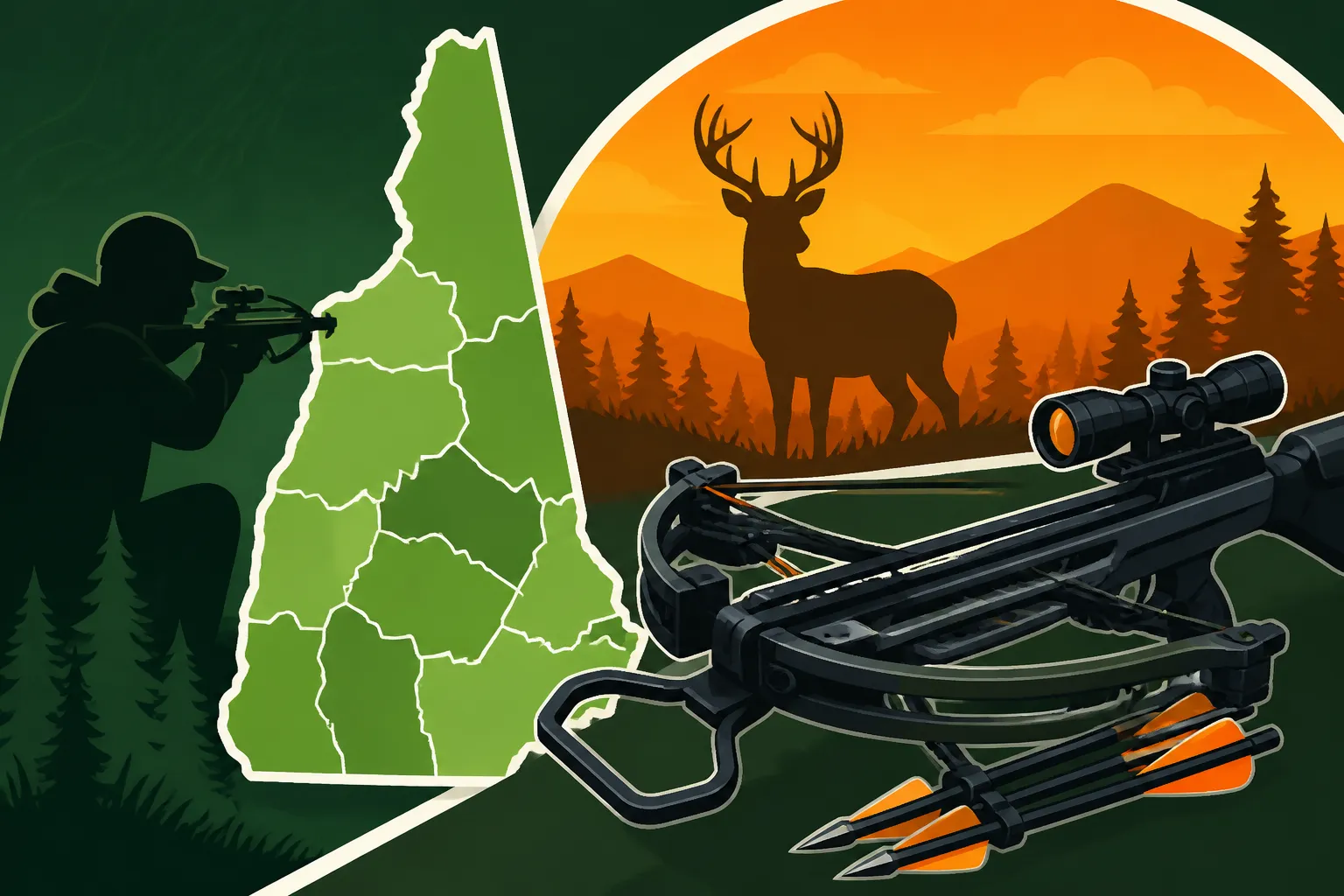
It’s a common scenario for many hunters in New Hampshire: you’re excited about the archery season, maybe you’ve got a new crossbow, but then you hit the regulations and suddenly it’s a maze of "which WMU allows what?" The truth is, New Hampshire's crossbow rules aren't uniform across the state, and navigating them can feel like a real headache. This guide is here to untangle that confusion, providing a clear breakdown of which Wildlife Management Units (WMUs) allow crossbow hunting during the archery season, along with practical advice to ensure you're hunting legally and effectively.
Understanding New Hampshire's Crossbow Regulations
For years, crossbows in New Hampshire were primarily seen as adaptive equipment for hunters with disabilities, or restricted to specific late-season firearms hunts. The idea of using a crossbow during the full archery season across the entire state was simply not a reality for most. However, things have shifted, reflecting both technological advancements and a growing interest from a broader segment of the hunting community. This evolution has led to a more nuanced regulatory framework, which, while offering more opportunities, also introduces WMU-specific complexities that can catch hunters off guard.
The Evolving Landscape of Crossbow Use in NH
The discussion around crossbows in New Hampshire has been dynamic, to say the least. It’s a classic example of traditional hunting methods meeting modern equipment, and finding a balance isn't always straightforward. For a long time, purists viewed crossbows as too much like firearms, arguing they didn't fit the "traditional" archery season spirit. On the other hand, many hunters saw them as a way to extend their time in the woods, introduce new participants to hunting, or simply an easier, more accessible option as they aged or dealt with physical limitations. The New Hampshire Fish and Game Department has been responsive to these discussions, leading to incremental changes that have opened up crossbow hunting in certain areas. This isn't just about weapon choice; it's about accessibility and participation, ensuring that more people can enjoy the Granite State's rich hunting heritage.
Why WMU Restrictions Exist
If you're wondering why some WMUs are good to go for crossbows while others aren't, you're not alone. It can feel arbitrary when you're just looking for a clear answer. The main reason for these varying rules often boils down to deer population management and hunter density concerns. In areas with higher deer densities and potentially more hunting pressure, wildlife managers might be more cautious about introducing new methods that could increase harvest rates or alter the hunting experience too drastically. Conversely, in areas where deer populations are robust or where specific management goals benefit from increased hunter opportunity, crossbows might be permitted.
Another factor is often public feedback and local traditions. Some regions might have a stronger historical preference for traditional archery equipment, while others are more open to adapting. The regulations aim to balance these different concerns, creating a patchwork that, while sometimes confusing, is designed to serve specific local wildlife management objectives. It’s definitely a case where it pays to "know your zone" before heading out. To truly understand why some WMUs restrict crossbows in archery season, one has to delve into the local dynamics and historical context that shaped those decisions.
Here's a quick reference table to help visualize the current landscape of crossbow legality during New Hampshire's archery season:
| WMU Grouping | WMUs Included | Crossbow Legal (Archery Season) |
|---|---|---|
| Northern | A, B, C, D1, D2, E, F | Yes |
| Southern | G, H1, H2, I1, I2, J1, J2, K, L, M | Yes |
| Summary | All New Hampshire WMUs are currently legal | Yes |
Editor's Note: As of the most recent regulations, all WMUs in New Hampshire now permit crossbow use during the regular archery deer season. This table reflects that current statewide allowance, simplifying what was once a more complex, WMU-specific restriction.
The Specifics: Which WMUs Are Crossbow-Legal?
Alright, let’s get down to the nitty-gritty. For a while, New Hampshire had a rather complex system where some WMUs allowed crossbows during the archery season and others didn't. This led to a lot of frustration and double-checking of maps and regulations. Good news! As of recent regulatory updates, the landscape has significantly simplified. All Wildlife Management Units in New Hampshire are now open to crossbow hunting during the designated archery deer season. This means you no longer have to cross-reference a map with a list to see if your favorite hunting spot is compliant; if it’s an archery season for deer, you can typically use your crossbow.
This change aims to reduce confusion and expand opportunities for hunters across the state, making it much easier to plan your hunts whether you're targeting deer in the remote North Country or the more populated southern regions. However, it's always, always, always a good practice to double-check the current year's New Hampshire Fish and Game Digest, as regulations can change.
Northern and Central WMUs (A, B, C, D1, D2, E, F)
These WMUs encompass the vast expanses of New Hampshire's North Country and the rugged beauty of the White Mountains. Historically, these areas have seen varying regulations, but with the updated statewide allowance, crossbows are now fully permitted during the archery season. This is fantastic news for hunters who frequent areas like Pittsburg (WMU A and B), Errol (WMU C), or those who tackle the challenging terrain of the White Mountain National Forest (largely WMU E and F). Whether you're hunting a moose bog in the Connecticut Lakes Headwaters region or scouting for deer in the timbered slopes around Mount Washington, your crossbow is a legal tool in your archery arsenal.
These northern zones often present unique hunting challenges, from dense softwoods to steep, rocky terrain. Having the option to use a crossbow can be a real advantage, especially for those longer sits in remote areas where a steady shot can be crucial. If you're planning a trip to these wilder parts of the state, remember that knowing your specific WMU is still vital for other regulations, such as bear season dates or antlerless permit availability. Tools like GoHunt can be incredibly helpful for checking specific WMU boundaries and overlays with satellite imagery, ensuring you're always within legal limits.
Southern WMUs (G, H1, H2, I1, I2, J1, J2, K, L, M)
Moving south, these WMUs cover everything from the rolling hills of the Monadnock Region (WMU G) to the more suburban-fringe areas around Manchester and Nashua (WMU I1, I2, K), and even the Seacoast (WMU J1, J2). The good news extends here too: crossbows are now legal for archery deer season in all these southern units. This significantly simplifies planning for hunters who might be trying to access smaller private parcels, or who hunt the scattered public lands that define the southern half of the state.
For instance, if you're hunting in the Merrimack Valley (WMU I1) or the agricultural fields of the Monadnock Region (WMU G), you can confidently carry your crossbow during the New Hampshire Archery Season Dates. This blanket legality removes a layer of stress for many, allowing them to focus more on scouting, tracking, and executing a good hunt. Hunting these southern zones often involves dealing with higher human populations, smaller woodlots, and sometimes fragmented habitat, so having the flexibility of equipment is a definite plus. Remember, even with uniform crossbow rules, local town ordinances or landowner permissions can still impact your hunt, especially when Finding New Hampshire Property Lines near more developed areas.
Gear and Preparation for Crossbow Hunting in NH
Just because crossbows are now widely accepted doesn't mean you can just grab one off the shelf and head into the woods. Proper preparation is key to a successful and ethical hunt. This goes beyond just knowing the WMU list; it involves understanding your equipment, practicing religiously, and adapting your hunting strategy to the unique capabilities of a crossbow in New Hampshire's diverse terrain.
Essential Crossbow Equipment and Setup
When it comes to New Hampshire Crossbow Equipment Requirements, you need to ensure your setup is not only legal but also effective and safe.
First, choose a crossbow that fits you. Just like a rifle or a vertical bow, ergonomics matter for accuracy. Consider draw weight, overall length, and weight. A lighter, more compact crossbow might be easier to maneuver in dense New Hampshire thickets, while a slightly heavier model might offer more stability for longer shots across clearings.
Next, focus on your bolts and broadheads. For Crossbow Bolt Weight for New Hampshire Deer, a good starting point is often a total weight between 400-500 grains, balancing speed, kinetic energy, and penetration. Paired with a quality broadhead – whether a fixed-blade or mechanical – you need to ensure it's razor-sharp and flying true. Spend ample time Tuning a Crossbow Before Archery Season. This isn't a one-and-done deal; broadheads and field points often fly differently, so practice with your hunting broadheads. Make sure your scope is sighted in perfectly, and understand how range affects your point of aim. A rangefinder is an indispensable tool, especially when hunting the varied topography of New Hampshire, where distances can be deceiving.
Don't forget accessories like a good cocking device (rope cockers are quieter and easier on your back), extra bolts, a quiver that keeps your bolts secure and quiet, and a sturdy case for transport. Also, ensure your sling is comfortable for those long hikes into the backcountry.
Scouting and Strategy for Crossbow Success
Even with the statewide legality, successful crossbow hunting in New Hampshire demands solid scouting and strategic planning. A crossbow might offer advantages in terms of ease of aiming and stability, but it’s still an archery weapon with limited range compared to a firearm. This means getting close to your quarry is paramount.
Start by Scouting With the New Hampshire Fish and Game App or other mapping tools to identify potential hotspots, bedding areas, and travel corridors. Look for natural funnels, pinch points, and areas with preferred food sources. Early season hunting often revolves around acorns, apples, and agricultural fields. As the season progresses towards Hunting the Rut in Early-to-Mid November, scrape lines and rub routes become more important. Using a trail camera can provide invaluable intelligence on deer movement patterns and timing, helping you refine your ambush locations.
When it comes to strategy, precision is key. While crossbows offer a steady aim, ethical shot distances are still crucial. Practice shooting from various positions you might encounter in the field – sitting in a treestand, kneeling on the ground, or even leaning against a tree. Pay attention to shot angles and potential obstructions like small twigs that can deflect a bolt. When setting up your stand or ground blind, consider prevailing wind directions and sun position. Concealment is vital; deer have excellent eyesight, and being able to draw your crossbow silently and without detection is a skill that comes with practice. Remember, the goal is a quick, humane kill, and that starts with knowing your effective range and sticking to it. If you're interested in refining your approach, consider topics like Setting Up a Crossbow in New Hampshire's Approved Units for more detailed insights.
Navigating Regulations Beyond WMUs
While knowing the crossbow-legal WMU list is a huge step, it’s only one piece of the puzzle. New Hampshire hunting regulations are comprehensive, and there are several other critical aspects you need to understand to ensure a legal and enjoyable hunt. This includes everything from how you obtain your license to the steps you take after a successful harvest.
Licensing and Hunter Education Requirements
Before you even think about stepping into the woods with a crossbow, you need to be properly licensed. Every hunter in New Hampshire, regardless of age or chosen weapon, must hold a valid hunting license. If you're planning to hunt deer with a crossbow during archery season, you'll need a New Hampshire hunting license with the appropriate archery permit. The costs for these vary depending on whether you're a resident or non-resident, and you can usually purchase them online through the New Hampshire Fish and Game Department website or at authorized vendors.
Furthermore, hunter education is a mandatory requirement for most new hunters in New Hampshire. If you haven't completed a certified hunter education course, you'll need to do so before you can purchase a license. This course covers vital topics like firearm and archery safety, wildlife identification, ethics, and conservation principles. It's a foundational step for anyone looking to hunt in the Granite State and ensures that all participants have a baseline understanding of safe and responsible hunting practices. For comprehensive details, check out New Hampshire Hunter Education Requirements. Even experienced hunters from other states might need to provide proof of prior hunter education.
Reporting Your Crossbow Harvest
The moment of truth arrives, and you've successfully harvested a deer with your crossbow. Congratulations! But the hunt isn't truly over until you've legally reported your kill. New Hampshire takes harvest reporting seriously, as this data is crucial for wildlife biologists to monitor deer populations, assess herd health, and make informed management decisions.
In New Hampshire, all deer harvests must be reported within 24 hours. There are generally a few ways to do this:
- Online Reporting: This is often the most convenient method for many hunters. The New Hampshire Fish and Game Department provides an online portal where you can enter your harvest information, including the WMU, date, sex of the deer, and type of weapon used.
- Phone Reporting: Sometimes an option for those without immediate internet access, though online is increasingly preferred.
- In-Person Registration Stations: While online reporting is prevalent, some hunters still prefer, or occasionally need, to register their deer at designated registration stations, such as sporting goods stores or general stores that act as agents for Fish and Game. It's wise to know where these are, especially if you're in a remote area or during periods like the Registering a New Hampshire Deer In Person During the Blackout Days when online services might be temporarily unavailable.
It’s important to familiarize yourself with New Hampshire Deer Reporting Requirements before you head out, so you know exactly what information you need to collect from your harvest (like age class, if requested) and the specific steps to follow. Accurate and timely reporting contributes directly to the future of deer hunting in New Hampshire.
Disclaimer
Please remember that hunting regulations, including those pertaining to crossbows and specific WMUs, can change. While this guide provides the most current information available, it is essential for every hunter to consult the official New Hampshire Fish and Game Department's annual hunting digest or their website for the most up-to-date and complete regulations before heading into the field. This information is for educational purposes only and should not replace official state resources.