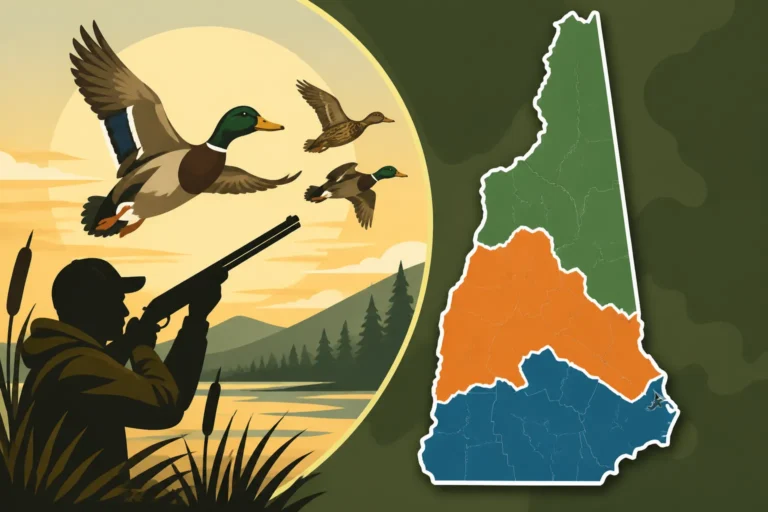
New Hampshire Migratory Bird Stamp Cost
For those of us who feel that crisp autumn air calling us to the marshes and fields, chasing ducks and geese across the Granite State, figuring out all the necessary permits and licenses can sometimes feel like solving a cryptic puzzle. Beyond your basic hunting license, there's a specific requirement for waterfowl hunters that often leads to confusion: the New Hampshire Migratory Bird Stamp. This guide is here to clear up exactly what that stamp is, how much it costs, and why it's such a vital part of waterfowl conservation in our state.
Understanding the New Hampshire Migratory Bird Stamp Requirement
If you're planning to hunt ducks, geese, woodcock, snipe, coots, or rails in New Hampshire, you’ll quickly discover that a standard hunting license isn't quite enough. The New Hampshire Fish and Game Department has a specific state-level stamp dedicated to migratory bird hunting. This isn't just bureaucratic red tape; it's a direct investment in the very habitat and populations that make our waterfowl seasons possible. Missing this crucial stamp could lead to fines and a very disappointing end to your hunt, so understanding its nuances is key.
More Than Just a Stamp: Its Purpose and Impact
Think of the New Hampshire Migratory Bird Stamp as a direct contribution to the health and sustainability of our waterfowl and their ecosystems right here in the Granite State. While many hunters are familiar with the federal duck stamp – and we’ll talk about that important distinction later – the state stamp funnels funds specifically into local and regional conservation projects. This money helps New Hampshire Fish and Game acquire, restore, and maintain vital wetland habitats, which are critical nesting, breeding, and migratory staging areas for ducks and geese.
These funds might support projects like marsh restoration along the Connecticut River, the creation of impoundments in our Wildlife Management Areas (WMAs) to provide better food sources, or efforts to control invasive species that degrade waterfowl habitat. Without these dedicated funds, many of these crucial conservation efforts would simply not be possible. So, when you purchase that stamp, you're not just buying a right to hunt; you're directly investing in the future of the sport and the wildlife you cherish. It’s a tangible way to give back to the resource, ensuring that future generations can experience the thrill of a morning flight over a decoying spread.
Who Needs to Carry This Stamp?
The requirement for the New Hampshire Migratory Bird Stamp is pretty straightforward, but it's important to be absolutely clear. Any person 16 years of age or older who intends to hunt migratory game birds in New Hampshire must possess this state stamp. This includes residents and non-residents alike. It doesn't matter if you're targeting mallards on a small pond in the Lakes Region, pass-shooting geese over a field in the Northern Zone, or pursuing woodcock in thick cover; if it's a migratory game bird, you need this stamp.
There are no exceptions based on your age if you're 16 or older, or whether you’re a resident or non-resident. If you're out there with a shotgun during the New Hampshire Waterfowl Season and Zones, you better have this stamp, along with your valid New Hampshire hunting license and a federal duck stamp. Even during the special New Hampshire Youth Waterfowl Weekend, the youth hunter (if 16 or older) would still be subject to the stamp requirements, though most youth weekends are designed for younger hunters who might not yet meet the federal or state stamp age threshold. Always check the latest New Hampshire Fish and Game Digest for the most current rules and regulations.
Breaking Down the Costs and Where Your Money Goes
Understanding the cost of any license or permit is usually the first question on a hunter's mind. For the New Hampshire Migratory Bird Stamp, the price is thankfully quite consistent and directly tied to supporting the waterfowl resources we all enjoy. It's a small investment for a big impact.
The Current Price Tag for Residents and Non-Residents
As of the current hunting season, the New Hampshire Migratory Bird Stamp has a consistent price for both residents and non-residents. This makes things a bit simpler, as you don't have to navigate different fee structures like you might for a New Hampshire Resident License Options versus a non-resident hunting license.
The cost for the New Hampshire Migratory Bird Stamp is $7.00.
This price has remained stable for some time, reflecting a commitment to keeping access affordable while still generating significant funds for conservation. When you combine this with the cost of your federal duck stamp and your base hunting license, you're looking at a relatively modest overall investment to pursue migratory birds. Remember, this state stamp is in addition to your regular hunting license. It's not a replacement, but rather a specialized endorsement required for a specific type of hunting. Many hunters will be familiar with checking their GoHunt account or the Fish and Game website for these updated prices, as regulations can sometimes shift.
Funding Conservation Efforts Directly
So, you've paid your $7.00. Where does that money actually go? Every single dollar generated from the sale of New Hampshire Migratory Bird Stamps is earmarked specifically for migratory bird habitat conservation and management projects within the state. This means the funds are not diverted to other programs; they go directly to benefiting ducks, geese, and the wetlands they depend on.
These projects can include:
- Habitat Restoration and Enhancement: This might involve restoring degraded wetlands, planting specific vegetation to provide food and cover, or managing water levels in impoundments to create optimal conditions for waterfowl. Think of projects that improve areas for Decoying Ducks on New Hampshire's Connecticut River or enhance fields for Layout Blind Hunting a Northern Zone Field.
- Land Acquisition: Funds can be used to purchase or secure conservation easements on critical wetland parcels, ensuring they remain undeveloped and available for wildlife.
- Research and Monitoring: Understanding waterfowl populations, migration patterns, and habitat use is essential. Stamp funds can support surveys, banding efforts, and research projects that inform management decisions for species listed in the New Hampshire Duck and Goose Bag Limits.
- Public Access: By enhancing and maintaining WMAs and other public lands, these funds also indirectly improve public access points for hunters, birdwatchers, and other outdoor enthusiasts.
This dedicated funding stream is crucial because migratory bird populations face constant threats from habitat loss, climate change, and other environmental pressures. Your $7.00 helps to counter these challenges and ensures that New Hampshire remains a vital stopover and breeding ground along the Atlantic Flyway. It’s a powerful example of how hunters are often the most significant contributors to conservation funding.
How to Purchase Your New Hampshire Migratory Bird Stamp
Getting your hands on the New Hampshire Migratory Bird Stamp is generally a straightforward process. The New Hampshire Fish and Game Department has made it quite accessible, understanding that hunters need convenient options. You won't find yourself traveling to some obscure office; it's integrated into the regular license purchasing system.
Online, In-Person, and Via Mail Options
There are several convenient ways to purchase your New Hampshire Migratory Bird Stamp, making it easy to comply no matter your preference or location. Most hunters these days opt for the digital route, but traditional methods are still available.
- Online: The most popular and often easiest method is through the New Hampshire Fish and Game Department's online licensing portal. This allows you to purchase your stamp from the comfort of your home, 24/7. You simply log in to your account, select the necessary licenses and stamps (including your base hunting license, the state migratory bird stamp, and don't forget the New Hampshire Federal Duck Stamp Requirement), and complete the transaction. After purchase, you can typically print a temporary copy of your license and stamps immediately, and your official hard copy will be mailed to you. Many hunters use platforms like GoHunt for their trip planning and then head directly to the state's official portal to buy their permits.
- In-Person: If you prefer a face-to-face interaction or need assistance, you can purchase the stamp at any authorized license agent throughout New Hampshire. These agents often include sporting goods stores, bait and tackle shops, and some general stores. They can help you ensure you have all the correct licenses and stamps for your planned hunting activities. It’s always a good idea to call ahead to confirm their hours and services.
- Via Mail: While less common today due to the convenience of online purchasing, you can still purchase licenses and stamps by mail. You would typically need to download the appropriate application form from the NH Fish and Game website, fill it out, and mail it with a check or money order. Be aware that this method takes longer, so plan far in advance if you choose this option.
Regardless of how you purchase it, ensure you receive proof of purchase and carry it with you while hunting migratory birds. Digital copies displayed on your phone are often accepted, but having a physical printout is never a bad backup, especially in areas with spotty cell service, such as when you are Hunting the North Country.
Essential Documents and Information Needed
When purchasing your New Hampshire Migratory Bird Stamp, you’ll generally need the same information you'd use for any other hunting license purchase. This usually includes:
- Proof of Identity: A valid driver's license or state ID.
- Proof of Residency (if applicable): If you're a New Hampshire resident, you'll need to demonstrate this for your base hunting license, which then allows you to purchase the resident rate for other permits. Non-residents will simply purchase at the non-resident rate.
- Hunter Education Certificate: You must have successfully completed a New Hampshire-approved hunter education course (or an equivalent course from another state) unless you meet an exemption (such as being born before January 1, 1949, or participating in the New Hampshire Mentored Youth Hunting Rules).
- Previous License Information: If you've purchased licenses in New Hampshire before, having your previous license number or customer ID can speed up the process.
- HIP Certification: Crucially, if you are hunting migratory birds, you must also complete the Harvest Information Program (HIP) certification. This is a federal requirement, and it’s typically a quick series of questions about your previous year's migratory bird hunting success that you complete when purchasing your license. The New Hampshire HIP Certification for Bird Hunters is free but mandatory.
Make sure all your information is up-to-date and accurate to avoid any issues. The process is designed to be user-friendly, especially through the online portal or at an authorized agent, but having your ducks in a row (pun intended!) will always make it smoother.
Here's a quick reference table for purchasing methods and requirements:
| Purchase Method | Accessibility | Required Info/Documents | Notes |
|---|---|---|---|
| Online Portal | 24/7, Convenient | ID, Hunter Ed #, Previous License #, HIP Cert | Print temporary copy; physical mailed |
| In-Person Agent | Business Hours | ID, Hunter Ed #, Previous License #, HIP Cert | Instant physical copy |
| Via Mail | Slower Process | Application Form, ID copy, Hunter Ed copy, HIP Cert | Plan well in advance for processing time |
Common Questions and Important Considerations
Even with clear instructions, hunters often have specific questions or overlook certain details when it comes to migratory bird stamps. It's easy to get tangled up in the various permits, so let's clarify a couple of key points that frequently arise.
Federal Duck Stamp vs. State Stamp: What's the Difference?
This is perhaps the most common point of confusion for waterfowl hunters in New Hampshire, and frankly, across the entire country. Many new hunters wonder if one stamp covers both requirements. The short answer is no, they are distinct and both are mandatory if you are 16 or older and hunting migratory waterfowl.
- Federal Duck Stamp (Migratory Bird Hunting and Conservation Stamp): This is a federal requirement, mandated by the U.S. Fish and Wildlife Service. The funds generated from its sale (typically around $25.00) go into the Migratory Bird Conservation Fund, which is used to conserve wetlands across the entire national wildlife refuge system. This means your federal duck stamp helps fund vast wetland projects from coast to coast. You can purchase these at post offices, many sporting goods stores, and online from the U.S. Fish and Wildlife Service's website, or sometimes through your state's licensing portal. It must be physically signed across the face of the stamp to be valid. For more details, check out the information on the New Hampshire Federal Duck Stamp Requirement.
- New Hampshire Migratory Bird Stamp: As discussed, this is a state-specific requirement. The funds (your $7.00) are dedicated solely to migratory bird habitat conservation and management projects within New Hampshire. It addresses local needs and supports local ecosystems, whether it's for New Hampshire's Split Waterfowl Season Explained or enhancing specific areas in the New Hampshire Northern Zone Waterfowl Dates.
In essence, the federal stamp is for national conservation, and the state stamp is for local conservation. If you are 16 or older and hunting ducks or geese in New Hampshire, you need both a valid New Hampshire hunting license, the New Hampshire Migratory Bird Stamp, and a signed Federal Duck Stamp. There's no getting around it!
Compliance and Avoiding Violations
The rules for migratory bird hunting are some of the most strictly enforced in the hunting world, largely due to federal oversight and the importance of conservation. Enforcement officers, whether state Fish and Game wardens or federal wildlife officers, regularly check hunters in the field for all the necessary documentation. Being caught without the proper stamps is not a minor infraction.
Consequences of Non-Compliance:
- Fines: You can face significant monetary fines for hunting migratory birds without the required state or federal stamps. These fines are often substantial enough to make the cost of the stamps seem negligible by comparison.
- Confiscation: In some cases, enforcement officers may confiscate your harvested game, and potentially even your hunting equipment.
- Loss of Privileges: Depending on the severity and frequency of the violation, you could lose your hunting privileges for a period, both in New Hampshire and potentially in other states through interstate compacts.
Tips for Ensuring Compliance:
- Triple Check: Before heading out to Reading a Marsh for a Morning Flight or setting up in a cornfield, always perform a last-minute check of your wallet or license holder. Do you have your hunting license, state migratory bird stamp, and a signed federal duck stamp?
- Understand the HIP Requirement: Don't forget the Harvest Information Program (HIP) certification. It's free and easy to do when you buy your license, but it's federally mandated. Without it, your stamps are essentially invalid for migratory bird hunting.
- Keep Up-to-Date: Regulations can change. Always consult the most current New Hampshire Fish and Game Digest before each season. Websites like GoHunt often provide helpful summaries and links, but the official digest is your ultimate source of truth.
- Digital vs. Physical: While many states now accept digital versions of licenses on your phone, a physical federal duck stamp must still be signed. For your state license and stamp, having a printed backup is always a good idea, especially in remote areas where cell service is unreliable.
By taking a few moments to ensure you have all your ducks in a row (I couldn't resist!), you can focus on the hunt itself, confident that you are fully compliant and contributing to the conservation of New Hampshire's incredible waterfowl resources.
Disclaimer
Please note that hunting regulations, license costs, and season dates are subject to change. While we strive to provide the most accurate and up-to-date information, it is the hunter's responsibility to verify all current rules and regulations with the New Hampshire Fish and Game Department before participating in any hunting activity. This guide is for informational purposes only and should not be considered legal advice.