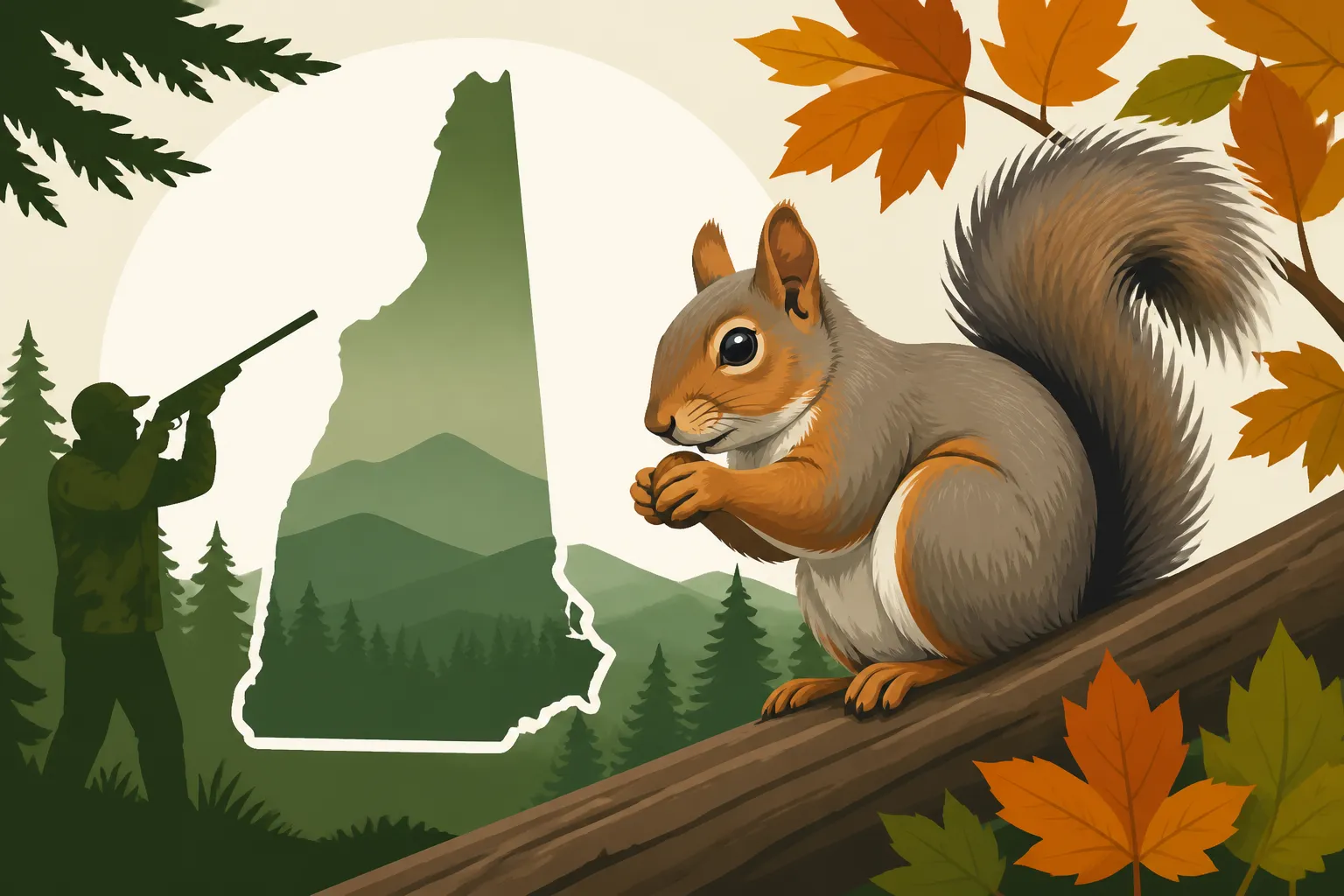
New Hampshire Squirrel Season Dates
It’s easy to feel overwhelmed by all the different hunting seasons here in New Hampshire. While everyone talks about deer and moose, the humble squirrel often gets overlooked, yet it offers some of the most accessible and enjoyable hunting experiences, especially for new hunters or those looking to extend their time in the woods. This guide is here to untangle the exact New Hampshire squirrel season dates, helping you plan your small game adventures and make the most of the Granite State's abundant opportunities.
Understanding New Hampshire's Small Game Seasons
Hunting squirrels in New Hampshire offers a fantastic way to sharpen your woodcraft skills, put some delicious meat in the freezer, and simply enjoy the tranquility of the forest without the intense pressure often associated with big game. It's an accessible entry point for beginners and a cherished tradition for many seasoned hunters.
Why Squirrel Season Matters
For many of us, big game seasons like deer and moose can feel short, intense, and, let's be honest, sometimes frustrating if luck isn't on our side. That's where small game hunting, particularly for squirrels, really shines. It's a chance to spend more time outdoors, learn the rhythms of the forest, and develop crucial hunting skills like stealth, patience, and marksmanship with less pressure. The frustration of missing out on deer season can be completely alleviated by knowing you have a long, productive squirrel season to fall back on. Plus, a plate of pan-fried squirrel is a truly underrated wild game meal! Many hunters find it's a great way to introduce younger family members to hunting, as the action can be more frequent and the stakes a bit lower, making for a more relaxed and educational experience. It’s also an excellent way to prepare for Small Game and Predator Hunting in New Hampshire as it hones those essential woodsmanship skills.
Key Regulatory Bodies and Resources
Navigating the rules and regulations can sometimes feel like trying to read ancient hieroglyphs, but thankfully, the New Hampshire Fish and Game Department makes it relatively straightforward. They are the primary authority, and their annual Hunting and Trapping Digest is your bible for all season dates, bag limits, and specific regulations. You can find this digest online on their official website, often downloadable as a PDF, or pick up a physical copy wherever hunting licenses are sold. Beyond the digest, their website is a treasure trove of information, including press releases about rule changes, and even a mobile app. Utilizing resources like the official website or even platforms where hunters share information, like those found through GoHunt, can keep you ahead of the game. Always double-check the current year's digest as dates and rules can sometimes have minor adjustments. Staying informed is the first step to a successful and legal hunt.
The Official New Hampshire Squirrel Season Dates
When it comes to squirrel hunting in New Hampshire, you're generally looking at a generous season, primarily focused on gray squirrels, but with red squirrels also being fair game. This extended season provides ample opportunities, whether you prefer hunting in the early fall foliage or tracking through late-season snow.
General Season Overview
The New Hampshire Fish and Game Department typically sets the squirrel season to open in early September and run all the way through the end of March the following year. This is a remarkably long season, especially compared to the relatively short windows for big game. Specifically, for gray squirrels and red squirrels, the season usually kicks off around September 1st and concludes on March 31st.
This long window is fantastic because it allows you to experience squirrel hunting across various stages of the New Hampshire fall and winter. Early season offers dense foliage, requiring keen eyes and patience. As the leaves drop in mid-to-late October, spotting squirrels becomes easier, but they're often more wary. The late season, particularly from December through March, presents opportunities for tracking squirrels in the snow, a unique and challenging experience.
There are generally no specific Wildlife Management Unit (WMU) variations for squirrel season dates; these dates apply statewide. The daily bag limit for squirrels is usually quite generous, often set at 5 squirrels per day, with a possession limit of 10. Again, always consult the current year's New Hampshire Hunting Licenses and What They Cost and the official digest to confirm these details, as slight changes can occur.
Nuances and Exceptions
While squirrel season is straightforward, a few nuances are worth noting:
- Youth Hunting Opportunities: New Hampshire often has special youth hunting weekends for small game, which might fall outside the regular season or offer unique opportunities for young hunters. These are fantastic programs designed to introduce the next generation to hunting in a mentored environment. If you're planning a hunt with a youth, check the digest for specific youth days or mentored hunting rules under New Hampshire Mentored Youth Hunting Rules.
- Weapon Restrictions: For squirrels, common legal weapons include small caliber rimfire rifles (like a .22LR), shotguns (typically .410, 20-gauge, or 12-gauge with small shot sizes like 6 or 7.5), and archery equipment. While it's perfectly legal, many hunters opt for a .22 rifle for a quieter hunt and to minimize meat damage, especially when targeting gray squirrels. Crossbows are also legal during the archery portion of the small game season in all WMUs, aligning with general crossbow regulations. Make sure your chosen weapon and ammunition comply with all regulations.
- Sunday Hunting: New Hampshire has specific rules regarding Sunday hunting. Generally, hunting on Sundays is permitted for small game, provided you have permission from the landowner if you are on private land. This is a common point of confusion, so clarify the specific rules in the digest, especially regarding private vs. public land access.
- Checking the Current Digest: The most crucial piece of advice is to always refer to the current year's New Hampshire Hunting and Trapping Digest. While the dates I've provided are standard, slight adjustments can occur due to wildlife management decisions or legislative changes. The digest will provide the definitive, most up-to-date information for your season. You can often find a digital copy on the New Hampshire Fish and Game website or check it using tools like the Scouting With the New Hampshire Fish and Game App to quickly access regulations in the field.
Preparing for Your New Hampshire Squirrel Hunt
A successful squirrel hunt isn't just about knowing the dates; it's about preparation. Understanding their habitat, having the right gear, and knowing where to hunt will significantly increase your odds and make the experience more enjoyable.
Scouting and Habitat
Squirrels are creatures of habit and food. Their movements are largely dictated by the availability of mast crops like acorns, beechnuts, hickory nuts, and even pine cones. Therefore, effective scouting involves identifying these food sources.
- Hardwood Forests: Focus on mature hardwood forests, particularly those with oak, hickory, and beech trees. These provide the primary food sources for gray squirrels. Look for signs on the ground: fresh cuttings of nuts, chewed acorn caps, and even piles of husks at the base of trees or on stumps.
- Conifer Stands: Red squirrels, while smaller, are also abundant and often found in conifer stands (pine, spruce, hemlock) where they feed on pine cones. Look for their middens – large piles of cone scales – at the base of trees.
- Water Sources: Like all wildlife, squirrels need water. Areas near streams, ponds, or even beaver flowages can be productive, especially during dry spells.
- Tree Dens and Nests: Scan trees for den holes (cavities in tree trunks) and leaf nests (drays). These are where squirrels live and seek refuge. A good density of these indicates a healthy local squirrel population.
- Early Season Clues: In the early season when the leaves are still thick, listening becomes as important as looking. Squirrels are noisy feeders; listen for the distinct sounds of them chewing on nuts, scampering up trees, or chattering warnings. This is exactly How Early Season Squirrels Give Themselves Away.
- Mapping Tools: Using mapping apps like the Scouting With the New Hampshire Fish and Game App can help you identify public land, forest types, and even terrain features that might concentrate squirrel activity.
Essential Gear and Tactics
You don't need a huge budget to get into squirrel hunting, but having the right tools makes a difference.
- Firearms: A .22 caliber rimfire rifle is arguably the most popular choice for squirrel hunting. It's accurate, quiet, and economical. A small-gauge shotgun (like a .410 or 20-gauge) with fine shot is also effective, especially for squirrels on the move or in thick cover. For the archer, a small game head on an arrow works wonders.
- Optics: A good pair of binoculars can be invaluable, especially when trying to spot a camouflaged squirrel high in a tree. A 8×42 or 10×42 power is usually sufficient. Websites like GoHunt often feature reviews and comparisons of quality optics that would be perfect for timber country.
- Clothing: Comfort and stealth are key. Choose camouflage that blends with the forest, and consider silent fabrics that won't rustle. Layering is crucial, as New Hampshire weather can be unpredictable, even in the fall. Check out tips for Layering for New Hampshire's Cold Hunting Season to stay warm and comfortable during those chilly sits.
- Footwear: You'll be doing a lot of walking, often off-trail. Comfortable, waterproof boots with good ankle support are essential for navigating uneven terrain and wet leaves. Think about the advice given for Boots for New Hampshire's Granite Terrain for some solid options.
- Still-Hunting: This involves moving slowly and quietly through the woods, stopping frequently to look and listen. Take 5-10 steps, then pause for several minutes, scanning the trees.
- Sitting: Find a productive area with abundant mast, sit down against a tree for concealment, and wait patiently. Early mornings and late afternoons are prime times.
- Calling: While less common than for deer or turkeys, squirrel calls can be effective. Barking and chattering calls can sometimes make a squirrel curious enough to reveal itself.
Public vs. Private Land Access
New Hampshire offers a mix of public and private lands, both providing excellent squirrel hunting opportunities.
- Public Lands: The Granite State boasts a significant amount of public land, including state forests, state parks (where hunting is allowed), and numerous New Hampshire Wildlife Management Areas. These areas are usually well-marked and open to hunting without special permission, though it's always wise to check specific regulations for each location. Use mapping apps to locate these areas and understand their boundaries. This is where a resource like Public Hunting Land in New Hampshire can be a huge help.
- Private Land: Many prime squirrel habitats are on private land. Gaining permission from landowners can unlock fantastic, less pressured hunting spots. Always approach landowners respectfully, well in advance of the season, and offer to share some of your harvest. Knowing how to politely engage with landowners, as discussed in Knocking on Doors in New Hampshire Farm Country, can open many doors. Always respect "posted" signs, as hunting on posted land without permission is illegal and can damage the reputation of all hunters. Even if not posted, assume private land requires permission.
| Species | Typical Season Start (approx.) | Typical Season End (approx.) | Daily Bag Limit | Possession Limit | Preferred Habitat |
|---|---|---|---|---|---|
| Gray Squirrel | September 1st | March 31st | 5 | 10 | Mature Hardwood Forests (Oak, Hickory, Beech) |
| Red Squirrel | September 1st | March 31st | 5 | 10 | Conifer Forests (Pine, Spruce, Hemlock) |
Always confirm exact dates and limits in the current year's NH Fish & Game Hunting and Trapping Digest.
Maximizing Your New Hampshire Squirrel Hunting Success
Beyond the basics, there are strategies and considerations that can elevate your squirrel hunting game and ensure you're making the most of your time in the woods.
Understanding Squirrel Behavior by Season
Squirrel behavior shifts significantly throughout the long season, and adjusting your tactics accordingly can dramatically improve your success rate.
- Early Season (September – Mid-October): The Leafy Challenge. This is often when the season opens, and foliage is still thick on the trees. Squirrels are actively foraging for newly fallen mast. They can be incredibly difficult to spot, leading to many missed opportunities. Your best bet is to slow down, really embrace still-hunting, and rely heavily on your ears. Listen for the rustling of leaves, the distinct chewing sounds of a squirrel cracking a nut, or their tell-tale chattering. Often, you'll hear them long before you see them. This period requires extreme patience and careful observation. For many hunters, this is the prime time for Squirrel Hunting New Hampshire Hardwoods, making careful observation critical.
- Mid-Season (Late October – November): The Harvest Rush. As the leaves begin to drop and eventually fall completely, the forest floor opens up, and visibility improves dramatically. Squirrels are in a frenzy during this time, gathering and burying nuts for the winter. This is arguably the easiest time to spot them as they scurry on the ground or silhouette against bare branches. However, their heightened activity also means they are more alert. They might be less inclined to sit still once they spot you. This is a great time for both still-hunting and setting up a comfortable stand to observe a productive area.
- Late Season (December – March): Winter Tracking and Den Hunting. Once snow covers the ground, squirrel hunting takes on a new dimension. You can now track their movements, following their tiny footprints from den trees to feeding areas. They become more reliant on stored food or whatever small mast remains. They also tend to spend more time in their dens during harsh weather. On warmer, sunny winter days, they will often emerge to sun themselves or seek food. Focus your efforts around large, old trees with visible den holes. A good technique is to locate a den tree and wait patiently for a squirrel to emerge or return. Their winter coats are also at their thickest and most beautiful during this time.
Ethical Hunting and Game Care
Responsible hunting extends beyond just following the regulations; it encompasses ethical behavior and proper care of your harvest.
- Shot Placement: For squirrels, aim for the head. This ensures a quick, humane kill and preserves the most meat. A clean headshot with a .22 is a hallmark of a skilled squirrel hunter. Body shots with a .22 can wound without immediately dispatching, and with a shotgun, while often fatal, can damage a lot of edible meat.
- Quick Retrieval: Once a squirrel is down, retrieve it quickly. Not only is it respectful to the animal, but it also prevents scavengers from getting to your game and ensures the meat stays clean.
- Field Dressing: Field dressing squirrels isn't complicated. Many hunters carry a small pair of game shears or a sharp knife. You can gut them in the field to help cool the meat, especially on warmer days, or simply skin and clean them thoroughly when you get home. There are various methods, from skinning quickly with a sharp knife to using a "foot-stomp" technique. Whatever your chosen method, cleanliness is paramount.
- Proper Cooling: Like any wild game, quick cooling of the meat is essential to prevent spoilage and ensure the best flavor. On cooler days, hanging them in a game bag (away from predators) might suffice, but on warmer days, getting them into a cooler with ice as soon as possible is ideal.
- Enjoying the Harvest: Squirrel meat is lean, flavorful, and incredibly versatile. It can be fried, stewed, or even used in recipes usually reserved for rabbit or chicken. Don't let anything go to waste! Even though it's a different animal, the same principles of respecting and enjoying the harvest apply to Cooking a Wild Turkey Breast, or any game, really.
Disclaimer
Please remember that hunting regulations can change. While every effort has been made to provide accurate and up-to-date information, it is the individual hunter's responsibility to consult the current year's New Hampshire Fish and Game Department Hunting and Trapping Digest for the official rules, regulations, and season dates before heading into the field. This guide is for informational purposes only and should not be considered a substitute for the official regulatory documents.