New Hampshire Coyote Range and Density
If you've spent any time in the New Hampshire woods, whether deer hunting or just enjoying a quiet hike, you've likely heard the distinctive yip-howl of a coyote. These highly adaptable canids are an undeniable presence across our beautiful state, and it's natural for hunters and outdoor enthusiasts alike to wonder just how many of them there are and where they roam. It can sometimes feel like they're everywhere, and understanding their distribution and numbers can certainly help when you're planning a hunt or just trying to get a clearer picture of our local wildlife. This guide will dive deep into the fascinating world of the New Hampshire coyote, exploring their range, population density, and what their pervasive presence means for our other game species and hunting strategies.
Understanding the Eastern Coyote in New Hampshire
The Eastern coyote, a fascinating and often misunderstood animal, has a remarkable story of expansion and adaptation right here in the Granite State. They're not the same as their western counterparts, and knowing a little about their history helps us understand their current place in our ecosystem.
A Brief History and Adaptation
The journey of the coyote into New Hampshire is a relatively modern tale, certainly within the scope of our state's natural history. Historically, the northeast was home to timber wolves, not coyotes. As European settlers expanded, forests were cleared, and wolf populations were extirpated. This created a massive ecological void, a niche just waiting to be filled. Over the last century, as forests began to regrow and human populations shifted, coyotes started to move eastward from their traditional prairie ranges.
The coyotes that arrived in New England weren't pure western coyotes. Genetic studies suggest that as they migrated, they interbred with wolves (specifically, eastern wolves or possibly even a bit of domestic dog) in the Great Lakes region and Canada. This genetic mixing gave rise to the larger, more robust animal we now call the Eastern coyote or coywolf. This hybrid vigor allowed them to thrive in our mixed forest and agricultural landscapes. They've proven incredibly adaptable, quickly learning to coexist with humans, often right under our noses. Their journey and subsequent dominance are a testament to their resilience, something you quickly appreciate when you look into New Hampshire's Eastern Coyote Origins.
The Eastern Coyote Versus Western Cousins
If you've ever spent time out west and seen a traditional coyote, you might be surprised by the size and appearance of our New Hampshire residents. The Eastern coyote is generally larger than its western cousin, both in body mass and skull size. While a western coyote might average around 20-30 pounds, an Eastern coyote in New Hampshire can easily tip the scales at 35-50 pounds, with some individuals reaching even higher. Their coats can also be quite variable, ranging from light blonde to reddish-brown, often with hints of black on their backs and tails.
This larger size isn't just for show; it's a key adaptation that allows them to hunt larger prey, such as white-tailed deer, which their smaller western relatives typically wouldn't tackle. They often exhibit more pack-like behavior when hunting larger game, similar to wolves, though their social structure is still primarily family-based. For hunters, recognizing these differences is crucial. A shot that might be sufficient for a smaller western coyote might not be as effective on our more substantial New Hampshire canids. It requires a different mindset and approach when you're considering Coyote Calling at First Light for these robust animals.
Their Role in the Ecosystem
Coyotes have firmly established themselves as the apex predator in most of New Hampshire, effectively filling the role once held by wolves. Their diet is incredibly varied, making them ecological generalists. They'll eat small mammals like mice, voles, and rabbits, as well as fruits, berries, and carrion. However, they are also opportunistic predators of deer, especially fawns, and turkeys. This dietary flexibility is a major reason for their success.
While some view coyotes purely as competition for game species, their role is more complex. They do exert predatory pressure on deer and turkey populations, but they also help control populations of smaller prey animals. A healthy ecosystem often includes predators, and coyotes have undeniably become an integral part of ours. Understanding this intricate balance is key to responsible hunting and wildlife management. Their presence shapes the behavior and distribution of other species, creating a dynamic environment that hunters need to observe and adapt to.
Geographical Range Across the Granite State
One of the most remarkable aspects of the Eastern coyote is their incredible adaptability, allowing them to establish a presence in virtually every corner of New Hampshire. There's hardly a region where you won't find them, from the densest forests to the edges of our most populated towns.
From the Seacoast to the North Country
Coyotes in New Hampshire are not confined to a single type of terrain or habitat. You can find them roaming the salt marshes and coastal plains of the Seacoast Region, though perhaps less frequently seen than in other areas due to human activity. Move inland, and they become a more common sight (or sound) in the mixed hardwood and softwood forests of the Lakes Region and the Monadnock Region. Here, the mosaic of woodlands, old fields, and agricultural land provides an ideal blend of cover, food, and denning sites.
As you head north into the White Mountains and the vast expanse of the North Country, coyotes thrive in the rugged, remote wilderness. These areas offer extensive cover, a healthy prey base, and less human disturbance. They'll utilize everything from dense softwood thickets to high-elevation basins. It's in these remote stretches where you might see the influence of their wolf ancestry most clearly, with larger individuals and more cohesive pack structures. When you're Predator Calling New Hampshire's White Mountain Backcountry, you're often targeting these more robust, wilderness-adapted coyotes. They’re truly everywhere, making them one of the most widespread large mammals in the state.
Urban and Suburban Adaptations
Perhaps the most surprising aspect of the Eastern coyote's range is their increasing presence in urban and suburban environments. While many people associate coyotes with wild, untouched landscapes, these intelligent animals have learned to exploit the resources found near human habitation. They'll live in greenbelts, undeveloped lots, industrial parks, and even large residential properties with adequate cover.
In these areas, their diet often shifts to include more human-associated foods like garbage, pet food left outdoors, and small pets, alongside natural prey like rodents, rabbits, and even domestic cats. They are incredibly wary and often operate under the cover of darkness, making their presence largely undetected by most residents. This close proximity to people can sometimes lead to conflicts, highlighting the need for residents to secure food sources and keep pets supervised. While it might seem odd, finding a good spot to try Coyote Calling New Hampshire Farm Country might actually involve scouting the fringes of suburban sprawl, where farmland meets expanding development.
Preferred Habitats and Terrain
Coyotes are habitat generalists, meaning they don't rely on one specific type of environment. However, they do show a preference for certain features that provide them with the necessities of life: food, water, and cover.
- Mixed Forests and Edges: They thrive in areas with a mix of deciduous and coniferous forests, especially those with openings, clearings, and edges where forest meets field. These "edge habitats" are rich in prey.
- Brushy Areas and Thickets: Dense undergrowth, old stone walls, and brushy thickets offer excellent concealment for denning, raising pups, and ambushing prey.
- Water Sources: Like all wildlife, coyotes need access to water, so river bottoms, stream corridors, and marshy areas are often productive.
- Human-Modified Landscapes: As mentioned, they're adept at using abandoned farmlands, logging clear-cuts, powerline corridors, and even suburban green spaces. These areas often provide easy travel routes and concentrated food sources.
When you're trying to locate coyotes, thinking about these habitat preferences can be a real game-changer. Using mapping tools, like those offered by GoHunt, can help you identify these transitional areas, dense cover, and water sources when you're scouting new ground. You can overlay different land features and elevations to get a better sense of prime coyote territories.
Coyote Population Density and Trends
While we know coyotes are everywhere in New Hampshire, pinning down exact numbers and understanding their population density is a far more complex challenge. Wildlife agencies rely on various methods to estimate these populations, but it's rarely an exact science.
Estimating Population Numbers
Unlike deer or moose, which have harvest data and specific survey methods tied to regulated seasons, estimating coyote populations is trickier. They have no statewide bag limits or strict reporting requirements for hunters, making harvest data less indicative of total population. Instead, wildlife biologists often use a combination of techniques:
- Scent Station Surveys: These involve setting up stations with attractive scents (like curiosity lures or urine) and tracking pads to count coyote visits.
- Roadside Surveys: Driving specific routes at night and counting coyote sightings or listening for vocalizations.
- Pellet/Scat Surveys: Analyzing scat to determine diet and infer presence.
- Hunter/Trapper Reports: While not precise, aggregated reports from hunters and trappers can provide general trends in sightings and harvest success.
- Telemetry Studies: Collaring individual coyotes with GPS trackers to monitor their movements, home ranges, and survival rates, giving insight into density in specific areas.
Based on these methods, the general consensus is that New Hampshire coyote population trends show a stable to slightly increasing population in many regions, indicating they are well-established and continue to thrive. While specific numbers like "X number of coyotes per square mile" are rarely published statewide, most regions are considered to have healthy, viable populations.
Factors Influencing Density
Several key factors play a significant role in determining how many coyotes can inhabit a given area and how dense their populations become:
- Food Availability: This is perhaps the most critical factor. Areas with abundant prey – be it deer fawns, rabbits, rodents, or even readily accessible carrion – will support higher coyote densities. When discussing New Hampshire Coyote Diet in Farm Country, you quickly realize how opportunistic they are, taking advantage of whatever food source is available.
- Habitat Quality: Adequate cover for hunting, denning, and avoiding humans is essential. A mosaic of fields, forests, and brush provides optimal habitat.
- Human Activity and Development: While coyotes are adaptable to human presence, heavy development, constant disturbance, and direct persecution can limit their numbers in specific, localized areas. However, as noted earlier, they often learn to coexist and even thrive on the fringes of human development.
- Hunting and Trapping Pressure: While open seasons for coyotes exist, the level of hunting and trapping pressure varies greatly by region and by individual hunter effort. Sustained, intensive pressure can certainly reduce local populations, but coyotes are known for their ability to compensate with larger litter sizes and increased survival rates when populations are suppressed.
- Disease: Outbreaks of diseases like mange, canine distemper, or rabies can occasionally cause localized declines, but these are generally temporary and rarely impact the statewide population significantly.
Regional Variations in Population
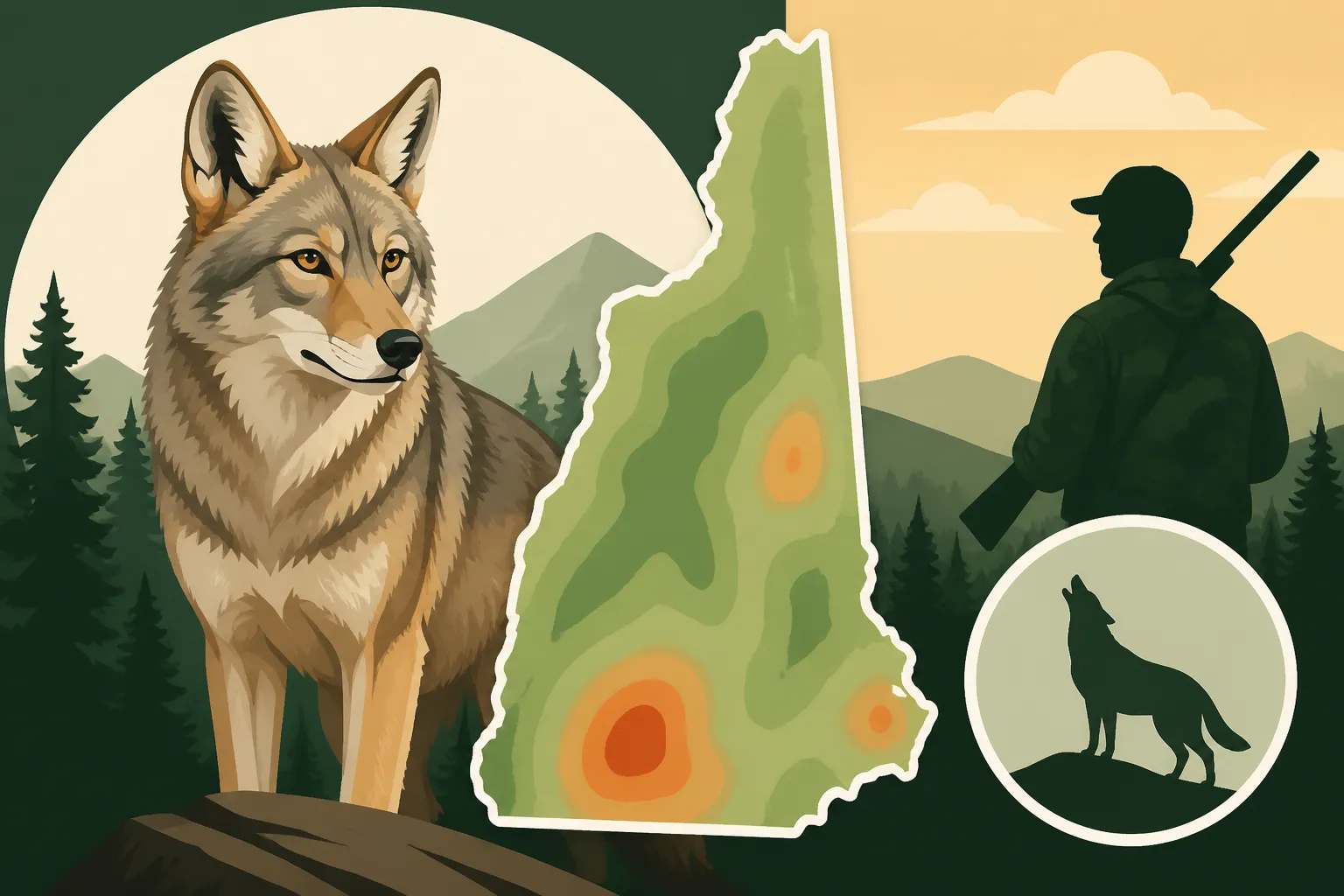
It's important to understand that "New Hampshire coyote density" isn't a uniform number across the state. There are definite regional variations:
- North Country/White Mountains: These expansive, heavily forested areas tend to have strong, stable populations. The vast wilderness provides ample cover and a diverse prey base, including larger game like deer and moose.
- Central Lakes Region/Merrimack Valley: Here, a mix of woodland, agricultural land, and increasing suburban areas means coyotes are present and often adapt to utilizing fringes of human activity. Densities can be moderate to high, often unseen.
- Southern Tier/Seacoast: While coyotes are present, the higher human population density and development can lead to more fragmented habitats. However, their adaptability means they persist in remaining green spaces and can still be quite common, though perhaps more elusive.
This table gives a simplified overview of typical coyote distribution and habitat use across New Hampshire's varied landscape:
| Region | Typical Habitat | General Density (Perceived by Hunters) | Notes |
|---|---|---|---|
| North Country | Deep forests, remote bogs, clear-cuts | High | Larger animals, more pack behavior. Less human pressure. |
| White Mountains | Rugged terrain, mixed timber, high elevations | Moderate to High | Adapt to mountainous terrain. Consistent presence. |
| Lakes Region | Mixed woods, lakeshores, some agricultural | Moderate to High | Utilize diverse habitats, often active near water. |
| Connecticut River Valley | River bottomlands, farmland, adjacent woods | High | Abundant prey in agricultural areas. Good cover along river. |
| Monadnock Region | Rolling hills, mixed hardwoods, old farms | Moderate to High | Well-established in varied terrain. |
| Southern Tier | Suburban fringes, fragmented woods, small farms | Moderate | Adapt to human presence, often nocturnal. |
| Seacoast Region | Coastal marshes, small woodlots, developed areas | Low to Moderate | More elusive, utilize remaining green spaces. |
This regional understanding is crucial for hunters. Knowing where to expect higher concentrations of coyotes helps inform your scouting efforts and your choice of hunting tactics, whether you're focusing on Night Hunting Rules for New Hampshire Coyotes or calling them during daylight hours.
Impact of Coyotes on Other New Hampshire Game Species
The presence of coyotes is a natural and important part of New Hampshire's ecosystem, but their role as a significant predator naturally leads to questions about their impact on other game species. It's a complex dynamic, not always black and white, and understanding it is key for any responsible hunter or wildlife enthusiast.
Predator-Prey Dynamics with Deer and Turkey
For many hunters, the most significant concern regarding coyotes revolves around their predation on white-tailed deer and wild turkeys. It's an undeniable fact that coyotes do prey on both of these species, particularly the young and vulnerable.
- Deer: Coyotes are opportunistic predators of deer, especially fawns. During the fawning season in late spring and early summer, fawns are highly vulnerable, and coyotes are known to take a significant number. While adult deer, especially healthy bucks and does, can often outrun or deter a single coyote, a pack of Eastern coyotes can certainly take down an adult deer, particularly if the deer is old, injured, or weakened by harsh winter conditions. This predation is a natural part of the ecosystem, but in areas where deer populations are struggling or rebounding, high coyote density can certainly slow that recovery. It’s part of the reason understanding the New Hampshire Deer Population Estimate isn’t just about hunter harvest, but also considering natural mortality factors.
- Turkey: Wild turkeys, especially poults (young turkeys), are also susceptible to coyote predation. Poults are small and relatively helpless shortly after hatching, and ground-nesting hens are vulnerable while on the nest. Adult turkeys, being agile and able to fly, are less often taken by coyotes, but it can happen. When you consider the effort put into the restoration of New Hampshire Turkey Population Trends, any factor impacting their numbers is carefully observed.
It's important to remember that predators like coyotes often target the weakest individuals in a prey population, which can actually lead to a healthier, more robust prey base in the long run. However, the exact level of impact is highly localized and depends on many other factors, including habitat quality, winter severity, and overall prey population health.
Interactions with Small Game and Furbearers
Beyond big game, coyotes also significantly interact with New Hampshire's diverse array of small game and furbearers. This is where their generalist diet really shines through.
- Small Game: Rabbits (snowshoe hare and cottontail), squirrels, and various game birds are all on the coyote menu. Their presence can certainly keep local small game populations in check. For hunters focused on Squirrel Hunting New Hampshire Hardwoods or chasing snowshoe hare, understanding that coyotes are also utilizing those same habitats is crucial. It’s a competitive environment, and coyotes are highly efficient hunters of these smaller creatures.
- Furbearers: Coyotes also compete with, and sometimes prey upon, other furbearers. They are competitors with bobcats for prey like rabbits and rodents. Fishers, another recovering furbearer in New Hampshire, also share some of the same prey base. While direct predation on adult bobcats or fishers by coyotes is less common, competition for food sources is a constant. Trappers often find coyotes in areas where they are targeting other furbearers, indicating shared habitat use.
Balancing Predator Control and Ecosystem Health
The ongoing discussion about predator control, particularly regarding coyotes, often boils down to finding a balance between protecting game species and maintaining a healthy, natural ecosystem. New Hampshire has generally maintained liberal hunting and trapping seasons for coyotes, reflecting their robust population and the ecological role they play.
Many hunters engage in coyote hunting not just for the challenge or the fur, but also with the belief that it contributes to local game management by reducing predator pressure. This is part of the broader conversation around New Hampshire Small Game and Predator Hunting in New Hampshire. While large-scale coyote eradication programs are generally ineffective and often lead to compensatory reproduction, localized predator control can potentially benefit vulnerable prey populations in specific areas, especially when combined with habitat improvements.
Ultimately, coyotes are here to stay. Their adaptability, intelligence, and reproductive capacity ensure their continued presence across New Hampshire. The focus for wildlife management and hunters becomes understanding their impact and deciding how we can best interact with them to support overall ecosystem health and hunting opportunities.
Hunting and Management Implications
Given the widespread presence and adaptability of coyotes in New Hampshire, it's no surprise that hunting them has become a popular pursuit. Whether you're looking to help manage local predator populations, enjoy a challenging hunt, or harvest their fur, there are specific seasons, regulations, and strategies to consider.
Seasons and Regulations for Coyote Hunting
New Hampshire takes a relatively liberal approach to coyote hunting, recognizing their robust population and the challenges they can pose to livestock and other wildlife. For the most up-to-date and specific information, always consult the current New Hampshire Fish and Game Digest. However, generally, coyotes can be hunted year-round with a valid hunting license.
Key aspects of New Hampshire Coyote Hunting Season Rules often include:
- Year-Round Hunting: Unlike deer or turkey, coyotes typically have no closed season, allowing hunters to pursue them throughout the year.
- Night Hunting: New Hampshire allows night hunting for coyotes under specific regulations, often requiring certain calibers, lighting restrictions, and sometimes a specific permit. This is a popular and effective method, but requires adherence to strict safety protocols.
- Weapon Choice: Most legal hunting firearms and archery equipment are permitted for coyotes.
- No Bag Limit: There is usually no daily or seasonal bag limit on coyotes, meaning hunters can take as many as they successfully harvest.
- Baiting: Baiting coyotes is often allowed, but again, always check the specific rules regarding bait type, placement, and distance from residences or public ways.
These liberal regulations provide ample opportunity for hunters to engage with coyotes, but it also places the responsibility on individuals to know and follow all the rules to ensure ethical and legal hunting.
Strategies for Effective Coyote Calling
Hunting coyotes is a test of skill, patience, and understanding animal behavior. It's far from easy, as these animals are incredibly intelligent and wary. Effective strategies often revolve around calling them into range.
- Locating Hotspots: Before you even set up, scouting is paramount. Look for areas with good cover, game trails, recent scat, and sign of prey activity (rabbit tracks, deer beds). Transition zones, like where woods meet fields, are often productive. Using mapping applications, like those provided by GoHunt, can be incredibly helpful here. You can identify potential travel corridors, pinch points, and dense cover areas where coyotes might feel secure. These tools allow you to study topography and vegetation patterns without physically walking every acre, helping you pinpoint the best setup locations.
- Calling Techniques:
- Distress Calls: Simulating the sound of a wounded rabbit, fawn, or bird is the most common and often effective method. These calls tap into a coyote's predatory instinct. Vary the intensity and duration of calls, mimicking a real animal's struggle.
- Howls: Coyote howls, whether locator howls or challenge howls, can be used to elicit a response and pinpoint a coyote's location. Sometimes a "come here" howl can lure in a curious or territorial animal.
- Puppy Distress: In late summer and early fall, puppy distress calls can be very effective, appealing to the protective instinct of adult coyotes.
- Scent Control and Camouflage: Coyotes have an incredible sense of smell and sight. Play the wind, use scent-eliminating sprays, and wear effective camouflage that blends with the New Hampshire hardwoods or snow-covered terrain. A good ground blind can also be highly effective for concealment.
- Setup: Always have the wind in your favor. Set up with good visibility, but also with ample cover to break up your outline. Be prepared for a quick shot, as coyotes often come in fast and silently. For tactics specific to particular environments, it's worth exploring guides on Coyote Calling New Hampshire Farm Country.
Utilizing Resources like GoHunt for Scouting
In today's hunting landscape, technology has become an invaluable ally, and platforms like GoHunt provide tools that can significantly enhance your coyote hunting success in New Hampshire. While GoHunt is often highlighted for big game, its mapping and data features are incredibly versatile for predator hunting as well.
Here’s how you can leverage such platforms:
- Topographical Maps and Satellite Imagery: These are critical for identifying terrain features that coyotes use, such as ridge lines, creek bottoms, logging roads, and dense cover. You can spot natural funnels, potential denning sites, and travel routes. A good satellite image will show you changes in vegetation density, which often correlates to good ambush points.
- Public and Private Land Boundaries: Knowing exactly where you are and what land you're on is fundamental. GoHunt’s detailed property line overlays ensure you’re hunting legally and ethically. This is especially important for understanding New Hampshire Public Land Hunting Hours and respecting private property. Just as you'd use tools like onX Layers for New Hampshire Land Status to confirm land ownership, GoHunt can provide similar critical information.
- Historical Data (if available): Some platforms may offer access to historical weather patterns or even anecdotal reports, which can help predict animal movement or calling success based on conditions.
- Offline Maps: In New Hampshire's remote areas, cell service can be spotty at best. The ability to download maps for offline use is a lifesaver, ensuring you always know your location and planned routes, even deep in the North Country.
By thoroughly scouting your intended hunting areas using detailed mapping resources, you significantly increase your chances of finding and calling in New Hampshire coyotes. The more you understand their habitat preferences and how to navigate the terrain, the more successful and rewarding your predator hunting efforts will be.
Disclaimer
This article is for general informational purposes only and does not constitute professional advice. Laws, prices and regulations vary by location and change over time. Consult a qualified professional for guidance on your specific situation.