Best New Hampshire WMUs for Turkeys
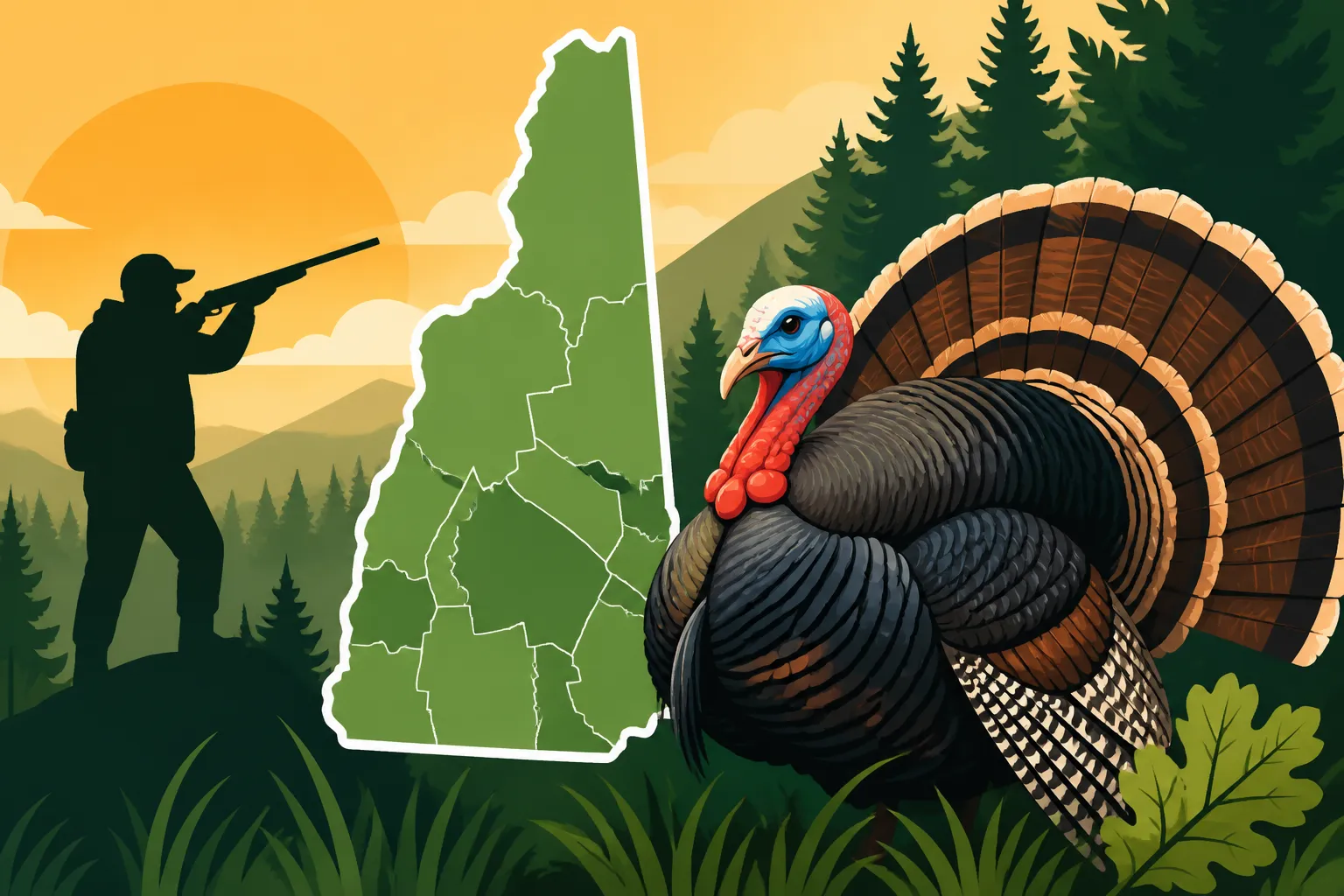
For many of us who love chasing gobblers through the New Hampshire woods, there’s nothing quite like the thrill of a spring morning filled with drumming and gobbling. But if you’ve ever found yourself scratching your head, wondering where to even begin your turkey hunt in our diverse state, you're not alone. It can feel overwhelming with all the different Wildlife Management Units (WMUs), each with its own quirks and characteristics. This guide is here to cut through the confusion and help you pinpoint the best New Hampshire WMUs for finding those elusive longbeards.
Understanding New Hampshire's WMU System for Turkeys
New Hampshire, like many states, divides its land into Wildlife Management Units, or WMUs. For deer hunters, these units often mean specific regulations, but for turkey hunters, they primarily help us understand habitat, bird density, and general opportunities. While a turkey can roam, these boundaries are drawn based on ecological factors that influence how and where our wild turkeys thrive.
Why WMUs Matter for Turkey Hunters
You might think a turkey is a turkey, no matter where it struts, but the reality on the ground in New Hampshire is a bit more nuanced. Each WMU represents a distinct ecological landscape, from the sprawling, undeveloped North Country forests to the more fragmented, agricultural lands of the southern tier. This means habitat varies greatly, and turkeys, being creatures of habit and specific needs, will reflect those differences in their numbers and distribution.
Think about it: a gobbler needs suitable roosting trees – often tall pines or mature hardwoods – close to open feeding areas like fields, logging cuts, or oak flats. It needs secure nesting cover for hens and poults, and accessible water sources. When you understand the general characteristics of a WMU, you start to grasp why some hold more birds than others. If you’ve spent a frustrating morning calling into empty woods, you know the pain of not being where the birds are, and WMUs are our best tool for getting closer to that sweet spot.
General Factors Influencing Turkey Abundance
Before we dive into specific WMUs, it's helpful to remember the bigger picture that dictates where turkeys flourish. These factors aren't unique to New Hampshire, but their interplay here creates the mosaic of turkey hunting opportunities we see across the state.
- Habitat Diversity and Quality: This is paramount. Turkeys thrive in areas with a good mix of mature hardwoods for roosting, open fields (agricultural or clear-cuts) for feeding and bugging, and denser cover for nesting hens. Monoculture forests, whether vast pine plantations or endless mature hardwoods without openings, tend to hold fewer birds. The "edge" habitat where different types of cover meet is often golden.
- Mast Crops: Acorns, beech nuts, and other hard mast are critical food sources, especially heading into winter. A good mast crop year means healthier birds going into spring, better brood survival, and generally higher populations. Conversely, a poor mast year can stress birds, leading to lower numbers in the following spring.
- Weather Patterns: Severe winters with deep, persistent snow can be tough on turkeys, limiting access to food. More critically, cold, wet springs during nesting and poult-rearing periods can dramatically reduce brood survival. A warm, dry spring often translates to more turkeys in the fall and the following spring.
- Predation: While turkeys are wary birds, their nests and young poults are vulnerable to predators like coyotes, raccoons, opossums, and even raptors. While we can't control predation, understanding its impact helps us appreciate why certain areas might have higher or lower survival rates for young birds.
- Hunting Pressure: High hunting pressure, especially on public land, can make birds extremely wary and push them into harder-to-reach areas or onto private parcels. This means even in a WMU with good numbers, finding unpressured birds requires more effort and strategic thinking.
Top New Hampshire WMUs for Spring Turkey Hunting
Alright, let's get down to brass tacks. While turkeys can be found in almost every corner of New Hampshire that offers suitable habitat, some WMUs consistently stand out for their robust populations and excellent hunting opportunities. Generally speaking, the southern and central regions of the state, with their mix of agriculture, fragmented woodlots, and suburban interfaces, tend to hold higher turkey densities.
Southern WMUs: Early Action and Diverse Habitat
When you look at the southern part of New Hampshire, you’re looking at areas that often boast the highest turkey numbers. This might seem counterintuitive given the higher human population density, but turkeys are remarkably adaptable and thrive in the mosaic habitat these areas offer. WMUs like H1 (Farmland), H2 (Ridge Country), I1 (Merrimack Valley), I2 (Suburban Fringe), K (Southern Tier), and M (Far Southeast) are often top contenders for spring turkey success.
These WMUs feature abundant agricultural fields – corn, hay, soybeans – interspersed with mature oak and maple forests. This provides the perfect combination of open feeding grounds and dense, tall timber for roosting. You'll often find birds using river bottoms, powerline cuts, and the edges of suburban development where small woodlots provide refuge. The key here, especially on the fringes of towns, is often securing private land permission, as many birds will gravitate towards less-pressured parcels.
You'll notice in these areas, particularly in WMUs like K and M, that even though there's more development, there are still ample opportunities. These birds have learned to coexist with humans, often using residential areas for feeding and crossing roads regularly. This requires hunters to be extra vigilant about safety zones and local ordinances, but the reward can be consistent encounters with birds. Data on harvest numbers for these areas often reflects their strong turkey populations. New Hampshire Spring Turkey Harvest Numbers can give you a general idea of where hunters are finding success.
Central and Lakes Region WMUs: Balanced Opportunities
Moving slightly north into the central part of the state and the Lakes Region, WMUs like D1 (Lakes Corridor), D2 (River Valley), and F (Highlands) offer a slightly different, but equally rewarding, turkey hunting experience. These areas strike a balance between the agricultural richness of the south and the more extensive, wilder forests of the North Country.
Here, you'll still find plenty of prime habitat: large tracts of mature timber, but often broken up by smaller farms, logging operations, and the numerous lakes and rivers that define the region. The Connecticut River Valley (partially in D2) is a prime example, offering fertile river bottomlands adjacent to timbered hillsides. Turkeys here have more room to roam, and while populations might not be quite as dense as in the southernmost WMUs, the birds can be less pressured and perhaps a bit more responsive to calling.
Hunting in these WMUs often involves more walking and a good understanding of topography. Birds will follow ridgelines, use benches on hillsides, and feed in less obvious forest openings. Public land opportunities tend to be more prevalent in these WMUs, though private land is still key for accessing prime, less-disturbed spots. New Hampshire Turkey Population Trends show a healthy population statewide, with these regions certainly contributing significantly to those numbers.
Strategies for Successful Turkey Hunting Across WMUs
Knowing which WMUs generally hold more turkeys is a fantastic starting point, but it's just that – a start. The real success comes from combining that knowledge with effective scouting and adaptable hunting tactics. Remember, a gobbler in WMU K might behave differently than one in WMU D1, even if they're the same species.
Scouting is Key, Regardless of WMU
You can have the best WMU in the state, but if you haven't done your homework, you're essentially walking around hoping to stumble upon a turkey. Pre-season scouting is paramount. This means getting out into the woods before the season opens, listening for gobblers at first light, trying to locate active roost trees, and identifying key travel corridors and feeding areas.
Tools like GoHunt can be invaluable here. Before you even step foot in the woods, you can use GoHunt to study topographical maps, identify potential roosting habitat (mature hardwoods on benches or near water), and locate open fields or clear-cuts that birds might be using for feeding. You can also overlay public land boundaries to identify accessible areas.
On the ground, look for physical sign: tracks in soft earth or mud, droppings (larger, j-shaped droppings indicate a gobbler), dusting bowls where birds clean themselves, and shed feathers. If you find an area with fresh sign, especially near a field edge or a hardwood ridge, you’re on the right track. Remember, turkeys are creatures of habit. If they're using an area in March, there's a good chance they'll be there when the season opens. Scouting With the New Hampshire Fish and Game App can also be a powerful tool for this pre-season legwork.
Adapting Tactics to Different WMU Terrains
Turkey hunting is rarely a one-size-fits-all endeavor. The terrain and habitat within your chosen WMU will often dictate the most effective tactics.
- Open Field Edges (Common in Southern/Central WMUs): These areas demand early morning setups. Get in well before dawn, position yourself with good cover and visibility overlooking a field where you expect birds to fly down. Subtle calling, initially soft tree yelps, can coax a gobbler off the roost. Decoys can be incredibly effective here, especially if you're hunting pressured birds. Place them where a gobbler can see them from the roost, but not so close that he hangs up just out of range. Decoy Placement for Pressured Spring Birds is a masterclass in this.
- Hardwood Ridges (Prevalent in Many WMUs): For a more active hunt, especially on public land or in areas with less open country, a "run-and-gun" approach can work wonders. This involves covering ground, stopping to call periodically, and listening for a response. When you get a gobble, use the terrain to your advantage to get as close as possible without being seen, then set up and try to call him in. Locating roosts on these ridges can give you a significant advantage for an early morning setup. Calling a May Gobbler Off the Roost discusses key strategies for this.
- Swamp/River Bottoms: Often overlooked by hunters, these areas can be absolute honey holes, especially later in the morning or when birds are pressured. The dense cover offers security, and the rich soil provides abundant insects and vegetation. While calling might be tougher due to acoustics, gobblers will often use these areas as travel corridors or for mid-day loafing. Don't be afraid to get your boots wet; some of the biggest gobblers are found in the nastiest places. Run-and-Gun Turkey Tactics on Public Land can apply here too, if you're willing to move quietly through thicker cover.
Understanding Pressure and Public vs. Private Land
Hunting pressure is a huge factor in how turkeys behave. WMUs closer to major population centers will inevitably see more hunters, especially on easily accessible public land. These birds become "call shy" and may be much harder to entice.
This is where identifying less-traveled public land spots or gaining private land access becomes critical. Use mapping tools like GoHunt to identify areas with limited road access, deep public tracts, or private parcels that might be worth knocking on doors for permission. Often, just walking an extra half-mile from a parking area can get you into unpressured territory. While Hunting Pressure on New Hampshire Public Land can be real, it doesn't mean success is impossible; it just means you need to work smarter. Many hunters find that simply asking a landowner politely and respectfully for permission can open up fantastic opportunities. Asking a New Hampshire Landowner for Permission offers guidance on how to approach this.
Fall Turkey Hunting Considerations by WMU
While spring is undeniably the most popular season for turkey hunting, New Hampshire also offers a fall turkey season in many WMUs. This is a very different game, focusing more on flock dynamics and less on breeding behavior.
Fall Hunting Opportunities and Methods
Fall turkey hunting in New Hampshire typically involves locating flocks, busting them up, and then calling the scattered birds back together. This can be an incredibly engaging and challenging hunt, relying heavily on woodsmanship and a good ear for hen and kee-kee calls. Hens and jakes are often the targets, and their social instincts make them responsive to calls aimed at reuniting the flock.
It's crucial to remember that not all WMUs are open for fall turkey hunting, and even those that are may have specific weapon restrictions or bag limits that differ from the spring season. Always consult the current New Hampshire Fish and Game digest for the most up-to-date regulations. Which WMUs Allow Fall Turkey Hunting provides specific details on this, and Breaking Up a Fall Turkey Flock dives into the effective tactics for this unique style of hunting.
Best WMUs for Fall Turkey
Generally, the WMUs that offer excellent spring turkey hunting will also be strong contenders for fall success. The same habitat characteristics – a mix of hardwoods, fields, and water – that support good spring breeding and poult survival will also provide ample food and cover for birds through the fall. The southern and central WMUs, with their consistent turkey populations, are often productive choices.
However, fall hunting requires even more thorough scouting to locate established flocks. As the leaves fall, visibility improves, but birds also become more visible. Food sources shift from insects and tender greens to hard mast like acorns and beechnuts. Focus your scouting efforts around these areas.
Always double-check the specific New Hampshire Fall Turkey Season Dates for your chosen WMU. These dates can sometimes vary, and you don't want to miss a prime opportunity or, worse, hunt out of season.
The pursuit of New Hampshire's wild turkeys is a deeply rewarding experience, filled with early mornings, strategic calling, and the thrill of a gobble echoing through the timber. By understanding the state's WMU system, focusing your efforts on areas known for strong turkey populations, and combining that knowledge with diligent scouting and adaptable tactics, you'll significantly increase your chances of bringing a Granite State gobbler home.
| WMU Type | General Location | Typical Habitat | Turkey Density (General) | Hunting Strategy Notes |
|---|---|---|---|---|
| Southern/Southeast | Near major population centers (e.g., K, M, J2) | Fragmented woods, agricultural fields, suburban edges | High to Moderate | Private land permission key, field edge setups, early season focus, mindful of safety zones. |
| Southwest Hill Country | Inland, mid-state (e.g., G, H2) | Rolling hills, mixed hardwoods, some agriculture | Moderate to High | Good public land potential, ridge running, finding overlooked pockets, understanding thermals. |
| Lakes Region/Central | Around major lakes (e.g., D1, D2, F) | Mixed forests, some open land, tourism influence | Moderate | Scouting away from developed areas, focusing on larger timber tracts, river bottoms, adaptable calling. |
| North Country | Far north (e.g., A, B, C, E) | Vast unbroken forests, logging areas, fewer open fields | Low to Moderate | Harder hunting, vast areas, finding specific openings or food sources, covering more ground, good mapping tools (GoHunt). |
Disclaimer
This article is for general informational purposes only and does not constitute professional advice. Laws, prices and regulations vary by location and change over time. Consult a qualified professional for guidance on your specific situation.