New Hampshire Squirrel Nest Counts and Mast Crops
For any hunter in New Hampshire, there's a constant quest to understand what drives wildlife movement, especially when it comes to elusive deer, bears, and turkeys. One often-overlooked but incredibly telling indicator is the humble squirrel population and, more importantly, the mast crop that sustains them. If you’ve ever wondered why some years the woods feel alive with chatter and rustling, while others seem eerily quiet, this guide will help you decode those subtle signs and use squirrel nest counts and mast crop intel to sharpen your hunting strategy right here in the Granite State.
The Vital Connection: Squirrels, Mast, and the Ecosystem
When you're out scouting, it's easy to focus solely on deer rubs, scrapes, or turkey tracks. But paying attention to the smaller details, like the activity of squirrels, can offer a wealth of information about the overall health of the forest and, crucially, where the bigger game might be feeding. Squirrels aren't just a fun chase; they're a vital part of the interconnected web that dictates animal movement throughout our New Hampshire woods.
Why Squirrels Matter More Than You Think
Sure, some of us love to chase squirrels with a .22 for a tasty stew, but their presence, or lack thereof, tells a much larger story. Think of squirrels as the forest's little, furry thermometers for food availability. If you're walking through a mature oak stand in late summer or early fall and hear the incessant chatter of red squirrels, see grey squirrels burying nuts everywhere, and notice plenty of leaf nests high in the branches, that's usually a strong sign of a good mast crop year. Conversely, if the woods are silent, and you're not seeing much squirrel activity, it often means the food sources are scarce, and other game like deer and bear are likely feeling that pinch too, forcing them to move more or seek out alternative forage.
The frustration of a silent woods, especially when you're anticipating prime hunting conditions, is something every hunter in New Hampshire has experienced. It’s disheartening to put in the miles only to find no activity. By understanding what squirrels are telling us, we can avoid some of that frustration and adjust our plans before we even set foot in the stand. They're also tiny, unwitting foresters, burying untold numbers of nuts that, if forgotten, grow into new trees, playing a key role in the long-term health and regeneration of our woodlands.
What Exactly is a Mast Crop?
Let's clear up any confusion: "mast crop" simply refers to the nuts, seeds, and fruits of woody plants that serve as food for wildlife. In New Hampshire, this broadly breaks down into two categories: hard mast and soft mast.
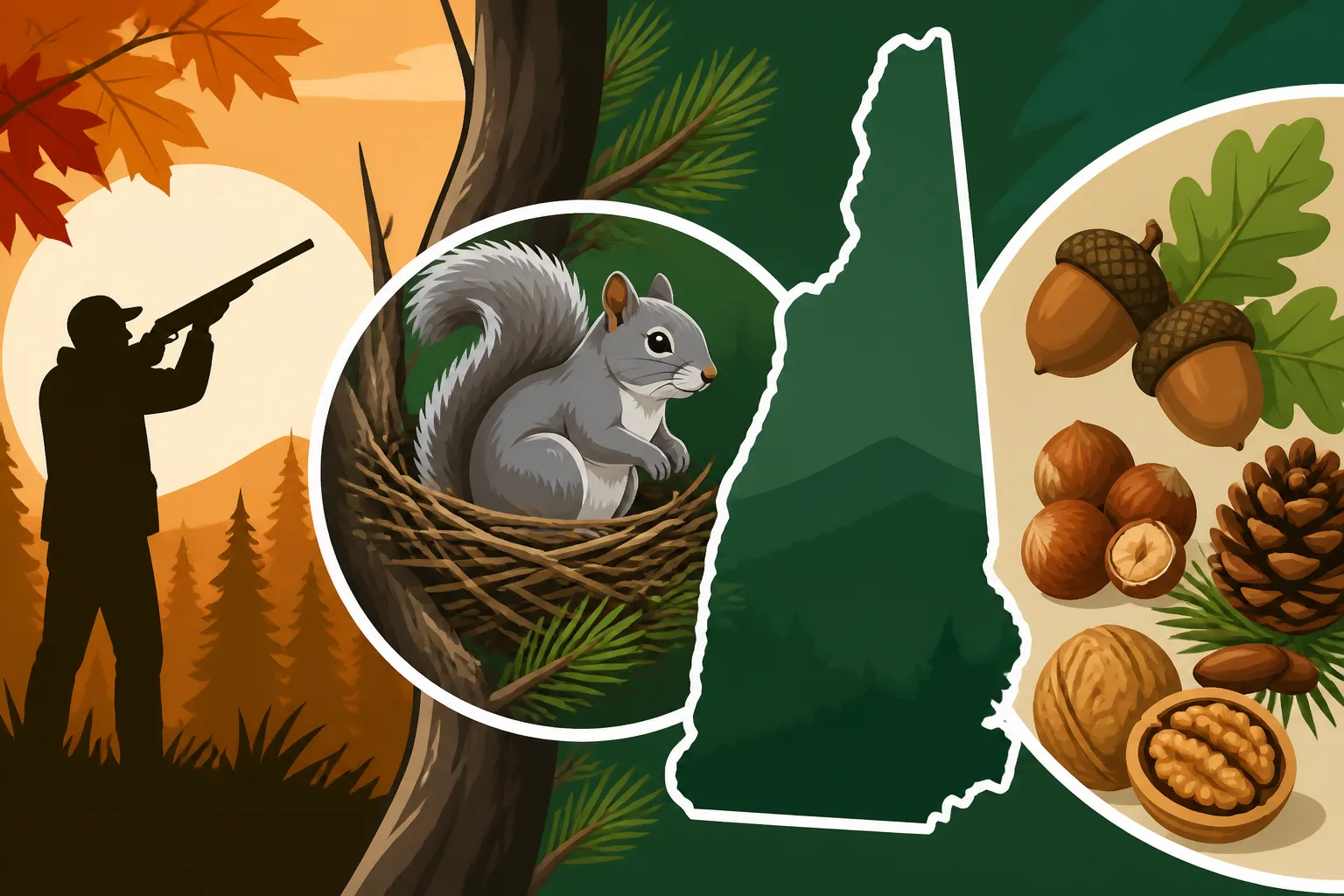
Hard mast includes the classic forest staples like acorns from various oak species, beechnuts from American beech trees, and hickories. These are the calorie-dense powerhouses that provide crucial energy reserves for deer, bear, and turkey, helping them pack on fat for the long New England winter. They are often available well into late fall and even early winter, especially if snow cover is light. A bumper crop of hard mast can keep animals localized to specific areas, making them easier to pattern.
Soft mast, on the other hand, consists of fruits and berries, such as wild apples, grapes, hawthorns, dogwood berries, and various other shrubs. While not as calorically dense as hard mast, soft mast is incredibly important in the early to mid-fall, offering a readily available sugar and carbohydrate boost. This food source is usually consumed quickly after ripening, often before the peak of deer or bear season, but it can be a hot ticket in the early archery season. Understanding the availability and timing of both hard and soft mast is paramount to successful scouting and hunting. The difference between a good mast year and a poor one can completely alter animal patterns across our diverse New Hampshire landscape, from the North Country to the southern farmlands.
Understanding New Hampshire's Mast Cycle
The success of any given hunting season in New Hampshire is often intrinsically tied to the yearly mast crop. It's a boom-and-bust cycle that keeps both wildlife and hunters on their toes. One year, a ridge might be littered with acorns, drawing in every deer and bear for miles, while the next, it might be barren, forcing animals to adapt and seek out other food sources. Learning to read these cycles is like gaining an insider's guide to the forest.
The Boom and Bust of Hard Mast
New Hampshire's hardwood forests are dominated by several key hard mast producers. Oaks are probably the most famous, with species like red oak, white oak, black oak, and scarlet oak scattered throughout the state. The crucial difference here for hunters lies in their production cycles. White oaks tend to produce acorns annually, offering a more consistent food source. Red oaks, however, are biennial, meaning their acorns take two years to mature. This leads to the "boom and bust" cycles we often observe: a huge red oak crop one year, followed by a lighter one the next. When both species have a good year, it's a mast hunter's dream.
Beech trees, with their smooth gray bark, are another major player, especially in the northern parts of the state. Beechnuts are incredibly high in fat and protein, making them a preferred food source for bears and turkeys. However, beech nut production can be even more inconsistent than oaks, with bumper crops only occurring every few years. When a beech ridge is dropping nuts, it's often an undeniable magnet for wildlife. Less common but still important are hickories, providing another hard mast option. The unpredictability of these mast crops is what drives animal movement. A localized failure in one area might push deer and bears several miles to find an alternative. This is precisely why hunters must pay attention to details like Hunting After a Poor Acorn Year to adapt their strategies.
Soft Mast: A Seasonal Feast
While hard mast provides the long-term energy, soft mast offers a quick, delicious feast during the early and mid-fall. Think about wild apple trees, often found along old farmsteads or logging roads, dropping their sweet fruit. Hawthorns, wild grapes climbing through trees, and dogwood berries are all high-sugar, readily available snacks for deer, bears, and turkeys. These sources are critical for putting on initial weight and providing energy as animals transition from summer forage to fall preparations.
Unlike hard mast, which can persist on the forest floor for weeks or even months under snow, soft mast is typically consumed very quickly once it ripens. A wild apple tree might be a deer hotspot for a week or two, then become completely barren. This means timing is everything when hunting soft mast. If you’re targeting early season archery, locating these active soft mast trees can be a game-changer. Learning to identify these trees and shrubs, even without fruit, is a valuable scouting skill. Imagine finding a stand of wild apple trees with fresh droppings underneath; that's a prime spot to consider for an early-season sit. Knowing how to locate and hunt these areas is key, especially if you're Hunting a Standing Apple Orchard.
Using Squirrel Nest Counts as a Scouting Tool
When you're out in the woods, it's not just about finding big tracks or fresh rubs. Sometimes, the smallest signs can tell the biggest stories. Squirrel nests, known as dreys, are one of those often-overlooked indicators that can give you a crystal-clear picture of the local mast crop and, by extension, the likely presence of other game. They are literally built from the bounty (or lack thereof) of the forest.
Decoding the Drey: What Nests Tell You
Squirrel dreys are those messy-looking clumps of leaves and twigs, typically high up in the branches of deciduous trees. While squirrels also use natural tree cavities, the abundance and condition of dreys are particularly telling. A fresh, well-maintained drey, often with a visible entrance hole, indicates current occupancy and an active squirrel presence. If you see numerous such dreys in an area, especially in late summer or early fall before significant leaf drop, it's a strong indicator of a healthy, thriving squirrel population.
The density of these nests in a particular stand speaks volumes. A forest section with a high concentration of active dreys signals that the environment is currently providing enough food and shelter to support a robust squirrel community. And what supports a robust squirrel community? You guessed it – a good mast crop. Therefore, a high squirrel count, evidenced by numerous dreys and visible activity, often translates directly to good mast availability, which in turn means this area is likely to attract and hold other mast-loving game like deer, bear, and turkey. Don't underestimate these small builders; their homes are beacons for food.
Practical Nest Count Surveys Pre-Season Scouting
Integrating nest counts into your pre-season scouting routine is surprisingly simple and incredibly effective. The best time to conduct these informal surveys is typically in late summer or early fall, before the leaves completely drop from the trees, but when the mast crop is starting to ripen and squirrels are most active in preparing for winter.
Here’s how you can do it:
- Choose your area: Focus on mature hardwood stands, particularly those with a mix of oak and beech trees, which are prime mast producers in New Hampshire.
- Walk transects: Instead of just wandering, try walking in a grid or along defined lines (like old logging roads or ridge lines) to systematically cover ground. This helps ensure you're not just finding scattered nests but getting a true sense of density.
- Observe and count: As you walk, actively look for dreys. Make a mental note (or even a physical tally) of how many active-looking nests you see within a certain radius or along your path. Note fresh nests versus older, dilapidated ones.
- Record your findings: This is where modern tools can really shine. You can simply jot down notes in a small pad, but using a mapping app like GoHunt can be a game-changer. You can drop pins on the map to mark concentrations of nests or areas of particularly high squirrel activity. Over time, you'll build a personalized map of where the mast crops tend to be strongest year after year. This kind of detailed Scouting New Hampshire Public Land Before Season is what separates consistent hunters from those who simply get lucky.
Integrating Mast Crop and Nest Count Data for Hunting Success
Collecting data on squirrel nests and mast crops isn't just an academic exercise; it's a practical, actionable strategy that can profoundly impact your hunting success. The goal is to use these indicators to predict where game animals will be and, consequently, where you should focus your efforts. It’s about being proactive rather than reactive in the unpredictable New Hampshire woods.
Predicting Wildlife Movement Based on Food Sources
The availability of mast, as revealed by squirrel activity, is one of the most powerful drivers of wildlife movement.
- Deer: When acorns are abundant, deer will often become incredibly localized, sometimes staying in a relatively small area for weeks as long as the food lasts. A good mast crop can mean deer don't need to travel far, making patterns more consistent. However, if there’s a localized mast failure – say, a particular oak flat didn't produce – deer will be forced to travel, sometimes significant distances, to find alternative food sources. Knowing this helps you understand Where New Hampshire Bucks Bed in Thick Cover in relation to available food.
- Bears: New Hampshire's black bears are absolute mast magnets. Beechnuts, in particular, are a high-energy, high-fat food source that bears will gorge on, sometimes exclusively, in the fall to prepare for denning. If you find a beech stand with heavy squirrel activity and fresh bear sign, you've hit the jackpot. Bears will literally walk past other food sources to get to prime beechnuts. This knowledge is crucial if you're involved in Baiting a Bear Site Before Your WMU Closes and want to understand natural competition.
- Turkeys: Wild turkeys, both gobblers and hens, are also keen consumers of mast. They'll scratch through leaf litter for acorns and beechnuts, and a strong mast crop can hold large flocks in an area throughout the fall.
The dynamic nature of these food sources means your scouting isn't a one-and-done affair. A soft mast location might be hot for a week in early October, while a hard mast ridge could be active well into November. Continual observation, even during your hunts, helps you stay ahead of these shifts.
Creating a Strategic Hunting Plan
Once you've gathered your mast crop and nest count data, it's time to turn that information into a strategic hunting plan.
- Prioritize Scouting Efforts: Instead of blindly wandering, focus your scouting on those areas where you've observed strong squirrel activity and confirmed a good mast crop. This concentrates your efforts on high-probability zones.
- Adjust Stand Locations: If your usual stand location is in an area with poor mast this year, and your squirrel counts were low, it’s time to move. Use your new intelligence to set up closer to the active mast trees and dense squirrel populations. Consider the wind and thermals, especially in the steep granite terrain of New Hampshire.
- Consider Hunting Pressure: Here's the catch: other savvy hunters might also be looking for mast. Areas with abundant acorns or beechnuts can sometimes draw more hunter pressure. This is where your detailed GoHunt map, marking subtle transitions or deeper pockets of mast, can help you find Finding Ground That Sees Fewer Hunters away from the crowds.
- Utilize Technology: The GoHunt app, or similar mapping platforms, allows you to overlay your personal nest count and mast observations with public land boundaries, terrain features, and even recent satellite imagery. You can mark specific trees, areas of high squirrel density, or zones where a particular mast species is abundant. This digital journal becomes an invaluable tool for planning future hunts and adapting to annual changes.
By understanding the subtle language of squirrels and the feast-or-famine cycle of New Hampshire's mast crops, you gain a significant advantage. It's about connecting the dots, from the smallest drey to the biggest buck, and turning those observations into a more informed, more successful hunting season.
| Mast Type | Example Species | Typical Production Cycle | Primary Wildlife Beneficiaries | Scouting Indicators |
|---|---|---|---|---|
| Hard Mast | Red Oak | Biennial (takes 2 years) | Deer, Bear, Turkey, Squirrels | Large, active dreys; lots of squirrel chatter; bear droppings with acorn fragments |
| Hard Mast | White Oak | Annual | Deer, Turkey, Squirrels | Steady squirrel activity; deer sign concentrated around trees; often consumed first due to lower tannin |
| Hard Mast | American Beech | Irregular (every 2-7 years) | Bear (favorite), Deer, Turkey, Squirrels | High squirrel activity; chewed nuts on ground; bear claw marks on trees; very distinct round, spiny husks |
| Hard Mast | Hickory | Annual/Irregular | Squirrels, Deer, Turkey | Thick, strong shells; good source of fat for squirrels; often overlooked by hunters, less widespread than oak/beech |
| Soft Mast | Wild Apple | Annual | Deer, Bear, Turkey, Raccoon | Fresh droppings under trees; chewed apples; short window of availability; often found in old fields/edges |
| Soft Mast | Wild Grape | Annual | Turkey, Deer, Bear, Birds | Vines climbing trees; abundant in transition zones; quickly consumed when ripe |
| Soft Mast | Hawthorn / Dogwood | Annual | Turkey, Deer, Birds | Berries ripen early fall; quickly consumed; good early season deer and turkey food |
Disclaimer
This article is for general informational purposes only and does not constitute professional advice. Laws, prices and regulations vary by location and change over time. Consult a qualified professional for guidance on your specific situation.