Hunting a Green Field Planted for Deer
New Hampshire food plots attract wary whitetail deer during hunting season, offering practical strategies for successful harvests.
Close the distance.
Archery, muzzleloader, and firearm techniques — calling, stand placement, still-hunting, spot-and-stalk, and the weapon rules that change at the state line.
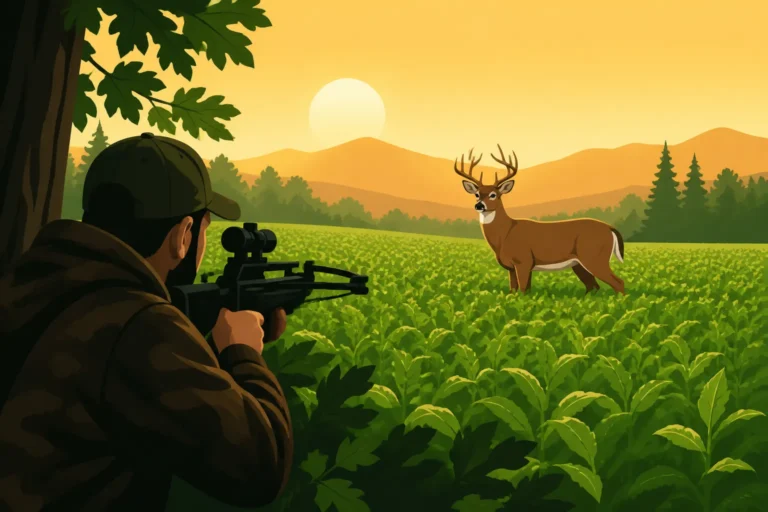
New Hampshire food plots attract wary whitetail deer during hunting season, offering practical strategies for successful harvests.
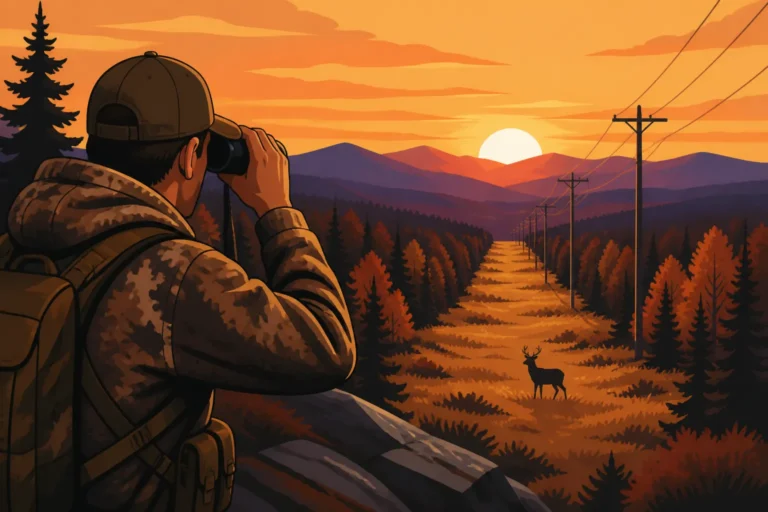
New Hampshire deer hunters can locate wary bucks in powerline cuts at dusk by utilizing optics, vantage points, and seasonal forage knowledge.
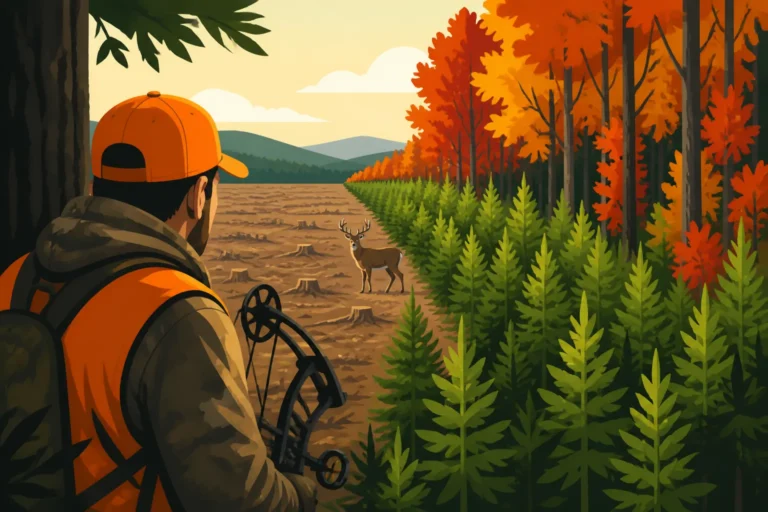
New Hampshire clear-cut regrowth edges offer whitetail deer food and cover, creating prime locations for hunting mature bucks.
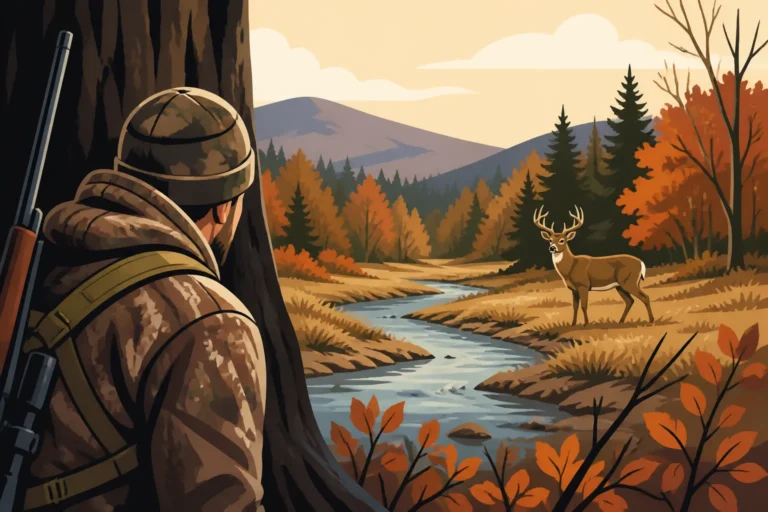
Late-season deer hunting in New Hampshire creek bottoms explains how low-lying thermal refuges and natural travel corridors improve success.
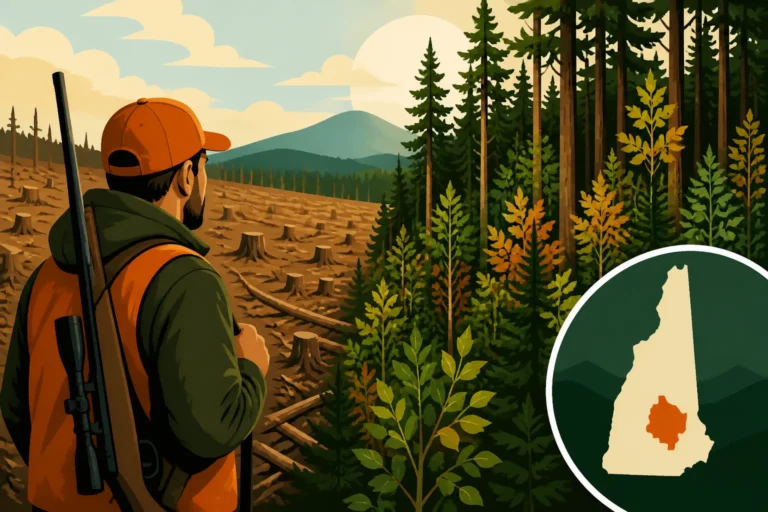
New Hampshire deer hunting strategies explain how whitetails retreat to standing cover after harvest operations alter landscapes.

New Hampshire mud tracking reveals fresh deer movement, animal size, direction, and timing across swamps and logging roads.

Ridge-top saddles in New Hampshire serve as travel corridors for rutting bucks, offering hunters strategic locations to intercept moving deer.
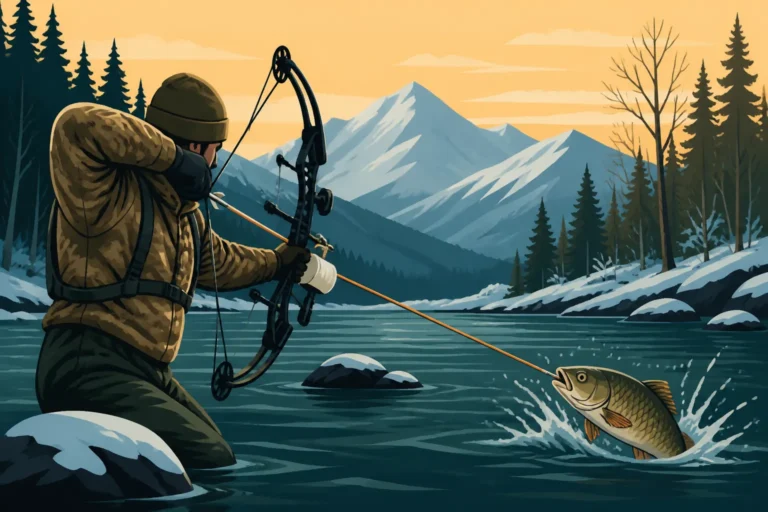
Bowfishing New Hampshire rivers lets hunters target non-game species like carp, suckers, and fallfish during the hunting off-season.

New Hampshire winter coyote calling over feed sites explains predator behavior, travel patterns, and population management strategies.
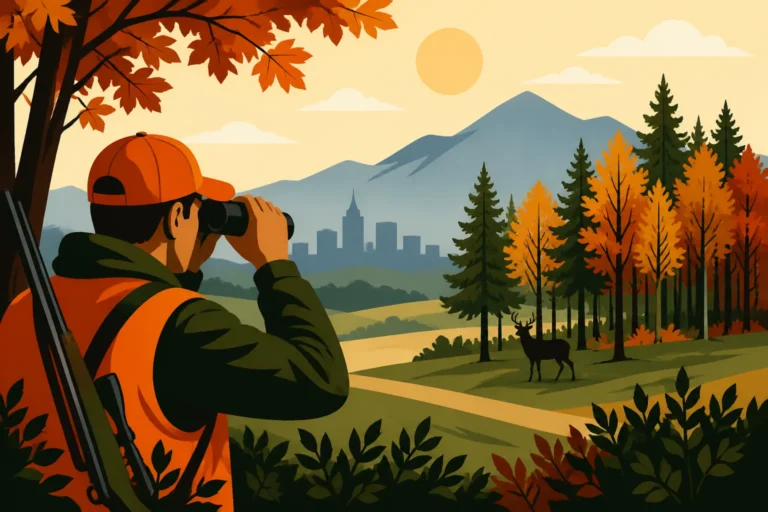
Hunting small woodlots near Manchester helps hunters find deer in fragmented urban-edge landscapes using digital mapping tools.