How Close a New Hampshire Mentor Must Stay
Hunting with a young, eager apprentice can be one of the most rewarding experiences in the New Hampshire woods, but it also comes with a significant responsibility: ensuring their safety and adherence to the law. Many seasoned hunters wonder exactly how close they need to stay to their mentee to meet state regulations, often fearing they might unintentionally fall short of the "direct supervision" requirement. This comprehensive guide will meticulously break down New Hampshire's specific rules for mentored hunting, particularly focusing on the mentor's proximity, to help you foster a safe, educational, and legal hunting experience for the next generation.
Understanding New Hampshire's Mentored Youth Hunting Program
New Hampshire's Mentored Youth Hunting Program is a fantastic initiative designed to introduce aspiring young hunters to the traditions, ethics, and skills of hunting under the watchful eye of an experienced adult. It allows youngsters who haven't yet completed their hunter education course to participate in hunting seasons, provided they are always accompanied and directly supervised by a licensed mentor. This program acknowledges that hands-on experience, guided by a knowledgeable individual, is often the best way to learn the ropes.
Who Qualifies for Mentored Hunting
The program is open to youth who are at least 10 years old but have not yet reached their 16th birthday. Crucially, they don't need to have passed a formal hunter education course before participating, which is a major advantage for getting them out into the field early. The mentor, on the other hand, must be at least 18 years old, possess a valid New Hampshire hunting license for the current season, and have successfully completed a hunter education course or held a prior hunting license. This ensures that the person guiding the apprentice has the necessary experience and understanding of safety protocols and regulations. The concept is simple: pair an eager learner with a responsible, knowledgeable teacher in a real-world setting. You can find more detailed information on the specific requirements in the article, New Hampshire Mentored Youth Hunting Rules.
Benefits and Goals of the Program
The primary goal of this program isn't just to get kids into the woods, but to instill a deep respect for wildlife, conservation, and safe hunting practices from an early age. It acts as a bridge, allowing supervised participation while the youth works towards completing their formal hunter education. It also helps combat the declining number of hunters by making the activity more accessible and fostering interest in the outdoors. For mentors, it's an opportunity to pass on a cherished tradition, share knowledge about the local ecosystem, and create lasting memories. It’s about building a foundation of ethical hunting, responsible firearm handling, and an understanding of wildlife management that will serve them throughout their lives. Mentors are truly the backbone of this program, and their active involvement is paramount.
The Crucial Proximity Rule: What "Direct Supervision" Really Means
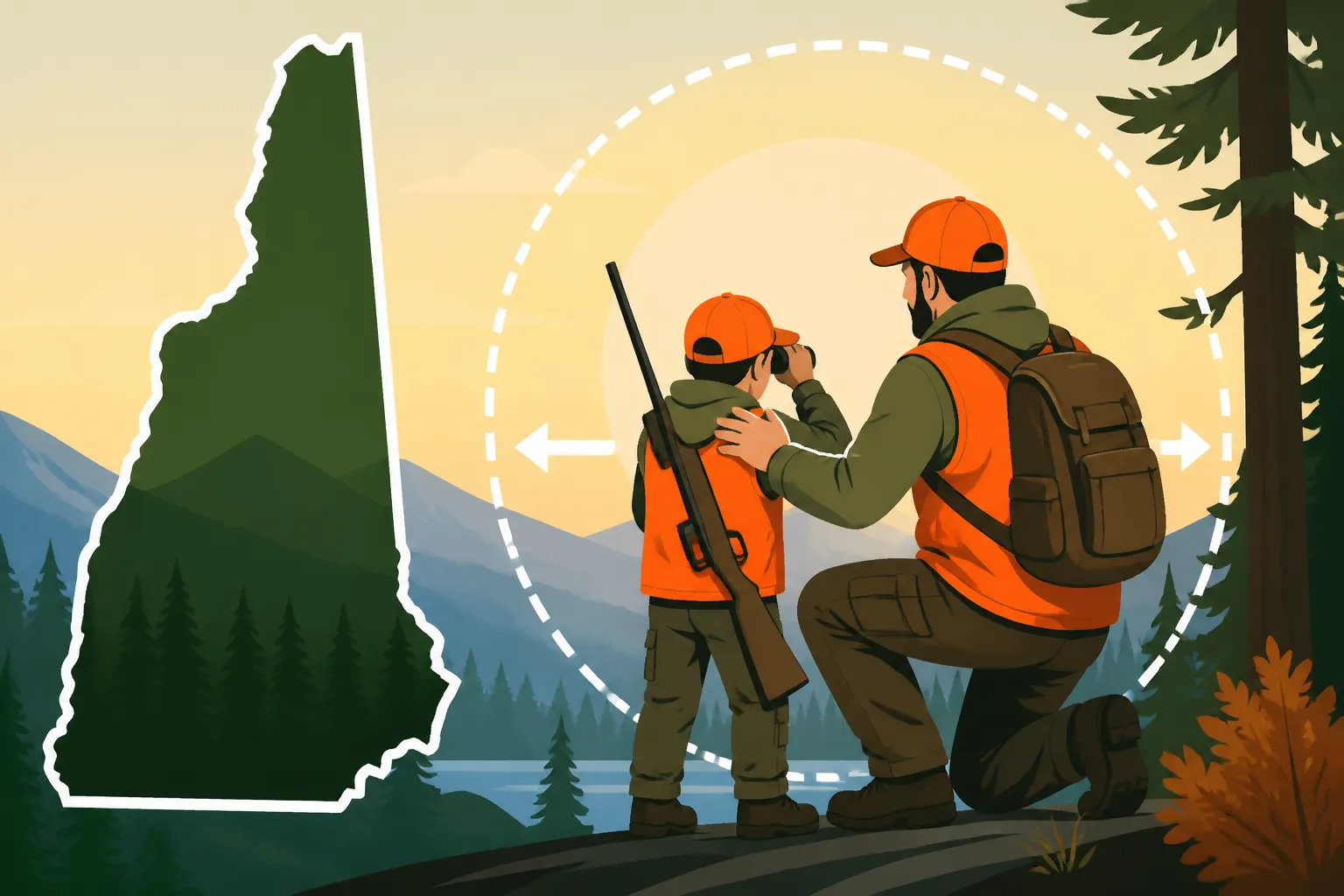
This is where many mentors find themselves pondering the exact interpretation of the rules, and for good reason—it's critical for both safety and legal compliance. New Hampshire Fish and Game states unequivocally that "direct supervision" means the mentor must be "within sight and normal voice communication" of the apprentice hunter. This isn't just a suggestion; it's a legal requirement.
Defining "Direct Supervision" in Practice
"Within sight and normal voice communication" is a common standard in many states, and it's intentionally designed to provide some flexibility while maintaining strict safety parameters. It doesn't mean you have to be holding hands, but it certainly implies more than just being in the same general area. Let's break down what this truly entails:
- Within Sight: This means you must have an unobstructed view of your apprentice at all times. If they walk behind a thick stand of pines, disappear over a ridge, or are obscured by dense brush, you are no longer "within sight." This requires constant awareness of their position. In thick New Hampshire timber, this might mean you're only 15-20 yards apart, while in an open field, you might be 50-75 yards away. What matters is that line of sight.
- Normal Voice Communication: This isn't shouting at the top of your lungs across a valley. It means you should be able to speak to your apprentice in a normal tone and be heard clearly, and vice-versa, without significant effort or strain. This allows for immediate instruction, warnings, or communication about game movement. If you need to yell, you're likely too far.
The spirit of this rule is about immediate intervention and guidance. If a safety issue arises, or an ethical decision needs to be made (like confirming an animal's legal status or ensuring a clean shot), you, as the mentor, must be able to act or advise instantly. An app like GoHunt can be incredibly useful in pre-planning your hunting routes and understanding terrain features, which can directly impact how well you maintain visual and vocal contact with your apprentice.
Scenarios: Still-Hunting vs. Stand Hunting
The application of "within sight and normal voice communication" will vary depending on your hunting method and the terrain you're in.
- Still-Hunting (Walking through the woods): When still-hunting or stalking, you and your apprentice should move together. You might walk side-by-side, or with one person slightly ahead or behind, but always maintaining that visual and vocal link. In dense hardwood forests or thick softwood stands, this means staying very close, perhaps within 10-20 yards. If you're both moving quietly, you can easily communicate with whispers or subtle hand signals. If you get separated, even for a moment, you’ve broken the rule. This is particularly challenging when Still-Hunting White Mountain National Forest Timber where the terrain can be rugged and visibility limited.
- Stand Hunting (Tree Stands or Ground Blinds): If you're hunting from a tree stand or a ground blind, the rule still applies. You and your apprentice must be in the same stand or blind, or in separate stands/blinds positioned close enough to meet the "within sight and normal voice communication" standard. If the apprentice is in a stand 50 yards away, and there's a rise or heavy brush between you, that likely doesn't qualify. Many mentors choose to share a two-person ladder stand or a spacious ground blind to ensure constant proximity. When Using a Ground Blind on Public Land, ensure it's large enough to comfortably accommodate both of you, or position two blinds very close together.
Remember, the emphasis is on the mentor's ability to supervise directly. This isn't a passive role; it's an active one that demands constant attention to the apprentice's actions, safety, and understanding of the hunt.
Why Proximity Matters for Safety and Instruction
The "within sight and normal voice communication" rule isn't an arbitrary restriction; it's the bedrock of safety and effective learning in mentored hunting. Its importance cannot be overstated.
- Immediate Safety Intervention: Hunting involves firearms, archery equipment, and often challenging terrain. An apprentice hunter, by definition, is still learning. They might forget a critical safety step, misidentify game, or make a quick, ill-advised movement. Being close enough allows you to immediately correct a muzzle direction, prevent an unsafe shot, or verbally guide them through a tricky situation. This is especially crucial when considering the various New Hampshire Legal Firearms for Deer Hunting and ensuring they are handled responsibly.
- Ethical Decision-Making: Beyond safety, hunting involves numerous ethical considerations, from confirming species and sex to ensuring a clean kill and proper game recovery. An apprentice may not yet have the experience to make these judgments independently. Your proximity allows you to guide them through these decisions, explaining why certain shots are ethical and others are not, or how to properly identify legal game versus a protected animal.
- Real-Time Instruction: Hunting is a dynamic activity. Being close means you can whisper instructions on scanning for game, using cover, reading wind direction, or interpreting animal behavior. You can point out tracks, rubs, or scrapes as you encounter them, transforming the hunt into a continuous, immersive learning experience. This direct, moment-by-moment teaching is far more effective than trying to explain things after the fact. Utilizing tools like GoHunt to scout areas beforehand can enhance these teaching moments, as you can show the apprentice features on a map that you'll encounter on the ground.
- Reinforcing Rules and Regulations: The mentor is responsible for ensuring the apprentice adheres to all hunting laws and regulations. Being close ensures you can monitor their actions regarding bag limits, shooting hours, and other legal requirements. If you're too far, you can't be certain they're following the rules, which could lead to legal trouble for both of you.
Responsibilities and Best Practices for Mentors
Being a mentor is about more than just maintaining proximity; it's about imparting knowledge, fostering good habits, and instilling a lifelong love and respect for hunting and the outdoors. It's a role that carries significant weight and reward.
Pre-Hunt Preparation and Communication
A successful mentored hunt begins long before you set foot in the woods. Thorough preparation and clear communication are paramount.
- Review Regulations Together: Before any hunt, sit down with your apprentice and review the New Hampshire hunting digest. Focus on the species you'll be hunting, season dates, bag limits, and specific rules like blaze orange requirements. Even if they haven't taken the full hunter education course, understanding these rules is vital. Platforms like GoHunt often have accessible summaries of regulations, which can be a great resource for this. Ensure they understand the importance of New Hampshire Blaze Orange Requirements for safety.
- Practice Shooting and Handling: If using a firearm or bow, spend ample time at a shooting range. Focus on safe gun handling, target acquisition, shot placement, and proper shooting fundamentals. This builds confidence and competence, reducing the risk of accidents in the field. Emphasize the four primary rules of firearm safety repeatedly until they become second nature.
- Discuss Hunt Plan and Expectations: Talk through the entire hunt plan: where you'll go, what you'll be hunting for, how you'll move through the woods, and what to expect. Discuss shot opportunities, what to do if an animal is wounded, and how to recover game. Set realistic expectations for success; hunting isn't always about filling a tag, but about the experience.
- Gear Check: Ensure both you and your apprentice have appropriate gear for the weather and terrain, including proper clothing, footwear, and any necessary safety equipment. For instance, if you're venturing into rougher areas, durable boots are essential.
Teaching Ethical Hunting and Game Recovery
Beyond the rules, true mentorship involves teaching the ethical dimensions of hunting, which are often best learned through example and direct experience.
- Respect for Wildlife: Instill in your apprentice a profound respect for the animals you pursue. Discuss the role of hunting in conservation, the importance of wildlife management, and the privilege of being a hunter. Emphasize that a quick, clean kill is the highest ethical standard.
- Shot Placement and Patience: Teach your apprentice to wait for the best possible shot. Rushing a shot often leads to wounded animals and difficult tracking situations. Explain that passing on a marginal shot is a sign of a responsible hunter. Talk about shot angles and vital zones.
- Tracking and Recovery: Should an animal be shot, the recovery process is a critical part of the hunt. This is where a mentor's experience truly shines. Teach your apprentice how to effectively Blood Trailing After Dark in New Hampshire, read sign, and follow a blood trail. Emphasize persistence and never giving up on a wounded animal. This commitment ensures that the animal is recovered and utilized.
- Field Dressing and Care: Guide your apprentice through the field dressing process, explaining each step and its purpose. This is a fundamental skill and teaches respect for the animal by ensuring the meat is properly cared for. The article on Field Dressing a Deer in Cold Weather can provide additional tips.
Ensuring a Safe and Ethical Mentored Hunt
Safety is paramount in any hunting endeavor, but especially when guiding a young, inexperienced hunter. The mentor's role is to be the primary safety officer and ethical guide throughout the entire experience.
Firearms Safety and Handling Instruction
Consistent and rigorous adherence to firearms safety rules is non-negotiable. As a mentor, you are responsible for drilling these principles into your apprentice.
- ACTT (Assume, Control, Treat, Keep): This simple acronym should be the mantra.
- Always assume every firearm is loaded.
- Control the muzzle direction. Never point it at anything you're not willing to destroy.
- Treat every firearm with respect.
- Keep your finger off the trigger until ready to shoot.
- Safe Carrying Positions: Teach your apprentice safe ways to carry their firearm in various terrains and situations, ensuring the muzzle is always pointed in a safe direction, away from themselves and others. Discuss how to cross obstacles like fences or fallen logs safely.
- Loading and Unloading: Supervise every loading and unloading of the firearm. For very young or inexperienced apprentices, you might handle loading and unloading entirely, only allowing them to take control of the firearm once they are in a safe, stationary shooting position and have a confirmed target.
- Target Identification: Emphasize positive target identification. They must know what they are shooting at and what is beyond it. This is where your direct supervision is most critical – you are the final check on their target.
Adapting to Different Hunting Methods
New Hampshire offers diverse hunting opportunities, from deer to turkeys and small game. Your mentorship must adapt to the specific demands of each.
- Deer Hunting: Whether you're archery hunting, using a muzzleloader, or firearms, the principles of proximity and safety remain. When Bowhunting New Hampshire's Long Archery Season or Muzzleloader Deer Hunting in New Hampshire, shot distances are often shorter, requiring even closer attention to stealth and precise shot placement. During firearms season, especially during New Hampshire's November Firearms Deer Season, reinforce the importance of safe zones of fire, especially if other hunters are in the area.
- Turkey Hunting: Turkey hunting often involves more movement and calling. When Spring Turkey Hunting in New Hampshire, teach your apprentice patience and how to use natural cover. Reinforce the critical rule of never stalking a gobble; always call birds to you to avoid mistaking another hunter for game. Your close proximity is vital for identifying a legal tom and ensuring a safe shot when the bird comes into range.
- Small Game Hunting: While perhaps less intense than big game, small game hunting still requires safety and ethical considerations. Teach your apprentice about pattern density for shotguns, identifying safe backgrounds, and the importance of quick, clean shots on fast-moving targets like squirrels or rabbits. This is an excellent way to practice handling a firearm and build proficiency in a lower-pressure environment.
No matter the game, your role as mentor is to cultivate a responsible hunter who understands the privilege and commitment involved in harvesting an animal. Make use of all available resources, including information from New Hampshire Fish and Game, and even advanced scouting tools like GoHunt, to plan the safest and most educational experience possible.
Table: Mentor Proximity Guidelines in New Hampshire
To help summarize, here’s a quick guide on applying the "within sight and normal voice communication" rule in common hunting scenarios:
Hunting Scenario Mentor-Apprentice Proximity Application Key Considerations You are responsible for ensuring your apprentice meets the age requirements. Ensure they are familiar with the rules for New Hampshire Youth Deer Weekend Rules.
Disclaimer
This article is for general informational purposes only and does not constitute professional advice. Laws, prices and regulations vary by location and change over time. Consult a qualified professional for guidance on your specific situation.